Successfully Converting Recipes for a Blackstone
As an Amazon Associate and member of other affiliate programs we earn a small commission from qualifying purchases through our affiliate link. For more information read our Entire Affiliate Disclosure.
Converting recipes for a Blackstone griddle will open your outdoor cooking repertoire considerably. You don’t need specialized recipes to cook on a flat top griddle, although we have a few Blackstone recipes for you to start with.
This guide shows you how to convert your favorite Skillet, Grill, Oven, and Frozen Food Recipes Successfully to your Blackstone griddle. Flat top griddles are incredibly versatile cooking tools.
Once you understand how flat top cooking is different than skillets, grills, and ovens, you can easily adapt MANY of your favorite recipes to the Blackstone and other flat tops.
From hibachi dinners and fajitas to smash burgers, breakfast hash, stir fry, frozen fries, and even sauces or pasta sides, the Blackstone griddle can, and often does, function beautifully as a complete outdoor cooking station.
But recipe conversions are not always straightforward. Don’t get frustrated. Learn your tool. If you’re having problems converting your favorite recipes to Blackstone, read on.
Many recipes fail on a Blackstone because of:
- overcrowding
- poor heat management
- excess moisture
- incorrect oil use
- adding sauces too early
The good news is these problems are easy to fix. Understand how flat top griddle cooking works.
This guide will show you:
- how to convert regular recipes for a Blackstone
- how to manage heat zones
- how to prevent steaming and sticking
- how to cook frozen foods successfully
- how to use pots and pans on the griddle
- and how to cook complete meals efficiently on a flat top
Once you practice with your griddle and learn these basic principles, you’ll stop searching only for “Blackstone recipes” and start adapting your own favorite meals confidently.
Why Blackstone Cooking Is Different
A Blackstone griddle cooks differently than:
- skillets
- grills
- ovens
- air fryers
Unlike grill grates, the Blackstone uses a large flat steel cooking surface with direct contact heat.
Unlike a skillet, the cooking area is much larger and allows multiple heat zones.
Unlike an oven, moisture stays directly on the cooking surface unless it can evaporate away.
This changes:
- browning
- steaming
- crust development
- cooking speed
- moisture evaporation
Converting recipes for a Blackstone requires understanding these differences. Then you can make a LOT of delicious recipes for your family on this amazing griddle.
The 5 Core Rules of Blackstone Recipe Conversion
Almost every successful Blackstone adaptation comes down to these five principles.
Control Moisture:
Moisture is the biggest challenge on a griddle.
When too much water builds up on the cooking surface, food steams instead of browning.
This commonly happens with:
- frozen foods
- mushrooms
- zucchini
- onions
- marinated meats
- overcrowded proteins
If food looks pale or soggy instead of caramelized, moisture is usually the problem.
The Fix
- cook in batches
- spread ingredients out
- avoid overcrowding
- allow steam to escape
- pat wet ingredients dry when needed
The Blackstone browns best when moisture can evaporate quickly.
Use Heat Zones
One of the biggest advantages of a Blackstone is the ability to create multiple cooking zones.
Instead of cooking everything over one temperature, divide the griddle into sections.
High Heat Zone
Best for:
- steak
- smash burgers
- hibachi proteins
- quick searing
Medium Heat Zone
Best for:
- vegetables
- fried rice
- chicken
- potatoes
- pancakes
Low Heat Zone
Best for:
- warming food
- melting cheese
- sauces
- tortillas
- buns
Using heat zones makes full meal cooking much easier.
Oil Matters More Than You Think
Oil on a Blackstone is not just for preventing sticking.
It also:
- improves heat transfer
- helps browning
- affects crust formation
- protects delicate foods
- controls surface dryness
Best Oils for Blackstone Cooking
Choose high smoke point oils whenever possible:
- avocado oil
- canola oil
- grapeseed oil
- peanut oil
- vegetable oil
Butter adds flavor but burns quickly over high heat. Olive oil should also kept on the medium heat section.
For best results:
- cook with oil first
- finish with butter later

Don’t Crowd the Griddle
Overcrowding is one of the most common beginner mistakes.
Too much food lowers the surface temperature and traps steam.
Instead of searing, the food boils in its own moisture.
This is especially noticeable with:
- vegetables
- frozen fries
- stir fry
- diced chicken
- sliced steak
Better Method
Cook ingredients in stages.
Move finished foods to cooler zones while other ingredients cook.
This dramatically improves browning and texture.
Add Sugary Sauces Near the End
Many sauces burn quickly on a hot griddle.
Examples include:
- teriyaki sauce
- barbecue sauce
- honey garlic sauce
- sweet marinades
Better Method
Cook proteins first.
Add sauce during the final minutes of cooking.
This prevents:
- scorching
- bitterness
- sticky carbon buildup
Wet marinades can also increase steaming, so shake off excess marinade before cooking. Blackstone Seasoning Manual can give you more ideas on how to use flavorful seasonings to enhance your recipes.

What Recipes Adapt Well to a Blackstone?
Converting recipes for a Blackstone is simple when you choose the correct recipes for this purpose.
The Blackstone is excellent for recipes that benefit from:
- high surface contact
- quick browning
- staged cooking
- large cooking areas
Can a Blackstone Sauté Properly?
Yes. A Blackstone can sauté vegetables and proteins very effectively when ingredients are spread out properly and moisture is controlled.
In many cases, vegetables brown better on a flat top because the larger cooking surface allows steam to evaporate more efficiently than crowded skillets.
Successful Blackstone sautéing depends on:
- medium to medium-high heat
- proper oil use
- avoiding overcrowding
- allowing moisture to evaporate
This works especially well for onions, peppers, mushrooms, fajita vegetables, diced potatoes, shrimp, and sliced meats.

Converting Recipes For A Blackstone
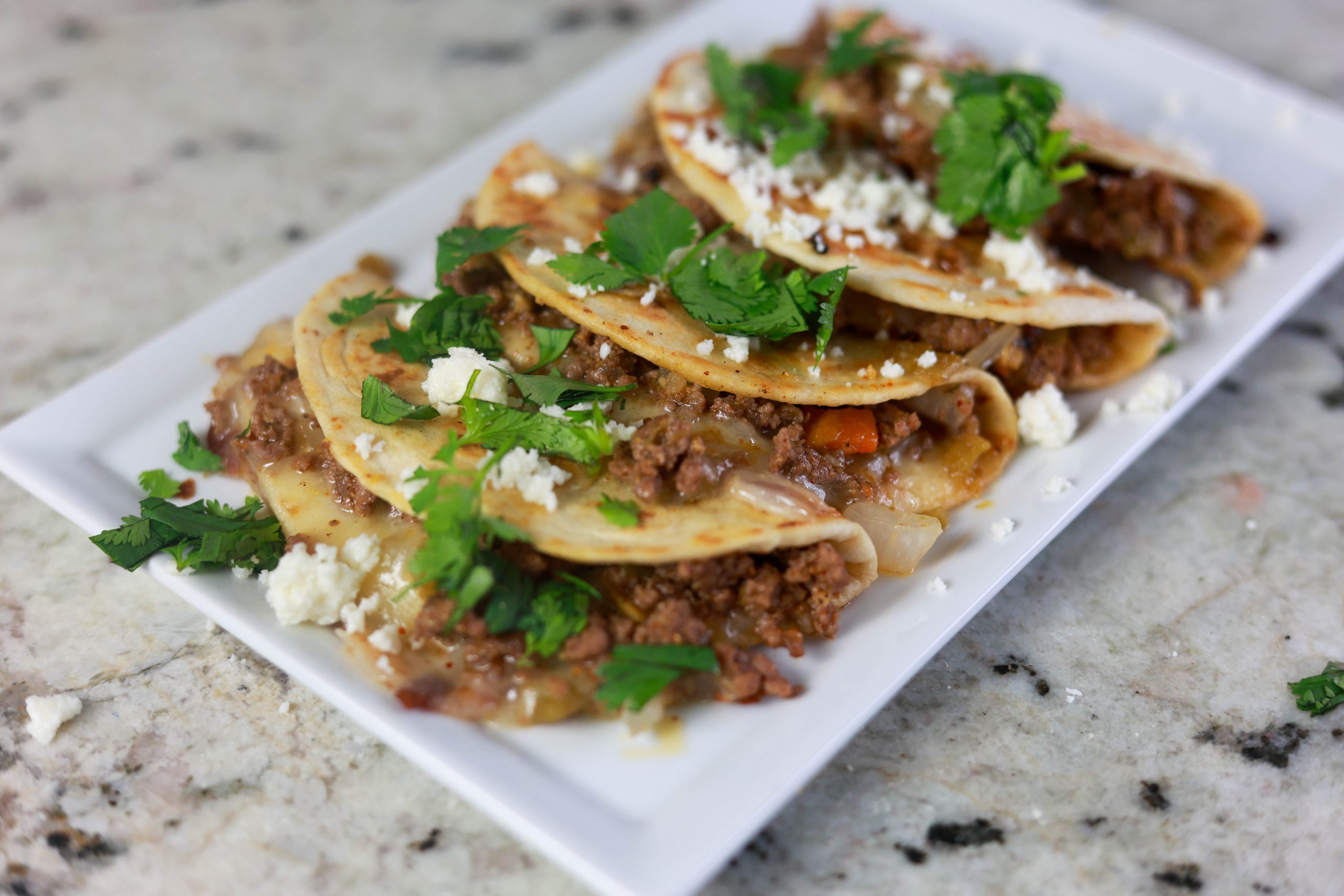
Easy Skillet Recipe Conversions:
These adapt extremely well:
- fried rice
- fajitas
- cheesesteaks
- breakfast hash
- taco meat
- stir fry
- quesadillas
Grill Recipe Conversions:
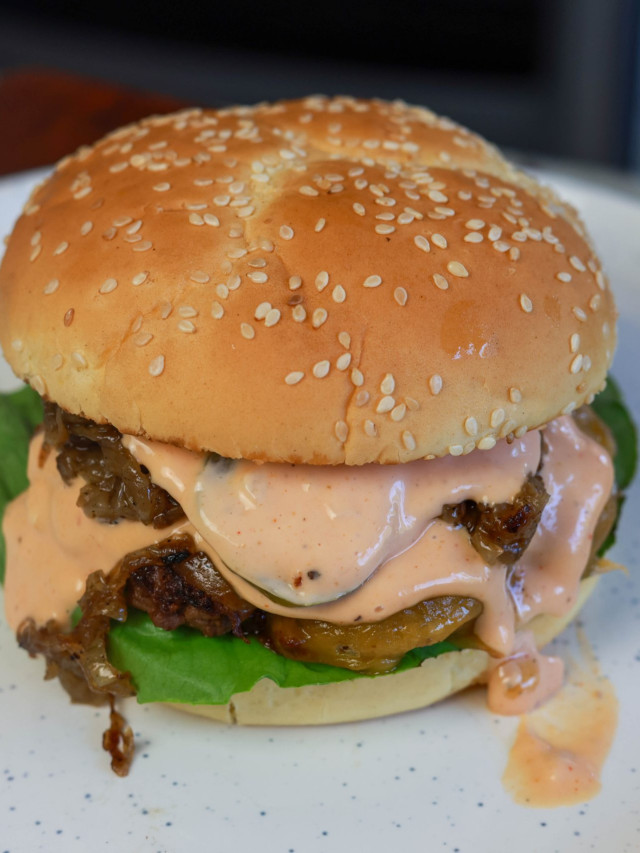
Most grilled foods cook faster on a Blackstone because the entire surface contacts the heat.
Great options include:
- burgers
- steak
- shrimp
- sausages
- chicken
- kebabs
Oven Recipe Conversions:
Some oven recipes work surprisingly well on a Blackstone.
Examples:
- melts
- grilled sandwiches
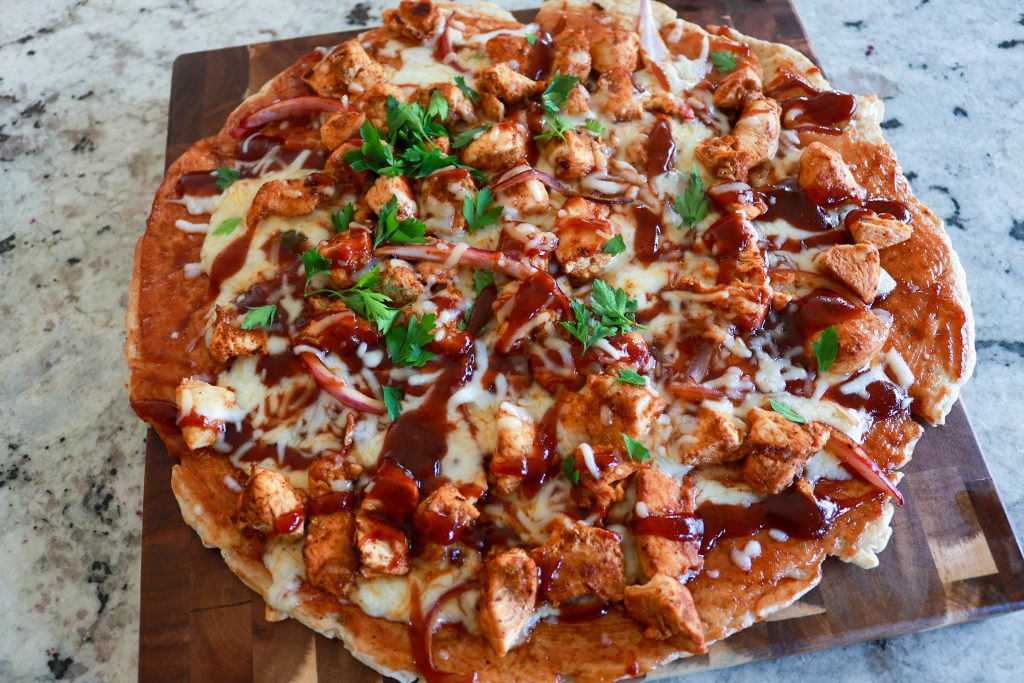
- flatbreads
- quesadillas
- toasted wraps
For these recipes, lower heat and a melting dome help trap heat for even cooking.
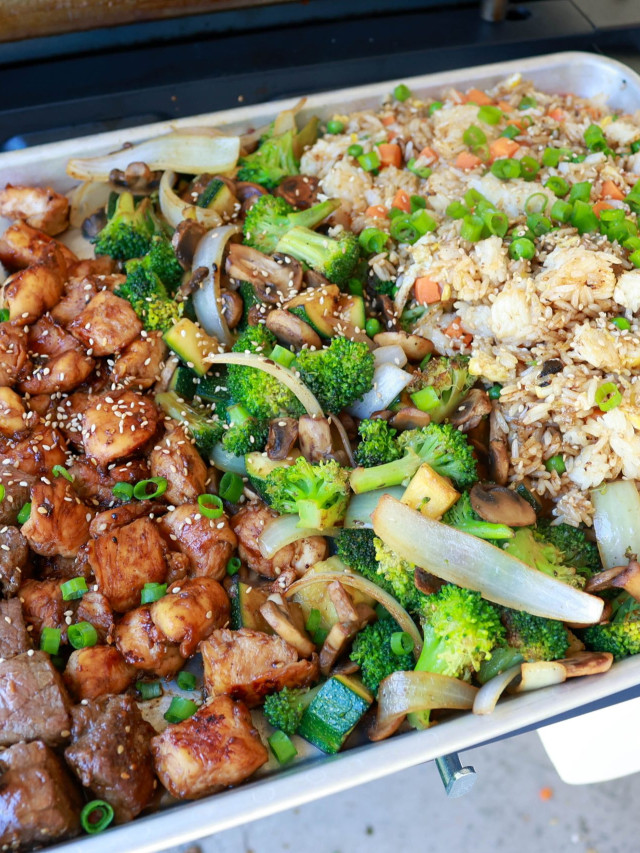
Example: Converting a Hibachi Skillet Dinner to the Blackstone
Watch us make hibachi on our blackstone in the video.

In a skillet, ingredients are usually crowded together in a smaller cooking area. This traps steam and limits browning.
On a Blackstone, the large flat top allows you to separate ingredients into cooking zones and stage the meal properly.
Hibachi-style meals are one of the best examples of successful Blackstone recipe conversion. We have a Blackstone Hibachi Recipe for you ready to go. Here is how we did the conversion.
Original Skillet Method:
Typical skillet hibachi often:
- cooks proteins and vegetables together
- creates excess steam
- limits caramelization
- overcrowds ingredients
Better Blackstone Method:
Step 1: Cook the Fried Rice First:
Use medium heat and spread the rice out for better browning.
Move finished rice to a cooler warming zone.
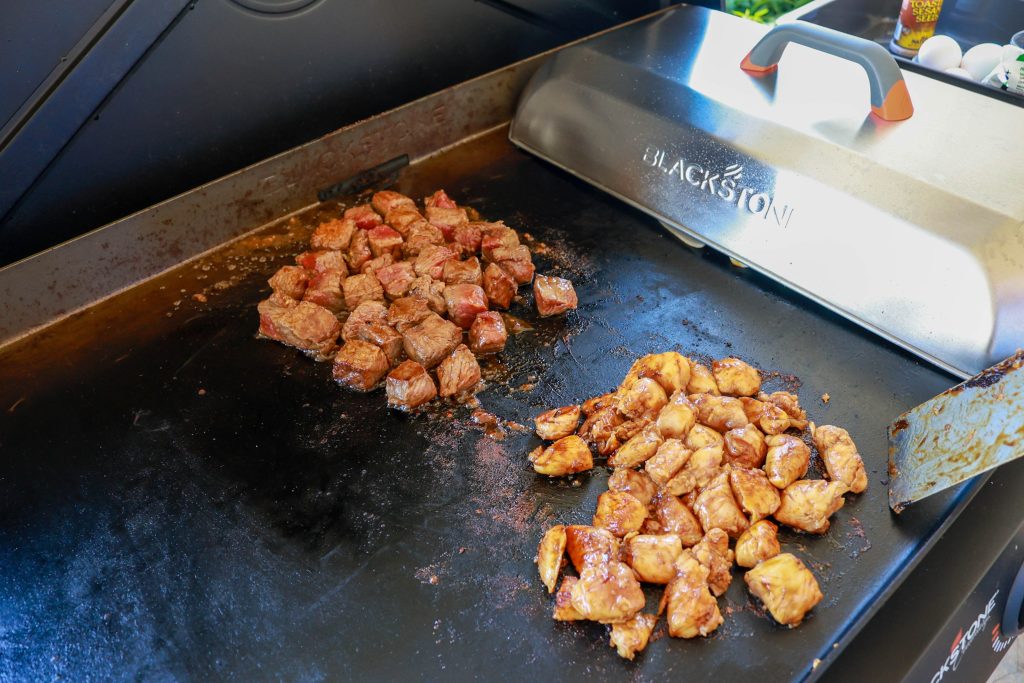
Step 2: Sear Proteins Separately:
Cook chicken and steak in smaller batches over higher heat.
This improves browning and prevents steaming.
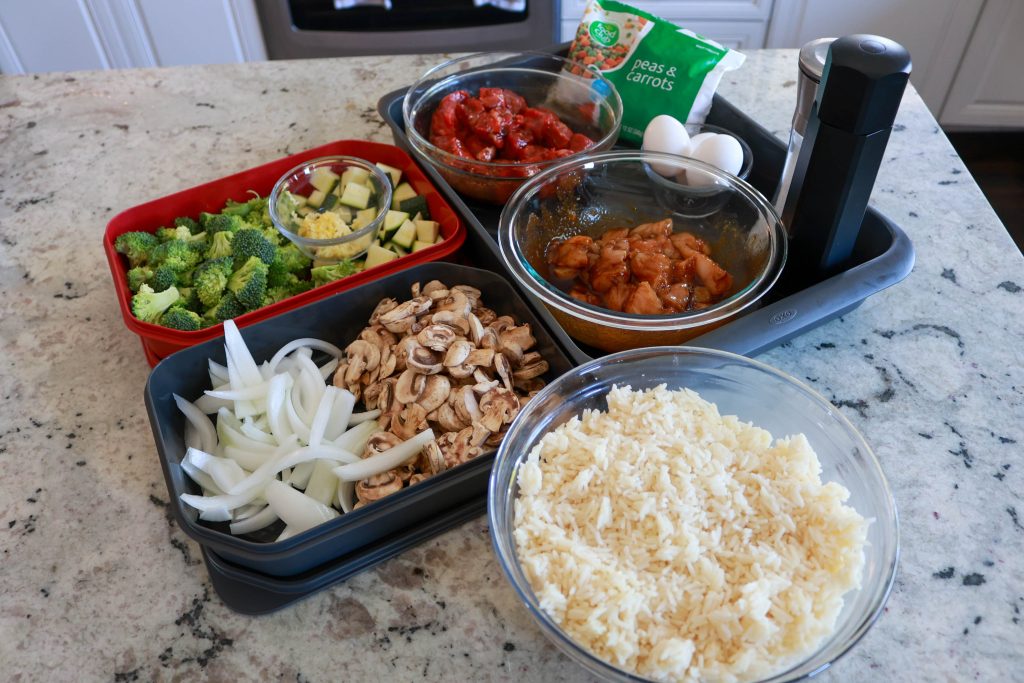
Step 3: Add Vegetables Last:
Quick-cooking vegetables stay crisper and more flavorful when cooked separately.
Step 4: Finish with Sauce:
Add hibachi sauce near the end to prevent burning.
Why the Blackstone Version Works Better:
The larger cooking surface:
- evaporates moisture faster
- improves caramelization
- reduces crowding
- creates better searing
This is why hibachi-style meals often taste better on a Blackstone than in a skillet.
Can You Cook Full Meals on a Blackstone?
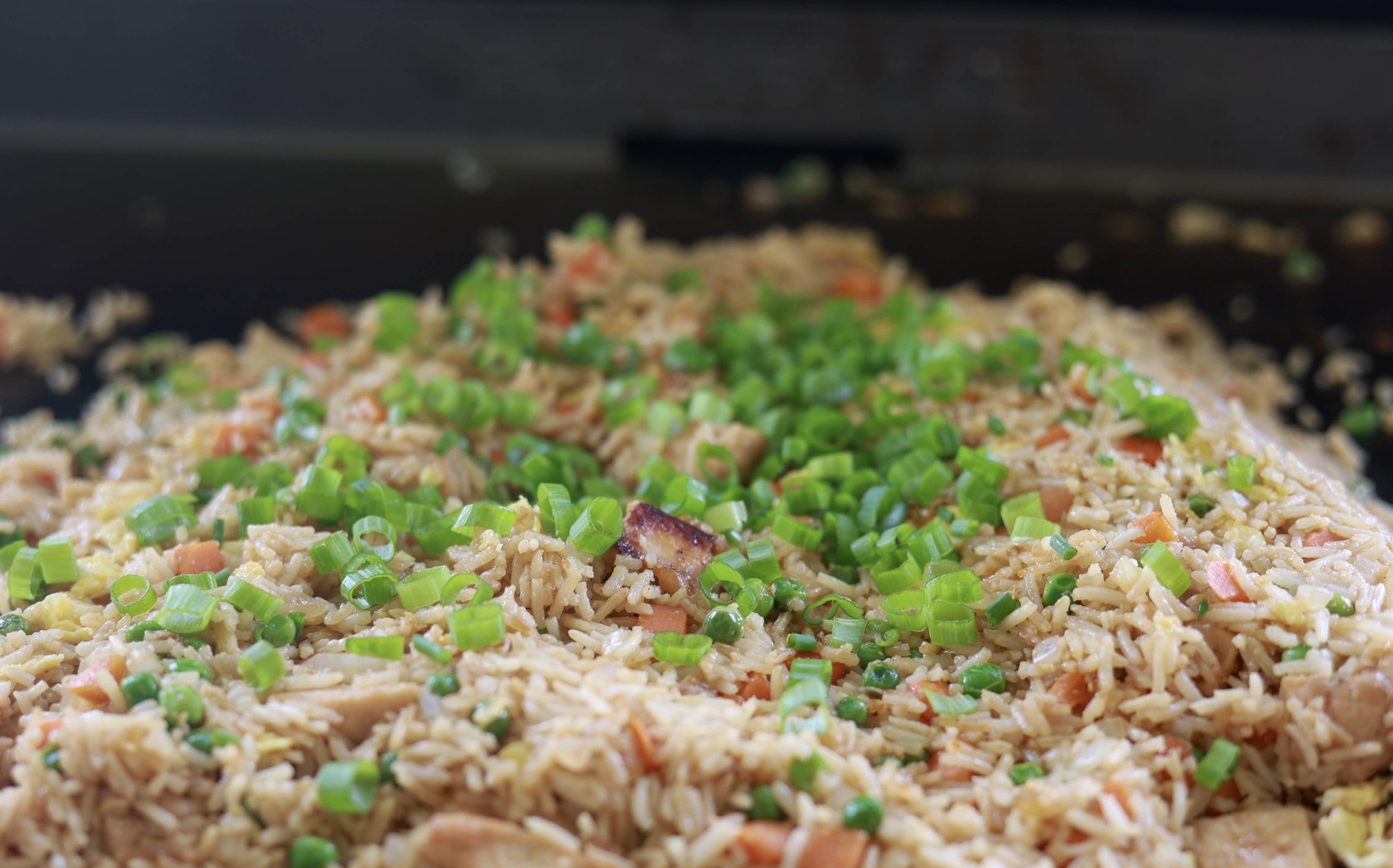
Absolutely.
Many experienced Blackstone cooks use the griddle as a complete outdoor cooking station.
You can cook:
- proteins
- vegetables
- potatoes
- sauces
- rice
- pasta
- buns
- tortillas
all at the same time.
This is where heat zones become extremely useful.
Can You Convert Recipes on Smaller Blackstone Griddles?
Yes. Smaller Blackstone models can still cook most converted recipes successfully.
The biggest adjustment is simply managing space more carefully.
On compact griddles:
- cook in smaller batches
- use fewer ingredients at once
- stage foods more intentionally
- hold finished foods warm while other ingredients cook
Crowding affects smaller griddles much faster because moisture has less room to evaporate.
This means steam management becomes even more important.
Small Griddle Tip:
Instead of trying to cook the entire meal at once:
- cook proteins first
- move them to a warming area or pan
- cook vegetables separately
- combine ingredients at the end
This usually produces better browning and texture anyway.
Even small Blackstone griddles can produce excellent results once you understand heat zones, moisture control, and staged cooking.
Can You Use Pots and Pans on a Blackstone?
Yes.
You can place:
- sauce pans
- cast iron pans
- aluminum pans
- small pots
directly on the griddle surface.
This works well for:
- simmering sauces
- boiling noodles
- cooking rice
- heating beans
- melting cheese sauce
- keeping foods warm
The Blackstone essentially becomes an outdoor stovetop.
Helpful Tip:
Place pans over medium or lower heat zones to avoid scorching sauces or boiling liquids too aggressively.
Cooking Frozen Foods on a Blackstone
Frozen foods release a large amount of moisture while thawing.
If that moisture is not managed properly, food steams instead of browning.
This is why frozen foods sometimes become:
- soggy
- pale
- rubbery
- unevenly cooked
For safe cooking temperatures, refer to the USDA Safe Minimum Temperature Chart.
How to Cook Frozen Fries on a Blackstone
Frozen fries work well on a Blackstone, but they cook differently than deep-fried restaurant fries.
Expect:
- crispy edges
- soft interiors
- diner-style texture
rather than ultra-crispy fast food fries.
Tips for Better Frozen Fries:
- preheat thoroughly
- use enough oil
- spread fries out
- avoid large piles
- cook over medium heat first
- crisp later over slightly higher heat
How to Cook Frozen Fish on a Blackstone
Frozen fish cooks best over medium heat.
Very high heat can burn the outside before the interior fully cooks.
Helpful Tips:
- oil the surface well
- pat away excess moisture while thawing
- avoid flipping too early
- allow fish to release naturally before turning
Fish becomes fragile while thawing, so gentle handling helps prevent tearing.
Quick Blackstone Conversion Cheat Sheet
| Original Cooking Method | Best Blackstone Adjustment |
|---|---|
| Skillet stir fry | Spread ingredients out more |
| Grill burgers | Reduce cooking time slightly |
| Oven quesadillas | Use lower heat + melting dome |
| Frozen fries | Use medium heat and more space |
| Marinated meats | Shake off excess marinade |
| Sauced proteins | Add sauce near end |
| Vegetables | Cook in stages to avoid steaming |
| Fried rice | Use medium heat and spread thin |
Common Blackstone Cooking Problems
Why Is My Food Steaming Instead of Searing?
Usually caused by:
- overcrowding
- excess moisture
- frozen ingredients
- wet marinades
- low griddle temperature
Why Is Food Sticking?
Usually caused by:
- not enough oil
- insufficient preheating
- poor seasoning
- flipping too early
Why Are My Vegetables Soggy?
Vegetables release water quickly on flat tops.
Cook them:
- in smaller batches
- over medium-high heat
- with enough space for evaporation
Frequently Asked Questions
Can you cook regular recipes on a Blackstone?
Yes. Many skillet, grill, and even oven recipes adapt very well to a Blackstone once heat and moisture are managed correctly.
Can you use pots and pans on a Blackstone?
Yes. Small pots and pans work well for sauces, pasta, rice, beans, and warming foods.
Can you cook frozen fries on a Blackstone?
Yes. Frozen fries cook well when spread into thin layers with enough oil and proper heat management.
Can you cook fish directly from frozen?
Yes, although medium heat usually works better than high heat to prevent burning before the interior cooks fully.
What oil works best on a Blackstone?
High smoke point oils like avocado oil, canola oil, and grapeseed oil work best.
Can you cook an entire meal on a Blackstone?
Absolutely. Many cooks prepare proteins, vegetables, sauces, rice, and side dishes simultaneously using separate heat zones.
Final Thoughts
Learning how to adapt recipes for a Blackstone is mostly about understanding:
- moisture control
- heat management
- oil use
- staging ingredients
- cooking in zones
Once you understand those principles, the Blackstone becomes far more than a burger griddle.
It becomes one of the most flexible cooking tools you own — capable of turning countless skillet, grill, frozen food, and even oven recipes into fast, flavorful meals outdoors.
For more About cooking on a Blackstone, including all of our Blackstone recipes, visit our Blackstone Hub.