
How to Freeze Dry Beef Safely: Steak, Ground Beef, Roasts and Meals
As an Amazon Associate and member of other affiliate programs we earn a small commission from qualifying purchases through our affiliate link. For more information read our Entire Affiliate Disclosure.
Can you freeze dry beef? Absolutely.
Beef is actually one of the foods that makes a home freeze dryer especially useful. You can freeze dry cooked ground beef, shredded roast, steak pieces and stew meat. You can also cook an entire beef dinner, such as beef stew, freeze dry the finished meal and store it for later.
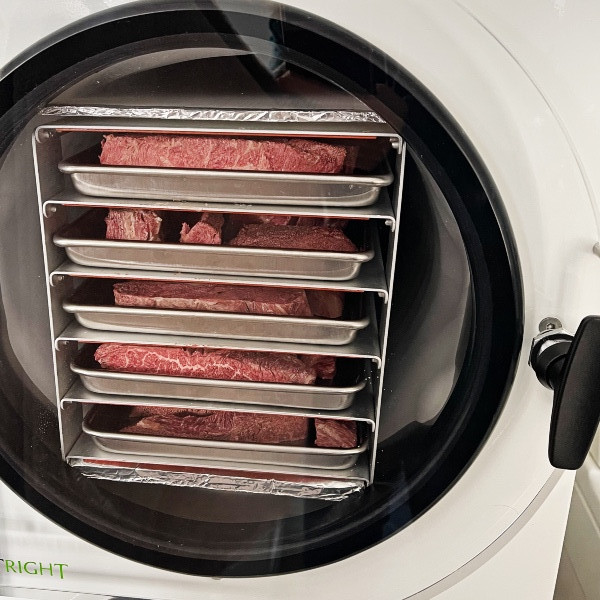
I use my Harvest Right Pro Medium freeze dryer for beef, but these basic principles apply to home freeze dryers in general.
The important thing to understand is that different forms of beef should not all be handled the same way.
Before you put beef into a freeze dryer, think about what you have and how you intend to use it later.
Are you preserving cooked hamburger that will eventually go straight into a skillet dinner? Are you making shredded beef for sandwiches? Are you freeze drying lean steak pieces that you want to rehydrate, marinate and cook later? Or are you making a complete beef stew that needs to reconstitute easily at a campsite?
Those choices should determine how you prepare the beef before freeze drying.
If you are new to the food-safety side of home freeze drying, read our Freeze Drying Food Safety first. Freeze drying removes water from food, but it does not sterilize food or reliably kill the microorganisms that may already be present.
Why Freeze Dry Beef?
For a home food preserver, beef is one of the most useful foods to put through a freeze dryer.
I can cook a large roast and preserve the shredded beef, cook ground beef for future meals, preserve lean steak pieces, or cook an entire beef stew and freeze dry the finished dinner.
For me, freeze drying a cooked meal such as beef stew is considerably simpler than pressure canning the same type of meal.
That doesn’t mean freeze drying replaces canning. Pressure canning remains an excellent established preservation method. A home freeze dryer is also a substantial upfront investment.
But once you own the equipment, freeze drying gives you another very flexible way to preserve cooked meals and meat.
It also gives you an alternative to filling the freezer with cooked beef. Once food is properly freeze dried, packaged and stored, it does not need continuous electricity to remain in storage.
This is particularly useful for camping meals, emergency food supplies, batch cooking and simply keeping convenient homemade food in the pantry.
Read Exploring Freeze Drying vs. Dehydrating for a broader look at where freeze drying fits among other home food-preservation methods.
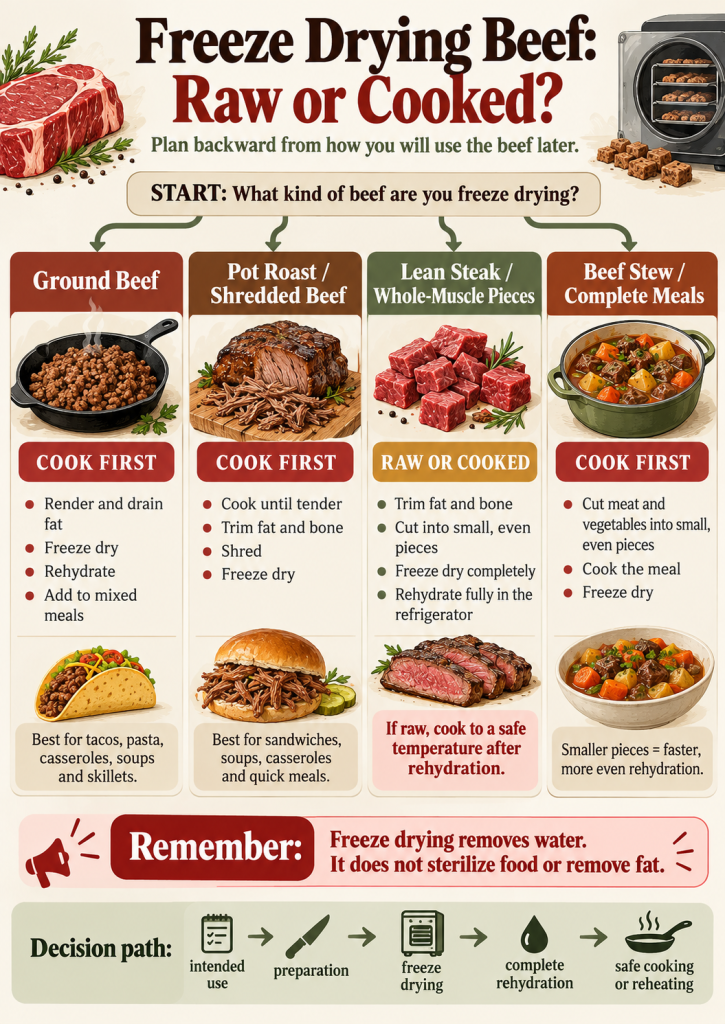
Should You Freeze Dry Beef Raw or Cooked?
This is where we need to get more specific.
Some beef is much more practical to freeze dry cooked. Other beef can be useful freeze dried raw when you understand that the meat is still raw and must eventually receive its cooking step.
Current Extension guidance is not completely uniform on home freeze drying raw meat.
The University of Minnesota Extension home freeze-drying guidance states that meat can be freeze dried either raw or cooked and that meats intended to be cooked should be cooked to their safe minimum internal temperature after rehydration.
Penn State Extension freeze-drying guidance also states that raw and cooked meats can be freeze dried, but raw products must be clearly labeled and safely handled.
Utah State University home freeze-drying guidance takes a more conservative position and recommends cooking meat before freeze drying. Although it does state raw meat must be safely cooked either before or after freeze drying.
Whichever approach you choose, all of these sources agree on the most important point:
Freeze drying does not provide a reliable microbial kill step.
Raw beef that goes into the freeze dryer is still raw beef when it comes out. Safe handling is paramount with beef, either raw or cooked when preserving it with any method.
For experienced home preservers, the biggest take away I can give you with freeze drying raw meats and eggs is LABEL CORRECTLY. Freeze dried meats are deceptive. Once freeze dried it can be difficult to tell if they are cooked.
For my own kitchen, I make the decision according to the form of the meat and how I plan to use it.
| Beef | How I Prefer to Freeze Dry It | Why |
|---|---|---|
| Lean steak or whole-muscle beef | Raw or cooked, cut into uniform pieces | Raw pieces can later be rehydrated, marinated and cooked like fresh beef |
| Ground beef | Cooked | Cooking provides the kill step, renders fat and makes the beef easy to add to meals |
| Pot roast | Cooked | Cooking renders fat and produces tender meat that is easy to shred |
| Shredded beef | Cooked | Ready for sandwiches, soups, casseroles and skillet meals |
| Stew beef | Usually cooked as part of the stew | Makes the eventual meal simple to reconstitute and heat |
| Complete beef stew | Fully cooked | Produces a convenient shelf-stable meal |
| Heavily marbled beef | Preferably cooked | Cooking allows excess fat to be rendered and removed |
That is the principle I suggest home cooks use throughout this article:
Prepare the beef for the way you intend to use it after storage.
Food Safety When Freeze Drying Beef
Start with wholesome beef that has been properly refrigerated and safely handled.
According to the USDA Beef From Farm to Table guidance, fresh beef should be kept at 40°F or colder. Raw beef also needs to be kept separate from ready-to-eat foods so raw juices do not cross-contaminate other ingredients.
Wash your hands before and after handling raw meat, and clean and sanitize knives, cutting boards, trays and other surfaces that contact it.
The same safe handling practices you normally use with raw beef still apply when the meat is headed for the freeze dryer.
And remember:
Freeze drying does not fix unsafe food.
If meat has been improperly stored or handled before freeze drying, the freeze dryer should not be expected to make it safe.
How Fat Affects Freeze-Dried Beef
Beef fat deserves special attention.
A freeze dryer removes water. It does not remove fat.
That means very fatty or heavily marbled beef is less suitable for long-term freeze-dried storage than lean meat. Fat is also susceptible to oxidation and rancidity during storage.
Our grass-fed local beef is naturally fairly lean, which makes many of our cuts good candidates for freeze drying.
With a fatty roast, I prefer to cook it first so I can render away much of the fat. I also remove visible fat before freeze drying whenever practical.
With steak pieces, trim off excess external fat.
You do not have to make every piece completely fat-free, but the leaner the finished product, the better suited it is to this preservation method.
For more information about choosing foods for the freeze dryer, read What Is Good to Freeze Dry?.
How I Freeze Dry Raw Steak
Raw steak is the main type of beef I personally choose to freeze dry raw.
I do not normally put an entire thick steak into the freeze dryer.
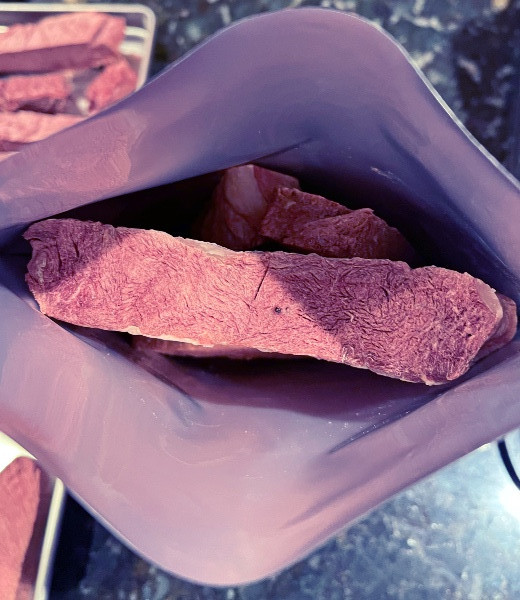
Instead, I remove the bone and excess external fat and cut the steak into smaller, relatively uniform pieces. Keeping the pieces reasonably thin makes it easier to dry the meat completely and also makes it much easier to rehydrate and cook later.
Uniform size matters.
If one piece is considerably thicker than everything around it, that piece may still contain moisture when thinner pieces are completely dry.
Current Utah State guidance recommends small, uniform pieces and gives about 3/4 inch as a useful maximum thickness for meat pieces. Whatever size you use, the important thing is that the centers dry completely.
Lay the pieces in a single layer on your freeze dryer trays without piling them together.
I also like to pre-freeze my trays. This can reduce the work the machine has to do during the initial freezing portion of the cycle.
Follow the operating instructions for your particular freeze dryer rather than relying on a fixed number of hours. Load size, meat thickness, fat content, room conditions and the machine itself can all change drying time.
Check Beef Carefully for Dryness
Do not assume the beef is ready for storage merely because the machine says the cycle is finished.
Check it.
Cut or break open some of the thickest pieces, including samples from different trays.
The inside should be completely dry, with no cold, damp, dark or soft center.
The University of Minnesota Extension freeze-drying guidance recommends checking food from multiple trays and cutting larger pieces open to make sure they are dry inside.
If you are uncertain, give the batch additional dry time.
This is particularly important with meat because dense pieces can appear dry on the outside while retaining moisture in the center.
Label Raw Freeze-Dried Beef Clearly
If you freeze dry beef raw, label the package so there can be no confusion later.
I recommend wording such as:
RAW BEEF — MUST BE COOKED
Then add the cut, date and any other useful information.
Do not rely on remembering six months or several years later whether a particular package contained raw or cooked meat.
And never taste a raw freeze-dried beef piece to decide whether it is dry. It is still raw beef.
How to Freeze Dry Ground Beef
I cook hamburger before I freeze dry it.
Technically, some Extension guidance allows raw meat to be freeze dried and cooked later, but ground beef presents another practical problem.
Grinding can distribute bacteria that were originally on the meat’s surface throughout the product. The USDA Ground Beef and Food Safety guidance explains why ground beef therefore requires thorough cooking to 160°F.
Cooking first also lets me render and drain away excess fat.
Just as important, I usually use freeze-dried hamburger as an ingredient.
I may put it into spaghetti sauce, taco filling, casseroles, soup or skillet dinners. In a mixed-ingredient dish, it would be awkward to verify later that every little piece of previously raw hamburger had reached the required temperature.
Cooking it before freeze drying eliminates that problem.

Plain or Seasoned Ground Beef
You can cook ground beef plain so it remains versatile, or season different batches for the meals you commonly make.
For example, I can add Italian seasonings, garlic and onions for beef that will eventually go into pasta sauces or casseroles.
Another batch can become taco meat or another seasoned filling.
Once cooked, drain excess fat well and spread the beef evenly over the trays.
Pre-freeze if desired, then run the freeze dryer according to your machine manufacturer’s instructions.
Freeze Drying Pot Roast and Shredded Beef
I also cook roasts before freeze drying them.
For fatty roasts such as pot roast, cooking first allows the fat to render so I can separate the lean meat from the bones and remaining fat.
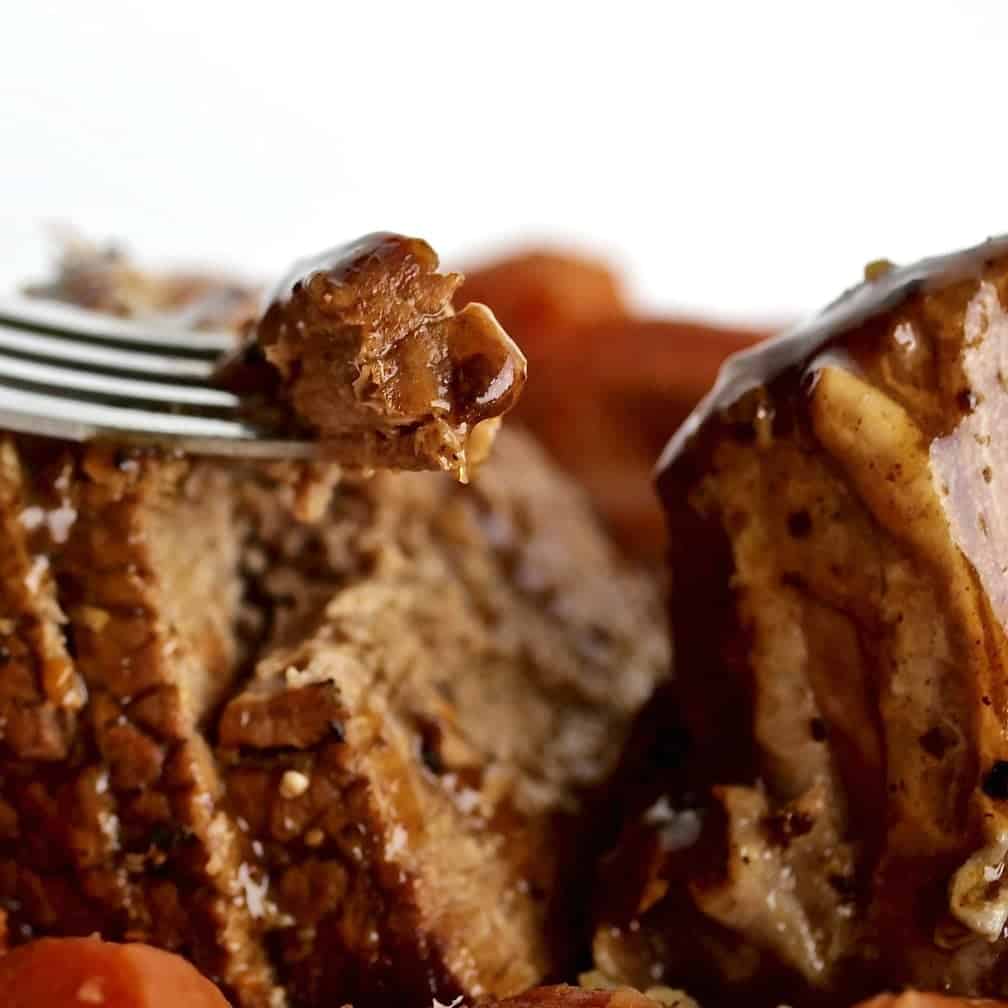
I often cook roasts until they are tender enough to shred, or slice thin.
Shredded freeze-dried beef is extremely useful. It can become sandwich filling, sliders, soup, casseroles or the meat base for skillet dinners.
I can also cook onions, peppers and seasonings with the beef before freeze drying it if I already know how I want to use it.
For leaner roasts, sliced cooked beef is another option.
Whatever form you choose, keep the pieces relatively uniform so the meat dries evenly.
What About T-Bone and Other Steaks?
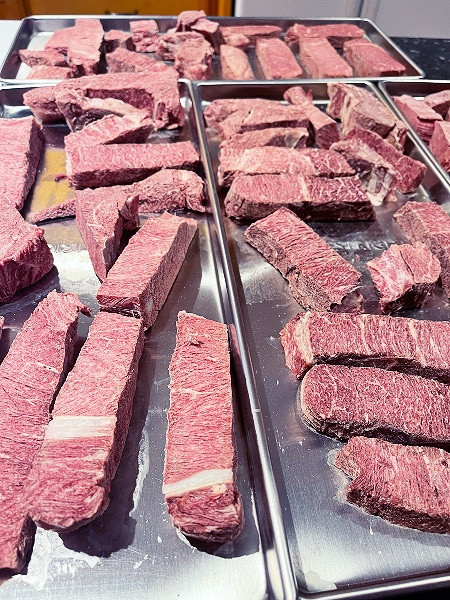
I have freeze dried T-bone steaks, but I remove the bone and cut the meat into pieces before putting it on the trays.
And this is worth saying to steak lovers:
Freeze drying will not improve an expensive steak.
If you have a beautifully marbled steak that you love fresh from the grill, that may be the best way to eat it.
Freeze drying is especially useful for leaner, tough cuts that you want to preserve for later meals. Those steak pieces will cook well in your instant pot after rehydrating. I have freeze dried T bone steaks with good results in thin pieces like pictured above. They are great cooked on the stove top in a marinade after rehydration.
Once rehydrated, the meat can still have very good flavor and texture, but don’t expect freeze drying to turn a tougher cut into a premium fresh steak.
Freeze Drying Beef Stew and Complete Beef Meals
This is one of my favorite advantages of owning a freeze dryer.
You can cook an entire beef dinner and preserve the finished meal.
I have cooked homemade beef stew from scratch and freeze dried it. Rather than preserving separate ingredients, I end up with a lightweight meal that can later be reconstituted with water.
This can be particularly useful for camping, hiking and emergency meals.
Read Creating Homemade Freeze Dried MRE for more ideas on building complete freeze-dried meals.
Cut Beef Stew Ingredients for Rehydration, Not Just Cooking
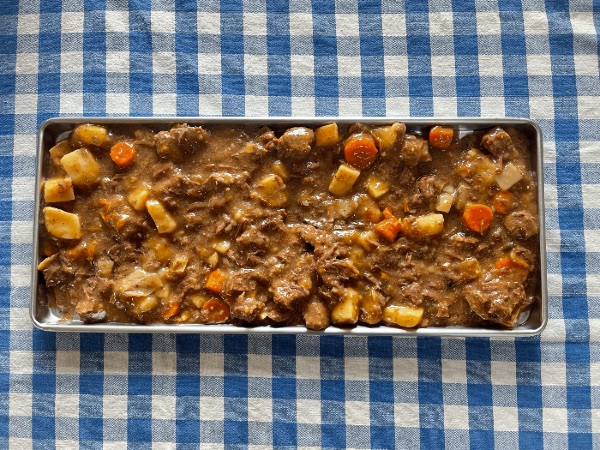
I learned something important from my first freeze-dried beef stew.
The stew contained fairly large pieces of beef. They freeze dried successfully, but those larger chunks take much longer to rehydrate completely.
That matters if the whole purpose of the meal is convenience.
If I want to take a package of beef stew to a trailhead, add water and cook it over a campfire, I don’t want one large piece of beef to still have a hard, dry center when the vegetables and broth are ready.
The next time I make beef stew specifically for freeze drying, I will cut the beef into smaller, more evenly sized pieces. I will also pay attention to the size of the vegetables.
The goal is for all the components of the meal to rehydrate at roughly the same rate.
If I want a trail meal that can be completely reconstituted in roughly 30 minutes, I need to design the original meal around that goal.
Test your own meal at home before depending on a specific rehydration time outdoors. Piece size, water temperature, elevation and other conditions can change how quickly a meal reconstitutes.
This is an important lesson with homemade freeze-dried meals:
Think about rehydration when you prepare the original food.
Rehydrating Freeze-Dried Beef
Whether the beef was freeze dried raw or cooked, substantial pieces need enough time to absorb moisture completely.
The outside can soften while the inside remains surprisingly hard and dry.
I know this from experience. Cooked freeze-dried beef that has not been given enough time to fully rehydrate can have a hard dry center, and it is not pleasant to eat.
For steak pieces, roast slices and beef chunks, I prefer to rehydrate the meat in the refrigerator before using it.
Place the beef in a covered container with water, beef broth or another suitable liquid and allow enough time for moisture to penetrate all the way into the centers.
Thickness matters much more than appearance.
Thin pieces can rehydrate relatively quickly. Larger steak pieces or chunks may take many hours or overnight.
For raw steak, I often use the rehydration period to marinate the beef at the same time.
The USDA Beef From Farm to Table guidance recommends marinating beef in the refrigerator. Never marinate raw beef on the counter.
Do Not Expect Large Dry Beef Chunks to Rehydrate in a Short-Cooking Meal
This deserves emphasis.
It is not practical to put large, completely dry freeze-dried beef pieces into a stew or skillet shortly before serving and assume they will completely rehydrate.
The outside may soften while the center remains dry.
For larger pieces:
- Rehydrate the beef in the refrigerator.
- Give the center enough time to absorb moisture.
- Then use the beef in your recipe.
For already cooked meat, this primarily improves texture and eating quality.
For raw beef, it also prepares the meat for the cooking step that must follow.
Cooking Raw Freeze-Dried Beef After Rehydration
Raw freeze-dried beef is still raw beef.
Once it has rehydrated, handle and cook it exactly as you would fresh raw meat.
According to the USDA Safe Minimum Internal Temperature Chart, whole beef steaks, chops and roasts should reach at least 145°F followed by a three-minute rest.
Ground beef should reach 160°F.
Use a food thermometer rather than relying on color.
For small steak pieces, make sure the thickest pieces are thoroughly cooked. If pieces are too small to check easily with a thermometer, that is another reason to cook them conservatively and thoroughly rather than trying to achieve a barely-done center.
Can Raw Freeze-Dried Beef Go Into an Instant Pot or Pressure Cooker?
Yes, rehydrated raw beef pieces can be cooked in an Instant Pot or another pressure cooker as part of a stew or similar recipe.
The pressure cooker is the cooking method. It does not change the basic food-safety rule: raw beef still needs to be fully cooked.
For quality, I recommend rehydrating larger freeze-dried pieces in the refrigerator before putting them into the pressure cooker.
A long pressure-cooked stew will normally cook beef far beyond the minimum temperature required for whole-muscle beef because the meat needs enough cooking to become tender.
But I would not rely on pressure alone as the safety rule. Follow a properly developed recipe, cook the beef completely, and use safe food-handling practices.
Rehydrating Cooked Beef and Complete Meals
Cooked beef still needs adequate rehydration.
A freeze-dried piece of cooked roast can have exactly the same dry-center problem as raw freeze-dried steak.
For large cooked meat pieces, give them adequate time in liquid before eating.
Cooked ground beef and finely shredded beef are usually easier because the small pieces allow water to penetrate relatively quickly.
Complete meals such as beef stew also need enough water and time for the densest ingredient to reconstitute.
If you are reheating a cooked beef meal or leftovers, the USDA Safe Minimum Internal Temperature Chart gives 165°F as the reheating temperature for leftovers and casseroles.
How to Store Freeze-Dried Beef
Before packaging, make absolutely sure the beef is dry. And make sure ALL your tools, hands and work space are also completely dry.
Then package it promptly. Freeze-dried foods readily absorb moisture from the surrounding air.
I commonly use Mylar bags with oxygen absorbers for foods intended for longer storage.
Read Tips for Freeze Dried Food Storage for our complete storage system and Oxygen Absorbers for Freeze-Dried Food for more information about using oxygen absorbers correctly.
Remember that an oxygen absorber cannot compensate for food that was not completely dried.
Label every package with:
- The type of beef
- RAW or COOKED
- Any seasonings or intended use
- The packaging date
- The amount or weight if useful
- rehydration instructions as needed
Store the packages in a cool, dry, dark location.
I also use a first-in, first-out inventory system so older food is used before newer batches.
Be cautious about assuming every package of home freeze-dried beef will have the same shelf life. Fat content, complete drying, packaging, oxygen exposure and storage temperature all affect how well the food keeps.
Freeze Dry Beef for the Way You Cook

The biggest lesson I have learned when planning freeze drying beef is that preservation doesn’t end when the machine finishes its cycle:
- You need to think about the entire life of that food.
- How fatty is the meat?
- Will you want it raw or already cooked when you open the package?
- How large should the pieces be so they dry completely?
- How will you rehydrate them?
- Will they be eaten as steak, added to a skillet dinner or simmered in a stew?
- Does the eventual meal contain a reliable cooking step?
Those decisions determine whether a particular piece of beef should be freeze dried raw or cooked and how it should be prepared.
For my kitchen, that means I normally cook ground beef, shredded beef, pot roast and complete beef meals before freeze drying them. Lean steak pieces are the beef I am most likely to freeze dry raw because I can rehydrate them slowly in the refrigerator, often in a marinade, and then cook them deliberately as raw beef.
Freeze drying gives home cooks a remarkable amount of flexibility. Once you understand the food-safety requirements and prepare the beef for its eventual use, you can build a pantry containing everything from simple cooked hamburger to complete homemade beef dinners.
For more help deciding what belongs in your freeze dryer, see What Is Good to Freeze Dry?, and for the safety principles behind this process read Freeze Drying Food Safety.
More Reading On Freeze Drying:
- Freeze Drying Food Safety: How to Preserve Food Safely at Home
- Freeze Dried Food Storage Tips for Short and Long Term Storage
- How Does Freeze Drying Work?
Follow Us:
We enjoy meeting you on our social networks. Follow us on Facebook, Pinterest, Instagram . Tag us with your pictures of our recipes and comment on how it went for you. We would love to see what you do with them.
We often like, comment and share your posts of our recipes on our daily Instagram stories.
Ask questions and rate the recipe in the comments section below. Please share what you did with this recipe. We are always looking for more and better ways to make homemade food. Other cooks love your ideas!
Recent Posts:
