
Properly Feeding Sourdough Starter
As an Amazon Associate and member of other affiliate programs we earn a small commission from qualifying purchases through our affiliate link. For more information read our Entire Affiliate Disclosure.
This guide explains how to feed sourdough starter for both daily maintenance and bread baking. If you need help creating or reviving a starter, see the related guides below.
Feeding sourdough starter is a simple process. Mix equal or larger weights of flour and water into a small portion of your starter and allow it to ferment until bubbly and active. The exact feeding ratio you use affects how quickly the starter ferments and how strong it becomes for baking.
Sourdough starter is a living culture of wild yeast and beneficial bacteria. Regular feeding keeps that culture balanced and active so it can raise bread properly.
But not every feeding has the same purpose.
Sometimes you feed a starter simply to maintain it between bakes. Other times you feed it to build strength before mixing dough. Understanding when and why to use different feeding ratios gives you much more control over your sourdough baking.
In this guide you’ll learn:
- what feeding a starter actually does
- common sourdough starter feeding ratios
- when to use different ratios
- how to feed starter for maintenance
- Your Starter vs Your Levain (Why They’re Not the Same)
- how to feed starter before baking
- how I maintain my starter in the refrigerator
This guide assumes you already have a mature sourdough starter. If you’re just beginning your sourdough journey, start with our step-by-step guide on how to make a sourdough starter from scratch.
What Feeding a Sourdough Starter Actually Does
A sourdough starter is a living culture of wild yeast and beneficial bacteria. Over time, those microorganisms consume the available starches and sugars in the flour. When the food runs low, the starter becomes hungry, more acidic, and less reliable for baking.
Feeding a starter does three important things:
- It gives the yeast and bacteria fresh food.
- It restores balance between acidity and activity.
- It rebuilds the starter’s strength so it can ferment dough well.
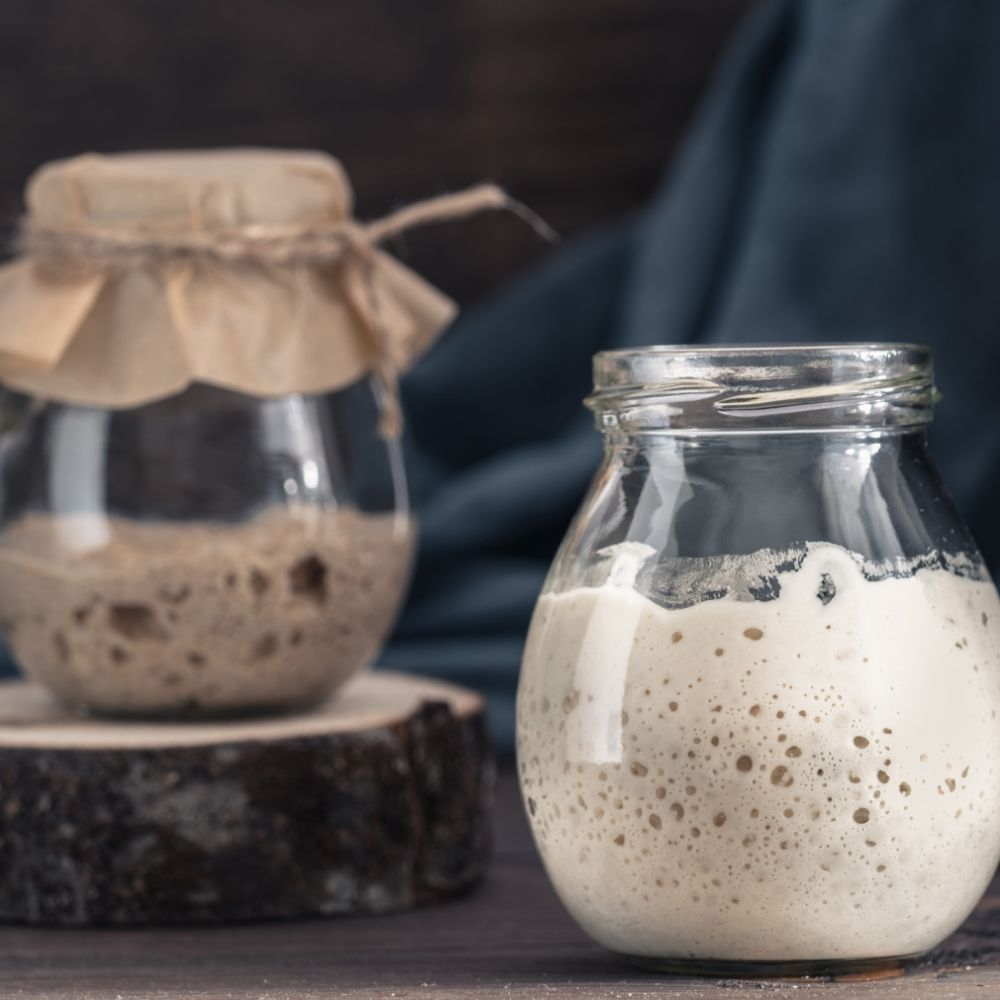
A properly fed starter should become bubbly, rise predictably, and smell pleasantly tangy or lightly yeasty.
When a starter is underfed, it often becomes sharply acidic, develops hooch, or loses strength. If your starter has been neglected for a long time, use our How to Revive Sourdough Starter guide. This post is focused on regular feeding and maintenance
Why Feeding Ratios Matter
Sourdough starter is usually fed by weight, not volume.
That matters because sourdough formulas depend on hydration and balance. Measuring by cups can throw off the flour-to-water ratio and make the starter too thick, too thin, or inconsistent from one feeding to the next.
A feeding ratio is written like this:
starter : flour : water
For example, a 1:1:1 feeding means:
- 1 part starter
- 1 part flour
- 1 part water
So if you start with 50 grams of starter, you would feed it:
- 50 grams flour
- 50 grams water
Different feeding ratios change how quickly the starter ferments, how acidic it becomes, and how long it stays at peak activity.
In general:
- smaller feedings ferment faster
- larger feedings ferment more slowly
- more fresh flour and water gives the culture more food and a longer activity window
That is why different bakers use different ratios depending on their schedule and goals. Feeding ratios, fermentation time, and temperature all influence the balance of yeast and bacteria in your starter.
Those same factors also shape the flavor of your bread. For a deeper look at how fermentation choices change sourness and aroma, read our guide on creating a sourdough flavor profile.
Why Measuring Starter Feedings by Weight Matters
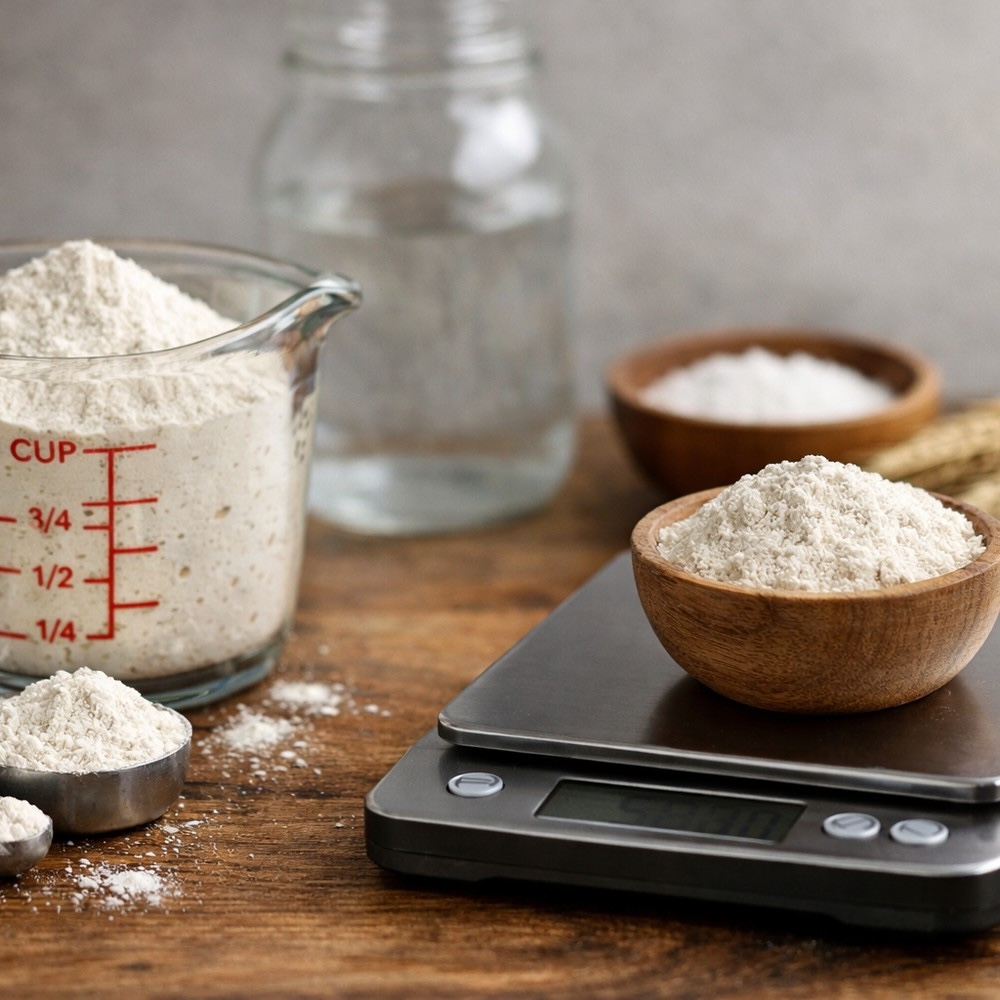
Sourdough starter feedings are most reliable when measured by weight rather than by volume.
Flour and water have very different densities. A cup of flour and a cup of water do not weigh the same, and flour can vary depending on how tightly it is packed in the measuring cup. Because of this, volume measurements can throw off the balance of your starter.
Using a digital kitchen scale allows you to keep the feeding ratio accurate and consistent.
For example, a 1:1:1 feeding by weight means:
- 50 grams starter
- 50 grams flour
- 50 grams water
Keeping these ratios consistent helps maintain predictable starter behavior and prevents hydration changes that can affect the performance of your bread dough.
A small digital scale is one of the most useful tools in sourdough baking because it keeps both your starter and your bread recipes consistent.
Tip: If you are used to baking with cups, you can still maintain your starter successfully. But when preparing starter for bread recipes, weighing the ingredients will give you the most consistent results.
Common Sourdough Starter Feeding Ratios and When to Use Them
1:1:1 Feeding Ratio
This is the most familiar feeding ratio for home bakers.
Example:
- 50 grams starter
- 50 grams flour
- 50 grams water
This is a good general-purpose feeding for:
- regular maintenance
- preparing a starter for baking
- keeping a recently healthy starter active
A 1:1:1 feeding usually ferments fairly quickly, especially in a warm kitchen. It is often ready in about 4 to 8 hours, though timing varies with temperature, flour choice, and starter strength.
Best use: routine feedings when you plan to check the starter fairly soon.
Three ingredients are essential for a successful sourdough bread. A good high protein flour, an active well balanced starter, and salt.
1:2:2 Feeding Ratio
Example:
- 50 grams starter
- 100 grams flour
- 100 grams water
This gives the starter more fresh food and more time before it peaks.
A 1:2:2 feeding is useful when:
- your starter seems a little too acidic
- you want a steadier rise
- you are refreshing a starter that feels tired
- you want a longer fermentation window before baking
This ratio is a very practical choice for both maintenance and light recovery feedings.
Best use: a balanced refresh when you want more strength and a little more time.
1:3:3 Feeding Ratio
Example:
- 25 grams starter
- 75 grams flour
- 75 grams water
This larger feeding slows the fermentation more and gives the microorganisms a lot of fresh food.
Use this ratio when:
- your kitchen is warm
- you need the starter to last longer before peaking
- you want to build strength gradually
- you are timing a feeding overnight
A 1:3:3 feeding can be very helpful in summer or in warm kitchens where 1:1:1 peaks too quickly.
Best use: warm kitchens, overnight feeds, or stronger refreshment.
1:5:5 Feeding Ratio
Example:
- 20 grams starter
- 100 grams flour
- 100 grams water
This is a larger refreshment feeding. It gives the starter a long runway before peak activity.
Use this ratio when:
- you need a long, slow rise
- your starter peaks too fast
- you are trying to rebuild strength over a longer feeding cycle
- you want to prepare a strong pre-bake build in a warm environment
Not every home baker needs to use 1:5:5 often, but it is a useful tool to understand.
Best use: extended timing, warm kitchens, or larger refresh builds.
Best Feeding Ratio for Everyday Maintenance
For many home bakers, the best maintenance feeding is simply the one that matches your routine.
If you bake often and keep your starter at room temperature, a 1:1:1 or 1:2:2 feeding usually works well.
If you store your starter in the refrigerator and bake less often, you may still use those ratios — just on a less frequent schedule.
A maintenance feeding should keep the starter:
- healthy
- balanced
- easy to wake up for baking
- manageable in size
You do not need to keep a huge starter. In fact, keeping a smaller amount is often easier and creates less discard.
For example, a simple maintenance feed might be:
- 25 grams starter
- 50 grams flour
- 50 grams water
That gives you a healthy, manageable starter without unnecessary waste.
Your Starter vs Your Levain (Why They’re Not the Same)
Many sourdough recipes simply say “use active starter.” But to really control your bread, it helps to understand that your starter actually plays two different roles.
Your starter in the fridge is your seed starter (also called your mother starter). Its job is to stay alive and stable over time. Most home bakers keep this starter at 100% hydration and feed it on a regular schedule.
When you’re ready to bake, you don’t use that starter directly.
Instead, you take a small portion of your seed starter and feed it to create a levain—a fresh build of starter designed specifically for that bake.
👉 The seed starter is for maintenance
👉 The levain is for performance
By adjusting how you feed your levain—your ratio, timing, and flour—you can influence how your dough behaves before you even begin mixing.
Do You Need Multiple Starters?
No. Most bakers only need one well-maintained starter.
Instead of keeping several starters with different hydrations or feeding schedules, you can build exactly what you need from your seed starter each time you bake.
For example, from the same starter you can create:
- A balanced, predictable levain (1:3:3) for everyday baking
- A milder levain (1:4:4 or higher) for stronger dough and less acidity
- A more acidic levain (1:2:2, longer fermentation) for deeper sour flavor
This approach keeps your process simple while giving you much more control over fermentation, dough strength, and crumb structure.
Why This Matters:
How you build your levain affects:
- fermentation speed
- dough strength
- acidity levels
- crumb structure
Once you understand this, you can stop guessing and start adjusting your process with purpose.
How Starter Feeding Changes Your Dough
(If you are on Mobile- swipe left to see full chart)
| Goal | Feed Ratio | Resulting Starter | Effect on Dough |
|---|---|---|---|
| Balanced everyday baking | 1:3:3 | Active, mild, predictable | Good rise, balanced structure |
| Stronger dough / better shape | 1:4:4 – 1:5:5 | Milder, slower fermentation | Stronger gluten, easier handling |
| More sour flavor | 1:2:2 + longer time | More acidic | Softer dough, deeper flavor |
| Open crumb potential | 1:3:3 at peak | Active and airy | Better gas retention, lighter crumb |
| Whole grain baking | 1:3:3 or higher + some whole grain | More active but controlled | Helps offset bran weakening |
One starter. Build what your dough needs from it for every bake. This gives you, the baker, more control. So you can get the bread you want to make.
Best Feeding Ratio Before Baking Bread
When feeding a starter for bread baking, the goal is different.
You are not just keeping it alive. You are building an active culture strong enough to raise dough well.
A pre-bake feeding should give you a starter that:
- rises predictably
- becomes bubbly throughout
- smells balanced and pleasantly sour
- reaches peak activity when you are ready to mix dough
For many bakers, 1:1:1 or 1:2:2 is the most practical pre-bake feeding.
Which one is better depends on timing.
Use 1:1:1 when:
- your starter is already healthy and active
- you want a faster rise
- you plan to bake within several hours
Use 1:2:2 when:
- you want a little more time before the starter peaks
- you want to reduce harsh acidity
- your starter needs a fuller refresh before baking
Refer to the Chart at the top of this section for more useful feeding ratios.
If your starter has been sitting neglected in the fridge for a long time, do not rely on a single feeding and hope for the best. Give it a proper revival first, then return to normal feeding.
If you starter is really starving from neglect, you’ll want to revive it. Take a look at our post on Reviving an Old Starter. Don’t make bread from a weak starter.
What Flour Should You Use to Feed Sourdough Starter?
There are several flours that can be used in your starter recipe. You can even make gluten free starters with special flour.
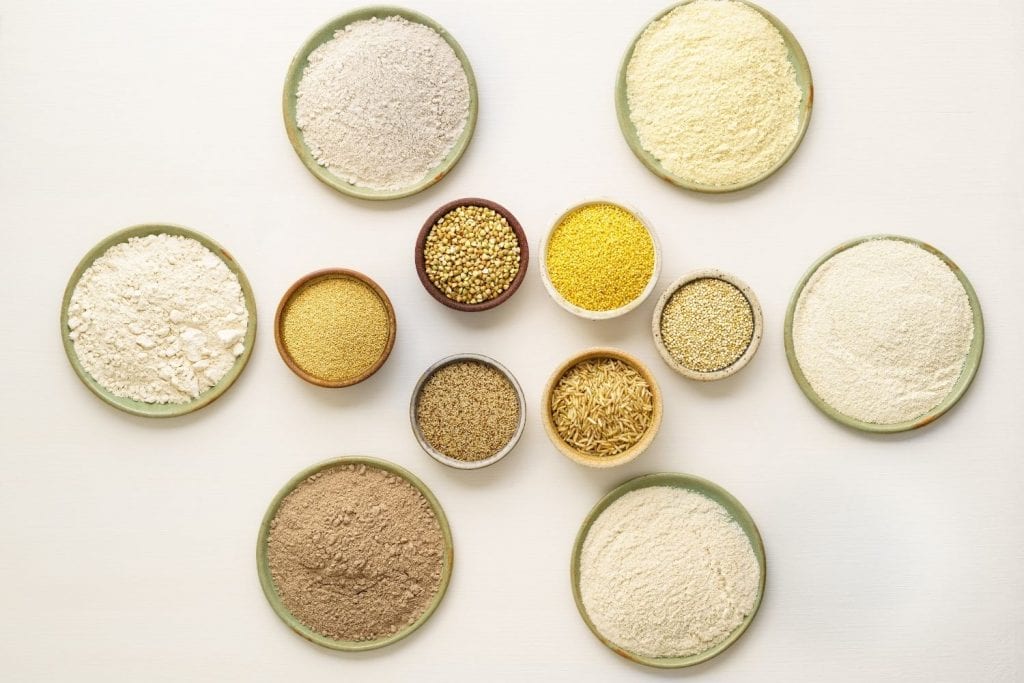
Most sourdough starters can be fed with several types of flour. Each flour provides different nutrients and can influence starter activity.
Common feeding flours include:
Bread Flour
A reliable choice with higher protein that supports strong fermentation and structure.
Unbleached All-Purpose Flour
Works well for routine feeding and maintenance. Many home bakers maintain their starter entirely with all-purpose flour.
Whole Wheat Flour
Rich in minerals and enzymes that help boost microbial activity. A small amount can help strengthen a sluggish starter.
Rye Flour
Extremely active due to high enzyme content. Even a small percentage of rye flour can help jump-start a tired starter.
Spelt or Einkorn
These ancient grains can feed a starter successfully, though they behave differently in bread recipes.
Many bakers use a blend of flours for feeding. For example, mixing a small amount of whole wheat or rye with white flour can help maintain a vigorous starter culture.
The best flour for feeding sourdough starter is usually the flour you bake with most often, since your starter gradually adapts to that environment.
When to Feed Starter Before Baking
Most sourdough recipes work best when the starter is near peak activity when it is mixed into the dough.
For many starters, this happens 4–8 hours after feeding, depending on:
- kitchen temperature
- feeding ratio
- flour choice
- starter strength
A simple baking schedule looks like this:
Morning Bake Schedule
- Feed the starter the night before (1:1:1 or 1:2:2).
- Leave it at room temperature overnight.
- In the morning, the starter should be bubbly and near its peak.
- Mix your dough.
Same-Day Bake Schedule
- Feed the starter in the morning.
- Allow it to rise at room temperature.
- Use it when it doubles and becomes bubbly.
The exact timing varies from kitchen to kitchen, so the most reliable indicator is how the starter behaves, not the clock.
A starter is ready to bake with when it:
- has doubled in size
- shows bubbles throughout
- smells pleasantly tangy
- looks slightly domed on top
If the starter has already risen and collapsed significantly, it may be past peak activity. In that case, feed it again and wait for the next rise.
How I Feed My Starter for Fridge Storage
If you bake only once in a while, storing starter in the refrigerator is one of the easiest ways to manage it.
My preferred fridge routine is simple:
- Remove the starter from the refrigerator.
- Discard down to the amount I want to keep. I use that discard in many sourdough discard recipes. I never throw it away.
- Feed it with fresh flour and water.
- Let it sit at room temperature briefly, just long enough to begin showing activity.
- Return it to the refrigerator for storage.
This method works well because the fresh feeding gets underway before the cold slows fermentation down.
You do not need to wait for the starter to fully double before refrigerating it for storage. In fact, if you leave it out too long first, it may peak and begin getting hungry again before it chills fully.
A short room-temperature rest is usually enough.
For many home bakers, feeding once a week is a practical refrigerator schedule. The only trouble is if you try to use the fridge for long term storage. A neglected starter takes a while to get into shape for baking and may not ever get there. There is a better way to long term store your starter.
If you plan to stop baking for an extended period, dry it. Dried starter can be stored for months or even years and revived later. See our guide on how to dry and revive sourdough starter for step-by-step instructions.
Should You Let Starter Sit Out Before Refrigerating?
Yes — usually for a little while.
After feeding, letting the starter rest at room temperature briefly helps the culture begin metabolizing its fresh food. This can make the starter easier to wake up later.
A short rest before refrigeration can help:
- start yeast activity
- strengthen the feeding response
- keep the culture more reliable between bakes
But this does not mean you need a full counter fermentation before chilling it.
A good middle ground is:
- feed the starter
- let it begin to show a little life
- refrigerate it before it peaks
If you refrigerate it immediately after feeding, it can still work. It may just wake more slowly later when you want to bake.

How Often Should You Feed Sourdough Starter?
That depends on where you store it.
- If you keep starter at room temperature: Feed it daily, or sometimes twice daily in a very warm kitchen.
- If you keep starter in the refrigerator: Feed it about once a week for maintenance.
If you bake straight from refrigerated starter routines, many bakers find they still get the best results by giving the starter at least one room-temperature feeding before mixing dough.
A healthy starter is usually easier to manage with regular small feedings than with long stretches of neglect followed by emergency rescue.
How Temperature Affects Starter Activity
Temperature has a strong influence on how quickly your sourdough starter ferments.
Wild yeast and beneficial bacteria become more active in warmer environments and slow down significantly in cooler conditions.
General guidelines:
(on Mobile Swipe Left to see full chart)
| Temperature | Starter Behavior |
|---|---|
| 75–80°F | Very active, faster rise |
| 70–75°F | Ideal fermentation range |
| Below 65°F | Slower activity |
| Refrigerator | Fermentation slows dramatically |
Because of this, a starter may double in just a few hours in a warm kitchen but take much longer in cooler conditions.
Temperature also affects how often a starter needs feeding. Starters kept at room temperature usually need daily feeding, while refrigerated starters can often go a week between feedings.
Understanding how temperature affects fermentation helps you predict when your starter will be ready to bake.
How to Tell When Starter Is Ready to Bake
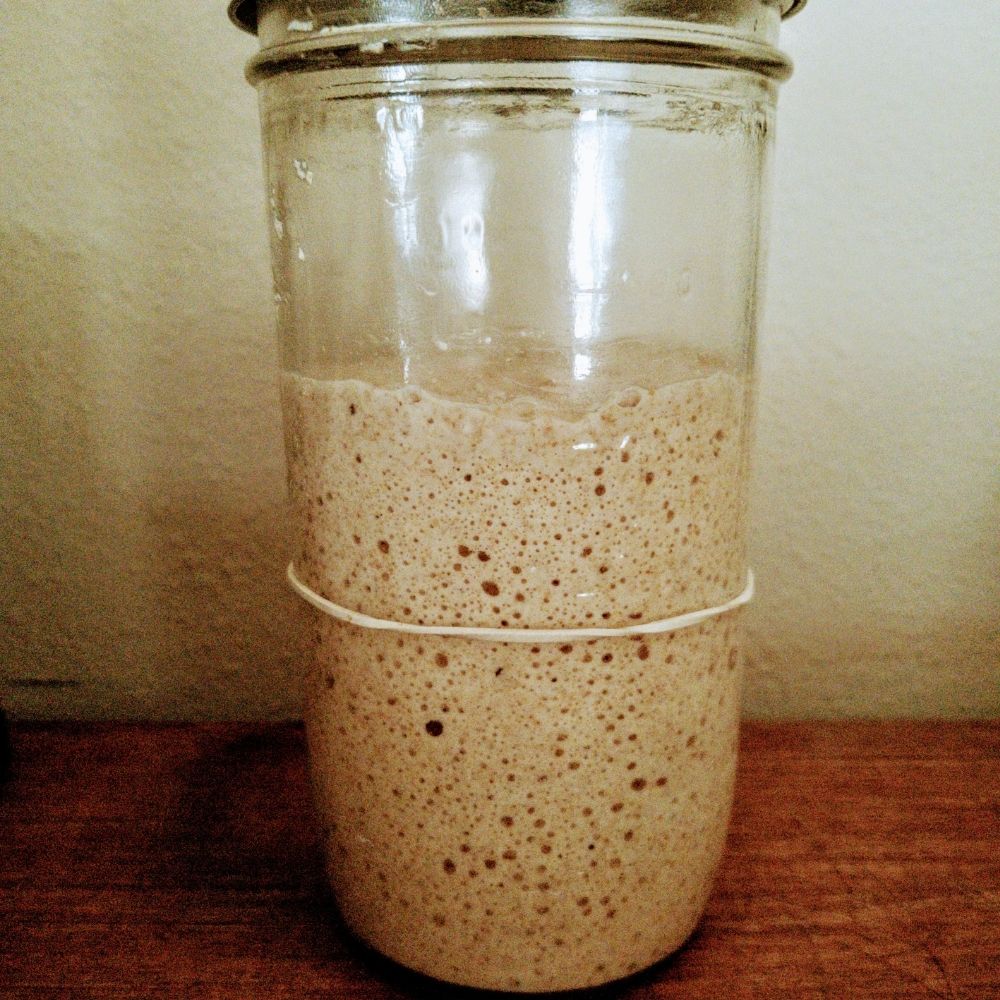
A starter is ready to bake when it is active, balanced, and close to peak fermentation.
Look for these signs:
- it has doubled or nearly doubled in size
- it is full of bubbles throughout
- the top looks slightly domed or just beginning to level
- it smells pleasantly tangy, mildly sour, or lightly yeasty
This matters more than the clock.
Some starters rise faster than others depending on flour, temperature, hydration, and overall strength.
Many bakers use the float test, but it is only a rough clue. A starter can be ready even if it does not float, especially if it is thick or has been disturbed. The most reliable signs are visible rise, bubbles, and consistent activity after feeding.
If the starter has already risen and fallen significantly, it may be past peak and less effective for bread. In that case, feed it again and wait for the next rise.
Refreshing a Weak Starter with Larger Feedings
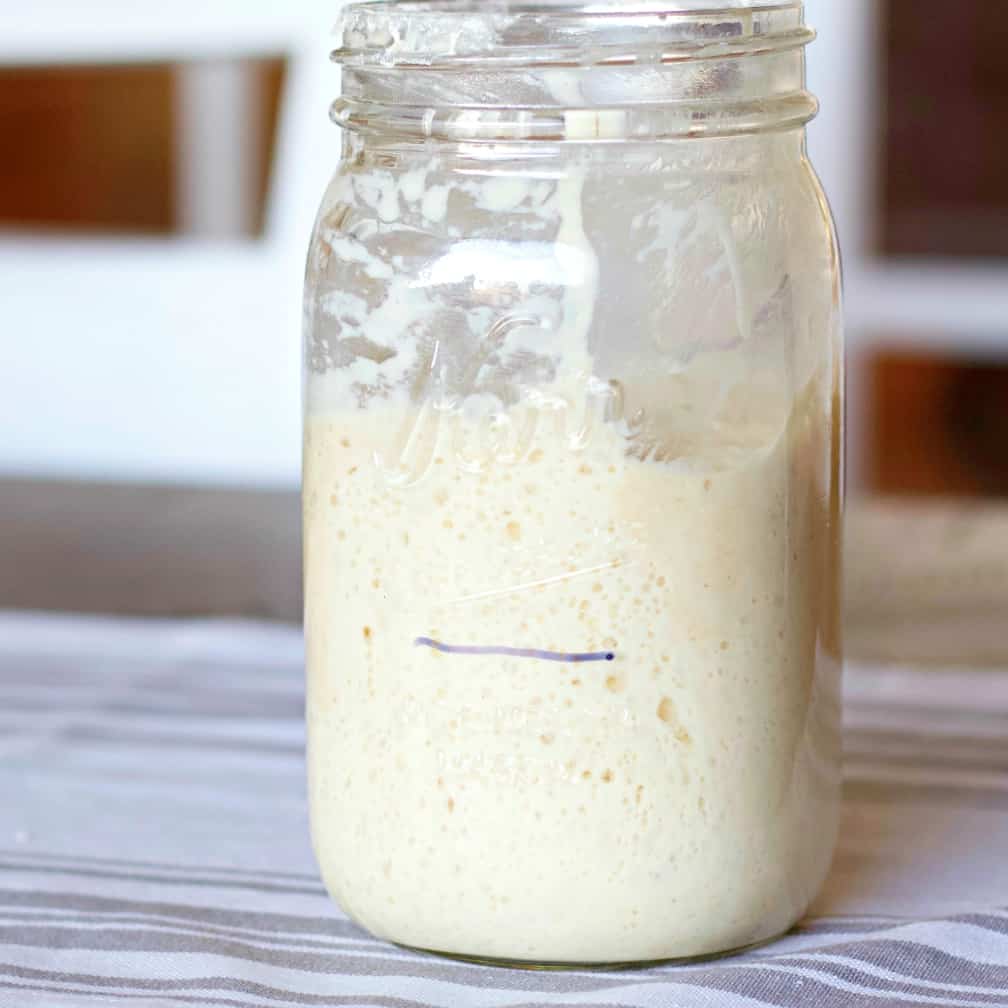
A larger feeding ratio can help when a starter is technically alive but seems sluggish, overly acidic, or quick to collapse. This can be helpful after refrigerator storage, hot weather stress, or several rushed feedings in a row.
Using something like 1:2:2 or 1:3:3 can:
- dilute excess acidity
- provide more fresh food
- encourage steadier recovery
- give the culture more room to rebuild strength
If your starter is sluggish, overly acidic, or hasn’t been fed for a long time, larger feedings can sometimes help restore balance. However, if the starter has been neglected for weeks or shows separation and hooch, it may need a full revival process instead. In that case, follow our guide on how to revive sourdough starter safely.

Basic sourdough Feeding Method 1:1:1 ratio
Sourdough bread recipes need a properly balanced starter to give best rise and fermentation. Here is how you prepare a balanced starter for baking bread.
Ingredients
- 100 grams sourdough starter-fed in the past week
- 100 grams flour
- 100 grams warm water
Instructions
- For quickest results your ingredients should be at room temperature.
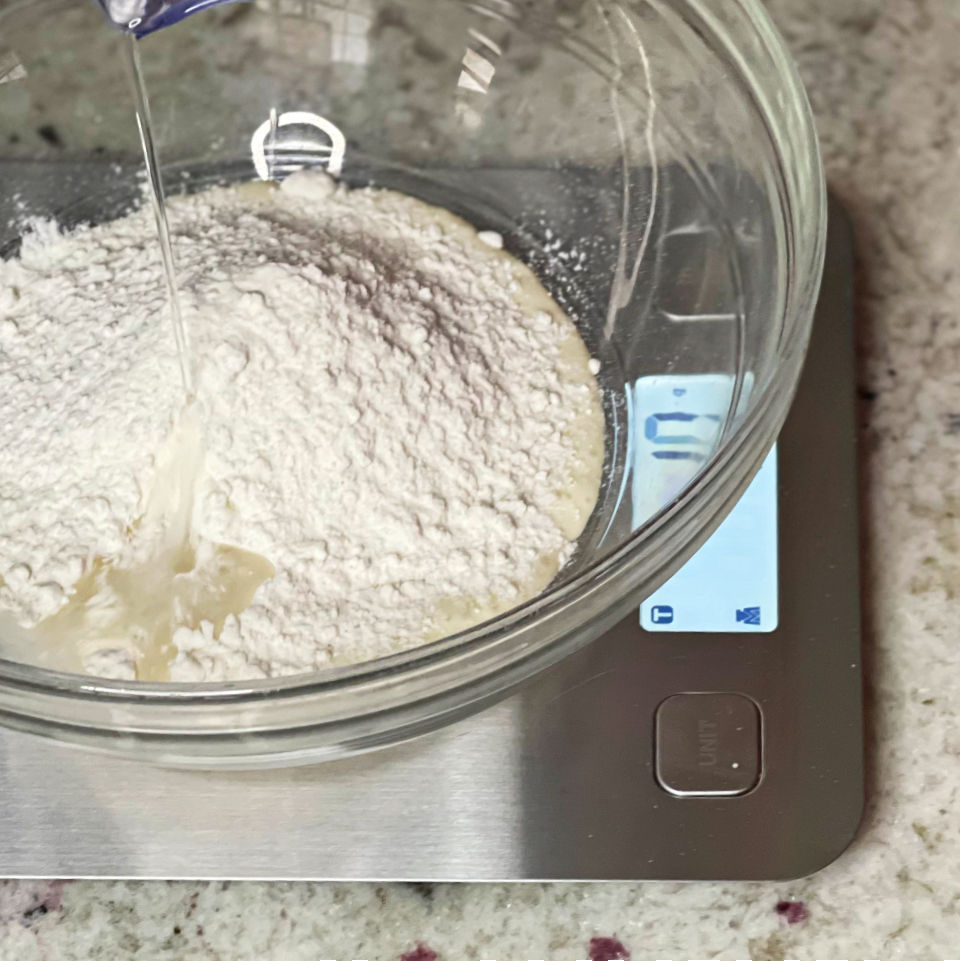
- Set a medium bowl or quart container on a digital scale
- Pour in the water, starter and flour.

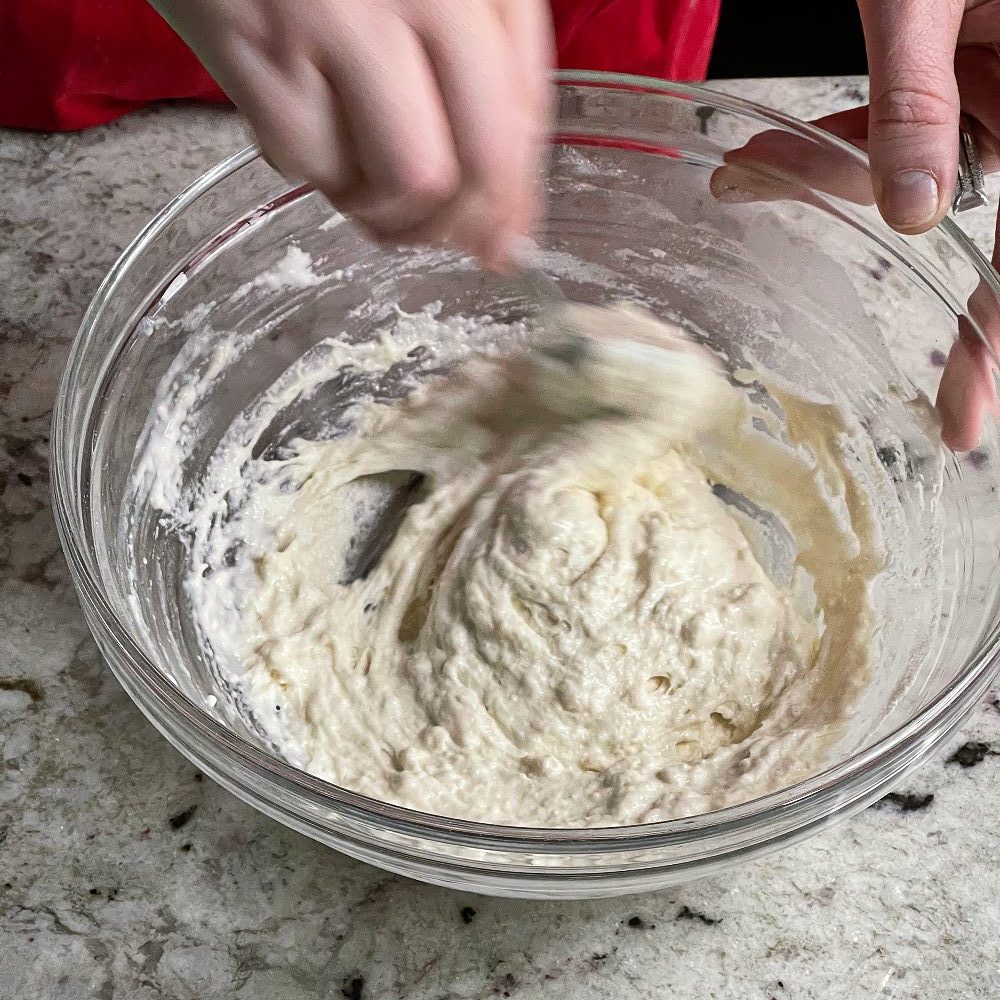
- Mix into a paste.

- Let sit covered until it is doubled in size. This will take 8 to 12 hours

- Do the float test.
 Ready to bake when it floats.
 - If you do the feeding and it does not float feed the starter again and wait a few hours.
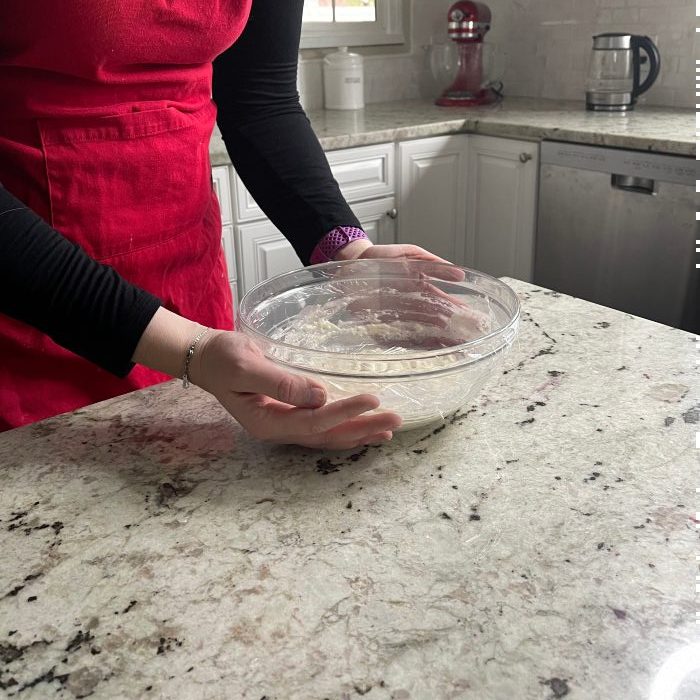
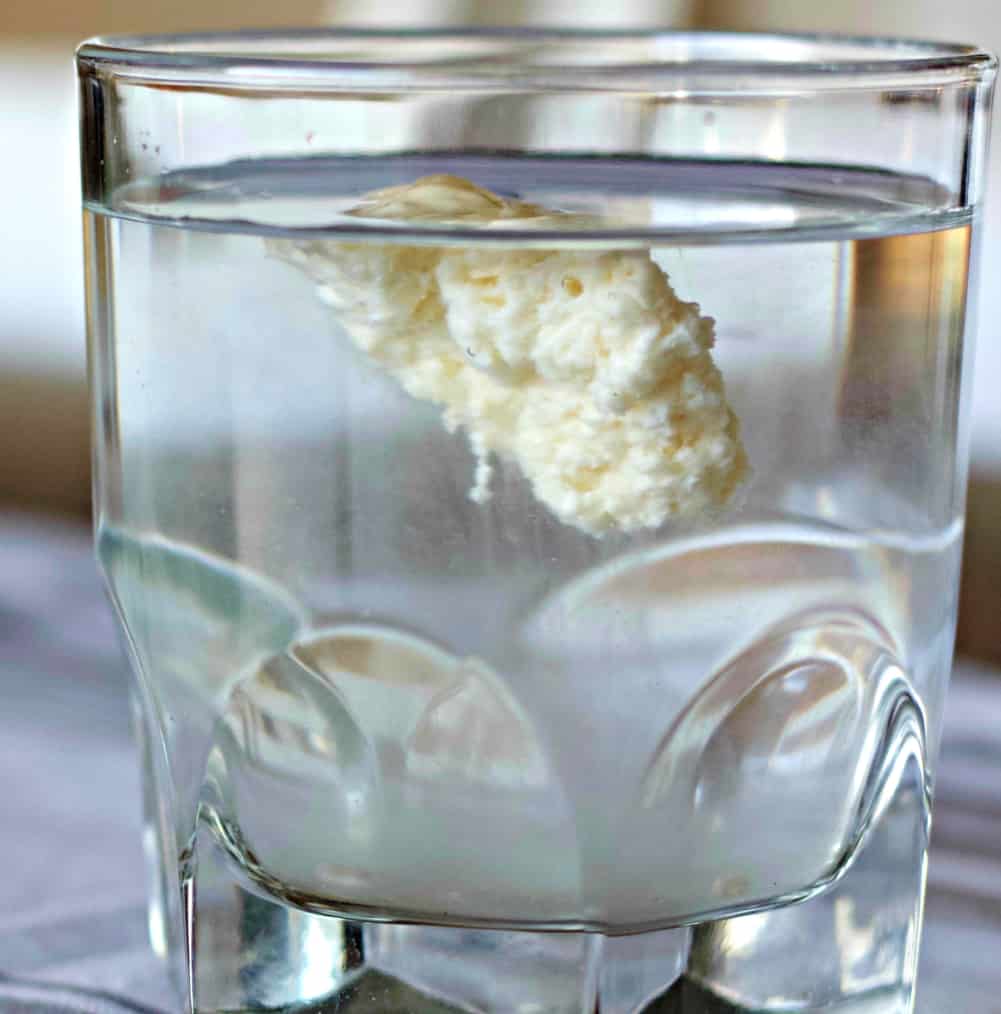 Ready to bake when it floats.
Notes
This is a tried and true recipe for balancing your starter for bread baking.
However, The important thing is NOT the absolute numbers of grams for each ingredient. The important thing is the RATIO of 1:1:1. You can halve this recipe or double it. but keep all the ingredients in proportion to each other BY WEIGHT for best results.
And as you can see by reading this post there are several useful ratios for feeding sourdough starter.
Nutrition Information
Yield
24Serving Size
1Amount Per Serving Calories 23Total Fat 0gSaturated Fat 0gTrans Fat 0gUnsaturated Fat 0gCholesterol 0mgSodium 0mgCarbohydrates 5gFiber 0gSugar 0gProtein 1g
This amount of sourdough starter is used to make two 1000 gram loaves of bread. About 24 slices of bread.
Final Thoughts on Feeding Sourdough Starter
Feeding sourdough starter is not just a routine chore. It is one of the main ways you control fermentation, timing, and baking performance.
Once you understand what different feeding ratios do, you can choose a method that fits your schedule and your bread goals.
Some feedings are for simple maintenance. Some are meant to prepare a strong starter for baking. Others are used to slow things down, reduce excess acidity, or give the culture more fresh food.
The more intentionally you feed your starter, the easier sourdough baking becomes.

Related Sourdough Starter Guides
If you need more help with starter care, these guides will help you find the right next step:
- How to Make a Sourdough Starter — for building a starter from scratch
- How to Revive Sourdough Starter — for rescuing an old, neglected wet starter
- How to Dry and Revive Sourdough Starter — for long-term backup storage
- How to Create a Sourdough Flavor Profile — for learning how starter behavior affects bread flavor
How to get a sourdough starter:
Starters are fun to make but also fun to explore. Buy a dried starter and rehydrate it. Purchase a starter from our Baker Friend Sasha Hunter. She sells her Apple Jack Sourdough Starter dried.


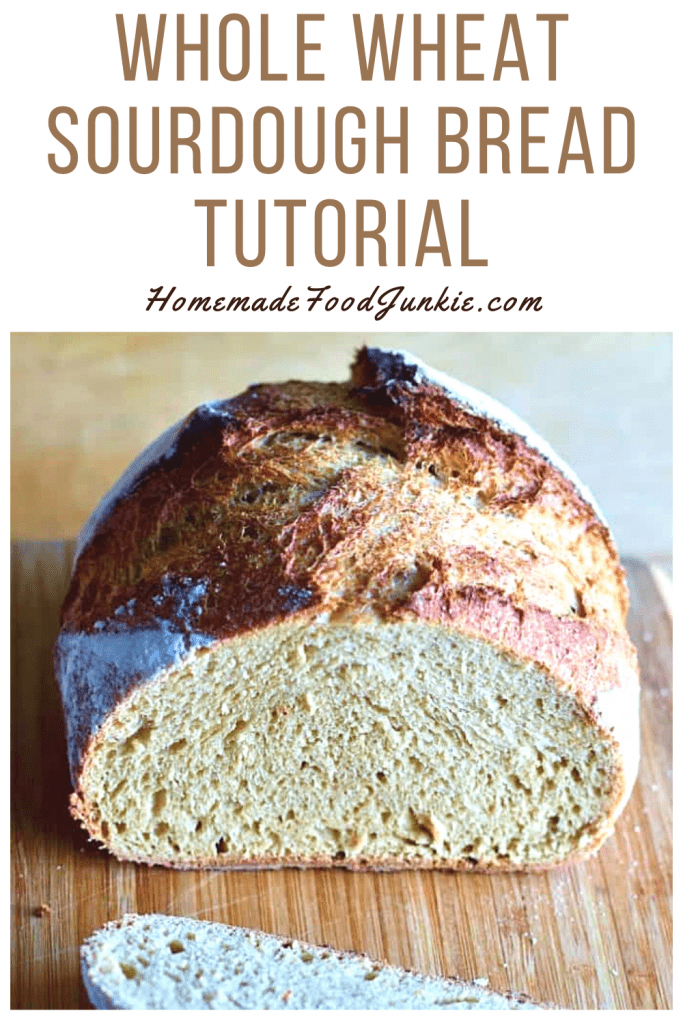
The breads pictured above are all made with balanced sourdough starter. The recipe method is the no knead stretch and fold method baked in a dutch oven.
Follow Us:
We enjoy meeting you on our social networks. Follow us on Facebook, Pinterest, Instagram . Tag us with your pictures of our recipes and comment on how it went for you. We would love to see what you do with them.
We often like, comment and share your posts of our recipes on our daily Instagram stories.
Ask questions and rate the recipe in the comments section below. Please share what you did with this recipe. We are always looking for more and better ways to make homemade food. Other cooks love your ideas!
Recent Posts:
Question: when feeding your starter, you took 100 grams out of your starter in the fridge then put what was left back in the fridge. How do you make sure you always have more than a 100 grams stored to have 100 grams to feed and make bread?
Thank you
Dawna
Hi Dawna, It’s all math. To keep 100 grams of starter in the fridge at all times, you have to build the fridge starter up to that level. A few feedings without discarding will ensure you have more than enough starter ready to go. When you get more starter left over than you want, try some of our sourdough discard recipes. Hope this helps! Happy Baking!
I also just revived my starter that had been neglected for 8 1/2 months! It’s amazing 🙂
Hi Heidi, Lol. Thanks for the reminder. Time for me to get mine fed for Fall baking. After you work with it a while it’s easy to see why sourdough baking is such an ancient art. The starter is so tough and versatile. Happy Weekend!