As an Amazon Associate and member of other affiliate programs we earn a small commission from qualifying purchases through our affiliate link. For more information read our Entire Affiliate Disclosure.
Stretch and fold vs. coil folds: What are they, and how do bakers know which method to use?
Stretch and folds and coil folds are the two most common folding methods used during sourdough bulk fermentation. Both techniques strengthen dough, organize the gluten network, and help the dough trap the gas produced during fermentation. However, they accomplish these goals in slightly different ways. As it turns out, this matters to you as the baker.
The folding method you choose can influence dough strength, gas retention, handling characteristics, and ultimately the crumb structure of the finished loaf. Which method works best depends on factors such as hydration, flour choice, fermentation stage, and the style of bread you’re trying to create.
If you’ve baked Homemade Food Junkie’s sourdough recipes, you’ve probably noticed we typically use stretch and folds. That’s because they are easy to learn, work well across a wide range of doughs, and consistently produce excellent results. However, stretch and folds are not the only way to build strength during bulk fermentation. Coil folds are another valuable technique many bakers use, particularly when working with higher hydration artisan doughs.
In this guide, we’ll compare stretch and folds vs. coil folds, explain what these two different types of folds are actually doing to your dough. Why it matters when bakers choose one method over the other, and how each technique affects dough development, fermentation, and crumb structure.
Building dough strength is one of the most important parts of making sourdough bread. Strong dough can hold its shape, trap fermentation gases, and create the rise and crumb structure bakers are looking for in the finished loaf.
Dough strength develops throughout the bread-making process. Mixing methods, rest periods, fermentation, and folding techniques all contribute to gluten development and dough structure. During bulk fermentation, bakers often use folds to continue strengthening the dough while organizing gluten and managing gas retention.
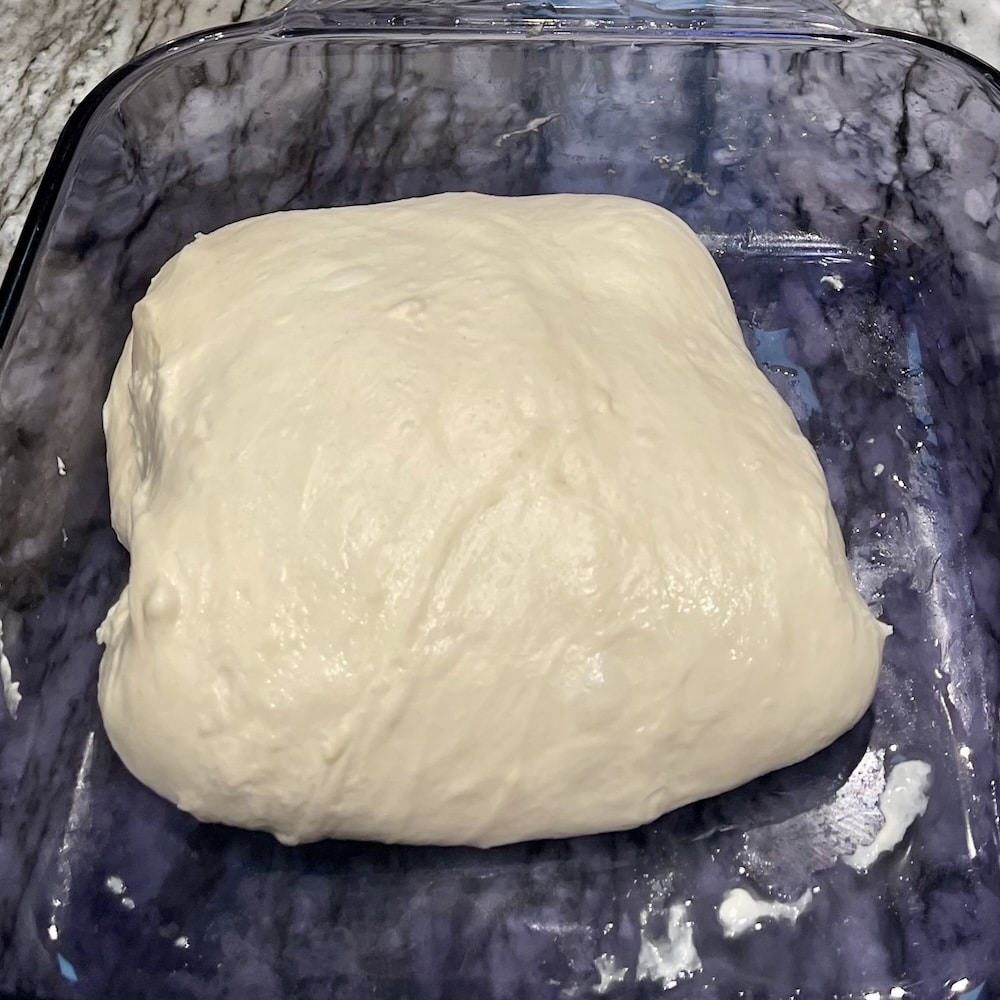
Identical Dough formula After division and separate coil methods.
How Dough Strength Develops During Bulk Fermentation
Before comparing stretch and folds and coil folds, it helps to understand where folds fit into the larger process of dough development.
Dough strength begins developing from the moment flour and water are combined. Throughout the bread-making process, several factors work together to build the structure that supports fermentation, traps gas, and helps the dough hold its shape.
Mixing Creates Initial Strength
The first stage of dough development happens during mixing, as we cover in our dough mixing post. Whether you use a simple hand mix, Rubaud mixing, slap and folds, or a stand mixer, gluten strands begin aligning and connecting as the ingredients come together.
Your choice of flour, hydration, and mixing method all influence how much strength is created at this stage.
Rest Periods Continue Development
As the dough rests, flour absorbs water and gluten continues organizing itself. At the same time, yeast and bacteria begin producing the gases that drive fermentation.
This is why dough often feels noticeably different after each rest period. A dough that feels rough and weak after mixing may become smoother, stronger, and more extensible after only thirty minutes of rest.
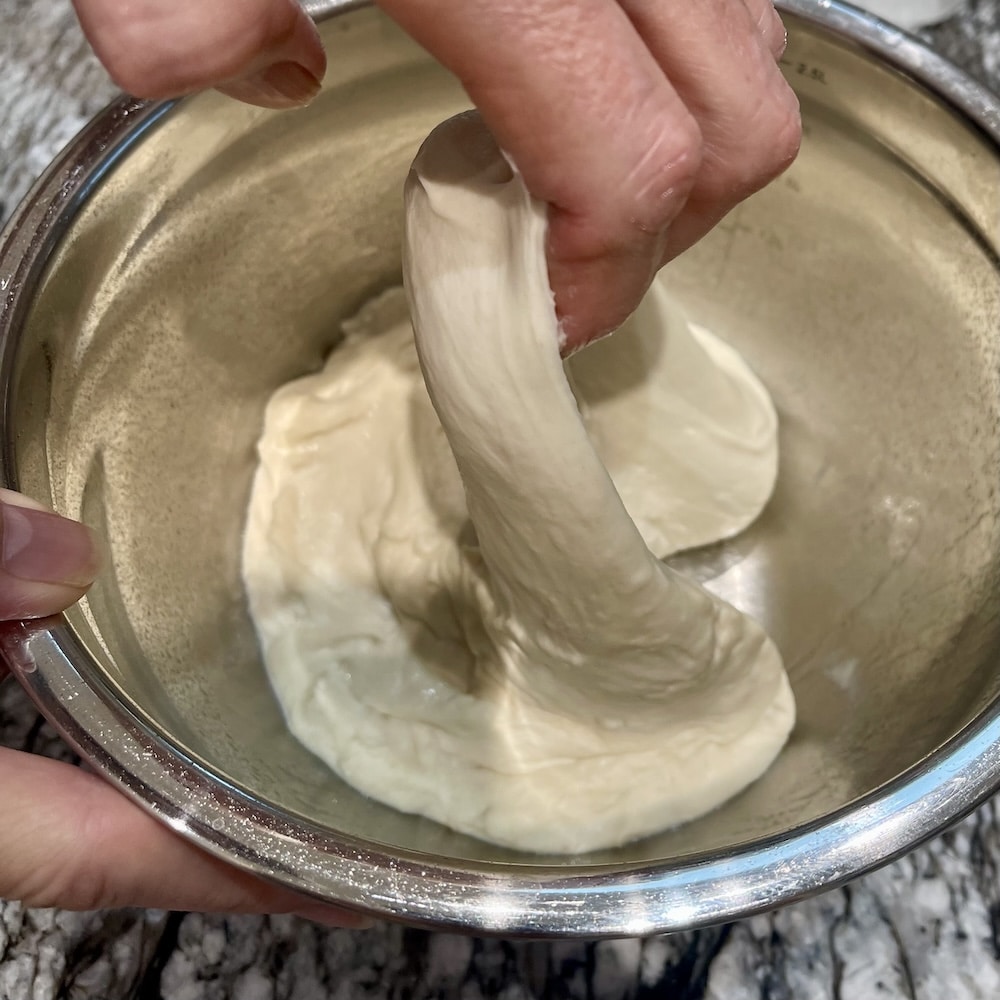
after dough is coiled into pan, pivot pan and repeat process four times. Now let dough rest to ferment.
Fermentation Builds Internal Structure
Think of fermentation like slowly inflating hundreds of tiny balloons throughout the dough. The gluten network stretches around those gas pockets and gains tension as fermentation progresses. Enough tension creates volume and oven spring. Too little gas creates a dense loaf, while too much gas can overstretch the dough and cause it to collapse
Great bread depends on maintaining the right balance between dough strength and fermentation. For more on Fermentation, Read our post on ProofingSourdough Bread.
Folds Organize and Strengthen the Dough
This is where stretch and folds and coil folds enter the process. Watch the video in this post to see me demonstrate both the stretch and fold and the coil folding methods.
Folding helps organize the gluten network while redistributing gas, yeast, bacteria, and temperature throughout the dough. Early in bulk fermentation, folds often focus on building strength. Later in fermentation, folds become more about maintaining structure without unnecessarily deflating the dough.
Both stretch and folds and coil folds accomplish these goals. The difference is how aggressively they build strength and how much gas they preserve as fermentation progresses.
For a deeper look at dough strength, gluten development, extensibility, and elasticity, see our Dough Structure guide.
What Is a Stretch and Fold?
Stretch and folds are one of the most widely used strengthening techniques in sourdough baking.
The baker gently lifts one side of the dough, stretches it upward, and folds it back over itself. This process is repeated on all four sides of the dough.
Each fold layers gluten strands over one another and gradually increases dough strength as this process is repeated during bulk fermentation.
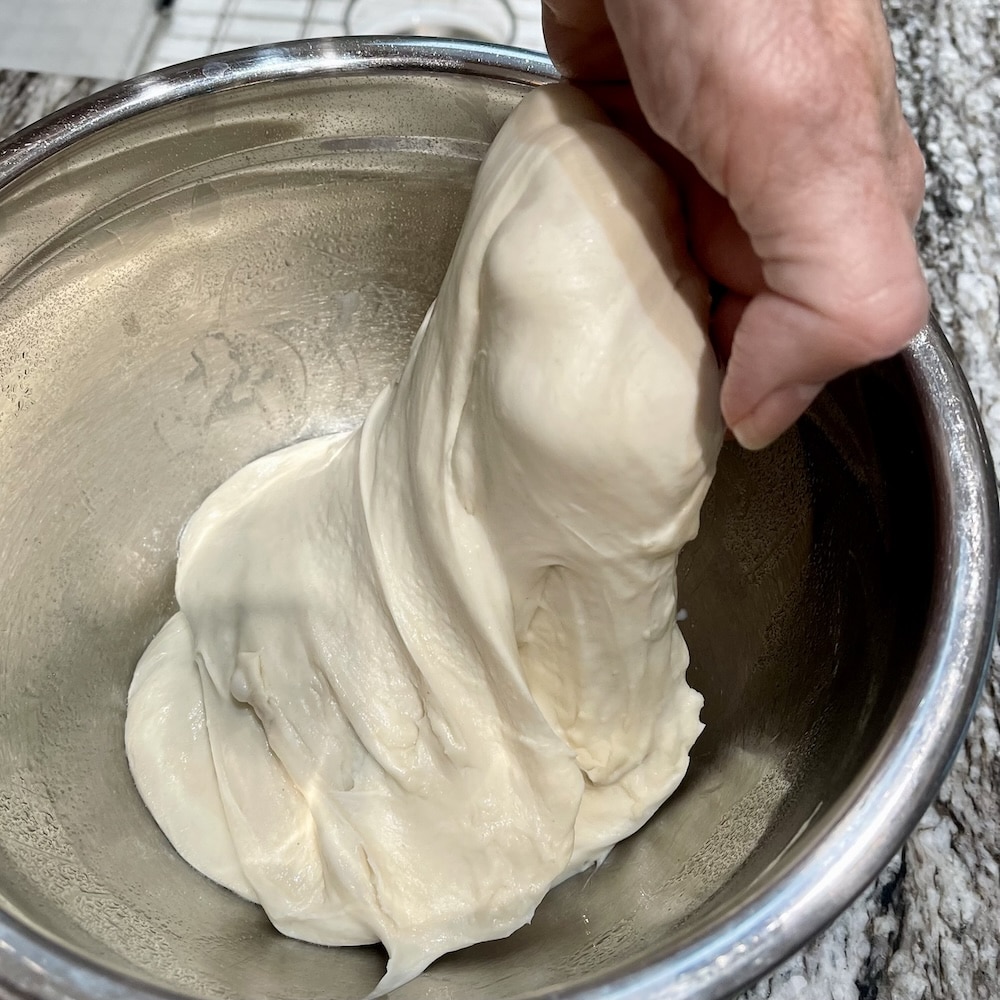
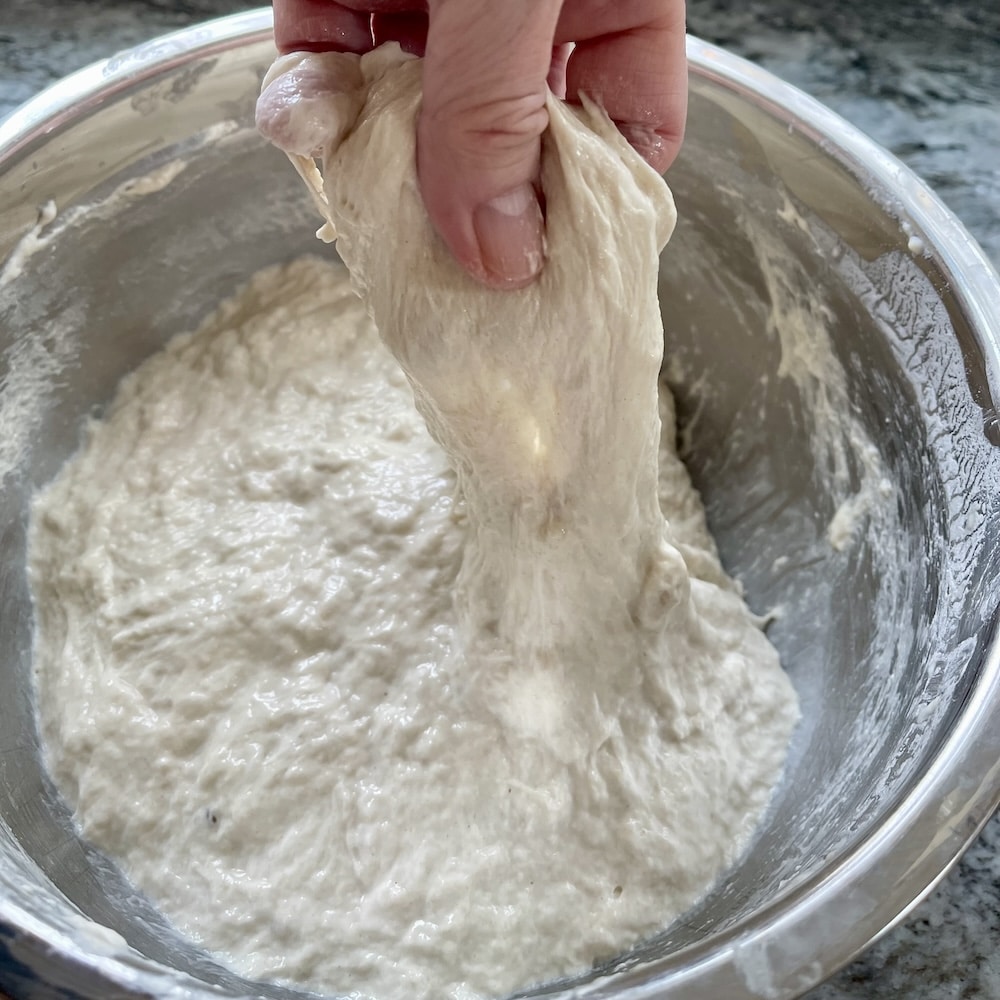
Pull the down from underneath and stretch it straight up with your fingers cupped.pull the dough over so it folds over itself.Lay the dough down. Pivot the bowl 1/4 turn and repeat this for all four dough quadrants
How To Perform Stretch and Folds
Wet your hands if needed.
Grab one side of the dough.
Stretch upward until resistance is felt.
Fold the dough over itself.
Rotate the container.
Repeat on all four sides.
One complete rotation equals one set of stretch and folds.
Benefits of Stretch and Folds
Builds strength quickly
Effective for weaker doughs
Helpful with whole grain doughs
Easy for beginners to learn
Works well at moderate hydration levels
Drawbacks of Stretch and Folds
Can degas dough if performed aggressively on very delicate, gassy doughs or too late in the dough structure building process
More handling may reduce openness in some doughs. But not everyone wants an open crumb.
Can tear fragile dough if overdone. Pay attention to this. Overstretching your dough is not good for structure. Work with what you have. If the dough resists the stretch, let it relax before the next stretch.
What Is a Coil Fold?
Coil folds are a gentler strengthening technique often used with higher hydration artisan doughs. You can use them later in fermentation in lower hydration dough too if the dough is very stretchy and full of gas.
Instead of stretching from the sides, the baker lifts the center of the dough and allows the ends to fold naturally underneath.
The dough essentially folds itself as it is lifted. Gravity is the main worker here. The dough weight will drop the dough and you essentially guide it to its resting place.
Because the dough experiences less direct stretching, coil folds can strengthen the dough while preserving more of the gas created during fermentation.
Many modern home bakers became familiar with coil folds through the work of artisan baker Trevor J. Wilson, (here is his IG account where he does many demonstrations). He emphasizes balancing dough strength with gas retention during fermentation. I have both his books. They are excellent.
How To Perform Coil Folds
Wet your hands.
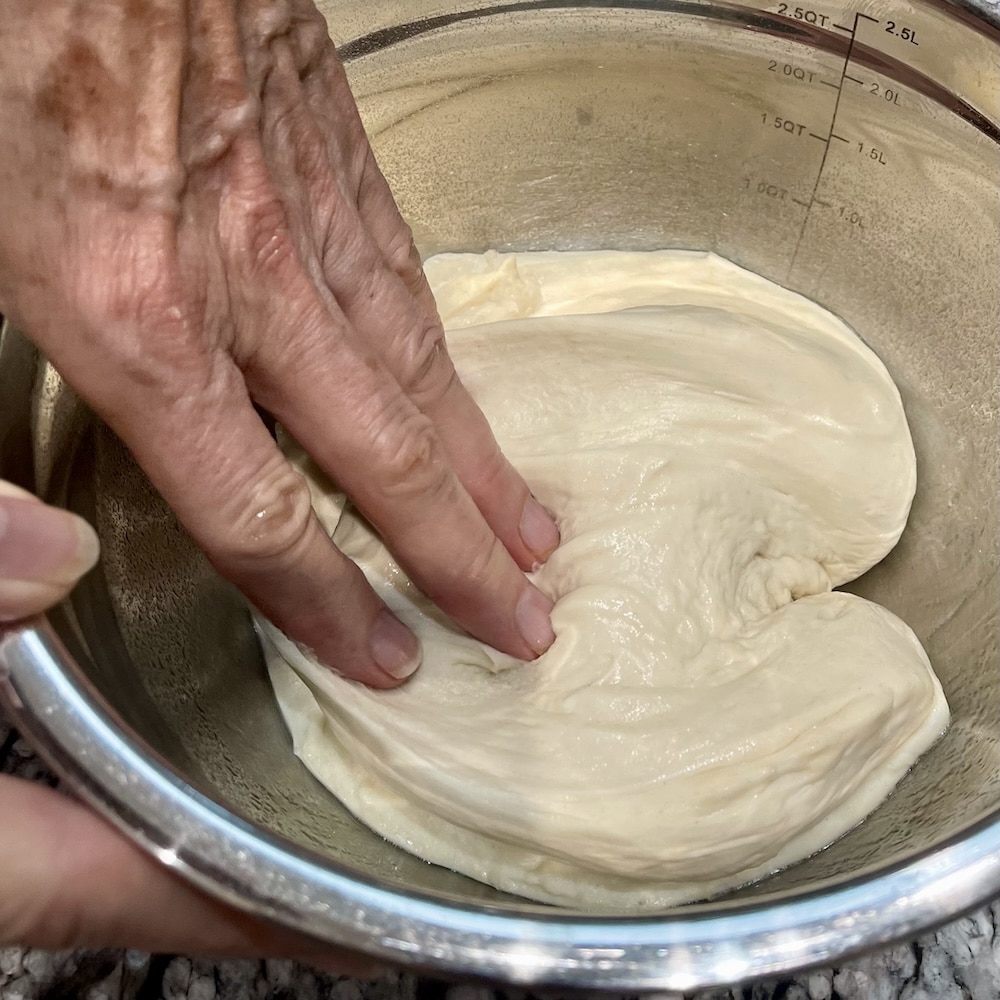
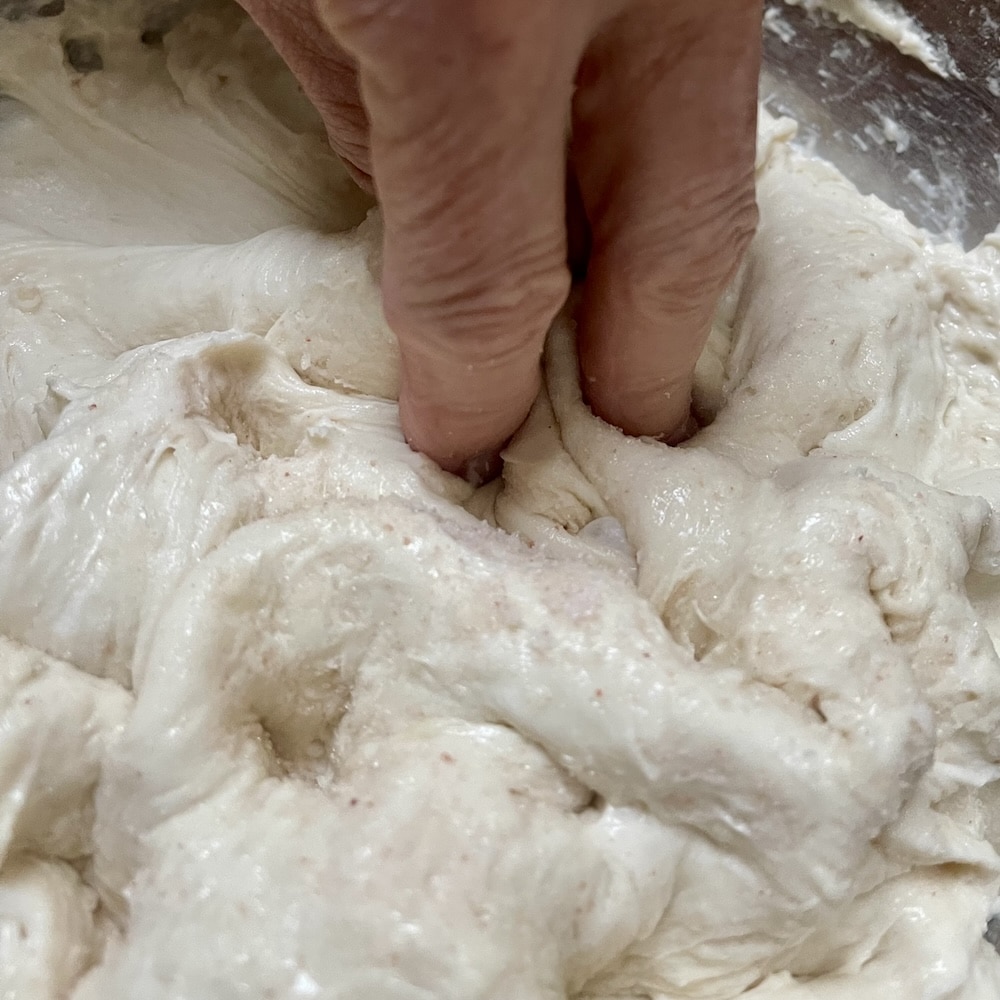
Slide two fingers(I use my middle fingers) from both hands, beneath the center of the dough.
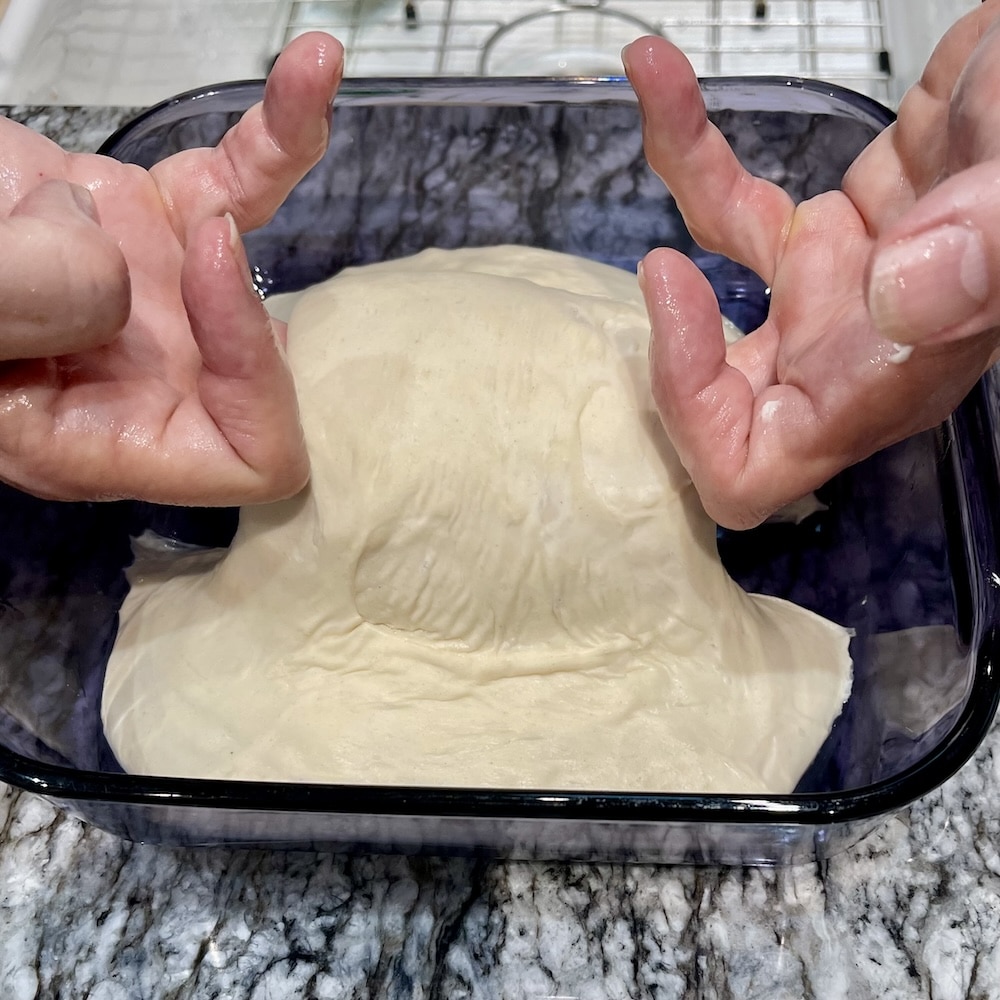
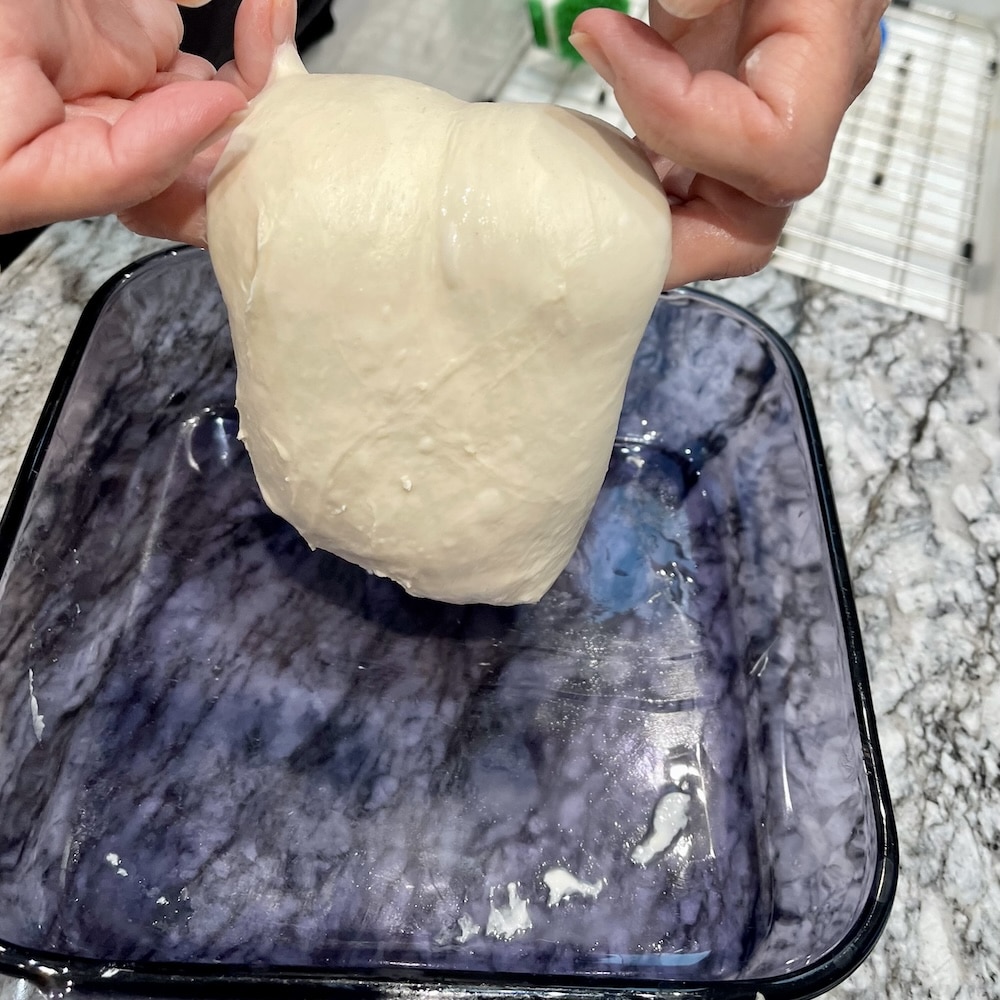
Lift slowly until the ends release from the container. You will feel the dough separate in your hands and drop into the bowl.
Allow the ends to fold underneath. Depending on the dough you may have to lift from both ends of the dough until it is completely coiled.
Rotate the container.
Repeat from the opposite direction.
Benefits of Coil Folds
Gentle on the dough
Preserves gas bubbles well
Works especially well for high hydration doughs
Helps maintain extensibility
Useful for artisan-style open crumb breads
Drawbacks of Coil Folds
Requires some existing dough strength (which is why stretch and fold often comes first)
Less effective on very weak doughs. Additional dough handling may overcome this but be gentle so gas loss is minimal.
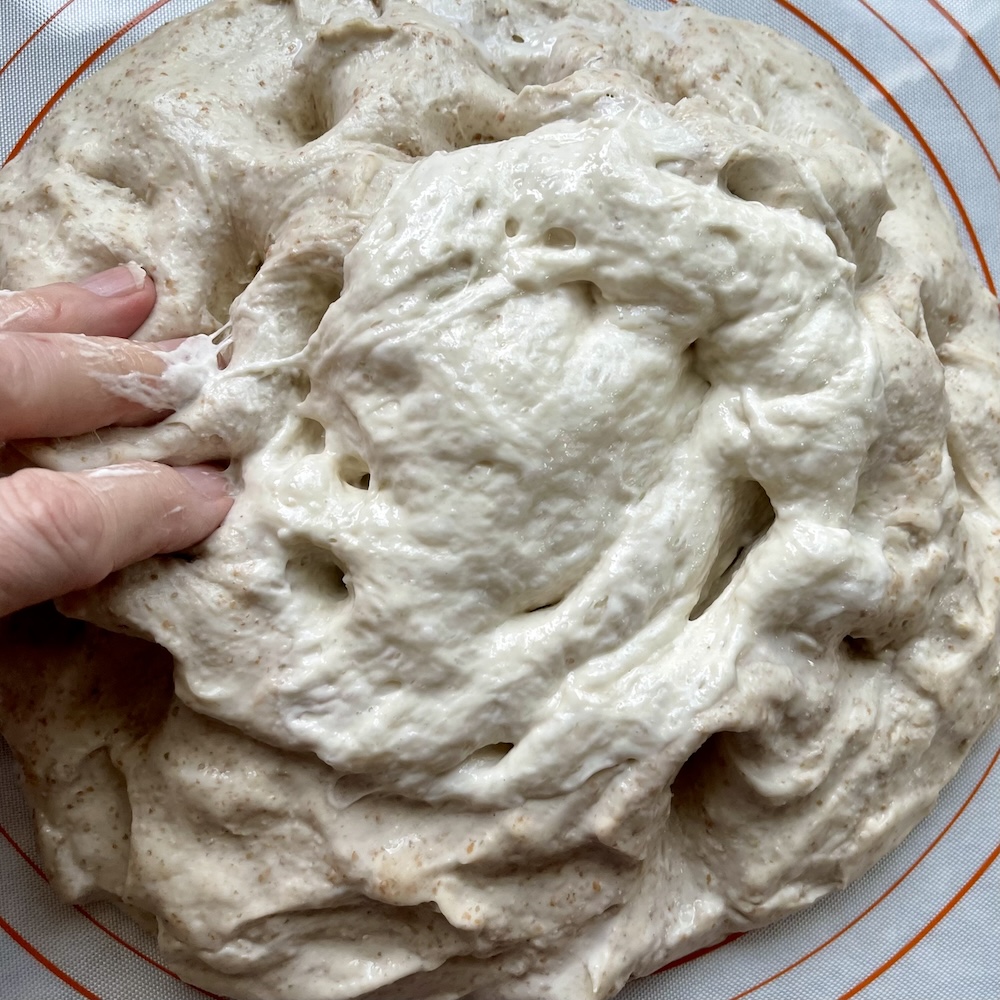
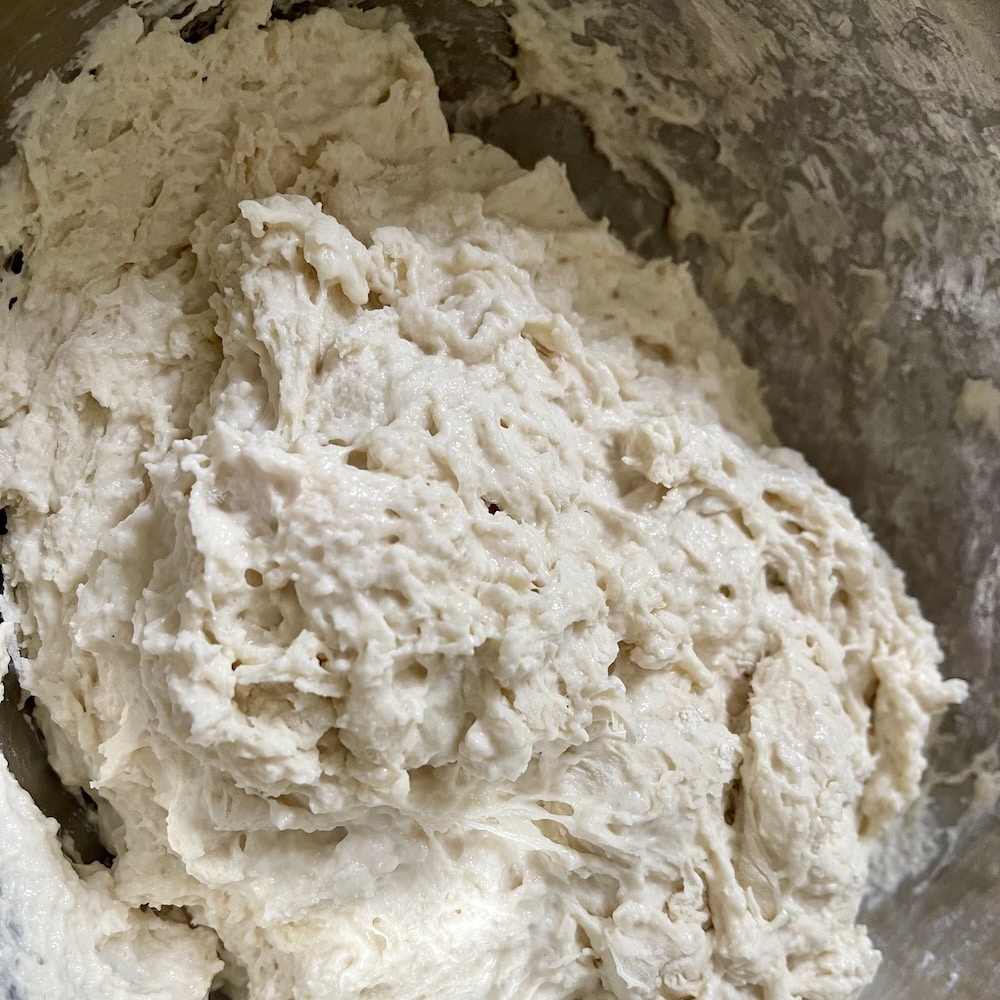
Can be difficult early in fermentation. Especially true for weak sloppy doughs like this.
This dough was particularly sloppy at about 85% hydration. It did strengthen with S&Fs initially and then I switched to coils to retain gas while dough building.
Stretch and Fold Vs. Coil Folds
Although both methods strengthen dough, they do not behave exactly the same. For highly hydrated delicate doughs, Stretch and folds are often the best folds to begin dough building. Then switch to coils as the dough builds strength to preserve gas and organize the crumb structure.
Stretch and Fold
Coil Fold
More aggressive strengthening
Gentler strengthening
Builds strength faster
Builds strength gradually
Useful for weaker doughs
Works best once some strength exists
Better for many whole grain doughs
Excellent for high hydration doughs
May degas dough more
Preserves gas more effectively
Easy for beginners
Requires a bit more feel for the dough
Neither method is inherently better. These are tools for the baker. As you gain experience with different doughs and practice these folding methods, you will learn how to use them to attain your baking goals.
The best folding choice depends on the dough, hydration level, flour type, fermentation stage, and your desired crumb structure.
Which Method Builds More Strength?
Stretch and folds generally create strength faster and more aggressively.
The larger stretching motion places more tension on the gluten network, which helps organize gluten strands and improve dough structure fairly quickly, even in weak doughs.
For doughs that feel weak, slack, or underdeveloped, stretch and folds are often the faster solution.
Coil folds still build strength, but they do so more gradually and with less disruption to the dough.
In my experience, coils will produce strength as well as S&F when done correctly, as shown in my dough folding comparison section below. Both eventually strengthen dough. That is not the major difference.
Gas organization is where coils come in.
Which Method Creates a More Open Crumb?
Gas distribution is where I see the biggest difference in my baking using these two folding methods. Many bakers associate coil folds with open crumb artisan bread. This is true, all things equal.
Coil folds tend to preserve gas more effectively because they handle the dough more gently. But that is not the whole story.
Crumb structure depends on many factors:
Dough strength
Hydration
Fermentation
Shaping
Flour selection
Handling
A dough that lacks sufficient strength may actually benefit from stretch and folds, resulting in a better crumb than a dough that receives only gentle coil folds.
Bakers of our Beginner Artisan Sourdough (78% hydration), which uses only stretch and folds, can have a really nice, disorganized open, wild, Tartine style crumb. Because the dough is folded early and cold proofed a long time. The result is a less structured dough since it ferments so long without folds.
There is much more than the folding method at work in your sourdough building processes.
Many experienced bakers combine both techniques during bulk fermentation. I combine these folding methods often, along with shaping methods, to produce a more organized crumb with higher rise in higher hydrated doughs.
A common approach is:
One or two sets of stretch and folds early in bulk fermentation
Followed by one or two coil folds later
Combining folds enables you, the baker, to build initial strength quickly while switching to gentler handling once the dough becomes more organized.
This approach often works particularly well with higher hydration doughs, depending on the crumb you are trying to build. The stretch and folds will strengthen the dough early and the coils help organize the gluten for a more even dispersal of gas throughout the dough if done correctly.
The tricky part is getting the highly gassed dough coiled without degassing it. Be very gentle the further into fermentation you are, when adding coils.
S&F DoughCoiled dough
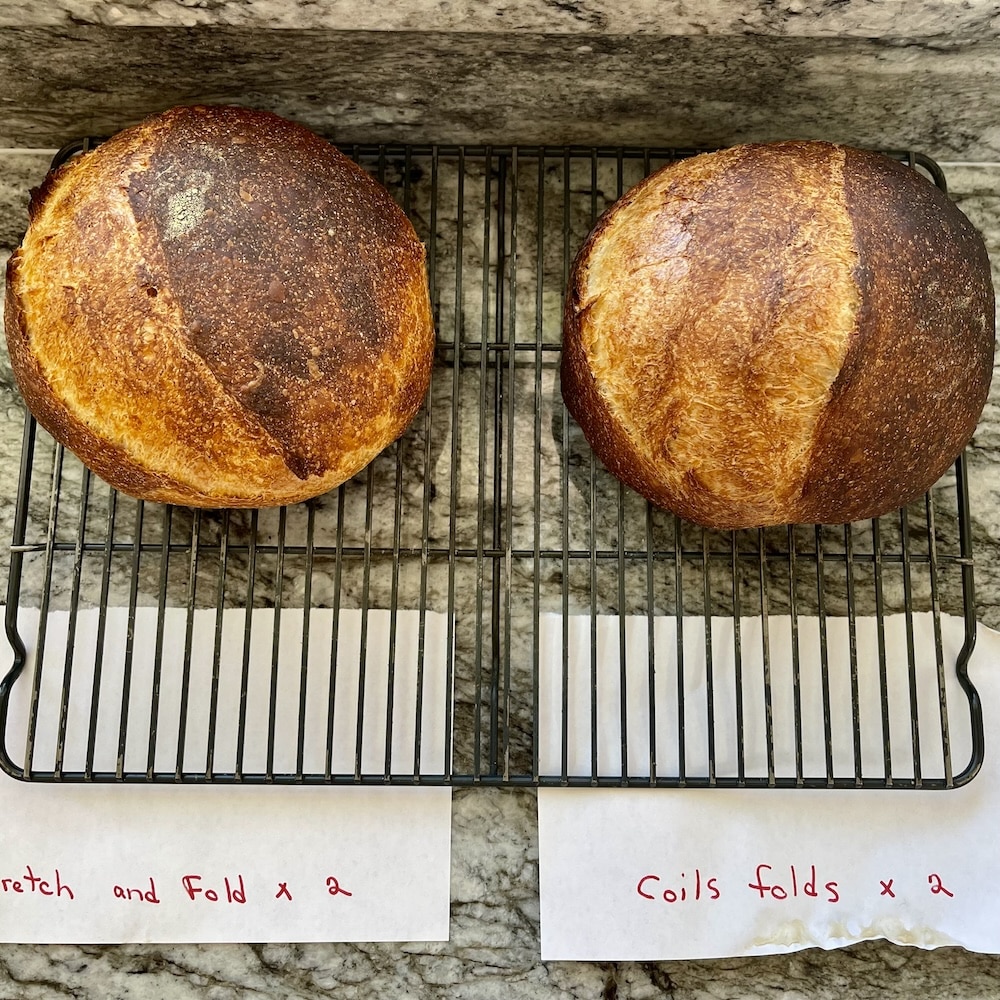
You can see above both doughs look similar in structure after shaping and scoring.
How Many Folds Does Dough Need?
There is no universal number.
Some doughs need little strengthening beyond mixing. In our folding comparison below, only two folds were used for each method. I often use 4 to 6 folds in high hydration doughs with coils only near the end of fermentation to preserve gas ,as needed.
Others benefit from multiple fold sessions.
Rather than counting folds, learn to observe the dough. We talk more about the timing of proofing your dough in our guide on dough fermentation.
Many doughs receive:
2 to 4 fold sessions during bulk fermentation
Spaced roughly 20 to 45 minutes apart
The exact number depends on:
Flour type and strength
Hydration level
Whole grain content (especially important for the huge variety of home milled flour blends)
Since real life is easier to show, I took one dough, split it after mixing and photographed the process. One dough used only coils and one used only S AND Fs. I performed two folds on each dough.
The Recipe:
800g bread flour
624g water (78%)
160g starter
16g salt
Autolyse: Allow mixed flour and water to rest and hydrate
Step 1: Autolyse:
Mix:
800g flour
624g water
Rest 30-60 minutes.
Step 2: Add Starter and Salt:
I used my fingers to dimple in the starter and salt (I’m using Himalayan pink salt here)
Add:
160g starter
16g salt
Mix until fully incorporated. I mixed about 5 minutes by hand with (sort of) Rubaud method. to do this, you cup your hand and pretend your arm is a diving arm mixer. 🙂
Step 3: Rested each dough 30 Minutes
Container A
Stretch and folds only.
Container B
Coil folds only.
I split the dough and folded it as shown two folds-different methods, same dough.
Same schedule-Two Folds
30 min, then rest
60 min, then cold bulk 9 hours
Stretch and Folds vs. Coil Folds
Folds do more than simply move dough around the bowl. Each fold helps organize and strengthen the developing gluten network while redistributing gas, yeast, bacteria, moisture, and temperature throughout the dough.
What are Folds Actually Doing To My Dough?
Early in bulk fermentation, folds primarily build strength and structure. As fermentation progresses and gas accumulates, folds help maintain that structure while preserving the gas needed for rise and oven spring. In short, folds help the dough become stronger, more organized, and better able to support fermentation.
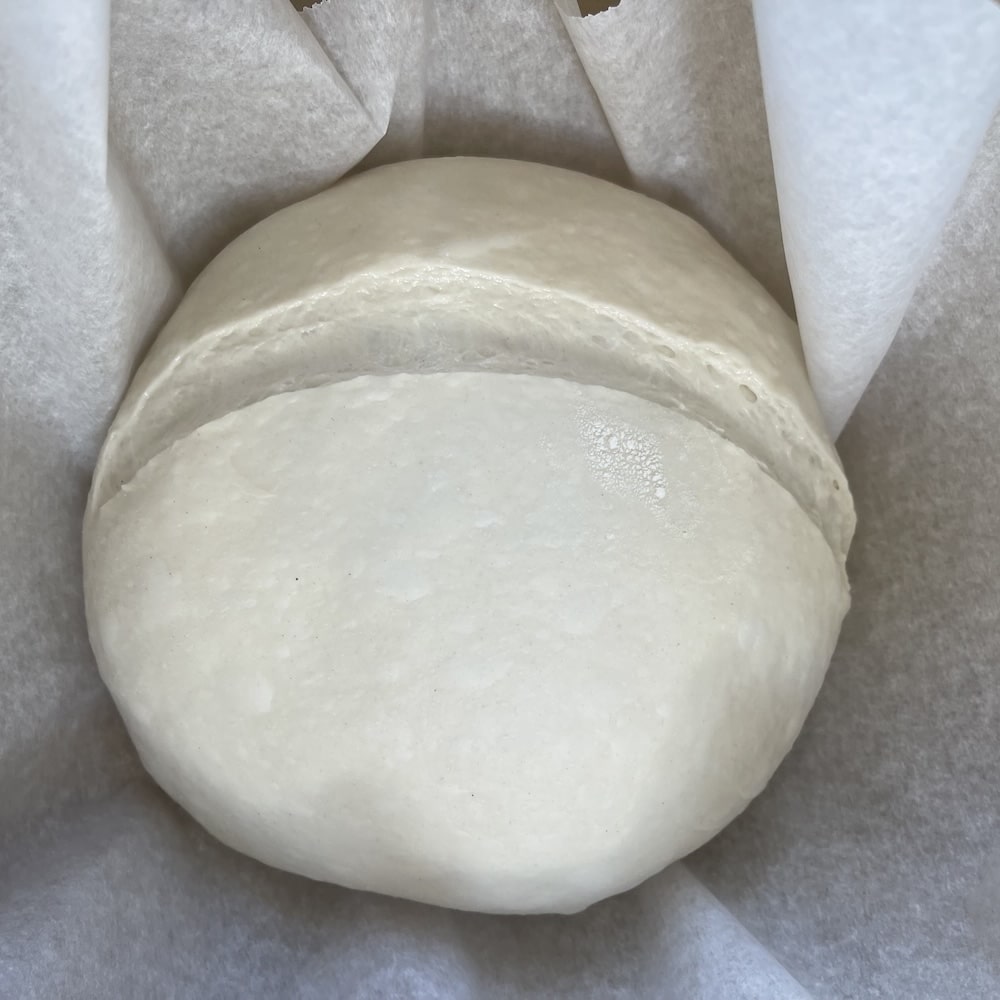
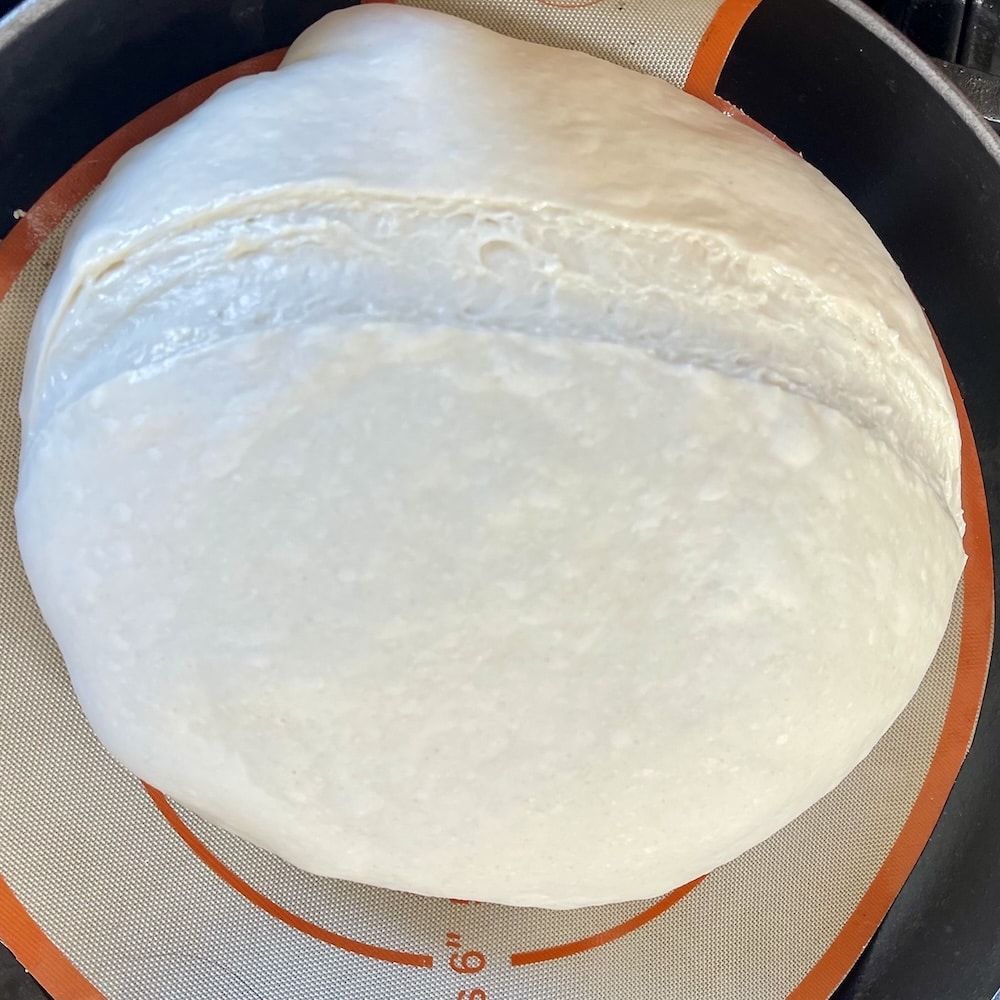
After bulk, laying on the counter to warm before bench so you can see them before handling.shaped and ready to bake
As you can see in the two pictures above, the two doughs are quite different in structure coming out of a 9 hour cold bulk. The doughs were allowed to warm and complete fermentation at counter temps with no further folds necessary.
The S&Fs did produce a better structure at this point and the coiled dough is more lax.
However, after pre-shape, bench and final shape, the coiled dough is structured as well as the S&F dough. This is due to my dough handling at shape. Although very similar, I did structure the coiled dough a bit more and it responded beautifully.
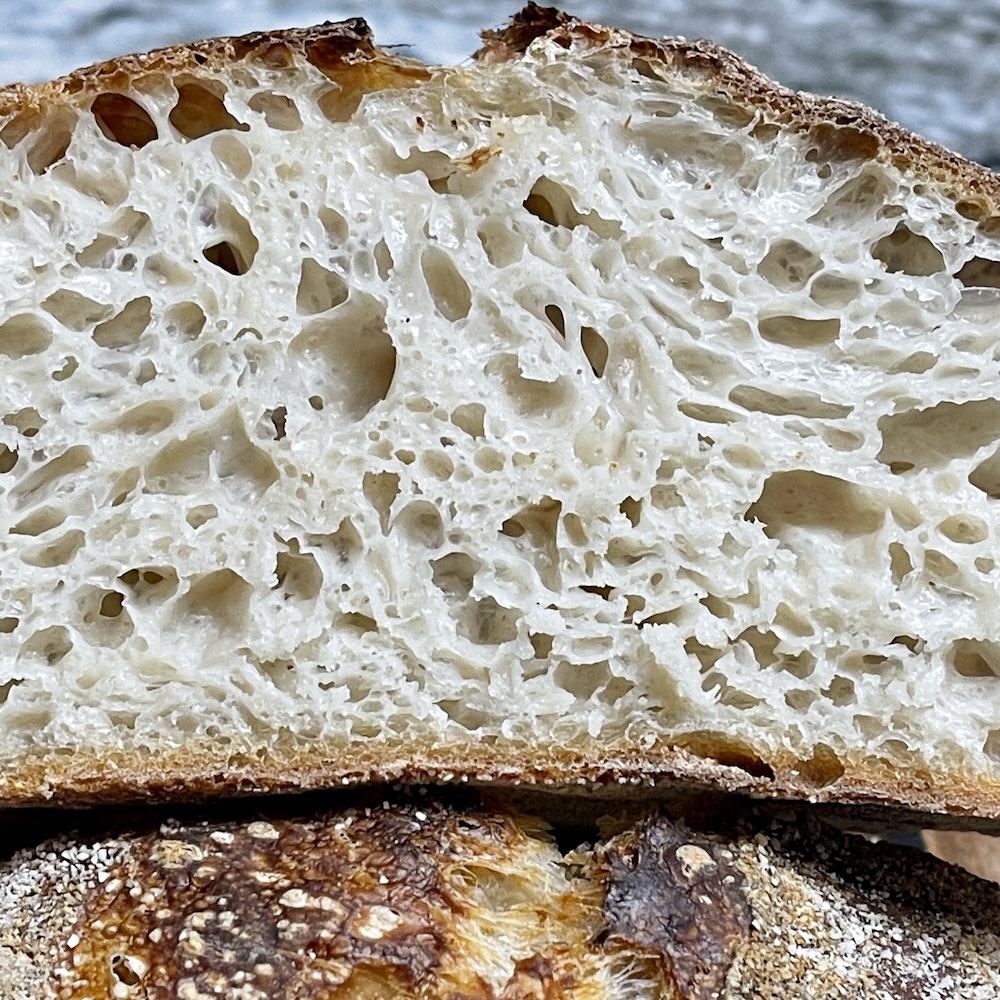
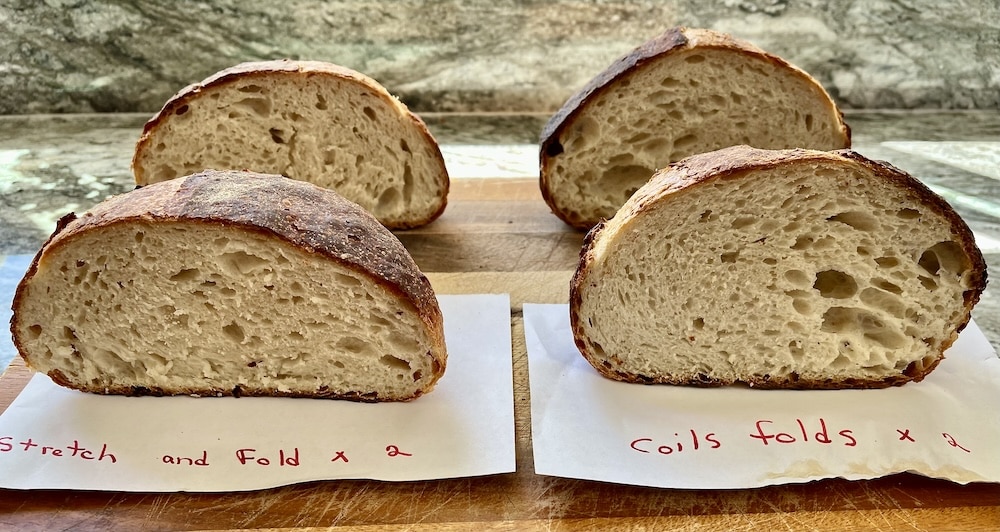
The breads both baked well. Coils gave a higher, loftier oven spring, as you can see from the score openings, since the gas was better preserved in this dough. The crumb, chewiness and flavor were very similar for both loaves.
Signs Your Dough Has Enough Strength
As folds build structure, the dough begins to change noticeably.
Look for:
Smoother surface
Improved elasticity
Better shape retention
Increased resistance during folding
More visible gas bubbles
Less spreading between folds
When the dough holds its shape well and feels organized rather than slack, additional folds may provide little benefit.
At that point, fermentation often becomes the primary focus.
Notes About This Comparison
This was not a laboratory experiment.
Both doughs used the same formula, hydration, starter, mixing method, fermentation schedule, and baking process. However, once the doughs began developing, they no longer behaved exactly the same.
When dividing the dough after bulk fermentation, the dough pieces were stretched and handled slightly differently. Later, during shaping, each dough required slightly different handling to achieve a similar final shape. The coil-fold dough retained more structure, while the stretch-and-fold dough relaxed more readily.
This highlights an important reality of sourdough baking. Dough is a living system. Small differences in handling, fermentation, temperature, and dough strength can influence the final result. Experienced bakers constantly adjust their technique to match the condition of the dough in front of them.
For that reason, this comparison should be viewed as a practical baking test rather than a strict scientific experiment. The results illustrate the tendencies of each folding method, but they do not prove that one method will always outperform the other.
In this comparison, only the folding method is different up to a point. Dough structuring during shape stage is responsible for the surprisingly close, moderately open crumb structure, but different rise apparent here. Coils helped retain gas and gentle restructuring during shape allowed the gas to spring, the crumb partially opened more than the S&F loaf. Stretch and folds dough sprang well but not as high as coiled dough, but the crumb shows more even gas distribution in the S&F dough, probably due to my handling.
Which Fold To Use?
There Is No ONE Best Folding Method for sourdough. To always use just one because it always gives the best outcome may be true for a particular recipe. But it won’t be true for every sourdough recipe.
Stretch and folds and coil folds are simply tools bakers use to strengthen dough and organize the gluten structure. Other methods, such as lamination, letter folds, and specialty folding techniques, can also be useful in specific situations, but stretch and folds and coil folds remain the most commonly used methods during bulk fermentation.
Just as bakers choose between autolyse, fermentolyse, or saltolyse depending on their bread baking goals, fold methods should be selected based on the needs of the dough.
A whole wheat dough, or lower hydration dough, may benefit from the more aggressive strengthening of stretch and folds.
A high-hydration artisan dough may benefit from the coil method since gas retention works better with gentler handling.
The best method is the one that helps you create the loaf you want to bake. As you learn the dough you are creating, the dough will tell you how it needs to be handled as it goes through fermentation. Adjust your method accordingly.
Frequently Asked Questions
Are coil folds better than stretch and folds?
Not necessarily. Coil folds are gentler and preserve gas well, while stretch and folds generally build strength faster. The best choice depends on the dough and your baking goals.
Can I switch from stretch and folds to coil folds?
Yes. Many bakers begin with stretch and folds early in bulk fermentation and switch to coil folds once the dough develops enough strength.
How often should I perform folds during bulk fermentation?
Most doughs benefit from folds every 20 to 45 minutes during the early stages of bulk fermentation. As fermentation continues, baker often increase time between folds to up to 60 minutes or so and then quit folding to allow the dough to ferment to the finish. The exact timing depends on dough development and fermentation conditions.
Can you over-fold sourdough dough?
Yes. Excessive folding can degas the dough, tighten the gluten network too much, and make shaping more difficult. Once sufficient strength develops, additional folds often provide little benefit.
Do all sourdough doughs need folds?
No. Some doughs develop adequate strength through mixing and fermentation alone. Folds are simply one tool bakers use to manage dough structure.
Other Factors That Influence Dough Development
The Take away Message: While folding methods influence dough strength and gas retention, they are only one part of the sourdough process. In this comparison, the differences between stretch and folds and coil folds were noticeable, but not dramatic.
Other factors often have an equal or greater impact on the final loaf, including:
Mixing methods– How dough is initially mixed affects gluten development and extensibility before the first fold is ever performed.
Flour Type– This is a huge variable to consider when working your dough. Folds are important for strengthening different flours as needed.
Hydration – Higher hydration doughs behave differently during folding and often benefit from different handling techniques.
Dough strength – Flour choice, gluten development, and fermentation all contribute to a dough’s ability to hold shape and trap gas.
Shaping– Final shaping can dramatically influence loaf height, oven spring, and crumb structure.
Fermentation management – Bulk fermentation and final proofing often have a greater impact on crumb structure than the choice of folding method.
Steam and baking technique – Proper steam helps the loaf expand before the crust sets, improving oven spring and overall loaf volume.
Where to go Next: More more help with making sourdough…
Peruse our Entire Sourdough Hub for even more helpful guides and connections to recipes. For help with dough building start with these:
Diane Williams is co-founder of Homemade Food Junkie and the primary editor and publisher of the site. She develops from-scratch recipes, sourdough baking tutorials, and garden-to-kitchen content designed to help home cooks succeed.