
Why Is My Sourdough Bread Dense? (Common Causes and Easy Fixes)
As an Amazon Associate and member of other affiliate programs we earn a small commission from qualifying purchases through our affiliate link. For more information read our Entire Affiliate Disclosure.

Why Is My Sourdough Bread Dense? If you’ve sliced into a loaf and found a tight, heavy, or slightly gummy crumb, you’re not alone. Many bakers carefully follow a recipe and still end up wondering why their sourdough bread is dense or the crumb is uneven.
Dense crumb is rarely random. In most cases, it comes down to fermentation balance, starter strength, Dough Structure, hydration, shaping, or steam during baking. The good news? Once you understand how these variables work together, dense sourdough bread becomes fixable.
If you’re not sure what your crumb is telling you, start with our guide on how to read sourdough crumb structure. This post focuses specifically on why sourdough turns dense and how to fix it.
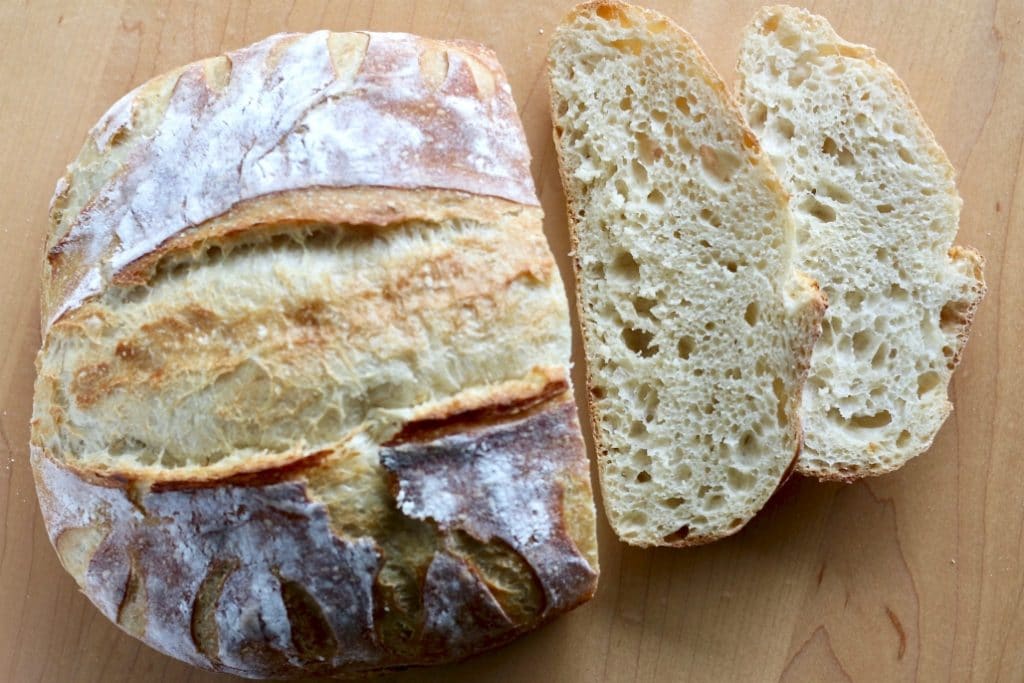
In this guide, we’ll walk through the most common causes of tight crumb, flat loaves, and sourdough bread not rising properly — and show you exactly how to correct each one so you can work toward a lighter, more open crumb.
Why Is My Sourdough Bread Dense Even After a Long Rise?
If you’re wondering why your sourdough bread is dense even after a long rise, the issue usually isn’t time; It’s fermentation balance. A long rise does not automatically guarantee proper structure.
Sourdough bread can still turn out dense if the dough was underproofed, overproofed, or made with a weak starter. Temperature, hydration level, flour type, how you measure ingredients and your shaping technique all influence how well the dough traps gas and builds internal structure.
If fermentation moves too slowly, the dough lacks enough gas for oven spring. If it goes too far, the gluten network weakens and collapses. Dense sourdough bread is rarely about patience alone — it’s about reading the dough correctly and adjusting the right variable. Heavy whole grain flours, especially home milled, act very differently in breads than commercially milled white flours.
To pinpoint exactly why your sourdough bread is dense, match your loaf’s symptoms to the guide below before making any changes. Once you zero in on the problem, read our breakdown on each issue below the table. The role of fermentation and gluten structure in bread development is well documented in baking science resources such as King Arthur Baking’s educational articles.
Finally, at the end of the post is a FAQ section to further focus on these issues. Remember we are always here to help. Just ask us in the comment section.
More in Depth Look at Why Your Sourdough Bread Is Dense:
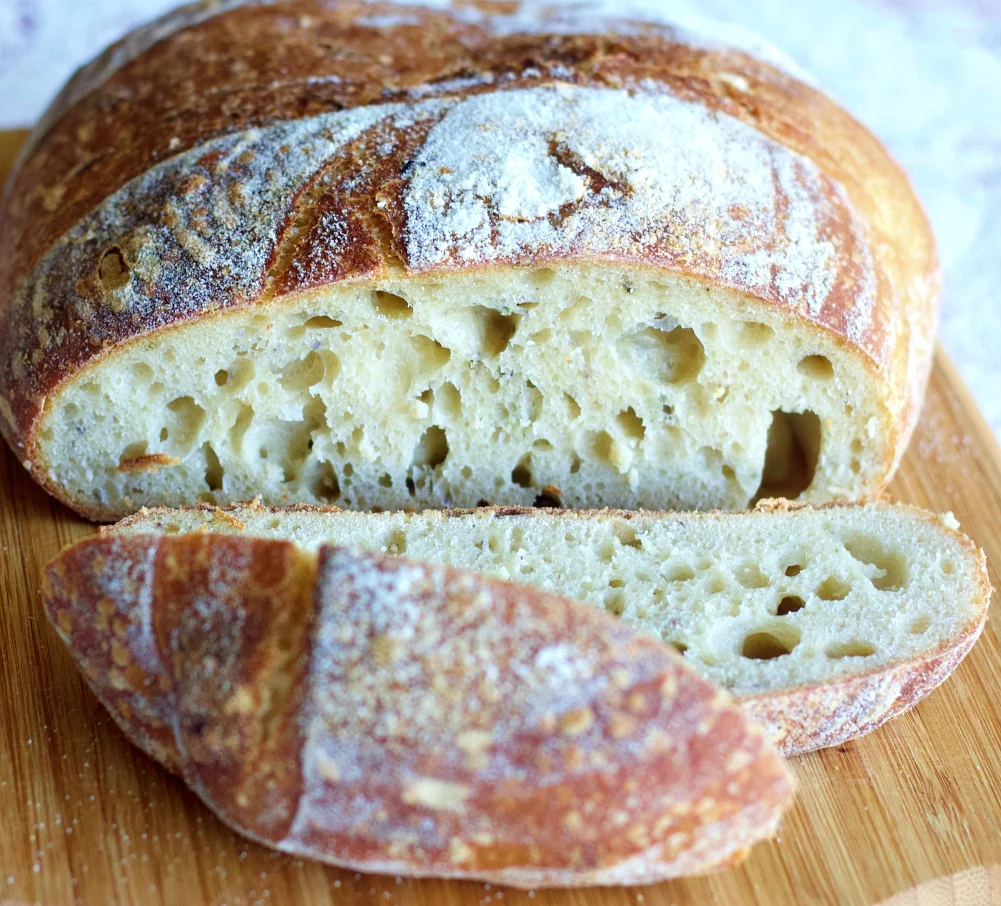
1. Your Dough Was Underproofed
See our underproofed bread crumb at the top of this article. Notice how the crumb is unevenly compact rather than open and airy. The dough needed more bulk fermentation time before shaping. Underproofing is the most common reason sourdough bread is dense. The degree to which your dough in underfermented will affect your finished bake. Our example was moderately under proofed. Tasted delicious and still made great bread, but it could have had a better structure if I’d proofed it longer.
When dough has not fermented long enough:
- The crumb stays tight
- The center may look gummy
- Oven spring is minimal
- The loaf feels heavy
Underproofed dough hasn’t developed enough gas inside the gluten structure. Without that internal expansion, the crumb remains compact. If fermentation timing feels confusing, our sourdough Proofing guide walks through common proofing mistakes in more detail.
How to Fix It
- Extend bulk fermentation time
- Watch the dough, not the clock
- Ferment in a warmer environment (around 70–75°F)
- Look for visible aeration and slight doming before shaping
If your sourdough bread did not rise properly, underproofing is often the culprit.
2. Your Dough Was Overproofed
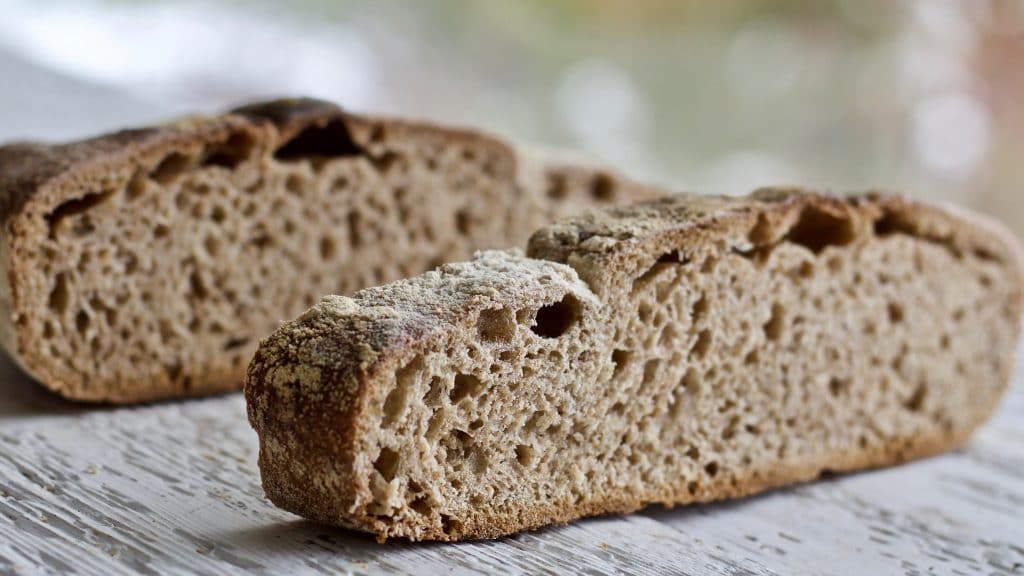
Yes — overproofing can also create dense sourdough bread.
When dough ferments too long:
- The gluten structure weakens
- Gas escapes
- The loaf spreads instead of rising
- The crumb collapses
An overproofed loaf may look flat and feel heavy even though it fermented “long enough.”
How to Fix It
- Shorten bulk fermentation slightly
- Reduce final proof time
- Watch for dough that feels overly slack and fragile
If your loaf spreads sideways instead of rising upward, overproofing may be the issue.
3. Your Starter Was Too Weak

A weak starter cannot properly leaven bread. If your starter struggles to double consistently, review our full guide on maintaining and feeding sourdough starter before baking again. Weak starter cannot rise bread well.
If your starter:
- Does not double after feeding
- Takes longer than 8–12 hours to rise
- Smells sharp but shows little activity
It may not have enough strength to raise your dough.
A weak starter often leads to dense sourdough bread or sourdough that doesn’t rise properly. If you need to build a starter from scratch or revive a sluggish one, start with our guide on how to make a wild sourdough starter
How to Fix It
- Feed at a 1:1:1 ratio for several cycles
- Keep starter warm during strengthening
- Ensure it reliably doubles before baking
If you suspect starter imbalance, review your feeding process and make sure your starter is strong before mixing dough.
4. Hydration Was Too Low
Lower hydration doughs produce tighter crumb. If your dough feels stiff or dry, the resulting bread may be dense and heavy. Higher hydration doughs typically create a more open and airy crumb structure.
How to Fix It
- Increase hydration gradually (5–10 grams at a time)
- Handle sticky dough with wet hands
- Avoid adding too much extra flour during shaping
If you want a deeper explanation of how hydration affects crumb structure, see our full sourdough hydration guide.
5. Flour Type Can Also Cause Dense Sourdough Bread
Another factor that can lead to a dense loaf is the type of flour you are using. Different flours absorb water, develop gluten, and ferment differently. If the flour doesn’t support good gluten structure, the dough may not trap enough gas during fermentation, resulting in a tight crumb.
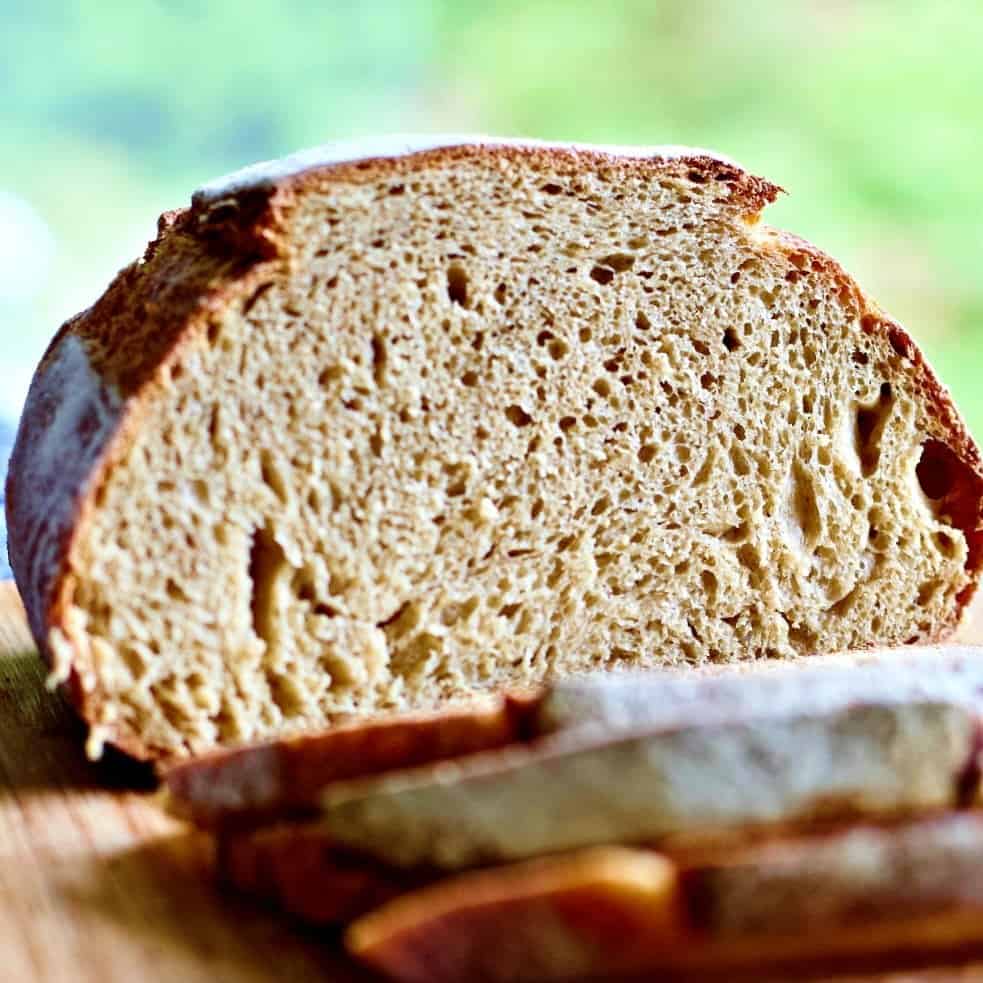
Whole grain flours — especially freshly milled flour — behave very differently from standard white bread flour.
Fresh-milled flour contains the full bran and germ of the wheat berry. While this adds flavor and nutrition, it also changes how the dough develops.
Bran particles act like tiny blades in the dough and can interrupt gluten development, making it harder for the dough to hold gas. This often leads to a loaf that feels heavier and has a tighter crumb.
Fresh flour also tends to absorb more water than store-bought flour, which means dough made with home-milled flour may require higher hydration to develop properly.
What It Means
If you recently switched flours or started milling your own grain, the dough may need adjustments in hydration, fermentation time, or mixing to compensate for the differences in flour structure.
A loaf that feels dense with whole grain flour does not necessarily mean something went wrong — it may simply mean the dough needs a slightly different process.
Quick Fix
If flour type may be affecting your loaf:
- Increase hydration slightly so the bran can fully absorb water.
- Allow longer bulk fermentation to help develop strength and flavor.
- Consider blending some bread flour with whole grain flour for better gluten structure.
- Give freshly milled flour time to hydrate well during mixing and rest periods.
If you’re working with freshly milled flour, you may also find it helpful to read our guide on how different flour types affect sourdough bread structure and crumb.
6. Incorrect Flour Measurement Can Lead to Dense Bread
Another common reason sourdough bread turns out dense is measuring flour inaccurately. Small differences in flour measurement can significantly change the dough’s hydration and texture.
Many beginner bakers measure flour using cups. However, flour can pack differently depending on how it is scooped or stored. A tightly packed cup of flour can contain far more flour than intended, which lowers the dough’s hydration and produces a stiff dough.
When the dough is too dry, it struggles to expand during fermentation and baking, often resulting in a loaf with a tight crumb and heavy texture.
What It Means
If your dough feels unusually stiff or difficult to stretch, it may simply contain too much flour due to volume measuring differences. Even small variations in flour measurement can change how the dough behaves.
For consistent results, many bakers prefer to weigh ingredients using a kitchen scale. Measuring by weight ensures the correct flour-to-water ratio every time.
Quick Fix
If dense bread may be caused by measuring differences:
- Measure flour by weight instead of volume when possible.
- If using cups, fluff the flour first and spoon it into the measuring cup, then level it off.
- Avoid scooping flour directly from the bag or container, which can compact it.
- Pay attention to dough feel — sourdough dough should usually feel soft and extensible, not stiff or dry.
For a deeper explanation of how measurement affects dough hydration and structure, see our guide on measuring sourdough ingredients accurately.
7. You Didn’t Build Enough Surface Tension During Shaping
Shaping is not just cosmetic. It builds structure.
Without proper surface tension:
- The loaf spreads
- The rise is limited
- The crumb tightens
A well-shaped boule traps gases and supports oven spring.
How to Fix It
- Gently tighten the surface during shaping
- Avoid over-degassing
- Keep air inside the dough
If your loaf looks flat before baking, shaping may need refinement. Learn how to shape sourdough for a better bake.
8. There Was Not Enough Steam During Baking
Steam is essential during the first 15–20 minutes of baking.
Without steam:
- The crust sets too early
- Expansion is restricted
- The loaf stays dense
Dutch ovens work well because they trap steam naturally.
How to Fix It
- Bake covered for the first portion of the bake
- Use a Dutch oven or enclosed vessel
- Ensure your oven is fully preheated
If your sourdough bread didn’t rise in the oven, steam may be the missing piece. Learn more about Steam Baking Sourdough.
9. You Cut the Bread Too Soon
It’s tempting. But slicing too early can create a gummy interior.
Sourdough continues setting as it cools. Cutting while hot compresses the crumb and makes it appear dense.
How to Fix It
- Cool completely before slicing
- Listen for “bread music” — the crust crackling as it cools
- Use a sharp serrated knife
Watch the Dough, Not the Clock
Many bakers follow timing exactly and still end up asking why their sourdough bread is dense. Fermentation speed changes with temperature, flour type, and starter strength.
Instead of relying only on time, look for:
- Visible aeration throughout the dough
- Slight doming during bulk fermentation
- Dough that feels elastic and alive, not stiff or slack
Reading the dough correctly prevents most density problems before baking even begins. Learn How to Proof sourdough.
How to Fix Dense Sourdough Bread and Get a Lighter Crumb
Getting an open crumb is not about one single adjustment. It is the result of balanced fermentation, strong gluten development, proper hydration, and correct baking technique working together.
To prevent dense sourdough bread:
- Use a strong, active starter
- measure Accurately
- Ferment fully (but not excessively)
- Maintain proper hydration
- Shape with tension
- Bake with steam
- Cool completely
When all of these work together, you’ll see better oven spring and a more open crumb.
Frequently Asked Questions
Why is my sourdough bread gummy inside?
Sourdough bread is usually gummy inside because it was underproofed or sliced before it fully cooled. Underproofed dough does not develop enough internal structure, and cutting the loaf while hot compresses the crumb. Let the bread cool completely and ensure full fermentation before baking.
Why didn’t my sourdough bread rise?
If your sourdough bread didn’t rise, the most common causes are a weak starter, underproofing, overproofing, or lack of steam during baking. A healthy starter should reliably double after feeding before being used in dough.
Can a weak starter cause dense sourdough bread?
Yes. A weak starter is one of the most common reasons sourdough bread turns out dense. If your starter does not double predictably after feeding, it may not have enough strength to properly leaven the dough.
Does hydration affect sourdough density?
Yes. Lower hydration doughs tend to produce a tighter, denser crumb, while higher hydration doughs allow for a more open and airy structure. However, hydration is only one factor among several that influence crumb texture.
Why is my sourdough bread dense even though I followed the recipe?
Even if you followed the recipe exactly, sourdough bread can turn out dense because fermentation depends on more than measurements alone. Temperature, starter strength, proofing time, shaping, and steam all influence the final rise and crumb structure.
How do I fix tight crumb sourdough?
To fix tight crumb sourdough, focus on strengthening your starter, fermenting the dough fully, maintaining proper hydration, shaping with surface tension, and baking with steam. Small adjustments in these areas usually improve crumb openness quickly.
Why is my sourdough bread heavy and tight?
Sourdough bread feels heavy and tight when fermentation is incomplete, hydration is too low, or shaping did not build enough tension. Adjusting fermentation time and improving dough strength usually corrects the issue.
Final Thoughts:
Dense sourdough bread is part of the learning curve. Sourdough baking makes more sense as you learn all the tips and tricks to producing a good loaf. The process is fascinating and so worthwhile.
Sourdough baking is a balance of fermentation, structure, and timing. Once you learn to read your dough with your eyes and hands, dense loaves become rare.
Use this guide alongside your artisan sourdough recipe to make small adjustments, and keep baking. Each loaf teaches you something new.
Dense sourdough bread is rarely a mystery once you understand fermentation. If you’re still wondering why your sourdough bread is dense, review each section above and adjust only one variable at a time.
With practice, your loaves will become lighter, taller, and more open — and dense crumb will become the exception, not the norm.
Use this guide alongside our Beginner Artisan Sourdough Bread Recipe and adjust one variable at a time.
More Sourdough Troubleshooting Help:
Bakers often blame density on one thing when it’s really a mix of hydration + fermentation + shaping. If your sourdough bread is still coming out dense, one of these guides may help you identify the step that needs adjustment. Visit our Sourdough Baking Hub to see all our baking guides and get the bigger picture and adjust your process as needed for a better bake.
- Starter not rising strongly? Read our guide on feeding and strengthening a sourdough starter.
- Dough texture feel off? Learn how hydration affects sourdough dough, crumb, and structure.
- Not sure if your dough is ready to bake? See how to proof sourdough for the best bake.
- Learn How to Properly Shape Sourdough.
- Read our Crumb Structure Guide for more ideas on dense bread.
Read our Comprehensive Sourdough Troubleshooting guide here.