
What Is Dough Structure in Sourdough?
As an Amazon Associate and member of other affiliate programs we earn a small commission from qualifying purchases through our affiliate link. For more information read our Entire Affiliate Disclosure.
Dough structure in sourdough baking is the internal framework of the bread. This framework allows sourdough bread to hold shape, trap gas, rise properly, and develop what we see as the crumb of the bread.
Experienced bakers learn how to create dough with enough organized gluten structure to support fermentation and expansion without collapsing. Different balances of strength, extensibility, fermentation, and gas retention create different loaf shapes and crumb structures.
Gluten is the bones of dough structure. Gas is the muscle.
Gluten holds the gas that creates the bread rise, loaf shape and crumb. It must be strong enough to do the job.
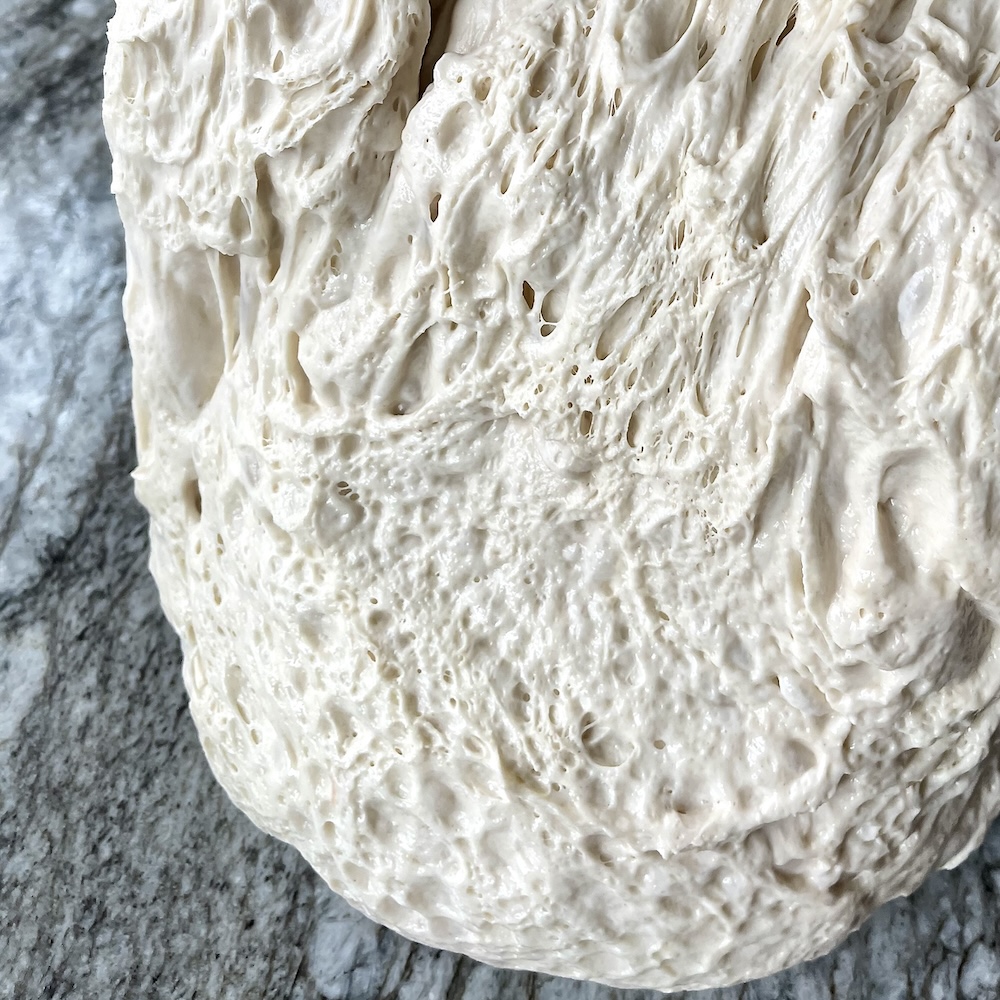
Dough structure in sourdough is built gradually throughout the dough making process. Hydration, mixing, folds, fermentation, shaping, and proofing all impact what the dough structure can offer the final bake.
Every stage of the process changes the dough’s ability to stretch, retain gas, and support the final loaf.
Learning to read dough structure tells bakers why some loaves spring tall in the oven while others spread flat, collapse, or develop dense and uneven crumb. The gas and gluten must attain balance to create a proper framework for your bread.
Sourdough Structure Comparison At Bench:
Pictured below are two doughs at bench.
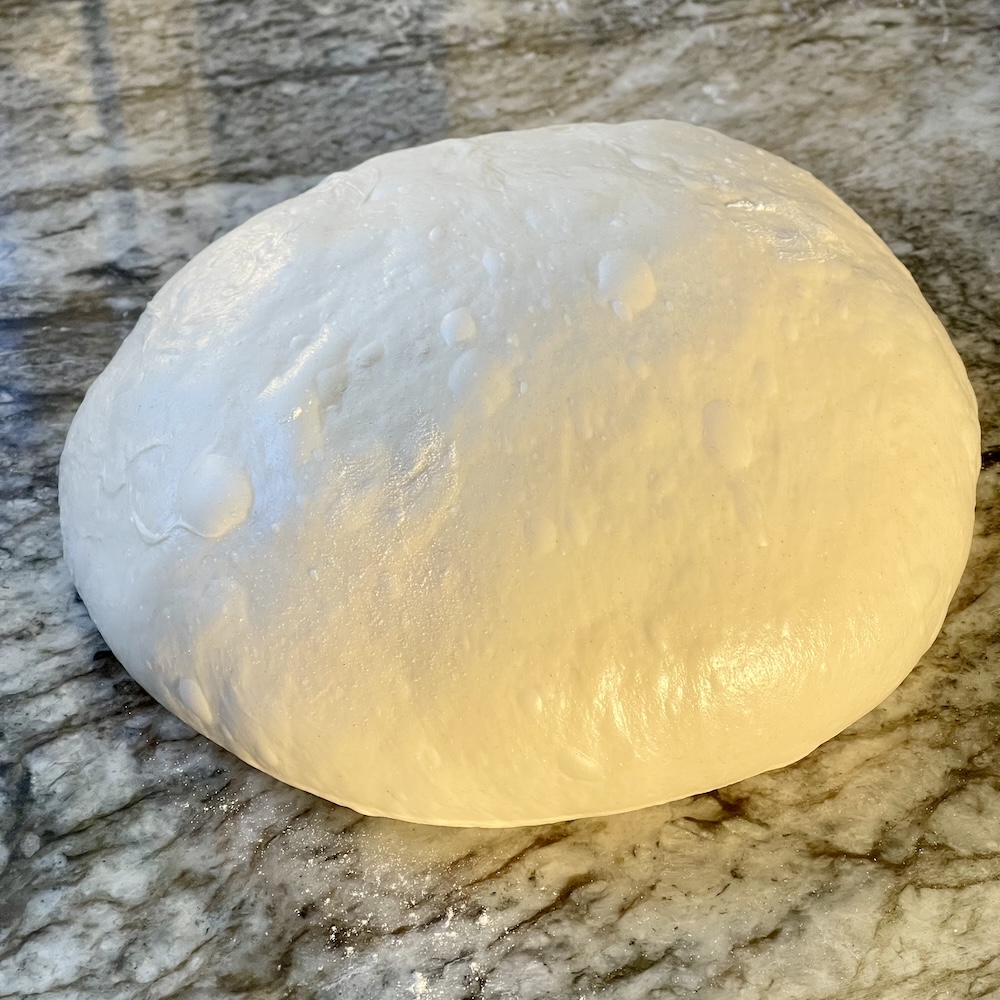
Well Structured Dough
Notice the rounded shape, visible gas bubbles, and smooth surface tension. This dough is holding fermentation gases effectively and maintaining structure at the bench.
The loaf shape and crumb will be higher with better oven spring and a have more even crumb.
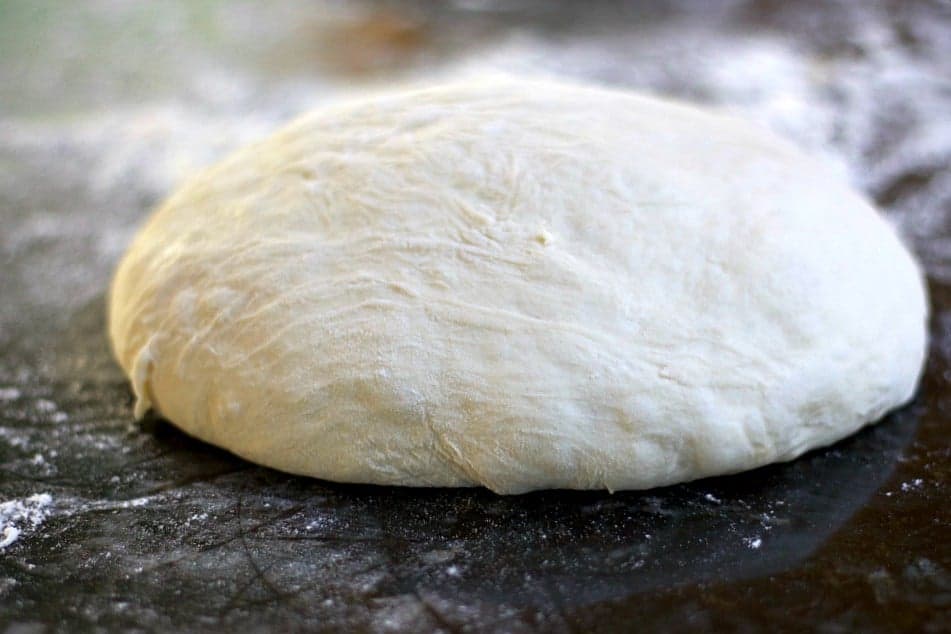
Weak Dough Structure
This dough is spreading outward and collapsing at the edges. Weak gluten organization and poor gas retention often lead to flatter loaves with weaker oven spring.
Dough Structure Is About Balance, Not Maximum Strength
Good dough structure is about balance. The dough needs enough elasticity to hold shape and trap fermentation gases, but also enough extensibility to stretch and expand during proofing and baking.
A dough that is too weak may spread flat or collapse.
A dough that is too tight may resist expansion and produce dense or compressed crumb.
Good sourdough structure balances:
- strength
- flexibility
- gas retention
- extensibility
- fermentation activity
This balance changes continuously throughout the bake.
Gluten Alone Does Not Create Dough Structure
Gluten forms the framework of the dough, but fermentation gases expand and shape that framework over time.
As the starter ferments the dough:
- gas inflates the gluten network
- folds reorganize and strengthen the gluten
- fermentation stretches the gluten while the dough inflates with gas.
- shaping tightens and supports it
- baking permanently sets the final structure
Dough structure building is a dynamic process, constantly changing as the baker works it through the stages.
The dough may feel tight early in bulk fermentation, then become smoother, lighter, and more extensible as gas develops inside it.
Eventually, if fermentation goes too far,(over fermentation), the gluten network can weaken and begin collapsing.
Why Early Dough Development Matters
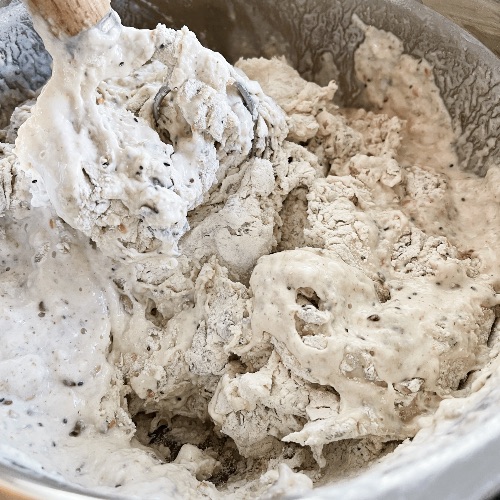
Strong sourdough structure usually begins early in the mixing and folding stages.
When gluten strand network is properly organized early:
- the dough traps gas more efficiently
- fermentation becomes more even
- shaping becomes easier
- the dough holds tension better
- oven spring improves
Fermentation expands existing structure with gas. It does not create strong structure from nothing.
This is why weak dough often struggles later even if fermentation appears active.
If the gluten network is poorly organized early on, the dough may:
- spread during proofing
- tear during shaping
- lose tension quickly
- collapse under expansion
- produce weak oven spring
Many final loaf problems actually begin much earlier in bulk fermentation than most bakers realize.
How Mixing Builds Dough Structure
Hydration begins gluten development as flour absorbs water. Mixing then organizes those gluten strands into a cohesive network capable of trapping fermentation gases. Read our guide on Understanding Hydration in Sourdough for more in depth information.
Different mixing and hydration methods can change how quickly dough develops strength and extensibility. Methods like autolyse, fermentolyse, saltolyse, and bassinage all affect gluten organization differently and may change how the dough behaves throughout fermentation.
Some doughs develop structure quickly during mixing, while others build strength gradually through folds and fermentation.
The flour type, hydration level, starter activity, and mixing method all affect how quickly dough structure develops.
Many bakers notice that well-developed dough begins showing elasticity and windowpane strength earlier in bulk fermentation.
A smooth, cohesive dough often indicates that gluten organization is progressing well.
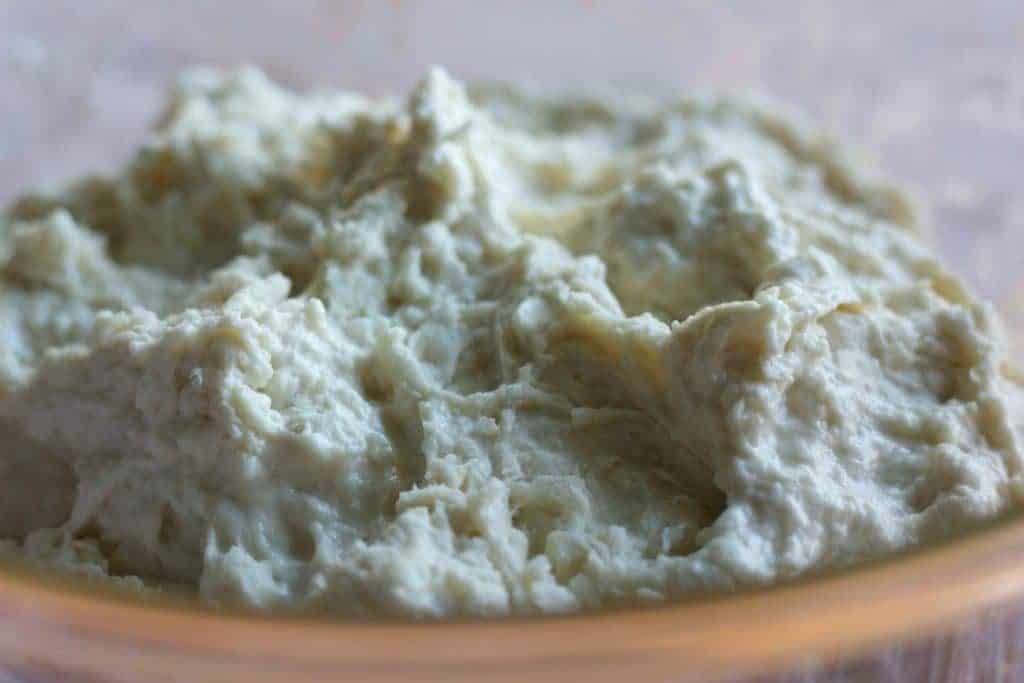
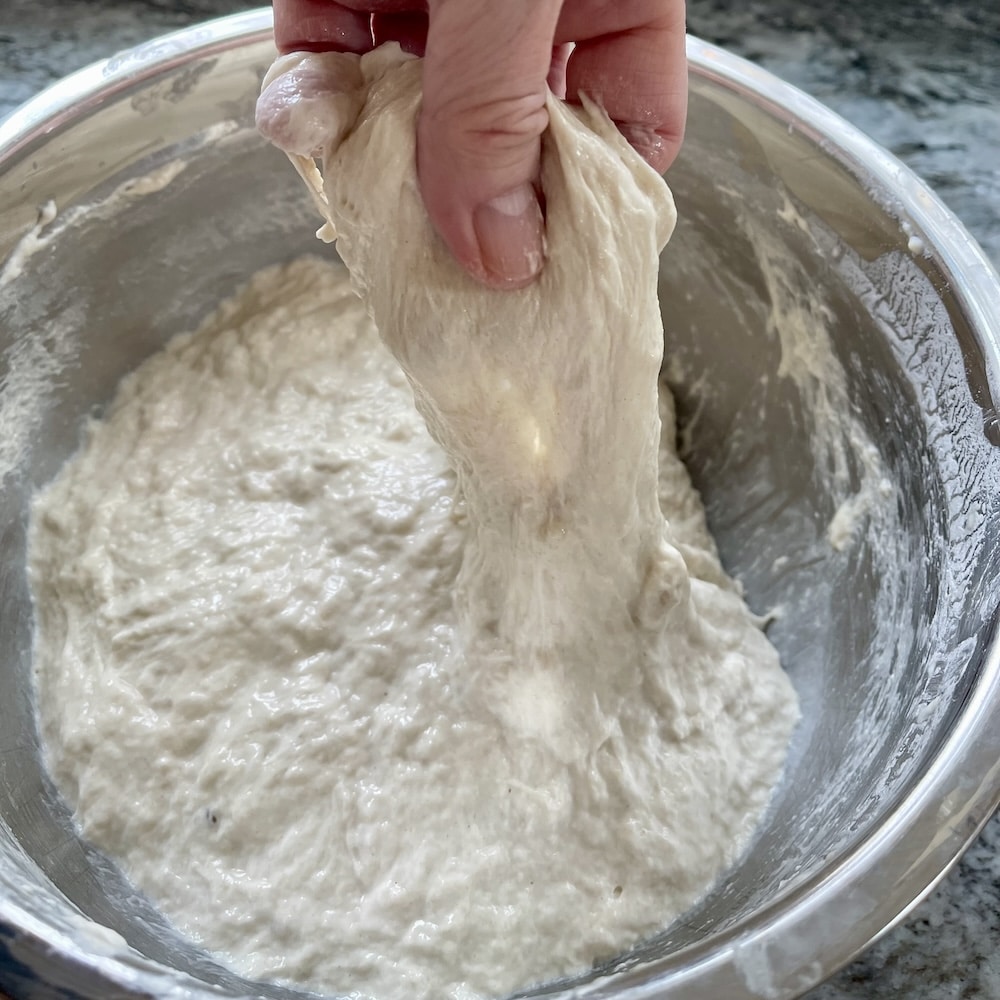
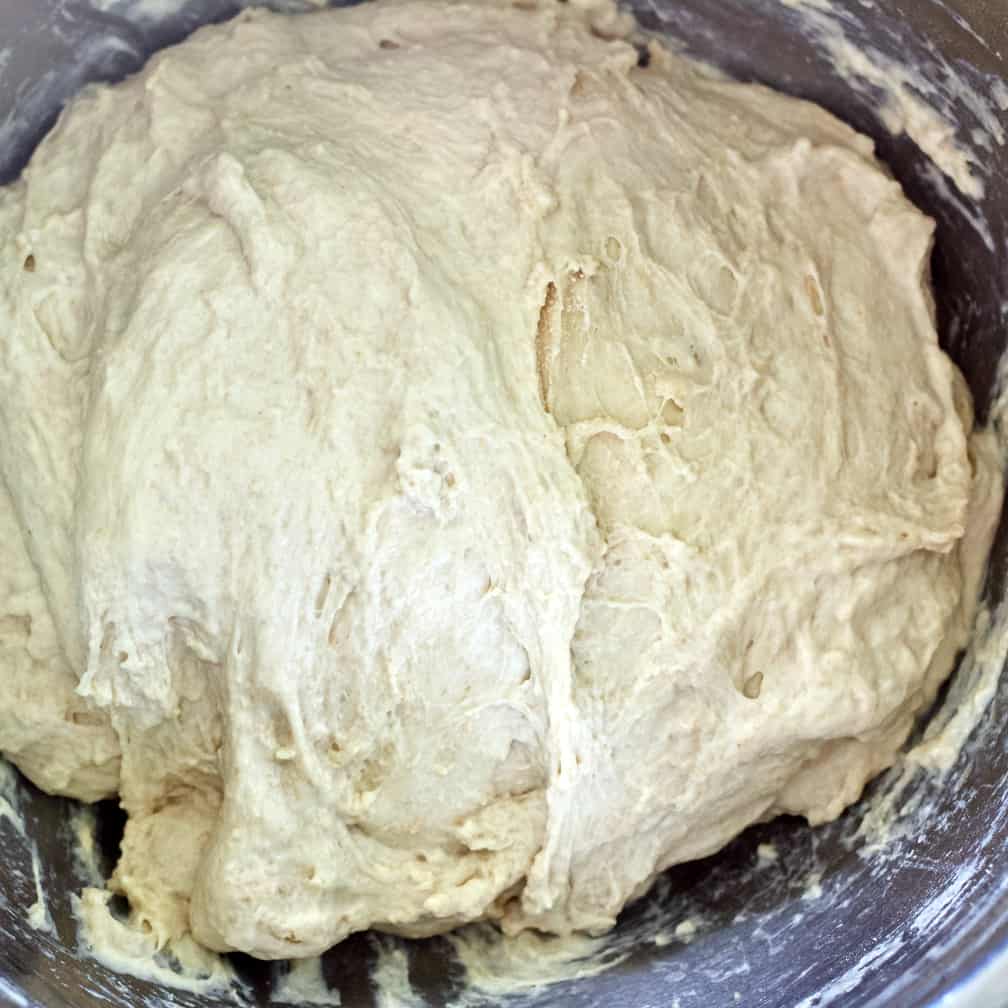
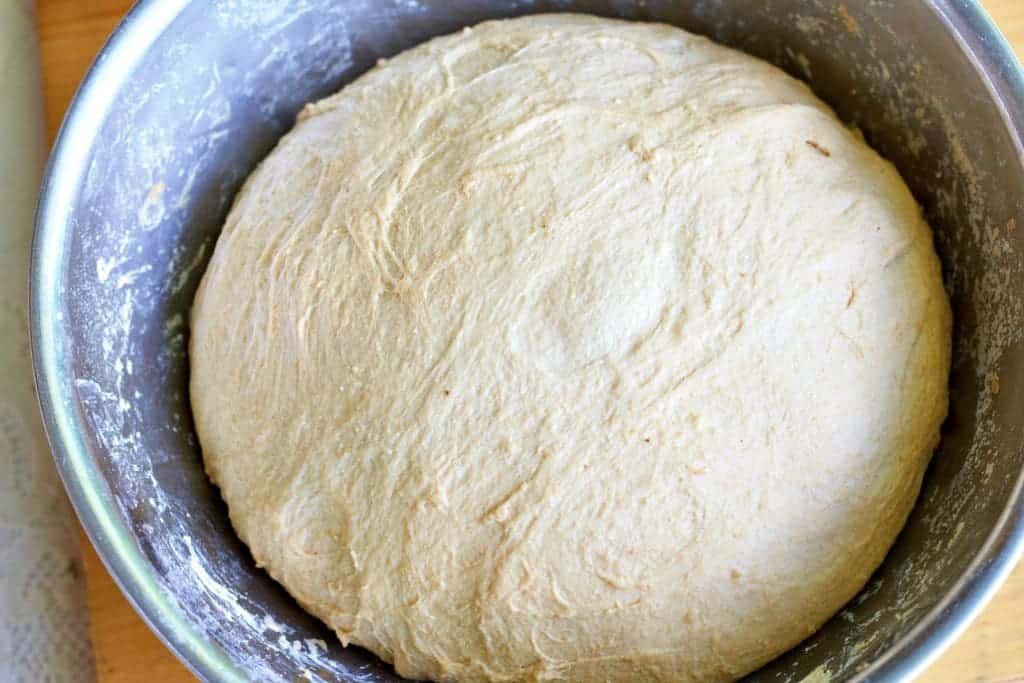
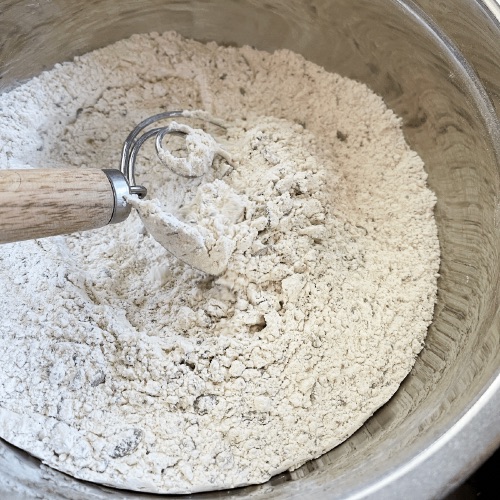
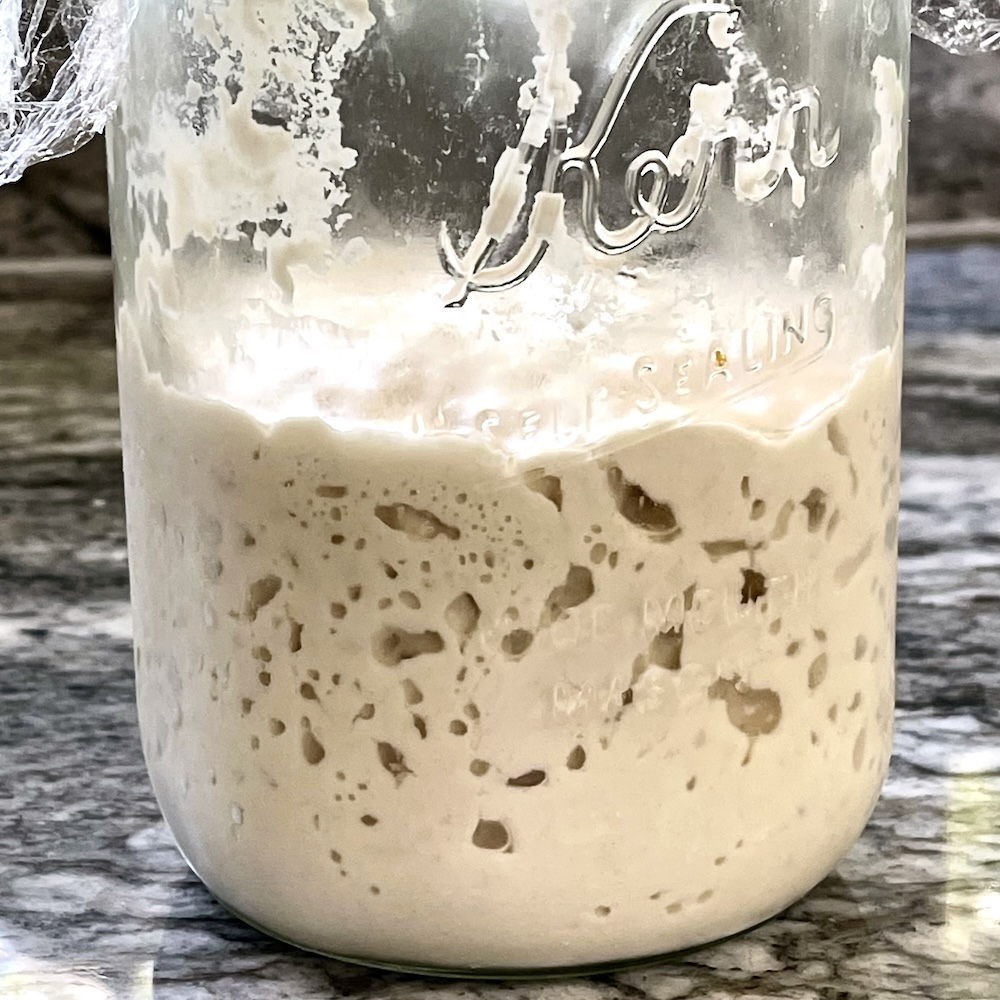
Notice in the gallery above a progression from the direct mix, shaggy ball stage, to finished folds and bulk rise phase. The dough strength is mostly built at this point.
Stretch and Folds vs Coil Folds
Both stretch and folds and coil folds help strengthen sourdough dough, but they affect structure differently.
Stretch and folds:
- organize gluten more aggressively
- build tension quickly
- help strengthen weaker doughs
- work well in lower hydration doughs
- can degas dough more heavily
Coil folds:
- strengthen dough more gently
- preserve fermentation gases better
- work especially well in wetter doughs
- maintain extensibility more effectively
- are often less disruptive later in bulk fermentation
Early in bulk fermentation, stronger mechanical folds may help organize the dough.
Later in fermentation, gentler handling often helps preserve the gas and structure already developed.
Good sourdough structure is not only about building strength. It is also about preserving it.
How Starter Activity Affects Dough Structure
Starter strength directly affects how quickly dough structure develops and changes during fermentation.
An active starter:
- produces gas more rapidly
- expands the dough earlier
- increases fermentation pressure
- accelerates acid production
A sluggish starter may delay gas production and leave the dough underdeveloped for much longer. Learn more on how to maintain a healthy sourdough starter.
As fermentation progresses, acids and enzymes gradually weaken gluten structure over time. This is one reason overproofed dough often becomes slack, sticky, and difficult to shape.
Healthy fermentation strengthens dough early, but excessive fermentation eventually weakens it.
This balance is one of the most important skills sourdough bakers learn.
Elasticity vs Extensibility
Understanding elasticity and extensibility helps explain many common dough behaviors.
Elasticity
is the dough’s ability to resist stretching and spring back.
Extensibility
is the dough’s ability to stretch without tearing.
Strong sourdough needs both.
Too much elasticity can make dough feel tight and resistant.
Too much extensibility can make dough feel slack and difficult to shape.
Hydration, flour type, fermentation level, folds, and handling all affect this balance.
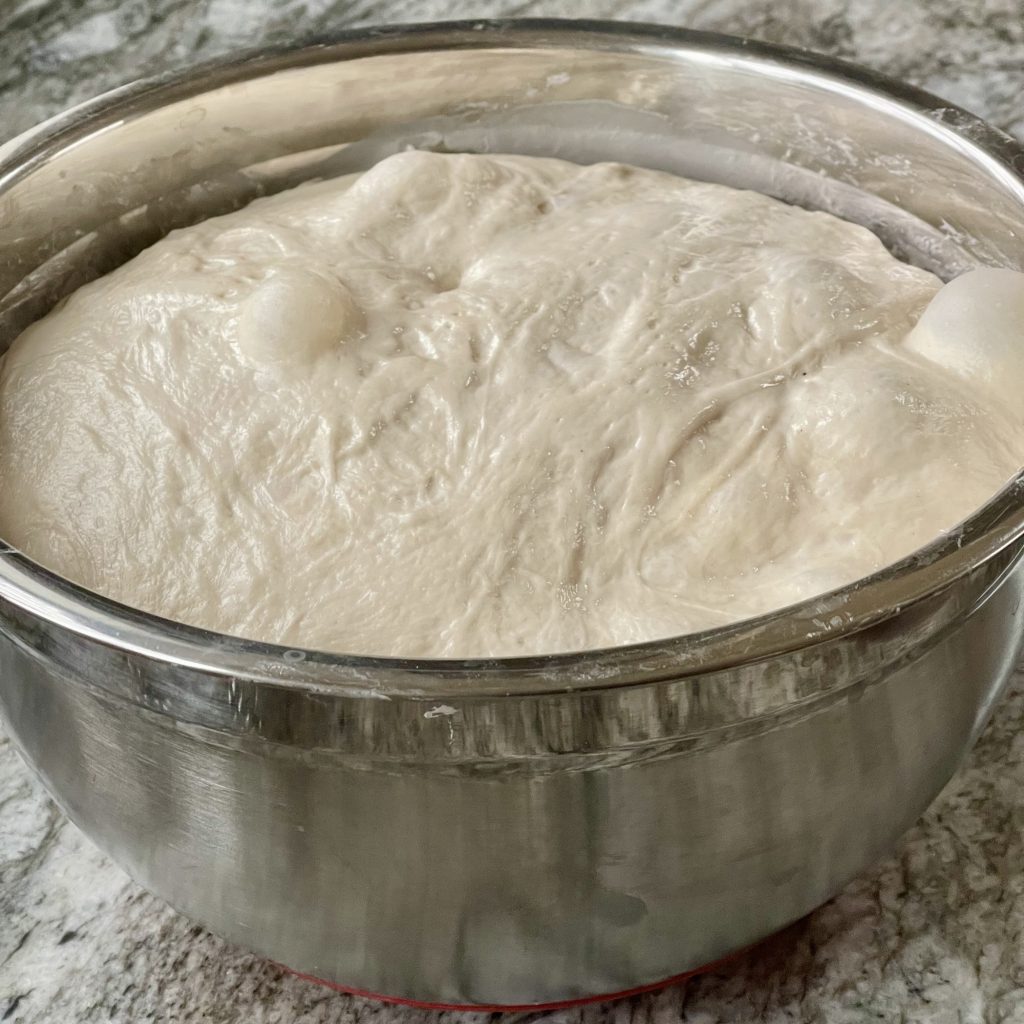
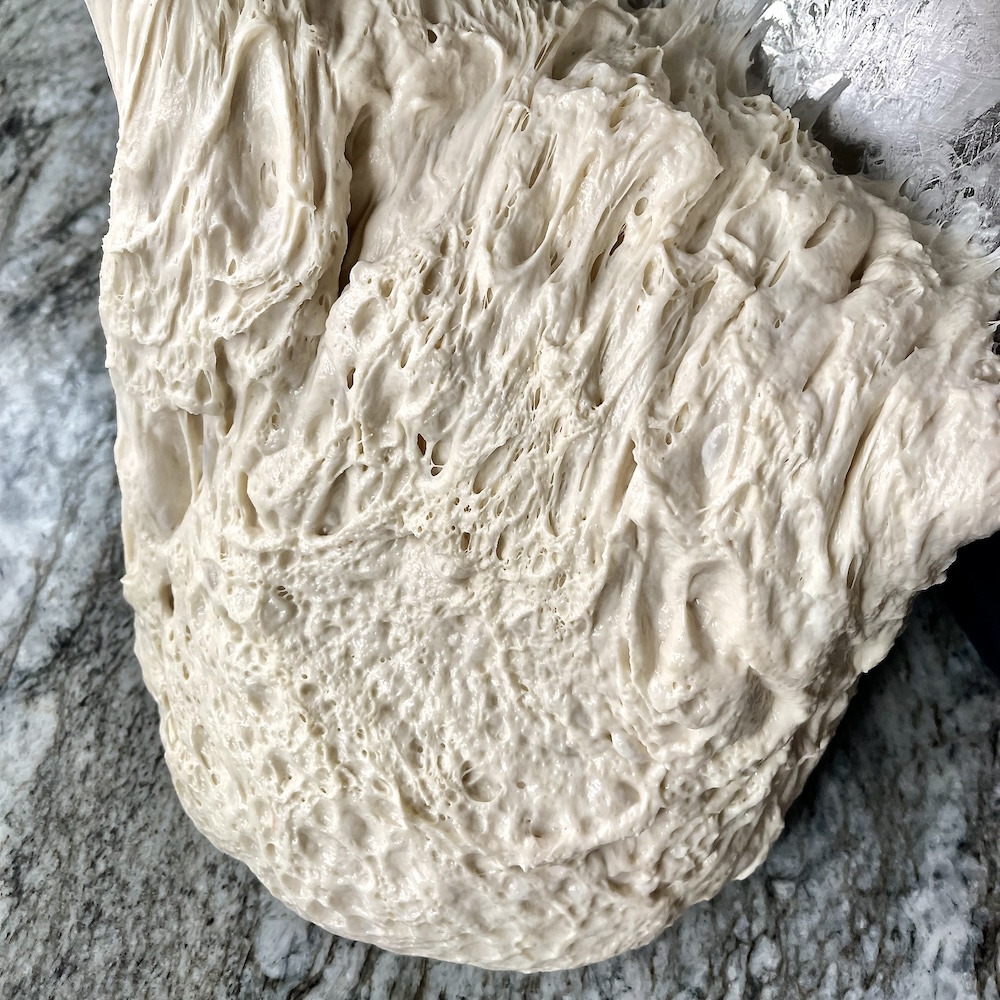
The bubbles developed during bulk fermentation become the internal gas structure of the final loaf. The gluten network must be organized enough to support and retain those gases without collapsing.
How To Read Dough Structure During Bulk Fermentation
Experienced bakers learn to evaluate dough structure by observing how the dough behaves throughout fermentation.
Signs of developing structure often include:
- smoother surface texture
- increased elasticity
- rounded edges after folds
- gas retention
- cohesive movement
- jiggle with support
- easier tension building
- early windowpane development
Windowpane testing can help evaluate gluten organization, but it is only one indicator.
A dough may technically pass a windowpane test while still lacking enough fermentation strength or gas retention for strong oven spring.
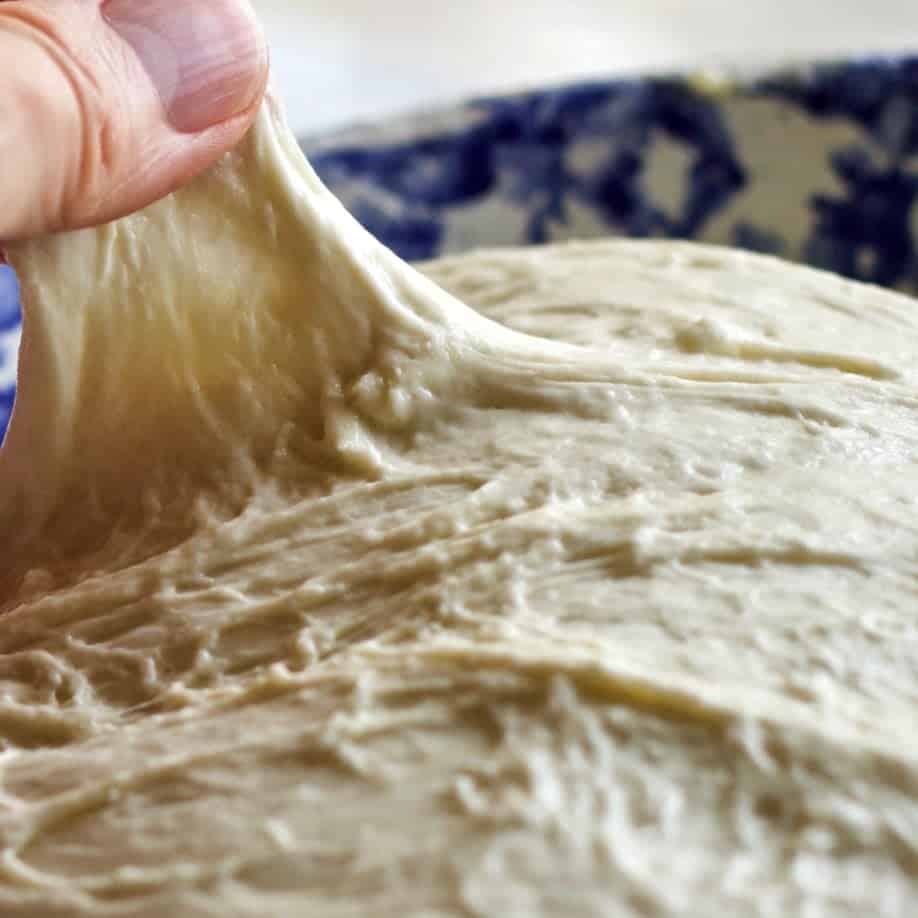
The overall feel of the dough matters just as much:
- elasticity
- cohesion
- tension
- extensibility
- gas development
These signs together provide a clearer picture of structural development than any single test alone.
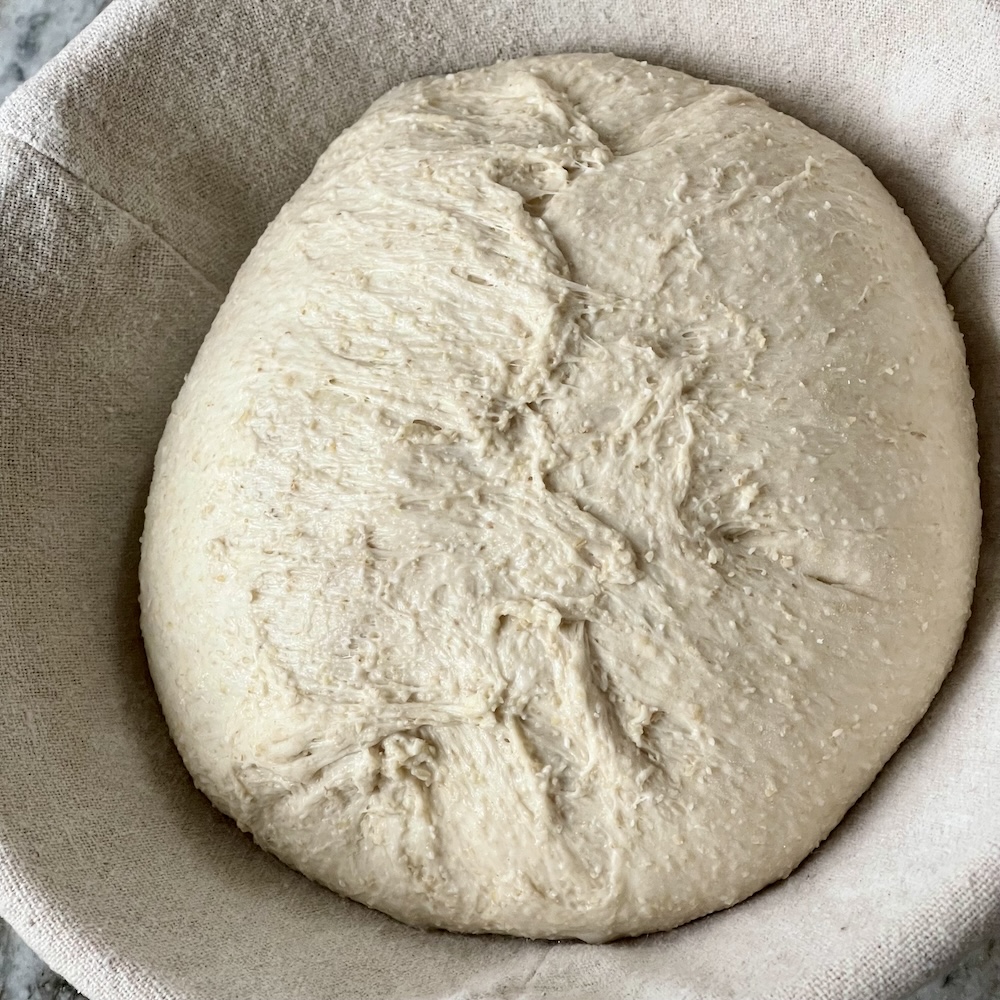
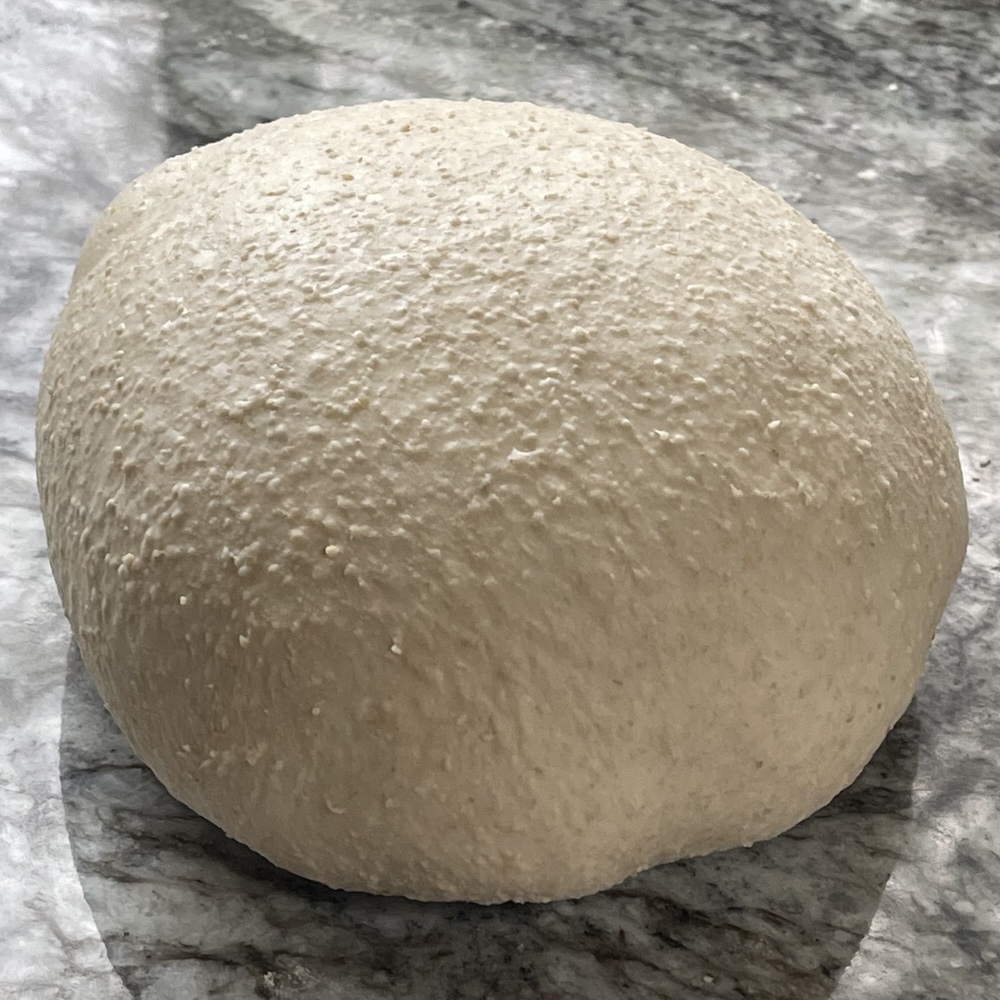
Surface tension reveals the condition of the internal dough structure. Puffy rounded dough, visible fermentation bubbles, and smooth tension across the surface usually indicate balanced gas retention and gluten organization.
The gluten and gas are balanced.
Surface Tension vs Internal Structure
Shaping creates surface tension, but shaping alone cannot fully compensate for weak internal dough structure. For more on shaping sourdough read this complete guide.
A properly shaped loaf depends on:
- organized gluten
- good fermentation balance
- sufficient gas retention
- internal strength already developed during bulk fermentation
If the dough lacks internal structure, tight shaping may only temporarily hold the loaf together before it spreads during proofing or baking.
This is why strong shaping technique works best when the dough itself is already healthy and organized.
How Weak Dough Structure Appears in Finished Bread
Weak dough structure often shows up in the final loaf in recognizable ways.
Common signs include:
- sloping shoulders
- flat or spreading loaves
- weak oven spring
- collapsed scoring
- tunneling under the crust
- compressed or gummy areas
- fragile crumb walls
- lack of height
These symptoms are not always caused by a single mistake.
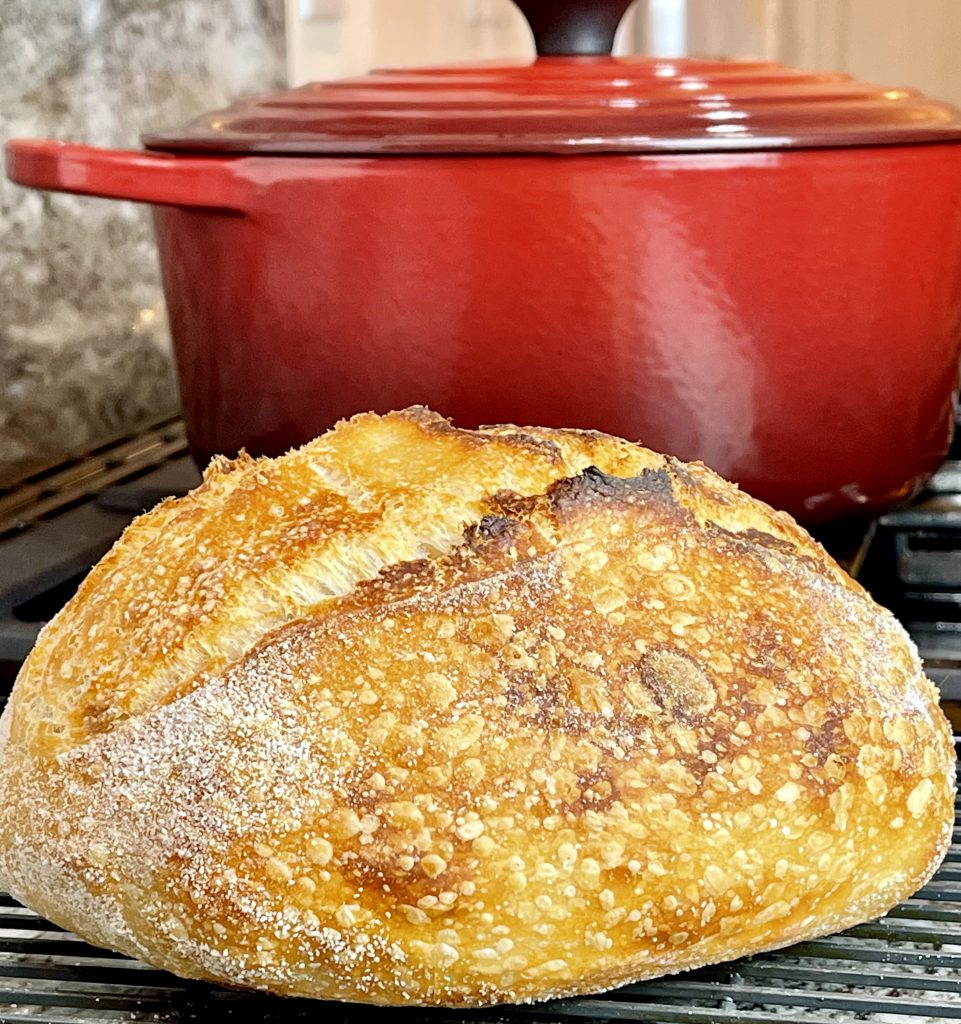
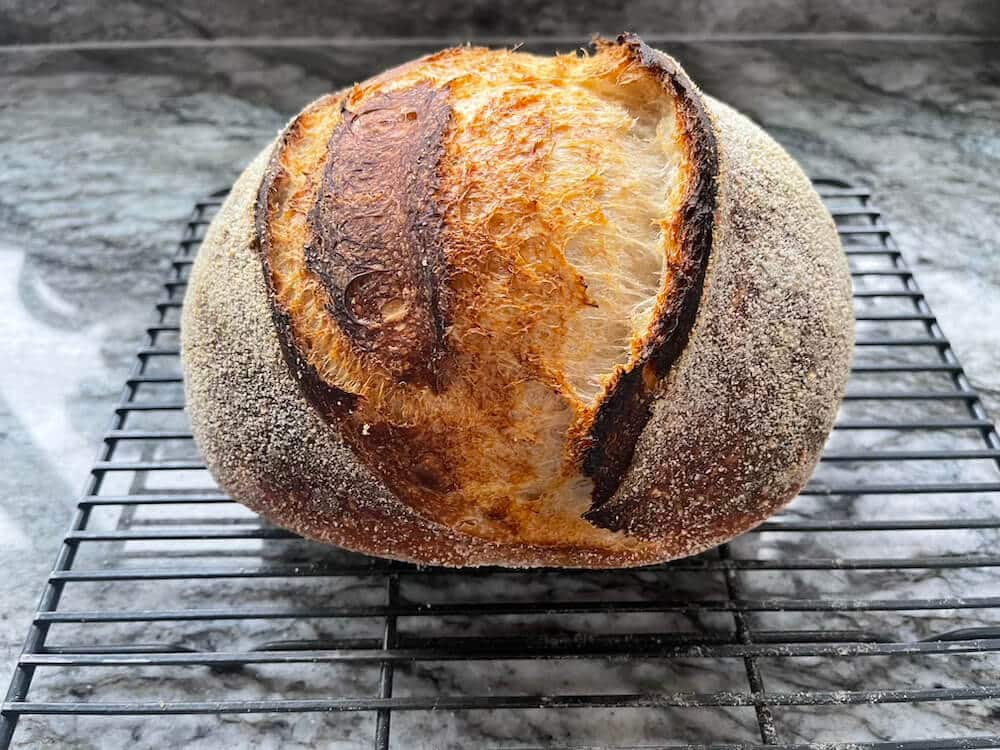
They often reflect the cumulative effect of:
- weak gluten organization
- overfermentation
- poor gas retention
- excessive handling
- inadequate early strength development
Flour Type Changes Dough Structure
Different flours behave differently during fermentation and structure development. Read more about sourdough flour types in our Sourdough flour type guide.
Whole grain and fresh milled flours often ferment faster and absorb water differently than white bread flour.
Rye flour contributes flavor and fermentation activity but develops weaker traditional gluten structure.
Higher hydration doughs typically require better gluten organization to support expansion.
This is one reason flour choice changes both dough handling and fermentation timing.
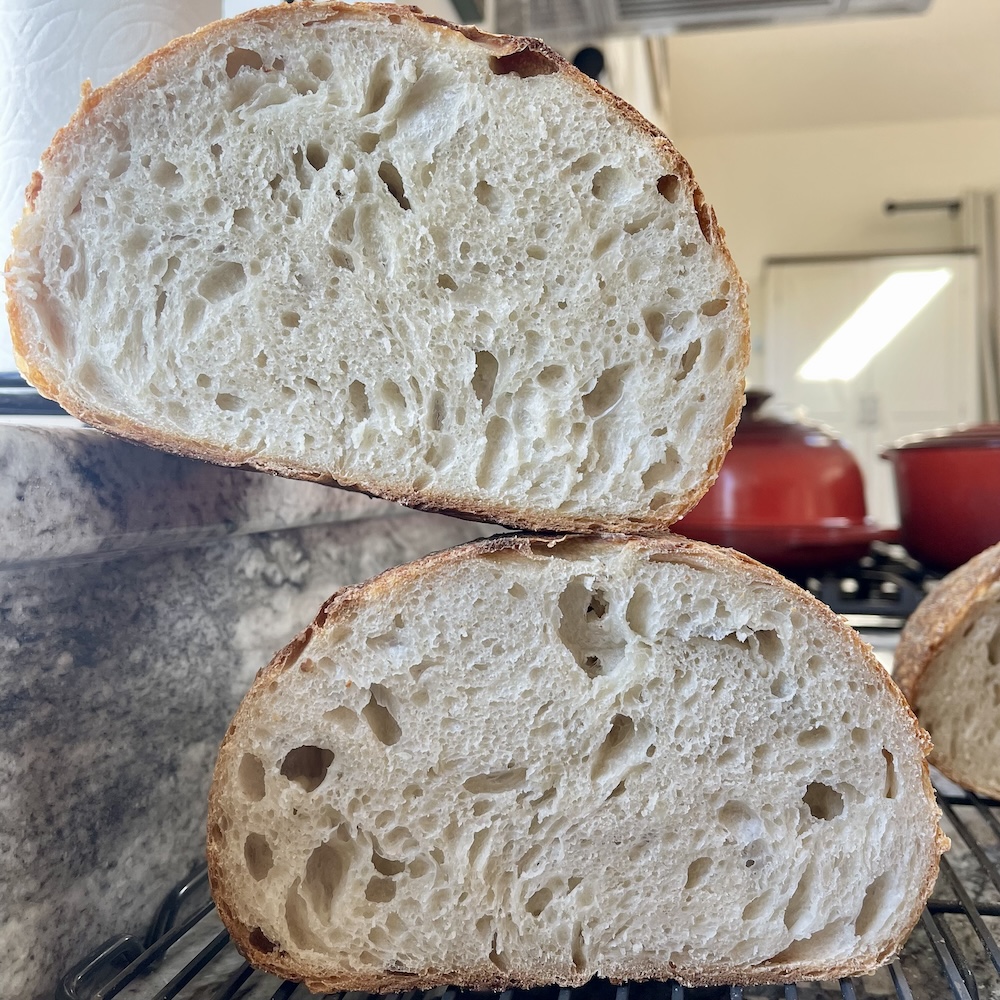

To learn more about how to read and control sourdough crumb, read our guides on how to read sourdough crumb to diagnose trouble in your process, and how to control sourdough crumb to learn how to create the crumb you’re trying to acheive.
If you have further problems in your sourdough bread making processes, read our complete sourdough trouble shooting guide to help you find the solution.
Dough Structure Changes Constantly During Fermentation
One of the most important things bakers learn is that dough structure is temporary.
The dough is constantly:
- strengthening
- stretching
- inflating
- reorganizing
- weakening
At different stages of fermentation, the same dough may feel:
- tight
- elastic
- airy
- extensible
- fragile
Why is this important? Because if you don’t build adequate structure in the early stage of dough development, before the bulk rise stage, the dough structure will be weak at the shape. This is where sloping shoulder loaves and low rise and dense crumb often come from.
Frequently Asked Questions About Dough Structure in Sourdough
What creates dough structure in sourdough bread?
Dough structure develops from the interaction between gluten development, fermentation gases, hydration, and handling.
Gluten forms the framework of the dough while fermentation gases inflate and stretch that framework over time.
Mixing, folds, fermentation, shaping, and proofing all affect how well the dough can trap gas and support the final loaf.
Why does my sourdough dough feel weak or slack?
Weak sourdough dough can result from several causes, including underdeveloped gluten, excessive hydration, overfermentation, weak flour, or insufficient strengthening during bulk fermentation.
As fermentation progresses, acids and enzymes gradually weaken gluten structure. Dough that ferments too long often loses tension and spreads more easily during shaping or proofing.
Does passing a windowpane test mean my dough has enough strength?
Not always.
A windowpane test helps evaluate gluten organization and extensibility, but it is only one indicator of dough strength.
Dough may technically pass a windowpane test while still lacking enough gas retention or fermentation balance for strong oven spring.
Experienced bakers also evaluate: elasticity, cohesion, dough tension, gas retention, overall dough feel
What is the difference between elasticity and extensibility in dough?
Elasticity is the dough’s ability to spring back and resist stretching.
Extensibility is the dough’s ability to stretch without tearing.
Good sourdough structure requires both. Dough that is too elastic may resist expansion, while dough that is overly extensible may spread flat or struggle to hold tension.
Can dough structure weaken during fermentation?
Yes. Dough structure constantly changes during fermentation.
Early fermentation often strengthens dough as gluten organizes and gas develops. However, excessive fermentation eventually weakens gluten structure as acids and enzymes continue breaking down the dough.
This is why overproofed dough often becomes sticky, slack, or difficult to shape.
Do stretch and folds and coil folds affect dough structure differently?
Yes. Stretch and folds organize gluten more aggressively and build tension quickly, which can help strengthen weaker doughs early in bulk fermentation.
Coil folds strengthen dough more gently while preserving fermentation gases and extensibility. Many bakers prefer coil folds later in bulk fermentation when maintaining gas retention becomes more important.
Final Thoughts
Good sourdough structure is built early, managed carefully during fermentation, and preserved through handling and shaping. As bakers experience different methods of building sourdough, the effects on the dough structure will become more apparent.
Structure in sourdough is not created by one fold, one shaping technique, or one proofing method alone. There are many variables at play in any given dough.
Dough structure develops from the interaction between:
- gluten development
- fermentation activity
- gas retention
- hydration
- handling
- timing
Understanding dough structure helps bakers move beyond simply following recipes and begin reading the dough itself. That understanding is what leads to more consistent fermentation, stronger shaping, better oven spring, and more predictable sourdough bread.
That experience and understanding is what eventually leads to more consistent oven spring, better crumb, stronger shaping, and more predictable sourdough bread.
For deeper study on fermentation and dough strength development, Trevor J. Wilson’s book Mastering Bulk Fermentation is an excellent resource for serious sourdough bakers.