
How to Read Sourdough Crumb Structure
As an Amazon Associate and member of other affiliate programs we earn a small commission from qualifying purchases through our affiliate link. For more information read our Entire Affiliate Disclosure.
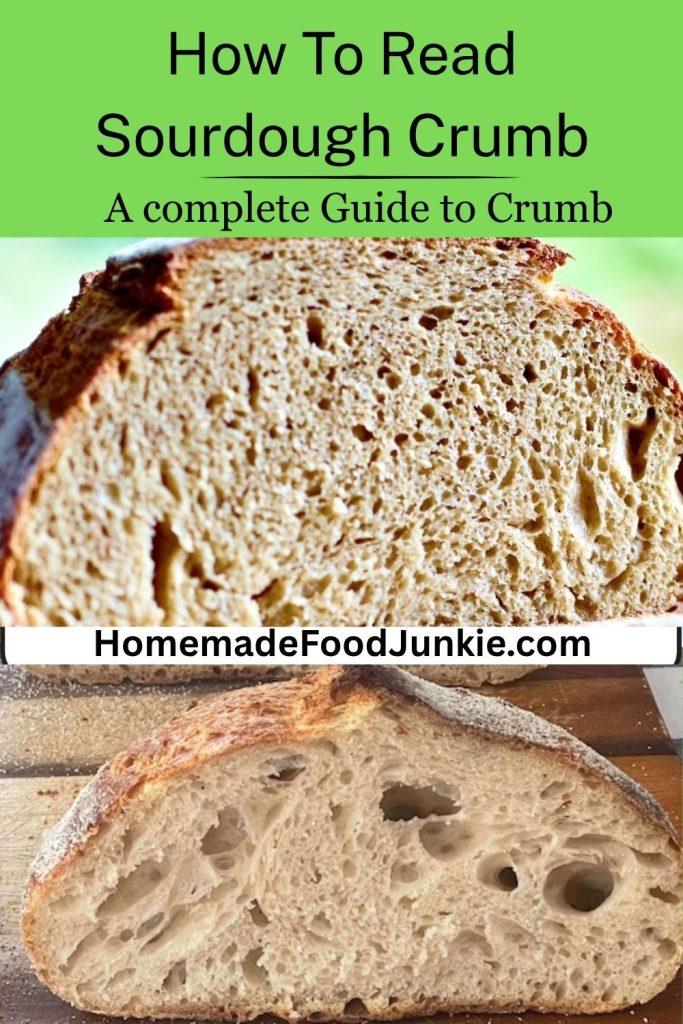
A practical guide to understanding your sourdough crumb structure.
This post teaches you how to read your crumb—not control it.
When you slice a loaf, the crumb tells the story of what happened during fermentation, shaping, and baking.
Once you know what to look for, your crumb becomes one of the most powerful diagnostic tools in sourdough baking—helping you identify problems, recognize improvements, and make better bread with each bake.
When you know how to read your crumb, this post, How to Control Sourdough Crumb (Open vs Soft Sandwich Style), will teach you how to make the proper adjustments to get the crumb you want to bake And eat.
Before you can improve your sourdough, you need to understand it.
A dense crumb, uneven holes, or a collapsed gluten structure can all point to specific stages in the bread-making process that may need adjustment. Read this post through to understand what your bread crumb is saying to you about those processes.
Every loaf gives you feedback:
• how well it fermented
• how strong the dough structure was
• how shaping affected gas distribution
Without reading your crumb, baking becomes guesswork.
Reading crumb is not about judging your bread—it’s about learning from it.
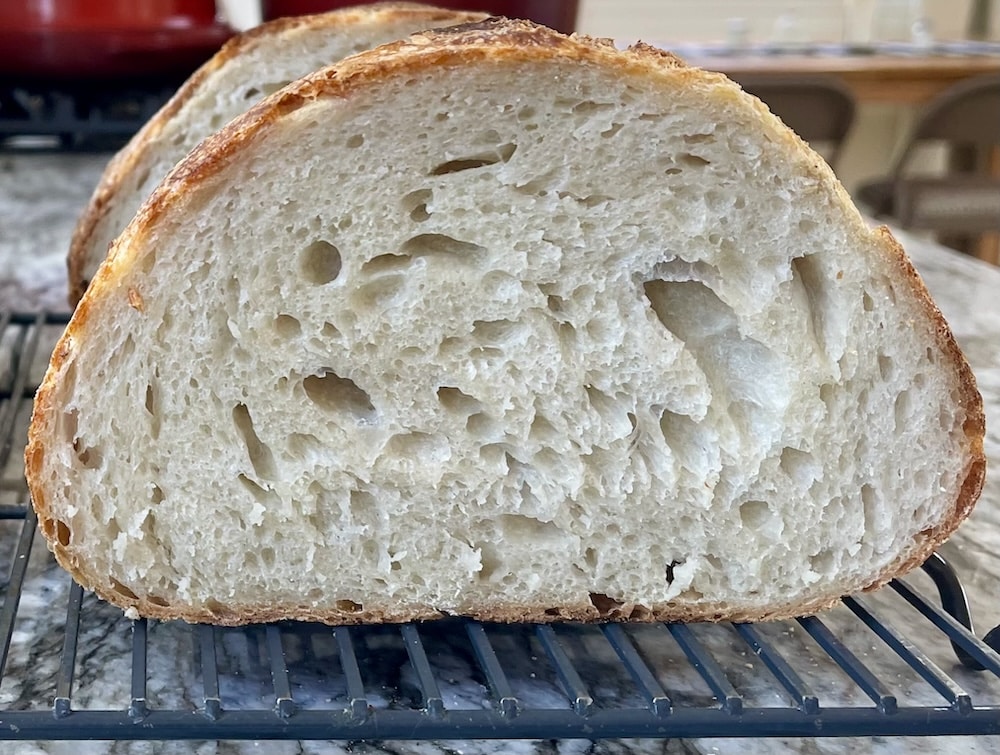
This guide Covers Understanding What You See In Your Crumb:
By the end of the guide, you’ll be able to read your sourdough crumb structure and Know what it is telling you about your baking techniques.
• what a balanced sourdough crumb looks like
• common crumb patterns and what they mean
• variables that affect crumb structure
• how whole grain baking looks in breads crumb.
• how shaping and degassing affects crumb texture- For more on this read our complete Sourdough Shaping guide.
• how to objectively evaluate whether your loaf was successful.
How to Objectively Evaluate Your Sourdough Crumb Structure
Many bakers believe that a successful sourdough loaf must have very large open holes. That is not true. Bakeries are full of lovely sourdough breads with a vast variety of Crumb styles. Crumb structures vary depending on the bread, flour, technique and bakers vision.
All successful sourdough crumb structures share several characteristics.
Even hole distribution
Air pockets should appear throughout the loaf rather than clustering in one area.
Strong crumb walls
The structure between holes should appear elastic and intact.
Soft but not gummy
The crumb should feel soft but dry, or creamy to the touch. Not gummy or wet.
Consistent texture
Texture should feel similar across the slice even if hole sizes vary.
Resilience
The crumb should compress slightly and spring back when pressed.
A good crumb structure reflects proper dough strength, construction and gas distribution while still producing slices that are practical for eating.
Not everyone agrees on the vision of a good crumb. but once you know what sourdough bread you want to bake, the attributes listed above should still define your crumb.
What a Good Sourdough Crumb Structure Looks Like
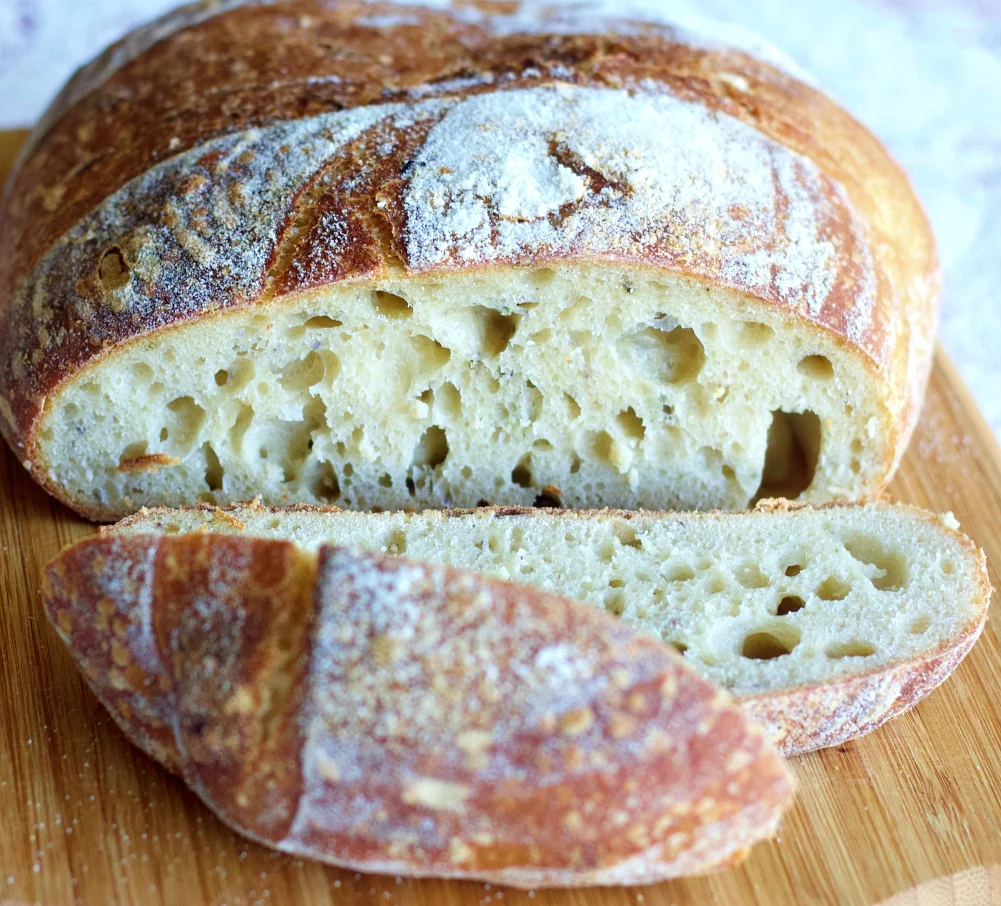
A well-structured sourdough crumb is defined by balance—not just large holes.
Look for:
- a mix of small and medium (or larger) air pockets
- evenly distributed holes(alveoli) throughout the loaf
- strong, elastic crumb walls
- a light, springy texture
The key is consistency.
Regardless of whether your crumb is open or tight, the gas should be evenly distributed and the structure stable. A good crumb is not defined by how open it is—but by how well it matches your intended result.
Artisan baker Trevor J. Wilson explains in his book Open Crumb Mastery that crumb structure is largely determined by fermentation balance and dough strength. This book is an excellent, in depth look at how to get the crumb you want.
Quick Sourdough Crumb Structure Diagnostic:
When you’re trying to understand what happened in your loaf, the crumb often provides clear clues. For example, Dense crumb can result from underproofing, over proofing, weak gluten development, or flour characteristics.
For a full breakdown of causes of dense bread and how to fix them, see: Why Is My Sourdough Bread Dense? Our post today will help you realize if your loaf crumb was correctly structured, dense or not.
Quick Crumb Evaluation Checklist
Once your loaf has fully cooled, use this quick check:
- Even hole distribution
- Strong crumb walls
- Soft but not gummy texture
- Consistent feel across the slice
- Slight resilience when pressed
If most of these are present, your loaf is structurally sound—even if the crumb is more open or more tight than expected. After that, it’s all about learning to control your crumb.
Common Problem Crumb Patterns
What to look for:
sourdough bread with process problems often show:
• tight crumb overall that is gummy-crumb alveoli did not open
• larger uneven holes near the top of the loaf-dough could not keep up with oven spring or trapped gas pocket.
• denser crumb toward the bottom-poor proofing
• uneven hole distribution-bad gas distribution
There is more than one way to get these results. Let’s go a bit deeper to see how various pieces of your baking process and methods can impact the crumb and you can read the story.
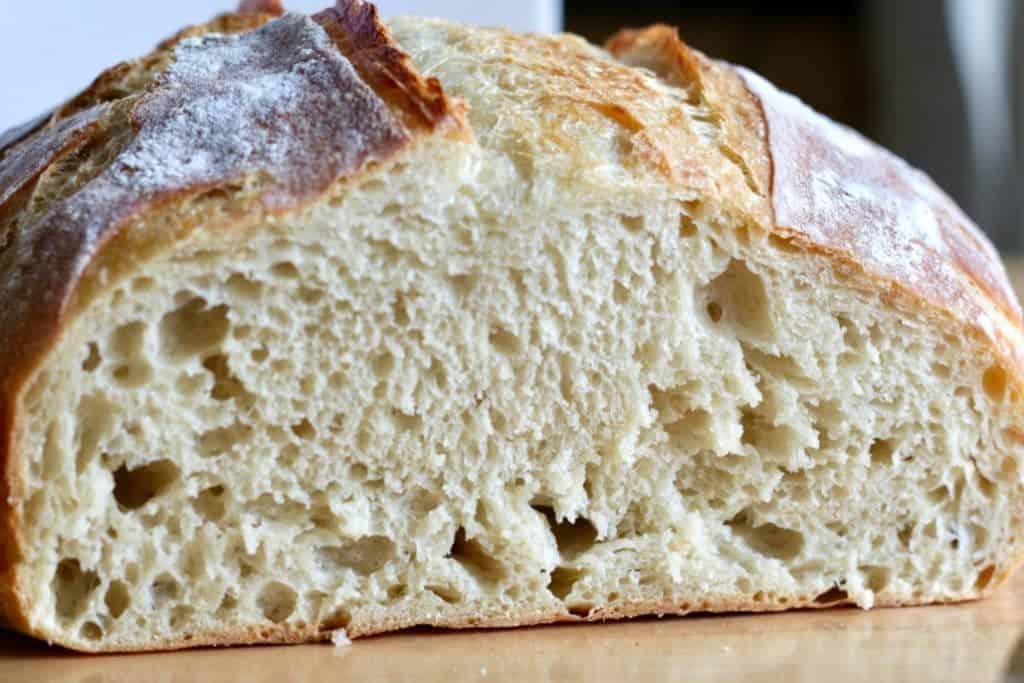
Factors That Affect Sourdough Crumb Structure
The crumb structure can vary a lot and remain correct. But when you’re frustrated with a crumb that is not structurally correct you need to know how to figure out what needs to change to get your better bake. It is usually one of these variables.
Dough Strength
Dough strength is a result of your processes and methods. The mixing method, starter strength and bulking methods impact your finished bread crumb. Read all about dough structure in sourdough baking in our What is Dough Structure in Sourdough guide.
Also different flour blends, hydration, structure building techniques and proofing methods all play a role in how to get your dough properly strong for a particular recipe. You will see it all in your crumb. Here’s how.
Quick Crumb Diagnostic: Weak Dough Structure
If your dough lacked strength, your crumb will often show these signs:
• Uneven hole distribution – large holes clustered in some areas, dense patches in others
• Collapsed or irregular pockets – air bubbles look stretched, torn, or deflated
• Weak crumb walls – thin, fragile, or breaking apart easily
• Gummy or slightly sticky texture – especially around larger holes
• Poor oven spring – loaf bakes flatter than expected
• Lack of elasticity – crumb doesn’t spring back when pressed
What it means:
Your dough didn’t build enough structure to hold and organize gas during fermentation and baking.
Strong dough crumb = even distribution + defined walls + springy texture
How Fermentation Affects Sourdough Crumb Structure
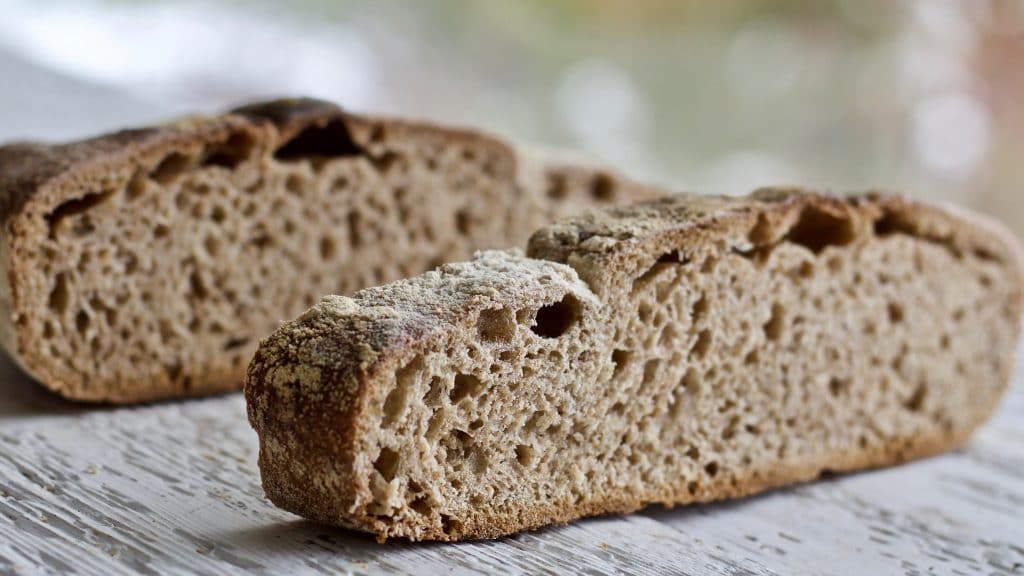
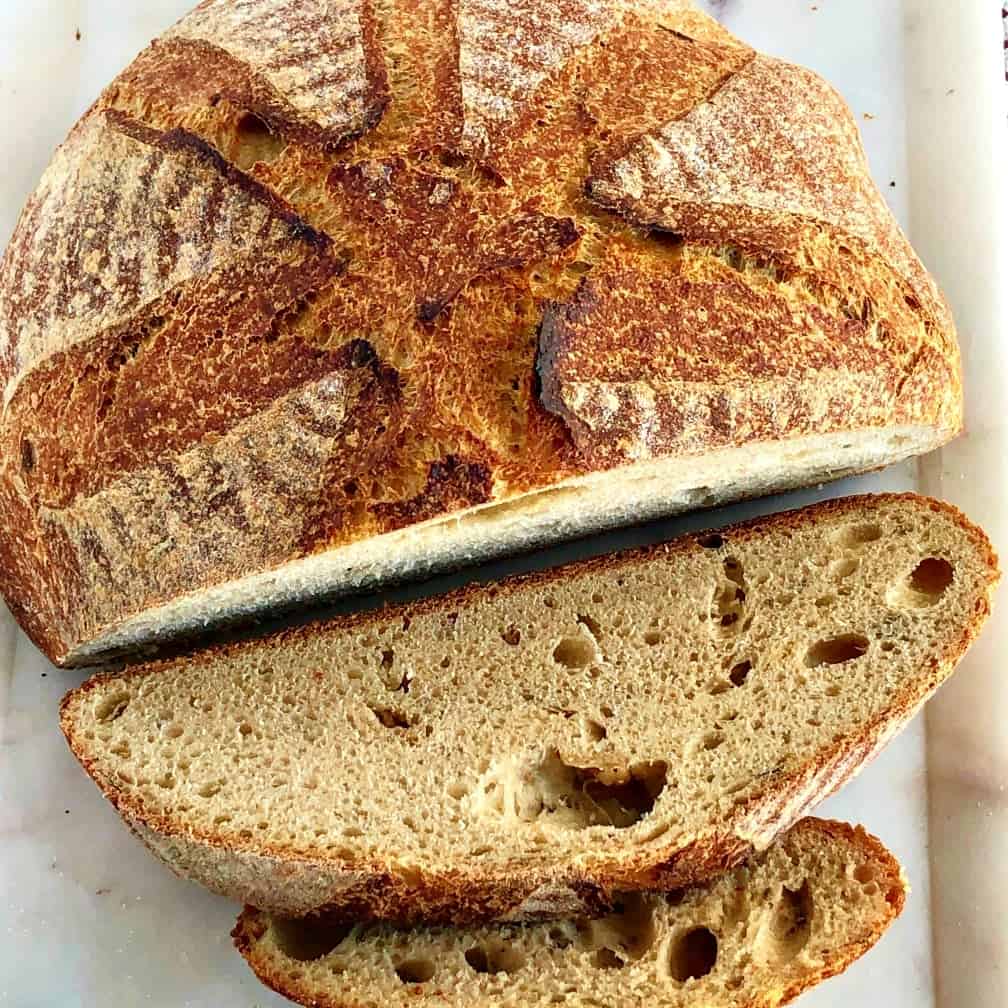
Fermentation is what creates the gas that inflates your crumb. Gluten is what holds that gas in place. When these two are out of balance, the crumb shows it clearly.
Underproofed Dough (Not Enough Fermentation)
The dough hasn’t produced enough gas, so the crumb cannot fully open.
What you’ll see in the crumb:
• Dense, compact interior
• Tight crumb with small, underdeveloped holes
• Uneven gas pockets—random larger holes surrounded by dense areas
• Dense band near the bottom (classic underproof sign)
• Gummy or slightly underbaked texture
What’s happening:
There isn’t enough gas to expand the dough, so the alveoli stay small and uneven.
Overproofed Dough (Too Much Fermentation)
The dough has produced gas, but the gluten structure has weakened and collapsed.
What you’ll see in the crumb:
• Overall flat, dense crumb despite full fermentation
• Collapsed or compressed structure
• Few visible holes or completely deflated pockets
• Fragile, sometimes gummy interior
• Poor oven spring or no rise
What’s happening:
The gluten can no longer hold the gas, so it escapes or collapses before baking.
Properly Fermented Dough (Balanced)
Gas production and dough strength are working together.
What you’ll see in the crumb:
• Even hole distribution throughout the loaf
• Mix of small and medium (or larger) air pockets
• No dense zones (especially at the bottom)
• Elastic, well-defined crumb walls
• Light, springy texture
What’s happening:
The dough has developed enough gas and strength to expand evenly during baking.
Key Takeaway
A good crumb is not about big holes—it’s about balance and distribution.
If your crumb is:
• Dense + uneven → likely underproofed
• Flat + collapsed → likely overproofed
• Even + elastic → fermentation is on target
To Correct Under or over-proofing and for more help with diagnosing and fixing proofing trouble. Read our Post on How to Proof Sourdough.
Baking educators at King Arthur Baking Company explain that proper gluten development and fermentation allow dough to trap gas, creating the interior crumb structure of bread.
Sourdough Crumb Types:
Learning to read your crumb means learning the different types of crumbs that are common to sourdough breads and what they are used for so you can dial in your personal style.
Open Crumb (Artisan Style)
Looks like: Large, irregular holes
Feels like: Light, slightly chewy, delicate
Eating experience: Soft but uneven; butter and spreads may fall through
Best for: Dipping, toast, artisan bread
An Inconsistent Open Pattern That Confuses Many Bakers
Lots of bakers want a beautifully open, tender and artistic crumb. That can take many forms. The eye is in the beholder. Up to a Point. If your crumb has good structure with all the attributes we listed at the first part of this post, you’re in the lane you want to be.
However, many beginner bakers THINK they have a cool wild Tartine style crumb. But they are really looking at a dough structure problem. Let’s take a look at this.
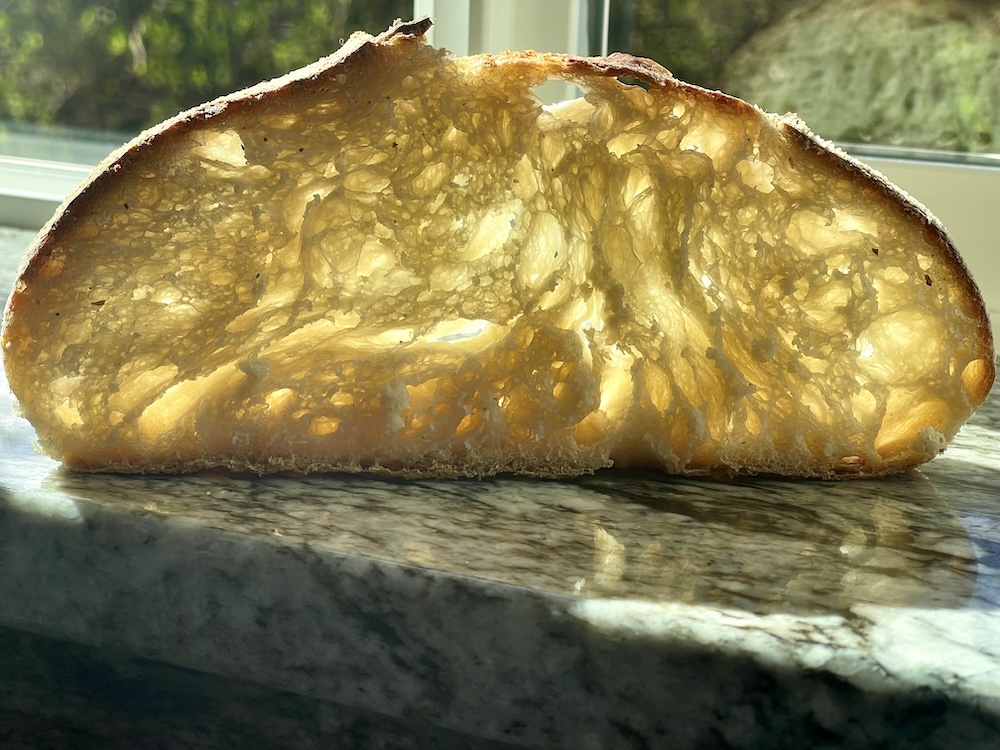
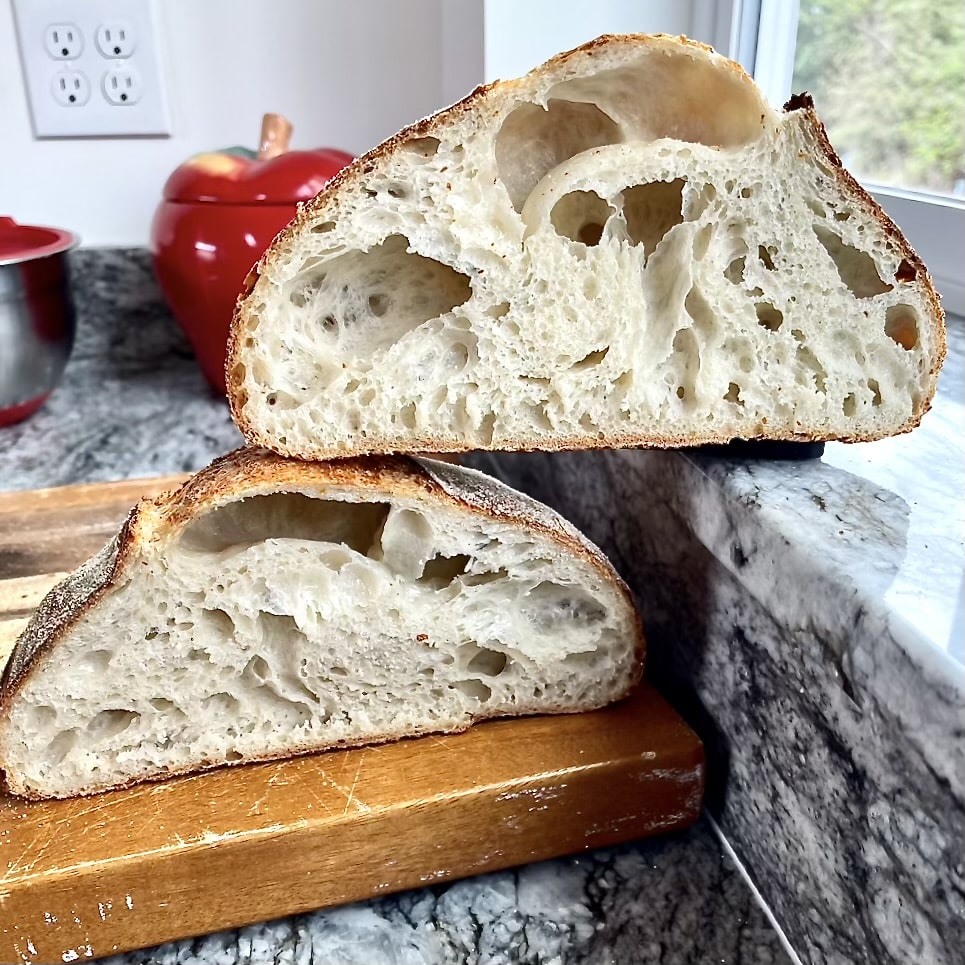
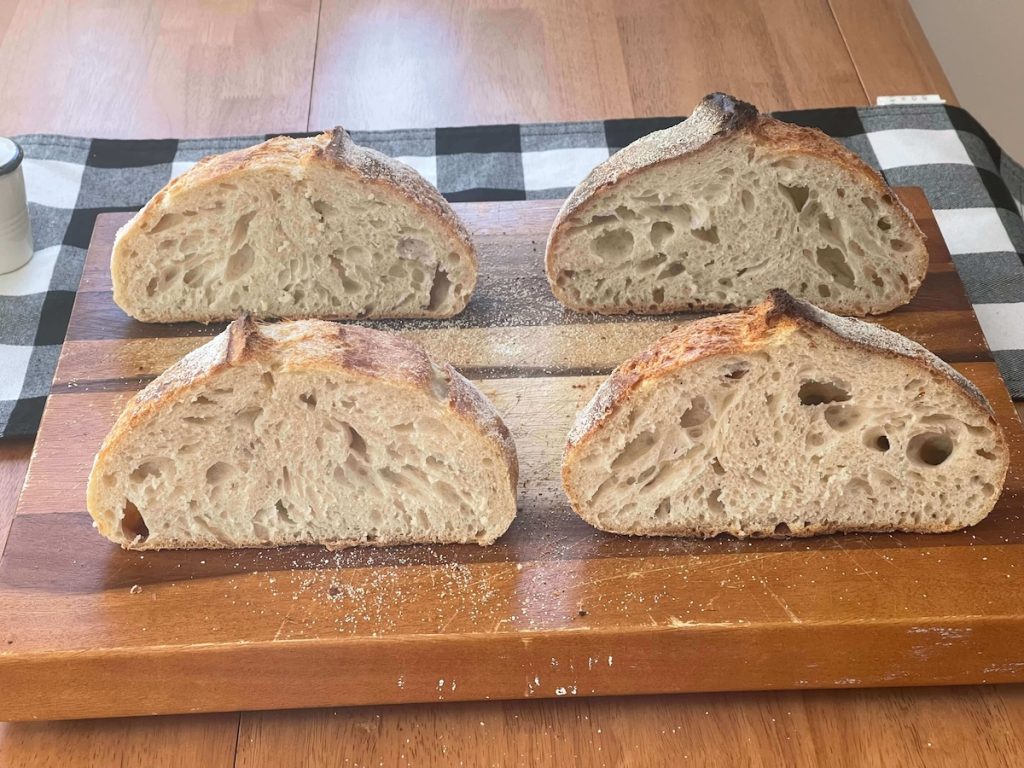
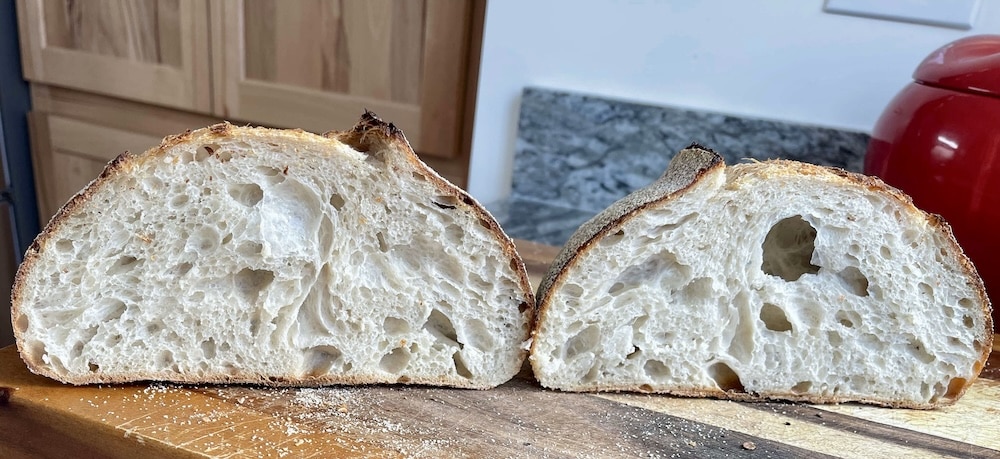
The crumb on the left shows a well-structured open pattern. The crumb on the right may appear similar at first glance, but the large tunnels and uneven distribution suggest poor gas distribution rather than a balanced open crumb.
They are not the same. Be sure you are interpreting your crumb correctly.
Uneven Crumb (Big Holes + Dense Areas)
Looks like: Large holes mixed with tight crumb
Feels like: Inconsistent texture
Eating experience: Messy and uneven
Cause: Poor gas distribution during shaping
You can see the loaf on the right would have been a much better crumb if it was better shaped with proper gas dispersal. Half the loaf looks fine, just open. but the large pockets are a fail.
Overly Open / Tunnel Crumb
Looks like: Very large holes or tunnels
Feels like: Fragile structure
Eating experience: Hard to use for sandwiches
Cause: Overproofing or shaping imbalance
Once you can identify your preferred crumb type, learn how to change it to suit yourself in our guide on how to control sourdough crumb.
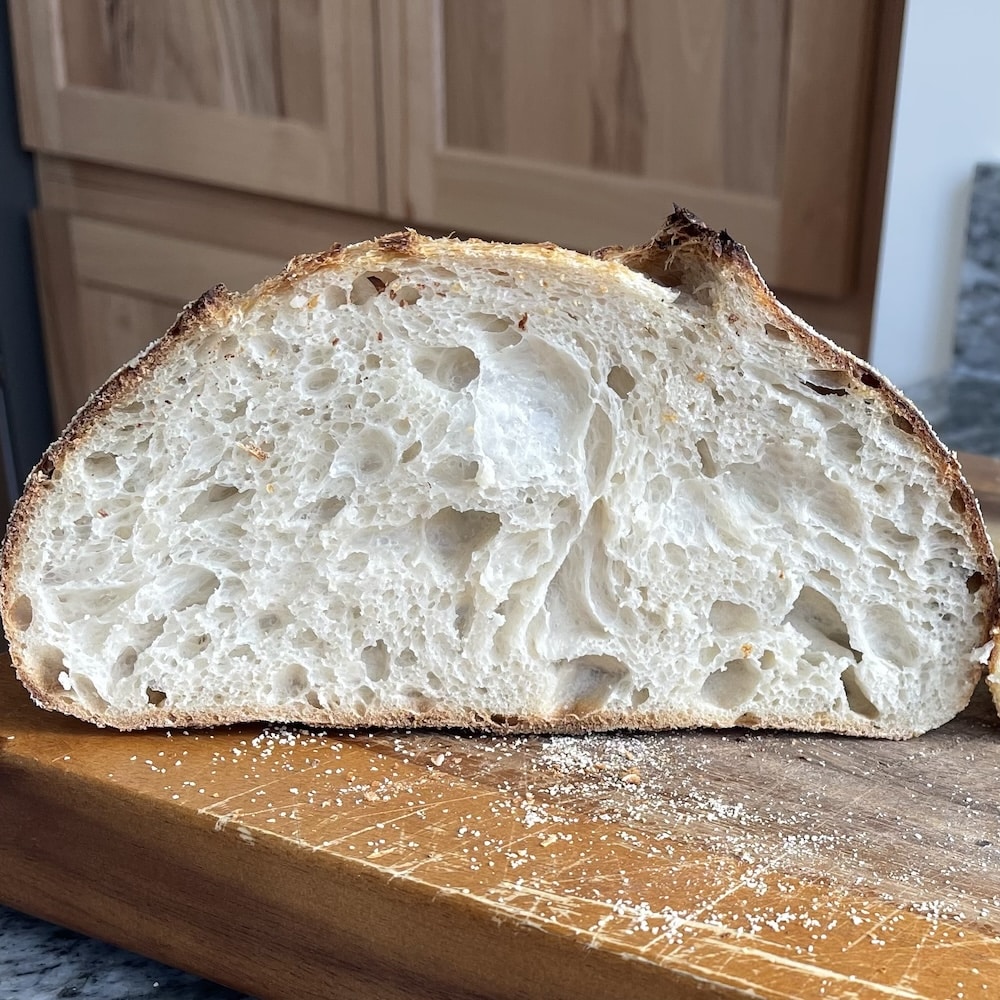
This loaf has a nicely balanced, somewhat open crumb. This loaf is springy and pops back up nicely when squeezed or pressed. The crumb walls are well defined and strong. This loaf slices really cleanly even when sliced thin.
Balanced Crumb (Ideal Everyday Bread)
Looks like: Mix of small and medium holes, evenly distributed
Feels like: Soft, springy, tender
Eating experience: Easy to bite and consistent throughout
Best for: Everyday bread, toast, light sandwiches
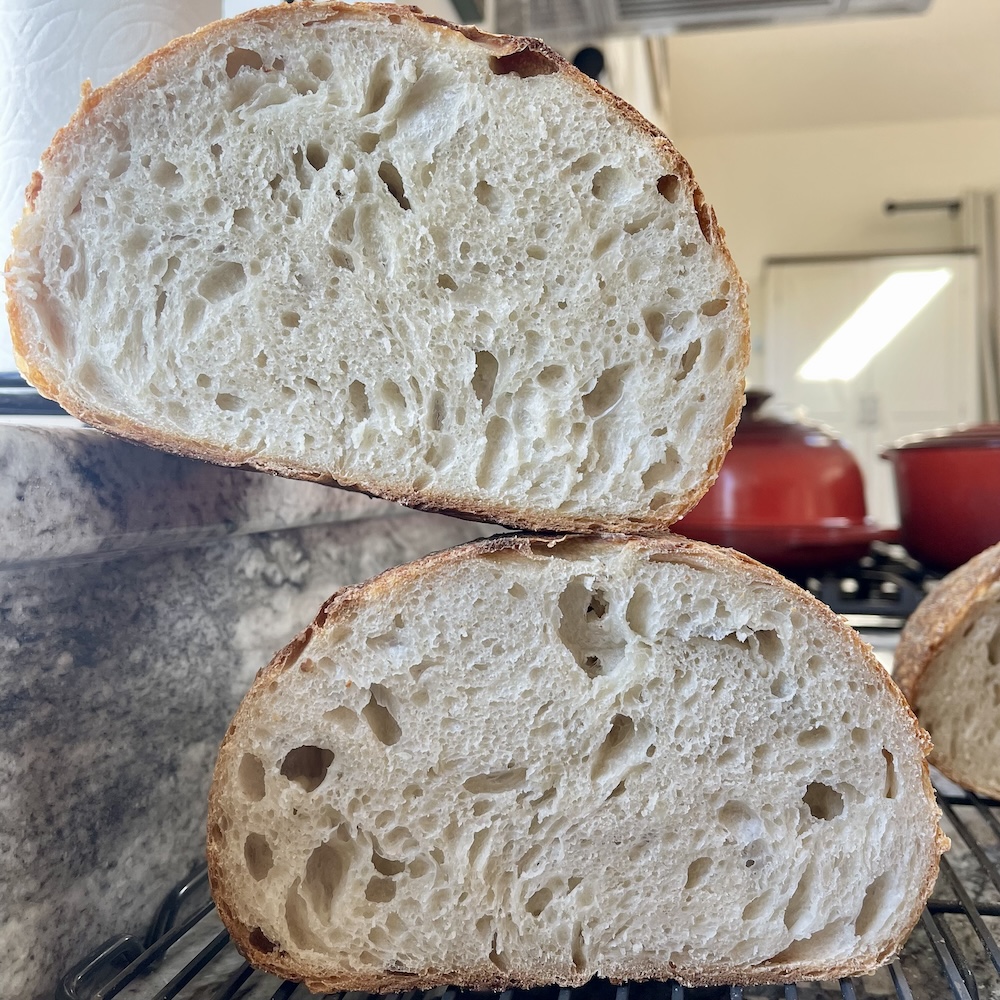
Even Crumb (Sandwich Style)
Sourdough Crumb Types: What They Mean and How They Eat
Here is a Table of the various sourdough crumb styles and their characteristics. Now you know what the crumb structure should be. In this table we also include the eating experience and what these types of breads work best for. This will help you focus on the crumb structures you enjoy.
On Mobile Devices: Scroll Left to see the complete table
The first four crumb styles are correct. Followed by incorrect and why it matters.
| Crumb Type | What It Looks Like | How It Feels | Eating Experience | Best Use |
|---|---|---|---|---|
| Open Crumb (Artisan) | Large, irregular holes, airy structure | Light, slightly chewy, delicate | Soft bite but uneven texture; can feel “holey” when eating | Dipping, toast, artisan loaves |
| Balanced Crumb (Ideal) | Mix of small & medium holes, evenly distributed | Soft, springy, tender | Pleasant to bite, holds together well | Everyday bread, toast, light sandwiches |
| Even Crumb (Sandwich Style) | Small, uniform holes throughout | Soft, fine, tender | Easy to slice, holds spreads well | Sandwiches, toast |
| Dense but Correct | Tight crumb, small pores, evenly distributed | Soft, slightly firm but not heavy | Clean bite, not chewy or tough | Whole grain breads, pan loaves |
| Dense and Underdeveloped (Problem) | Tight crumb with dense or gummy patches | Heavy, rubbery, or wet | Difficult to chew, unpleasant texture | Needs correction (see dense bread guide) |
| Uneven Crumb (Big Holes + Dense Areas) | Large holes mixed with tight crumb | Inconsistent—soft in spots, dense in others | Messy to eat, structurally weak | Gas distribution issue |
| Overly Open / Tunnel Crumb | Very large holes or tunnels, often near top | Fragile, lacks support | Hard to use for sandwiches, uneven bites | Overproofing or shaping issue |
Dense Sourdough Crumb Structure
Dense and Unpleasant (Problem Crumb)
Looks like: Tight crumb with dense or gummy areas
Feels like: Heavy, rubbery, or wet
Eating experience: Difficult to chew, often gummy and not enjoyable
Cause: Underproofing, weak structure, or poor gas distribution
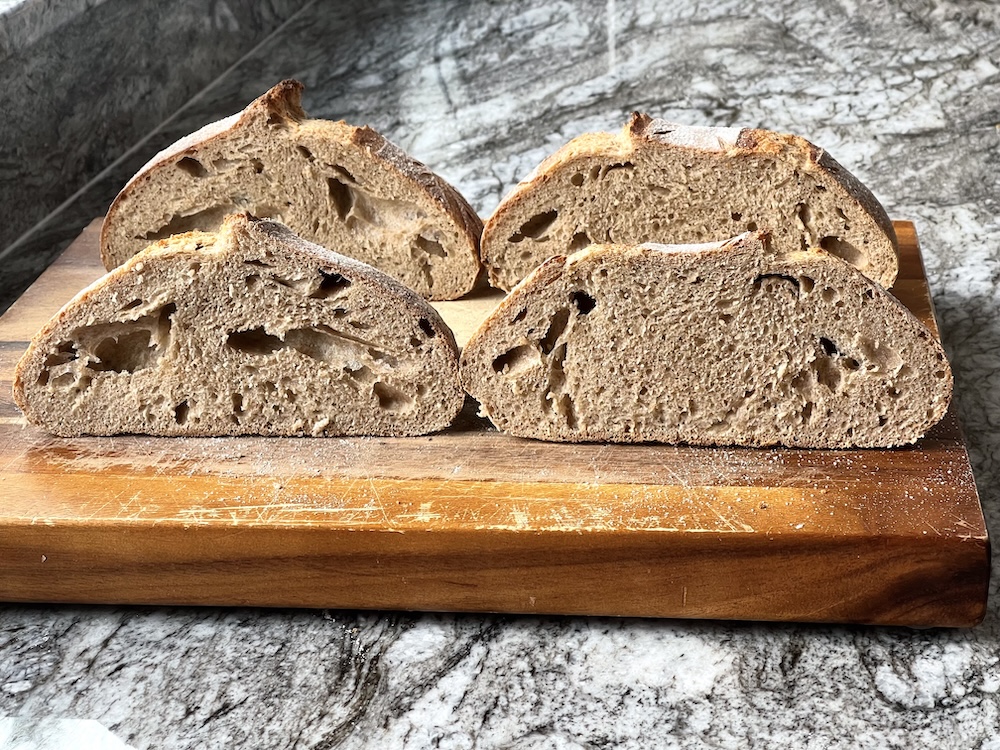
Sometimes a loaf shows large holes but still has a tight crumb overall. As shown above, this often happens when dough is slightly underproofed, improperly shaped but experiences decent to strong oven spring.
This uneven crumb indicates a structural failure in gas distribution. It shows that the dough could not properly distribute the gas it held to produce an even crumb structure. The result is a crumb with large air pockets mixed with overly dense crumb. This bread was tough, not tender.
What It Looks Like
• large holes near the top or unevenly dispersed
• tighter crumb surrounding those holes
• denser lower crumb and often middle section of crumb is overly dense.
Learn more about why sourdough bread is dense here. A complete diagnostic.
Dense Bread with Intent
Dense sourdough bread is not a fail if it makes the crumb you want correctly. Degassing sourdough is often intentional and if done correctly , will produce a wonderful, sliceable, bread. Perfect for sandwiches.
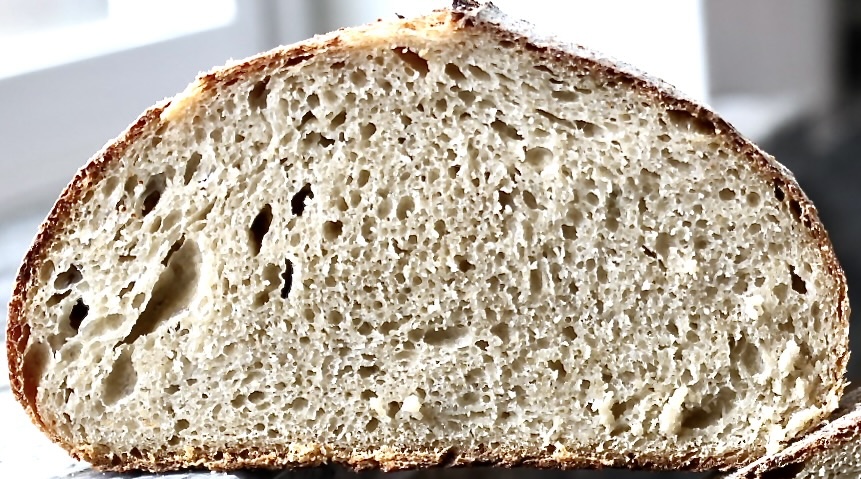
Dense but Correct
Whole grains flours, especially home milled grain flours are likely to produce a denser crumb. This is correct for these types of flours. Not all whole grain flours act the same. But they do absorb a lot of water from the recipe and the crumb is often tighter. With these crumbs evaluate them this way:
Looks like: Tight crumb with small, even pores
Feels like: Soft but slightly firm
Eating experience: Easy to chew, not heavy
Best for: Whole grain breads, pan loaves
What Degassing Looks Like in Your Crumb
Sandwich-style crumbs often indicate that the dough was degassed during shaping, redistributing gas into smaller, more uniform pockets.
Looks like: Small, uniform holes. This is relative and can include moderately open holes as shown below.
Feels like: Fine, soft, tender
Eating experience: Clean slices, holds spreads well
Best for: Sandwiches and toast
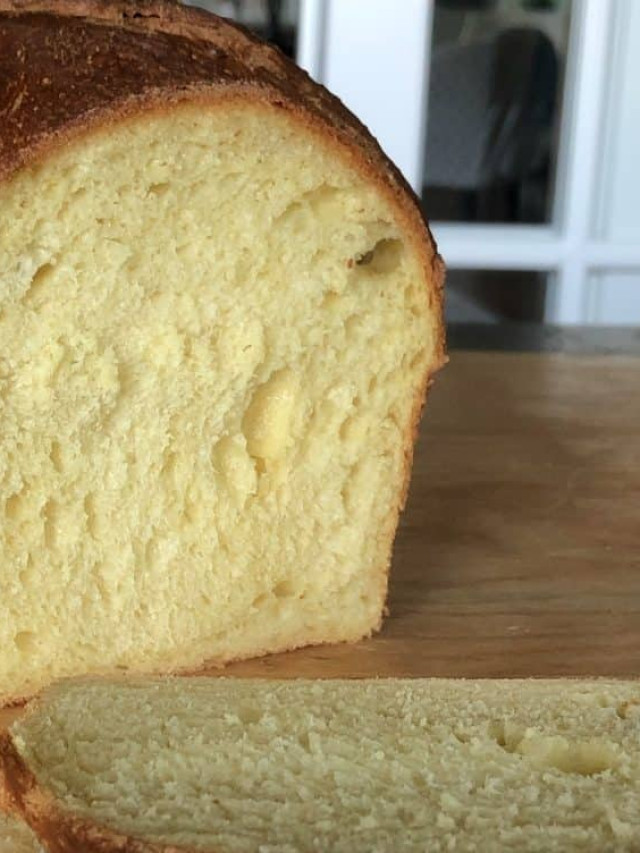
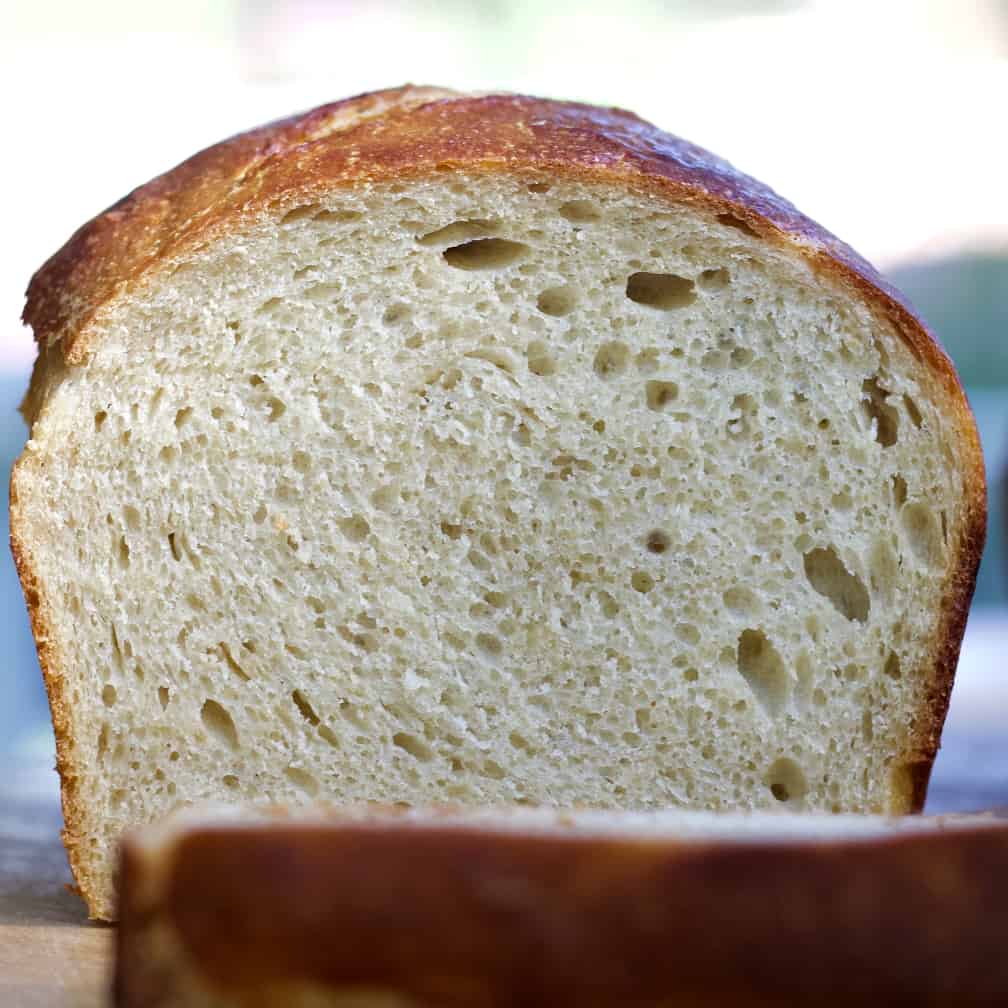
If the crumb is evenly balanced with small or moderate alveoli, degas worked. When aggressive, degassing can create bread that slices cleanly and holds fillings well.
Make Sasha’s Soft Sourdough Sandwich Bread Recipe and her Milk and Honey Sandwich Bread and learn her method for how to properly make and Degas the dough for fabulous enriched sourdough sandwich breads.
Hydration
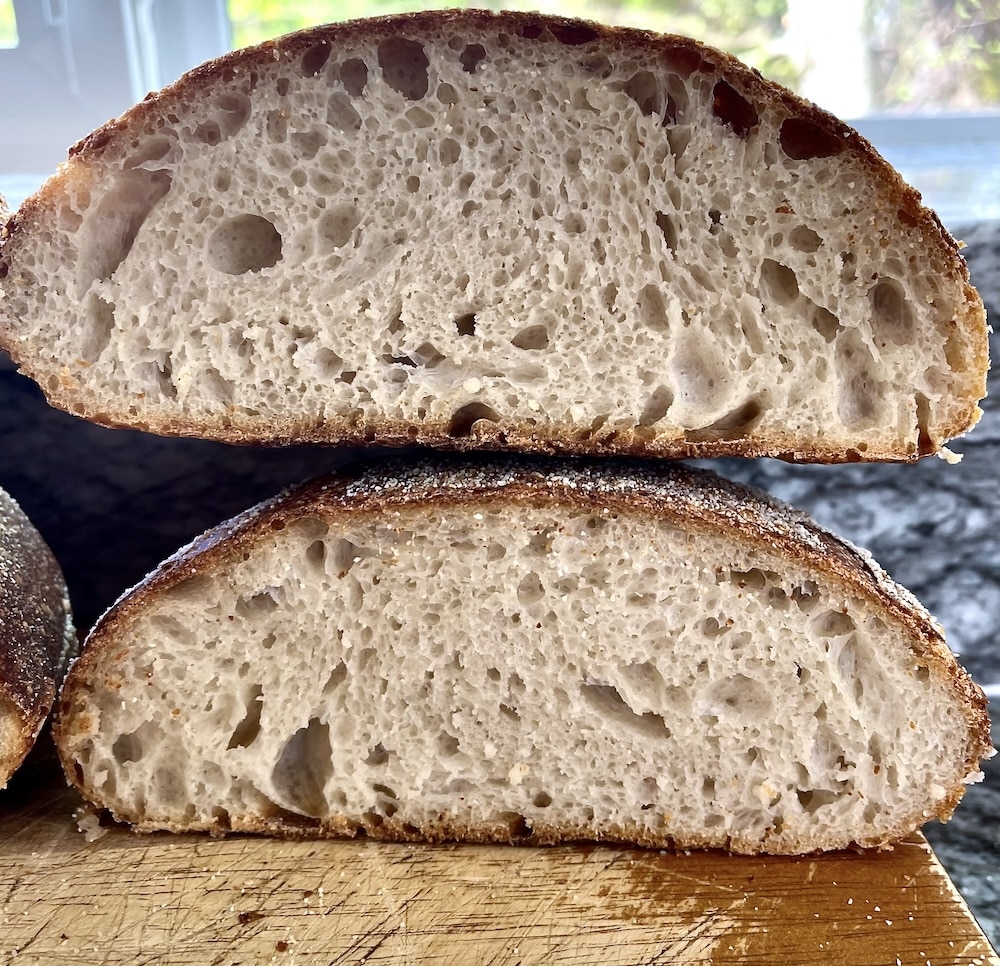
Higher hydration doughs are more extensible, which can allow larger or more open holes—but only if fermentation and structure support it. The breads pictured here show two ways to structure and shape these gassy, fragile doughs.
The bread on the left was made with stretch and folds and shaped gently. The crumb opened well and gave us the signature Tartine style crumb.
The bread on the right is very different, but still correct. I structured this dough with coil folds and the crumb shows the highly organized crumb that resulted.
Shaping was extremely gentle for this higher hydration dough but the coils organized the gluten well.
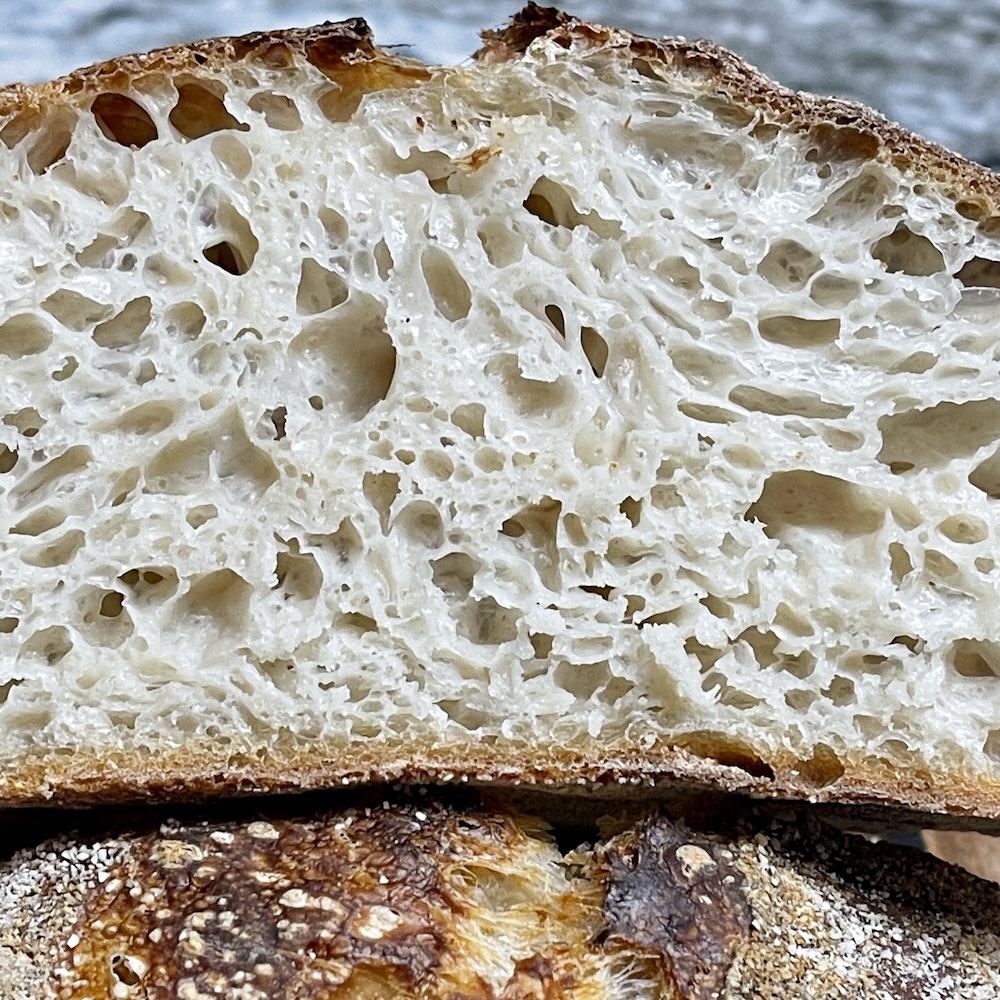
These higher hydration breads pictured above both have correctly structured crumbs. The 75%hydrtion loaf was less structured and the gas pathways were allowed to go a bit wild. The 82% hydration bread was much more strongly structured for a more even open crumb with more uniform gas distribution.
Lower hydration doughs typically produce tighter crumb. Read our guide on understanding sourdough hydration.
Unexpected hydration changes in your sourdough can cause crumb changes you do not expect. If your bread crumb is not locked in, and your basic method stays the same, look at your hydration. Inconsistent measuring can affect hydration and change your results.
Flour Type
Bread flour with higher protein supports stronger gluten networks and often produces a more open crumb. All home milled grains also have distinct properties that impact your dough enormously and will show up in your sourdough crumb structure.
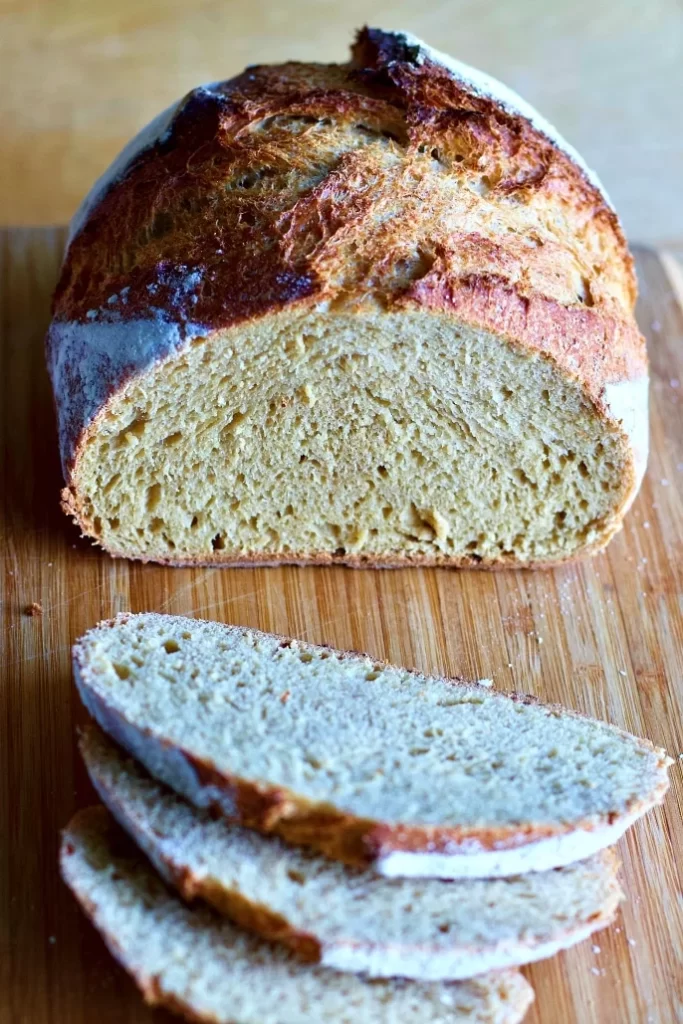
Whole grain flours tend to produce tighter crumb because bran interferes with gluten formation. For more on this read our sourdough flour type guide. This denser bread is correct for these grains.
What Shaping Looks Like in Your Crumb
Shaping determines how gas is distributed in the final loaf. During shaping, you are either preserving, redistributing, or removing the air pockets(degassing) your dough.
Here is how to Read your sourdough crumb to determine if shaping needs work.
- Gentle shaping preserves larger gas pockets for a more open, irregular crumb
- Firm shaping redistributes gas more evenly for a tighter, sandwich-style crumb
- Over-handling or aggressive degassing makes a dense or compressed crumb
- Weak shaping (low tension) leaves uneven holes and possible collapse in crumb structure.
For a full step-by-step guide to building proper tension in your dough see: How to Shape Sourdough Bread
Let the Loaf Cool Before Judging the Crumb
Sourdough bread should cool completely before slicing if you want an accurate view of the crumb structure.
Cutting the loaf too early can make the interior appear gummy or compressed even when everything else was correct.
Final Takeaway
Your crumb is not random—it’s a record of what happened during your bake.
- fermentation shows how the dough developed gas
- structure shows how well that gas was supported
- distribution shows how the dough was handled
When you learn to read these signals, you can quickly identify what went right—and what needs adjusting.
Once you understand your crumb, you’re ready to control it.
Next step: learn how to shape your results in How to Control Sourdough Crumb (Open vs Sandwich Style).
Frequently Asked Questions
Why does my sourdough have big holes at the top?
Large holes near the top often indicate slightly underproofed dough where oven spring expanded trapped gas unevenly.
What does a dense sourdough crumb mean?
Dense crumb can result from underproofing, weak gluten development, or flour that naturally produces tighter crumb.
How do I know if my sourdough is underproofed?
Underproofed loaves often show tight crumb with large holes near the top and denser crumb near the bottom.
Can I get a tight sandwich crumb without underproofing?
Yes. Allow full fermentation and then degas during shaping to create a fine even crumb.
Why is whole wheat sourdough crumb tighter?
Whole grain flours contain bran which interferes with gluten development and limits large gas pockets.
Related Sourdough Guides
These guides will help you even more to zero in on the variables that impact your sourdough crumb structure.
- Sourdough Proofing Guide
- Why Is My sourdough Dense?
- Understanding Hydration guide
- Starter Feeding Guide
- Measuring sourdough ingredients accurately
- Cold Bulk vs. Cold Proof Sourdough
- How to Shape sourdough Bread
- How to Get Crispy Sourdough Crust (Fix Soft, Hard, Thick, and Chewy Problems)
- Steam Baking sourdough Properly
- How to Get An Ear on Sourdough Bread
- Sourdough Troubleshooting Guide