
Cold Proof vs Cold Bulk Sourdough: Long Cold Rise Method Explained
As an Amazon Associate and member of other affiliate programs we earn a small commission from qualifying purchases through our affiliate link. For more information read our Entire Affiliate Disclosure.
If you bake sourdough using a long cold rise, you’ve probably seen terms like cold bulk, cold proof, and overnight fermentation used interchangeably. That can make the process feel more complicated than it really is. We explain Cold proof vs. cold bulk sourdough processes and how to use them in this guide.
On this blog, many of our sourdough recipes use a long cold bulk fermentation, followed by shaping and then a short cold proof before baking. This method is simple, flexible, and produces excellent flavor—one reason it works so well for home bakers.
But like any method, it comes with tradeoffs. The long cold bulk rise makes the dough very extensible, which makes structuring the dough challenging. The results are a less structured bread with an irregular crumb. With delicious flavor.
In this guide, you’ll learn how cold bulk and cold proof can work together in a long cold rise system. And how to use each cold rise style and timing to improve flavor, structure, and consistency. Both, together in the same recipe, and as stand alone methods in recipes for the different results they produce in your bread.
These are both legitimate methods of cold rising dough and they have different purposes. While cold proof is often used to support structure after cold bulk, it can also be used as the primary cold fermentation method on its own. Cold bulk can be used alone in recipes, but the benefits of an additional cold proof do make a much better baked sourdough bread.
This post assumes you know how to proof your dough. If you need help understanding bulk fermentation and final proofing stages, start here: How to Proof Sourdough Bread.
What Is a Long Cold Rise in Sourdough?
A long cold rise uses refrigeration to slow fermentation so the dough develops flavor gradually over time. Cold fermentation is often called retarding, because refrigeration slows yeast and bacterial activity without stopping fermentation completely. This process allows dough development to slow so the flavor can intensify and gas can build airiness into the dough.
This Long Cold Rise method is popular with home bakers because:
- Cold bulking improves sourdough flavor and makes a true crusty artisan loaf with a nice irregular crumb when done properly.
- Cold bulking the dough makes timing the dough more flexible for the baker.
- Cold proofing after cold bulk firms the dough for easier scoring
- Cold proofing also helps produce more oven spring and consistent crumb results.
In these styles of sourdough, dough often becomes more extensible during cold bulk fermentation, which is why shaping and handling become especially important for maintaining structure.
This approach is inspired by methods used by bakers like Chad Robertson of Tartine Bakery, where structure is built early after the dough mix. Then long cold fermentation develops flavor. Finally, structure is managed through shaping and handling. The method is simple. but when you apply the long cold rise matters.
In practice, the long cold rise can happen at different stages of the process. Some bakers refrigerate after shaping (cold proof), while others refrigerate during bulk fermentation (cold bulk). Many methods—including the one used in our recipes—combine both.
In short, The long cold rise method uses refrigeration to slow fermentation so your dough develops flavor more gradually and becomes easier to handle.
Fermentation creates gas that fills the dough structure and determines whether the dough can support and retain it.
Where Cold Fermentation Fits in the Sourdough Process
A simple sourdough process looks like this:
mix → bulk fermentation → shape → final proof → bake
Cold fermentation can be used in two different stages:
Cold Bulk Fermentation (Before Shaping)
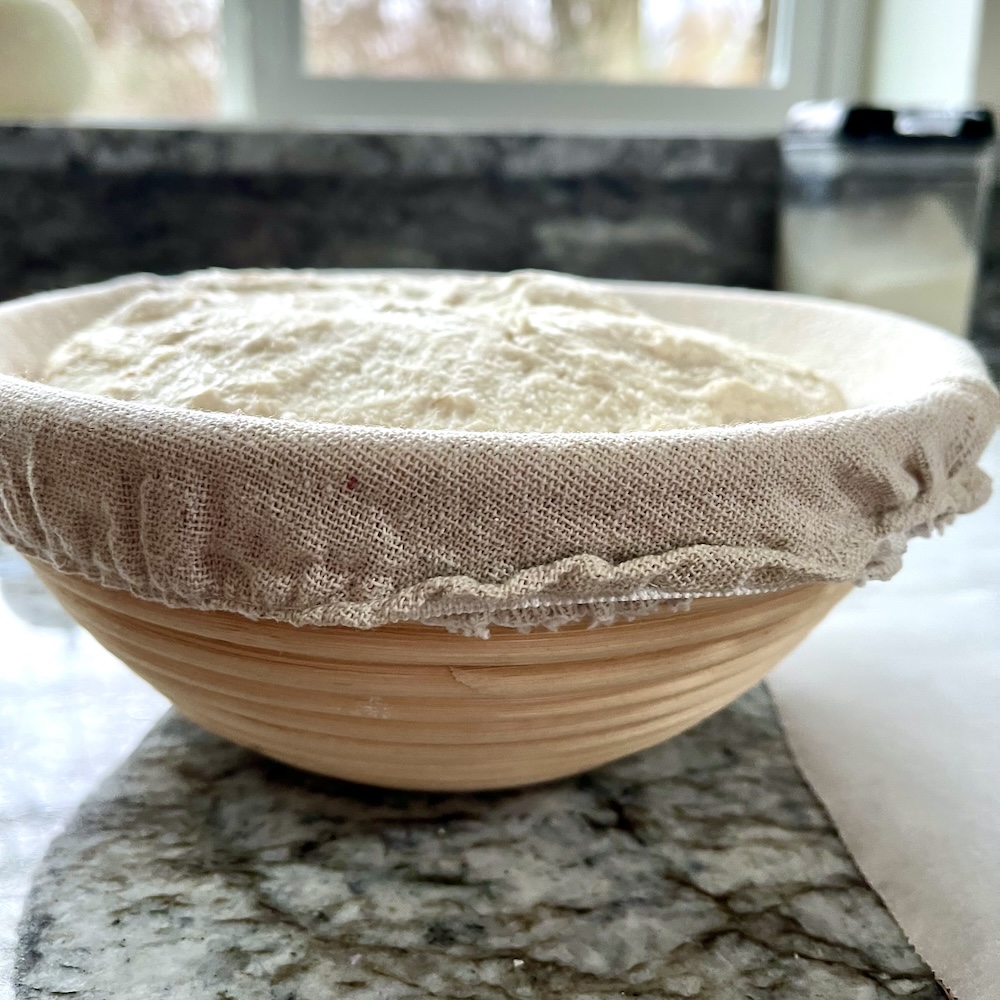
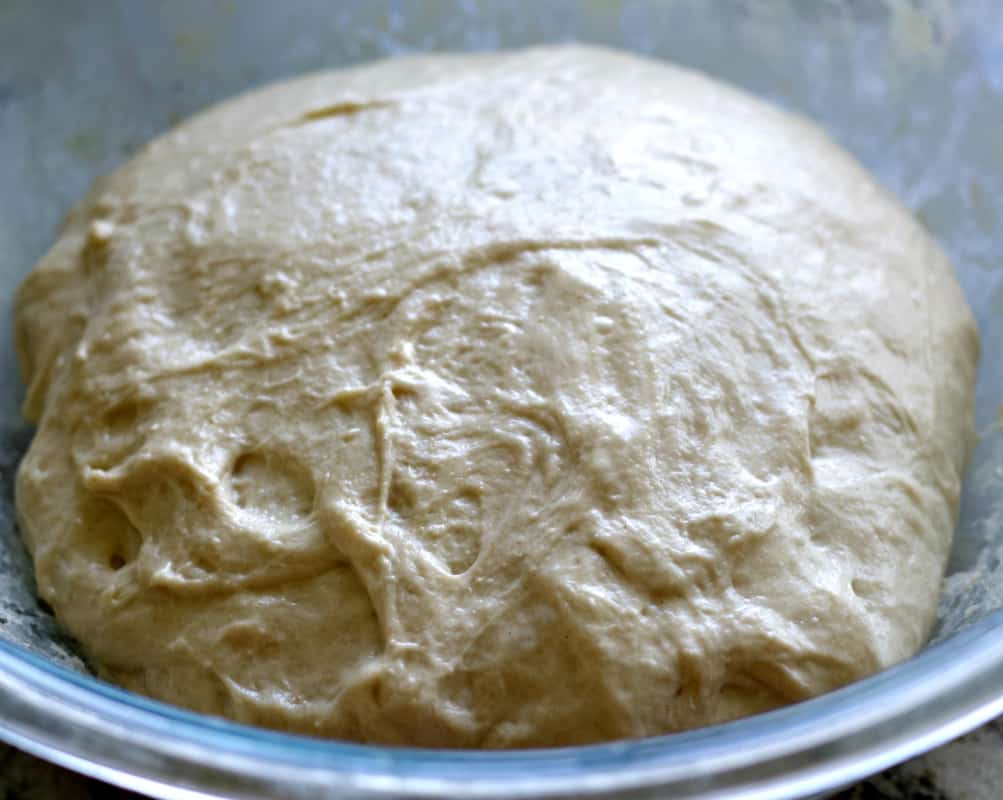
This means the dough is refrigerated during bulk fermentation, before shaping. When a long cold rise is used during the bulk ferment, the crumb is stylishly open and irregular, but the bread structure is challenging, since the dough relaxes as it slowly ferments in the fridge.
Extensibility (stretchiness) of the dough after a long cold bulk makes the dough difficult to handle, easily degasses during pre shape and shape and the structure suffers.
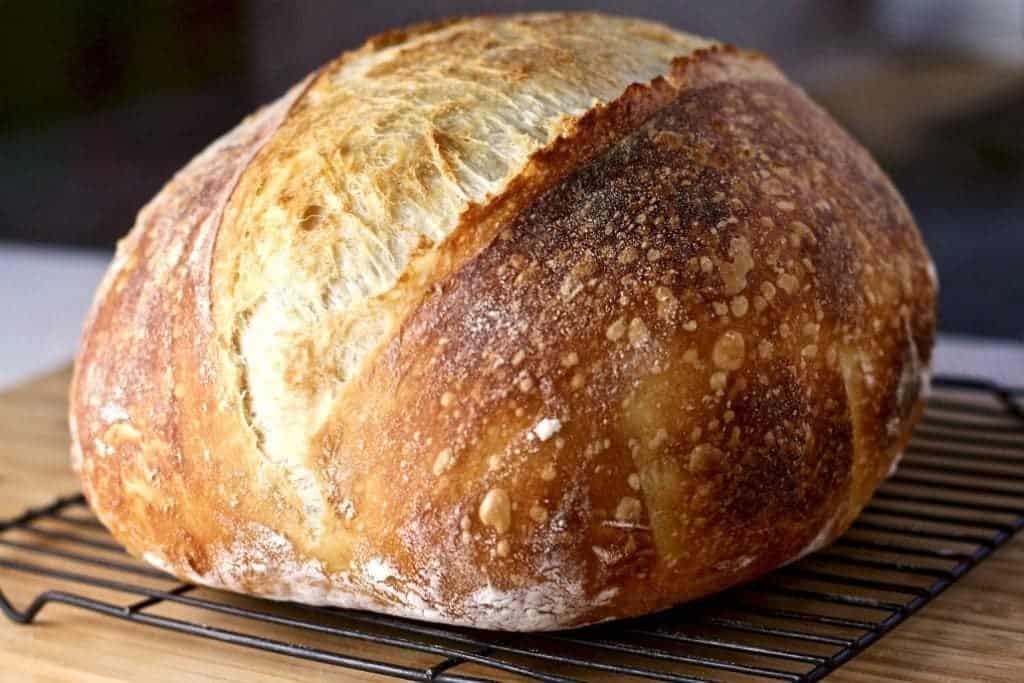
The finished bread often has sloped shoulders. Not always. I have baked many loaves with this method with fine round shoulders. It is just very difficult to time a long cold bulk for prime structure.
The key here is to build a nice strong dough structure early with the stretch and folds. It gives you a better chance of retaining some of the structure through the cold bulk.
Cold Proof (after Shaping)
This means the shaped loaf is refrigerated after shaping, during final proof.
That timing difference matters because it changes how the dough behaves.
- Cold bulk develops flavor earlier in the process and can create a more extensible, airy dough with a wild, irregular crumb.
- Cold proof helps preserve shape, firms the loaf for scoring, and can make baking more predictable. Cold proofed loaves also have a more organized dough structure and a more uniform crumb. Not always. It depends a lot on how you handle the dough throughout the process.
For many home bakers, these are not either-or choices. They are tools that can be combined to get the finished baked loaf where you want it be.
Cold Proof vs Cold Bulk Sourdough (Key Differences)
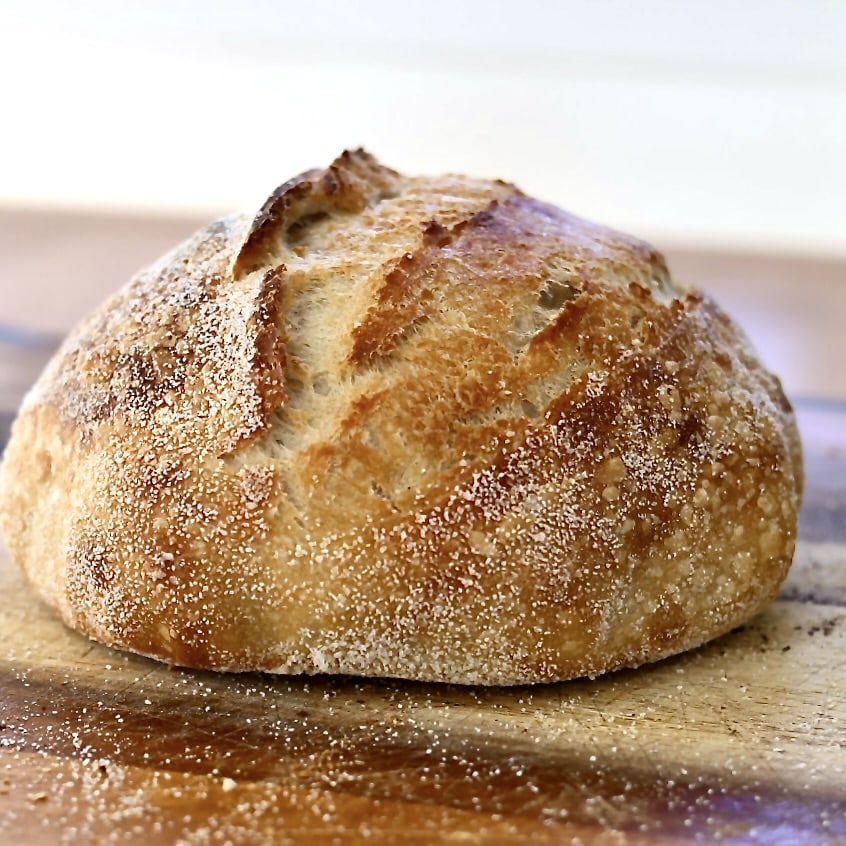
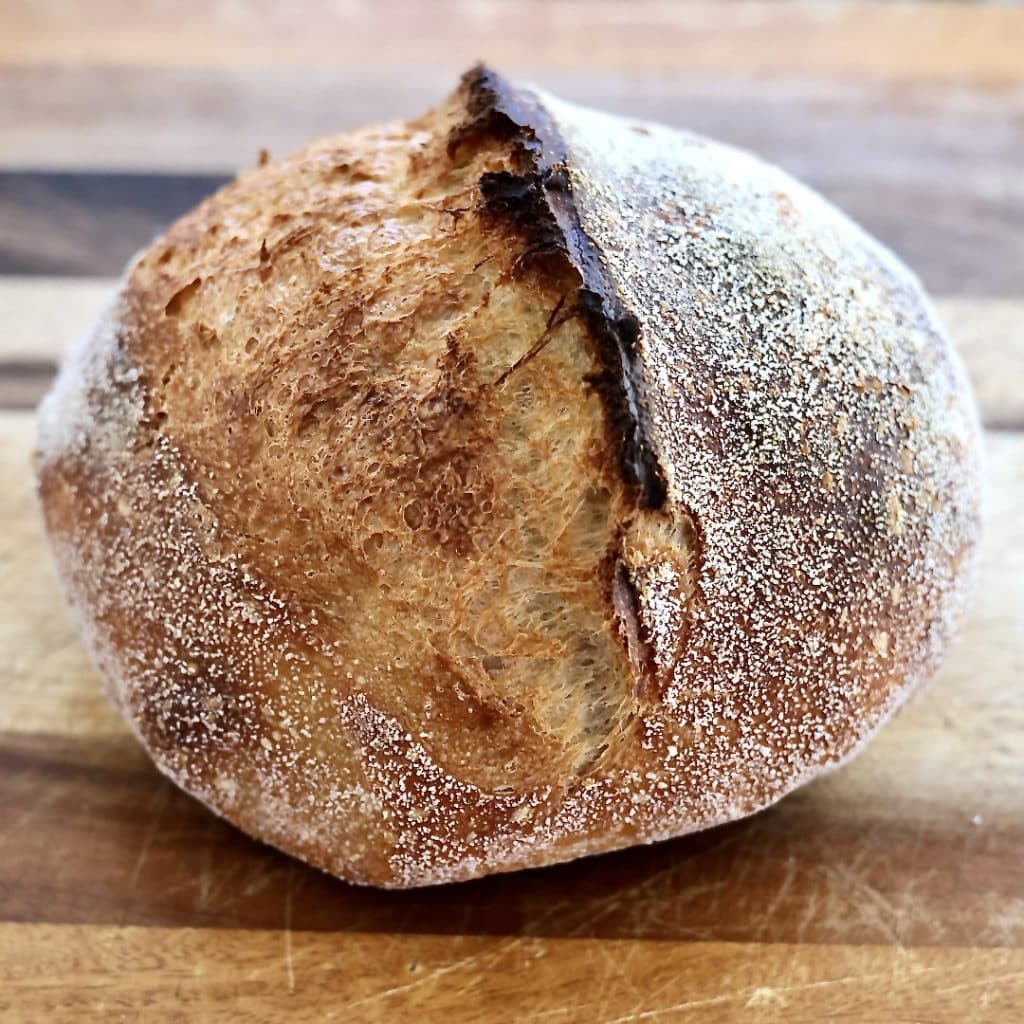
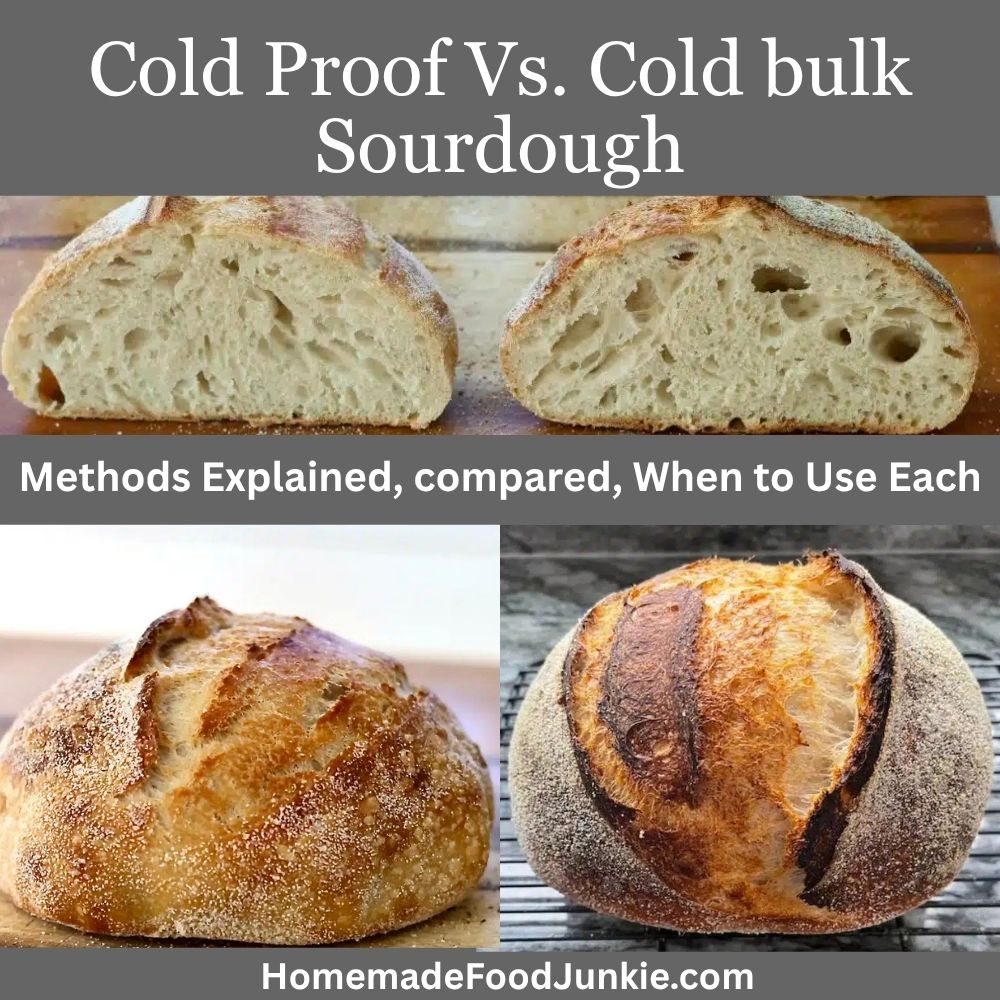
Pictured above is the same recipe, made with two Long cold rise methods to show you how different methods can affect the bread. The loaf on the left is made according to recipe instructions. Mix, autolyse for 60 minutes, 4 stretch and folds, bulk counter for 60 minutes, long cold bulk overnight in the fridge, then reshape, shape and cold proof 2 hours before score and bake.
The loaf on the right same exact recipe, but we proofed the loaf entirely at counter temp (about 74 degrees F), then shaped (very tricky at room temp), then cold proofed overnight and baked the next morning.
As you can see the long cold bulk rise loaf has a more relaxed structure. the cold proof loaf is a bit fuller and rounder.
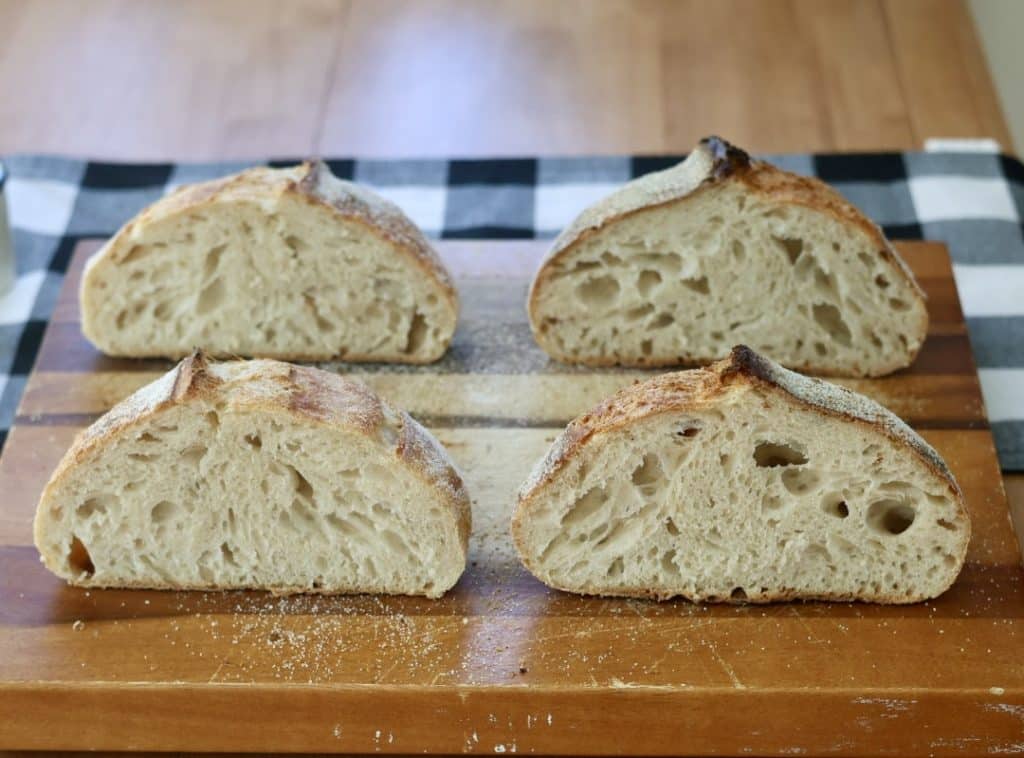
Cold proof and cold bulk are often discussed as though you must choose one or the other. In practice, many bakers use a hybrid long cold rise method. This is the method we use most often at Homemade Food Junkie in our Artisan bread recipes.
That hybrid approach looks like this:
- develop the dough at room temperature
- refrigerate during bulk for a long cold rise
- shape the dough after bulk
- use a short cold proof to firm the loaf
- score and bake cold
This kind of workflow can give bakers the best of both methods:
- flavor development from the long cold bulk
- structure and scoring support from the short cold proof
That does not mean the method is foolproof. A dough that goes too far before refrigeration can still become slack or overly relaxed. But it does mean the answer is not to abandon cold bulk.
Cold proof also doesn’t create structure in sourdough—it helps preserve and manage the structure you’ve already built earlier in the process.
The better solution for bakers is to learn how to manage dough strength, timing, shaping, and cold proofing more intentionally. This is what makes the craft of baking sourdough bread fun for the baker.
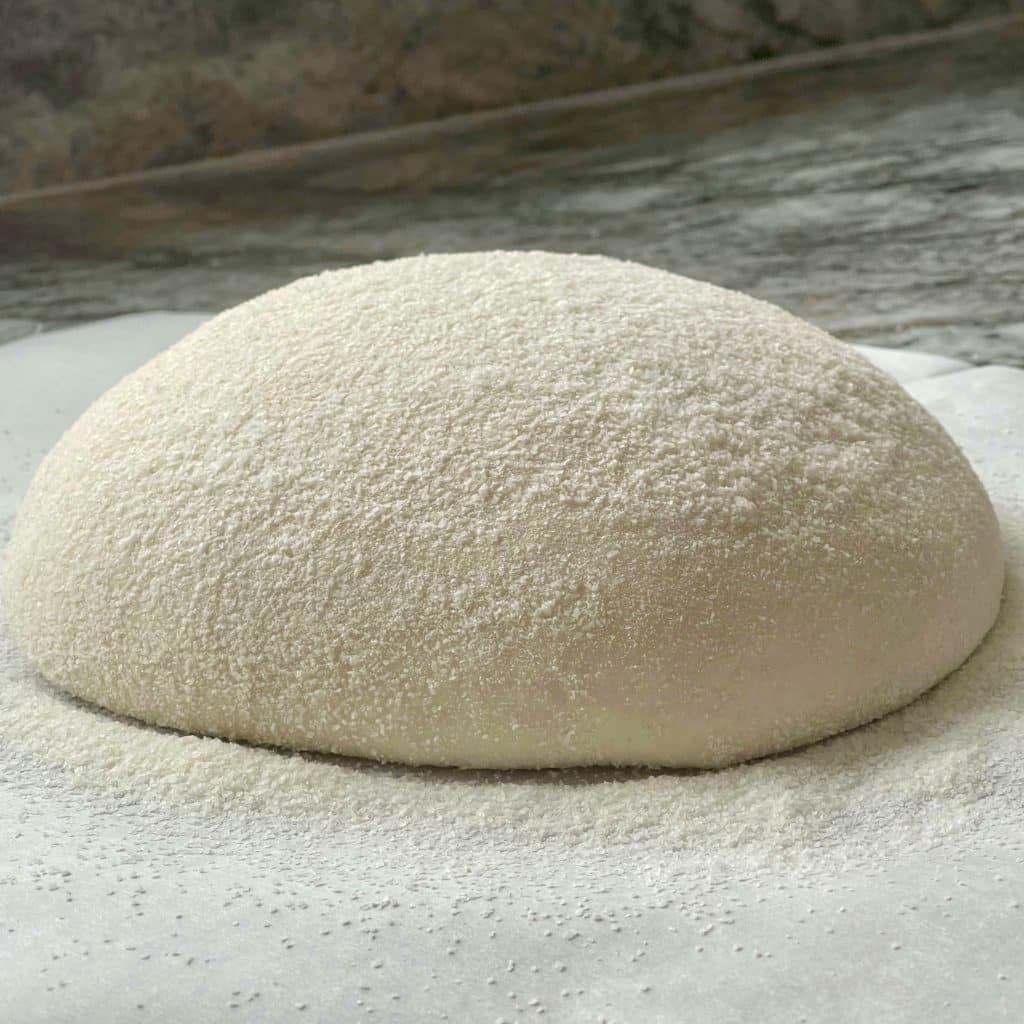
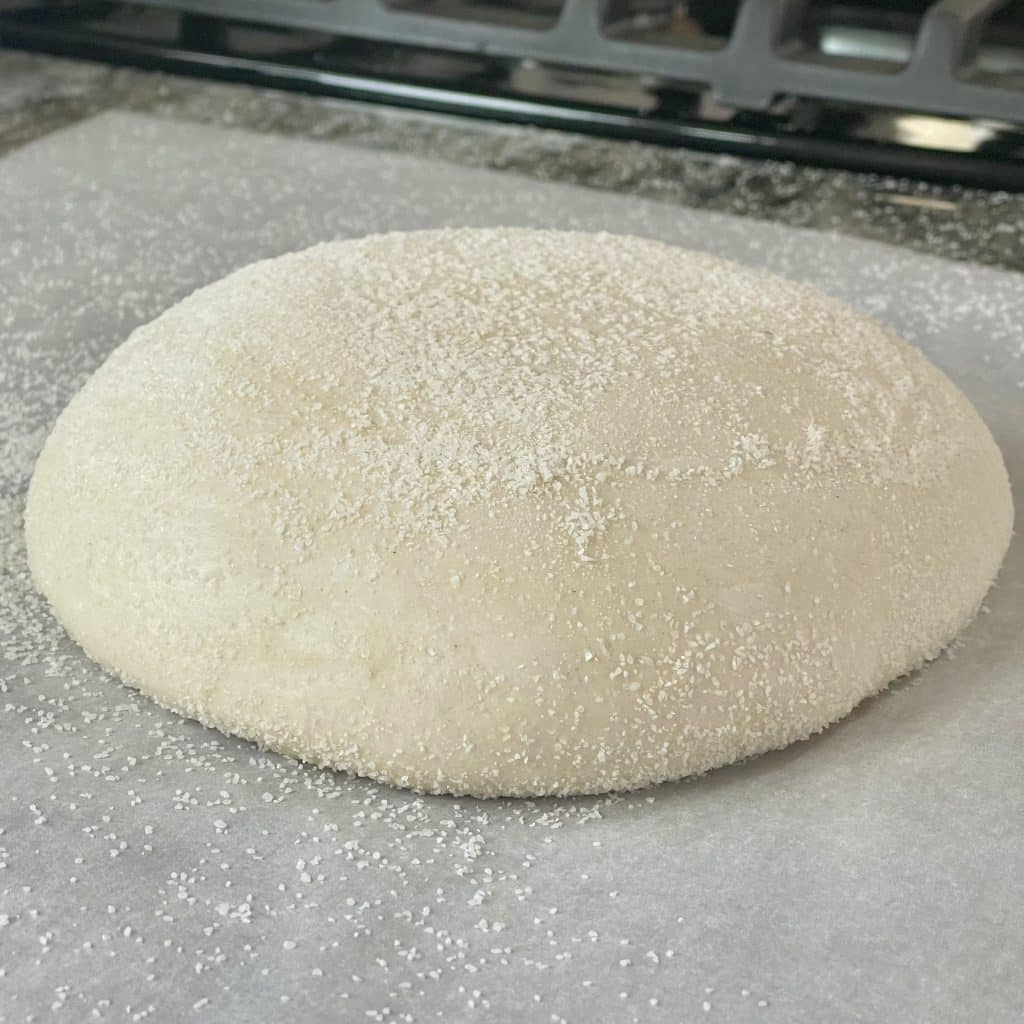
The differences in the dough are apparent at prebake. Both loaves have shape and baked well. The cold proof is more highly structured. the cold bulk rose well and created good bread since it was cold proofed before baking to help in handling and oven spring.
Using Cold Bulk and Cold Proof Together (Best Method for Flavor + Structure)
Cold bulk fermentation has a lot to recommend it, especially for home bakers who want strongly flavored bread and a manageable workflow.
Cold bulk fermentation is widely used because it:
- develops deeper sourdough flavor
- fits well into a home schedule
- produces airy, well-fermented dough
- works reliably even for newer bakers unconcerned about judging crumb and loaf structure in detail
That’s why many beginner artisan sourdough methods use it successfully. The bread often tastes excellent and looks appealing without requiring precise control.
Where bakers often want to improve from here is not flavor—it’s structure.
This is one reason a beginner artisan sourdough method using cold bulk satisfies many bakers. The bread tastes excellent, looks beautiful, and feels approachable to make. But it is rather unpredictable in its results.
As experience grows, many bakers start noticing:
- whether the dough holds tension well
- whether the loaf spreads or stands tall
- whether the crumb is evenly developed
- whether the results are repeatable from bake to bake
That is where understanding the relationship between cold bulk, shaping, and short cold proof becomes more valuable
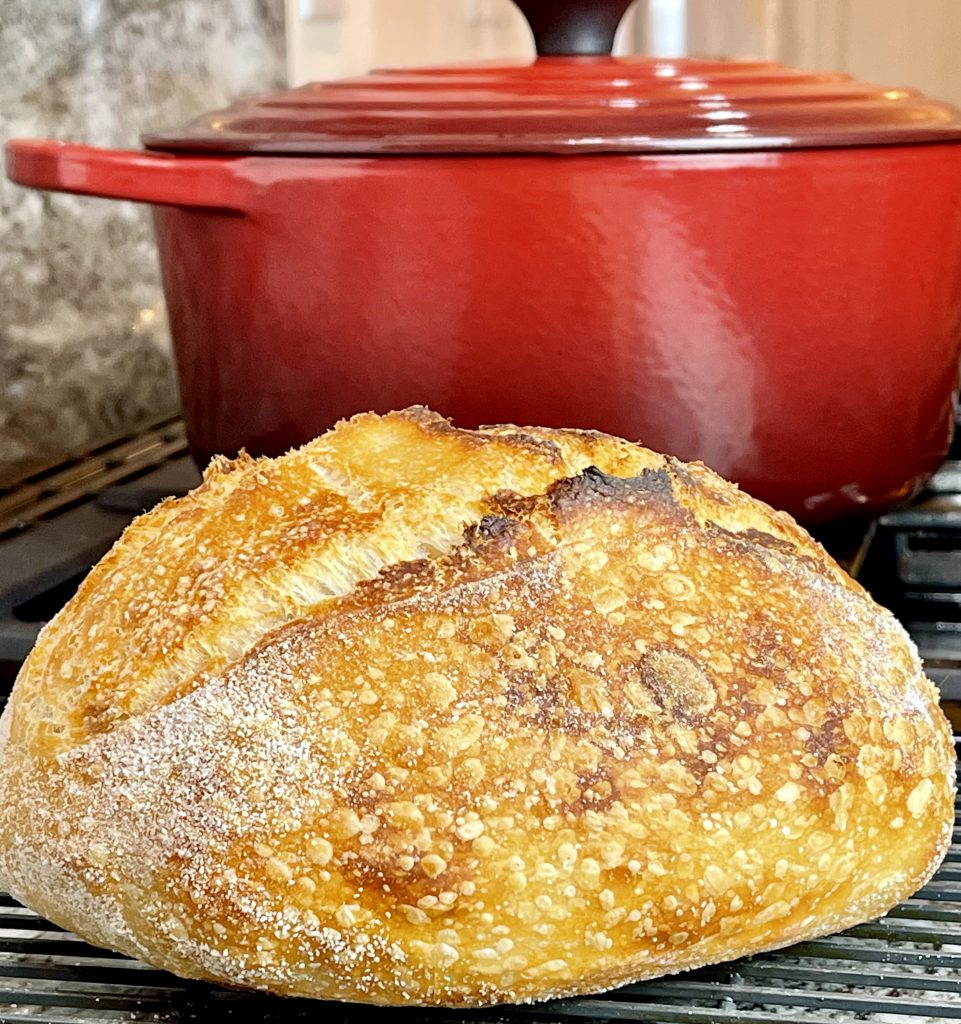
When Cold Bulk Weakens Dough Structure
As we noted earlier in this post, a long cold bulk method can make dough more flavorful, but also more extensible.
That is not automatically a problem. In fact, some extensibility helps create an open crumb. The challenge comes when fermentation goes far enough that the dough begins losing too much strength before refrigeration.
Depending on how quickly the room-temperature bulk progresses, the dough can relax quite a bit before it ever goes into the fridge.
When that happens, the dough may become:
- softer and looser
- more difficult to shape tightly
- very gassy, but less able to support its own structure
Want to improve your breads crumb and loaf shape? Remember This:
Cold fermentation can deepen flavor, but it does not rebuild strength. So you must build the dough strength early.
If the dough enters cold bulk already too relaxed, the baker(you) often has to rely more heavily on extra folds, late in the process, shaping and a short cold proof after shaping to recover as much structure as possible.
It is unlikely, at the point of shaping, to rebuild all lost structure. The most you can hope for is through delicate handling and a good cold proof, you don’t lose the structure completely.
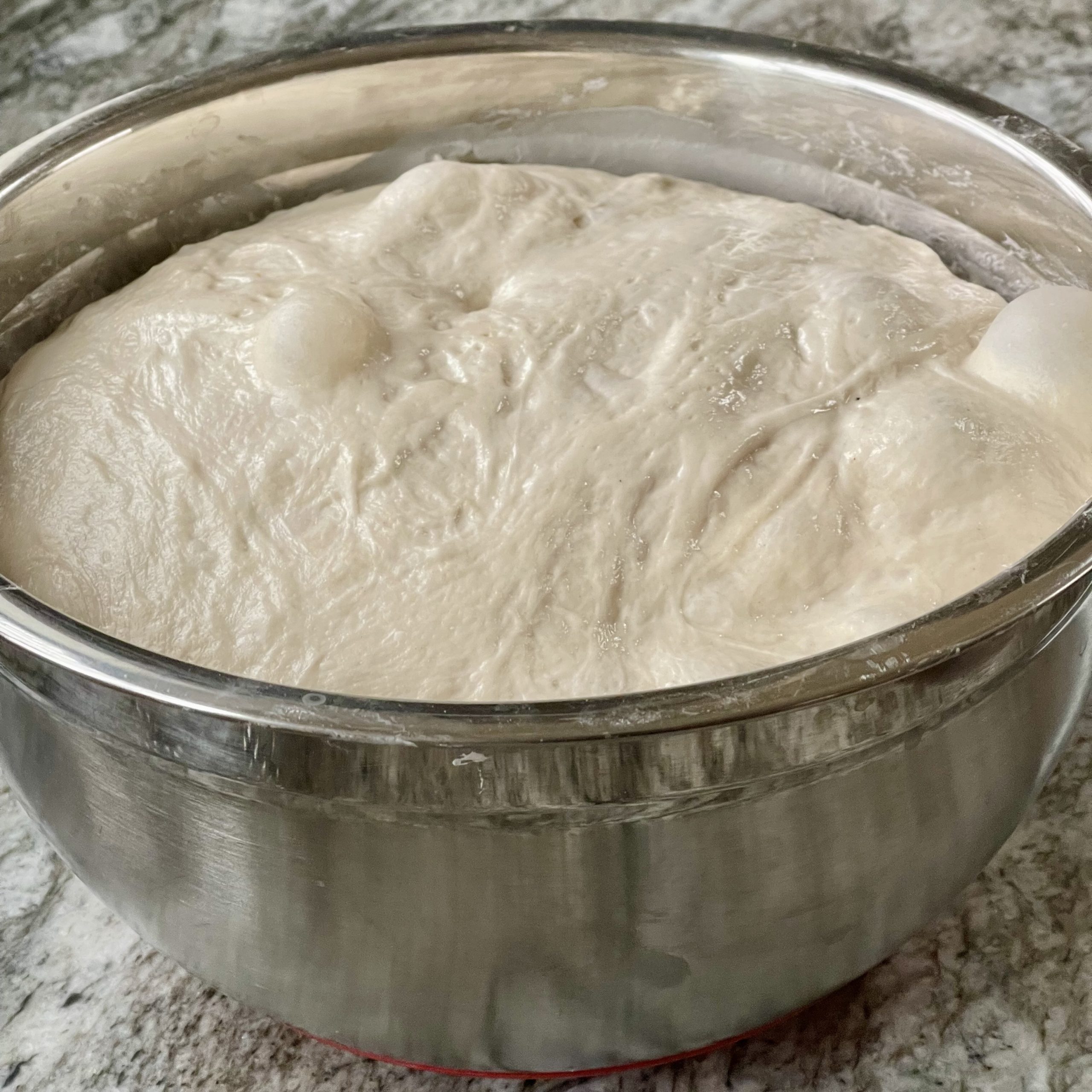
Building Dough Strength During Bulk (Critical Step)
When using a long cold bulk rise, dough strength needs to be built early and protected through fermentation.
During bulk fermentation, the dough is doing two things at once:
- building structure through gluten development
- gradually relaxing as fermentation advances
If fermentation moves too far before refrigeration, the dough may look active and promising, but it can already be slipping into a weaker structural state.
That is why folds matter so much in this method.
Early in bulk, use stretch and folds or coil folds to help the dough build elasticity and support. Then pay attention as the dough continues to ferment. If it starts spreading more in the container, feeling softer, or losing resistance during handling, that is often the sign that the dough is approaching its relaxation point.
For a long cold bulk method, the goal is not simply “more rise before the fridge.” The goal is to refrigerate when the dough is:
- aerated
- slightly puffy
- elastic
- still able to hold shape
That balance of fermentation plus strength is what gives you the best chance of carrying structure into shaping. If your dough isn’t behaving as expected, use our full Sourdough Troubleshooting Guide to diagnose the issue.
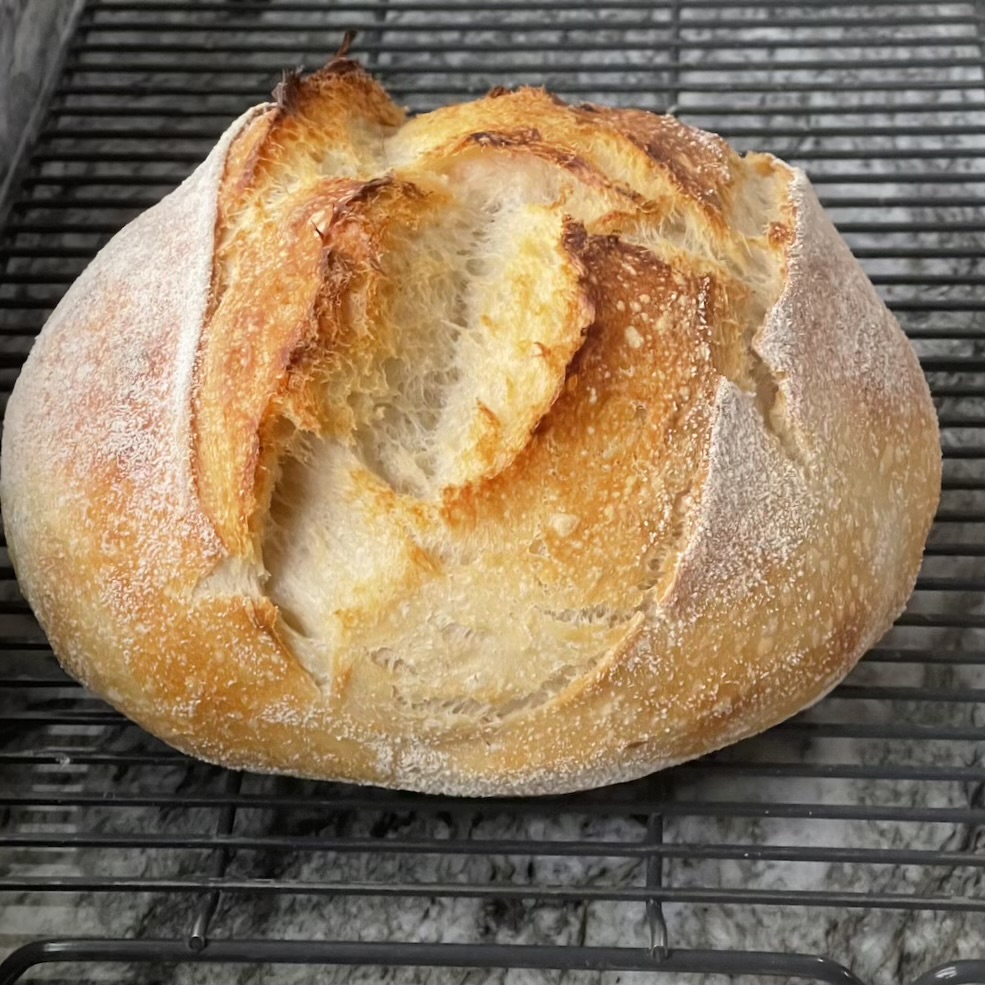
How Fermentation Changes Dough Strength
Fermentation is the bedrock of sourdough baking. All else hinges on a good ferment in your bread dough.
Signs Your Dough Is Ready
- elastic and slightly resistant
- holds shape
- lightly aerated
Signs Your Dough Has Gone Too Far
- spreads flat
- feels very soft
- loses structure easily
- looks gassy but fragile
Shaping After Cold Bulk (How to Rebuild Structure)
After a long cold bulk, especially if the dough is gassy and fragile, shaping becomes critical.
Your dough will often be:
- airy and well fermented
- more extensible
- slightly relaxed
What Good Shaping Should Do
- create surface tension
- support internal gas structure
- help the dough hold its form through tension in the dough surface.
How to Shape Without Losing Structure
Be gentle when removing the dough from the bulk proof container so it doesn’t overly degass or compress.
- handle gently
- avoid excessive degassing
- use firm, controlled movements
- tighten the outer surface without tearing
If the dough spreads quickly, increase shaping tension.
Can You Fix Over-Relaxed Dough? (Shaping + Cold Proof)
Sometimes, if the dough has not gone too far, yes.
If the dough has become somewhat relaxed after bulk, shaping and a short cold proof can work together as a baker’s tool to improve the final loaf.
Here is why:
How Shaping Helps
- rebuilding surface tension
- organizing the dough into a tighter form
- supporting the internal gas structure
How Cold Proof Helps
- firming the shaped dough
- slowing further breakdown
- helping the loaf hold its form for scoring and baking
Together, these steps can help a slightly over-relaxed dough perform better.
But this is a recovery tool, not a miracle cure.
If the dough is already extremely slack, fragile, or unable to hold any tension, a short cold proof will not restore lost strength. It may help stabilize what is left, but it cannot fully reverse structural breakdown that has already happened.
That is why the best results still come from:
- building strength early
- refrigerating before the dough becomes too relaxed
- then using shaping and cold proof as support tools
Why Cold Proof Improves Structure, Oven Spring, and Crust
Cold proof is more than a step—it’s a valuable baking tool.
How Cold Proof Affects Oven Spring
- firms dough
- stabilizes structure
- improves scoring
- improves oven spring
This is why our recipes use the cold proof after shaping. This extra fridge time does a lot for your bake.
Why Cold Proof Improves Oven Spring and Crust:
- more controlled expansion
- better browning
- deeper crust flavor
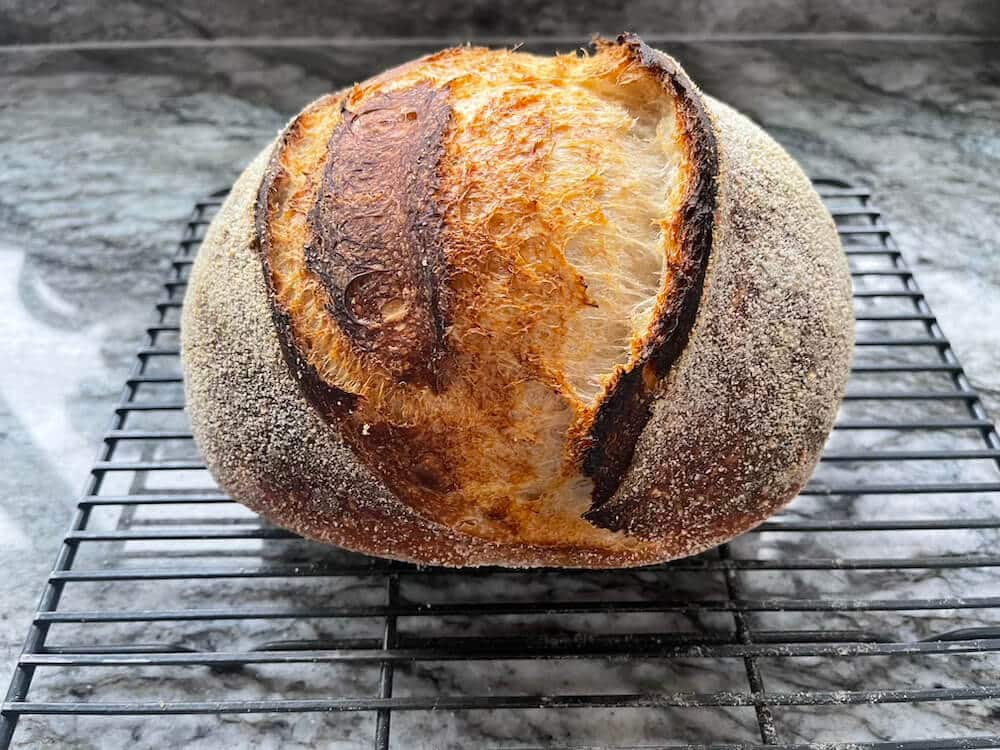
Here is why your loaves are browner with cold proofing: Cold proof slows fermentation and preserves sugars. So cold proof changes fermentation, which affects sugar availability which impacts browning in the oven
Here are two related (but different) processes happen during baking:
Maillard Reaction (Crust Browning)
- browning from sugars + proteins
- creates deep flavor and crust color
Here is why Cold Proof Has these results:
Caramelization and Crust Color
- browning of sugars alone
- contributes sweetness and color
This leads to two important improvements in the oven.
First, oven spring improves.
The firmer dough holds its shape better and expands more predictably when heat hits it. Good oven spring will help your loose constructed bulk cold rise loaves reach their full potential. Don’t skip this step for optimal baking results.
Second, crust development improves.
Because fermentation slows during cold proof, more sugars remain available for browning during baking. This contributes to:
- deeper crust color
- more developed flavor
- a better overall finish
Cold bulk builds flavor.
Shaping builds structure.
Cold proof stabilizes that structure so it performs well in the oven
In this way, cold proofing supports both structure and the final bake quality.
When to Use Cold Proof Without Cold Bulk (Overnight Method)
Cold proof can be used alone as the main fermentation method. In fact, for many bakers this is their preferred method of the long cold rise.
Step-by-Step Workflow
- Counter Bulk at room temp to prime proof, then…
- Shape the loaves (very tricky for high hydration at room temp-light hands and wet tools help)
- Cold proof overnight in fridge
- Bake cold. Keep loaves refrigerated while oven preheats at least 45 minutes. Score the loaves and bake immediately for best handling and scoring results.
Benefits of Cold Proofing Alone
- Stronger loaf structure
- Better fuller rounder shape more consistently
- More predictable results
Tradeoffs to Consider
- Slightly less flavor development
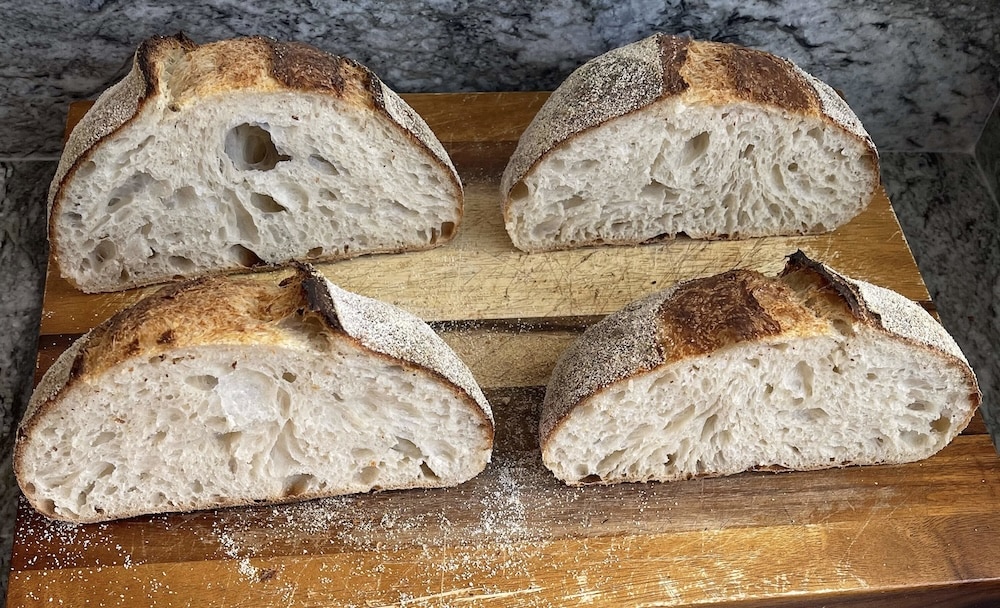
- Tighter, more even crumb achieved more consistently.
Long Cold Rise Schedules (Cold Bulk vs Cold Proof)
Overnight (8–16 hours)
- reliable results
- easier scoring
- balanced flavor
Extended (18–48 hours)
- deeper flavor
- more flexibility
Watch for increased extensibility and reduced strength.
Baking Cold Sourdough: Why It Works Better
We bake our sourdough cold in all our recipes for these reasons.
Cold dough:
- scores better
- holds shape
- expands more predictably
Common Long Cold Rise Mistakes (and How to Fix Them)
Flat loaf
Cause: over-relaxed dough
Fix: shorten bulk, build strength
Dense crumb
Cause: under-fermented
Fix: extend bulk
Weak structure
Cause: over-fermentation
Fix: reduce time, improve folds
Cold Bulk vs Cold Proof: It’s About Control
Cold bulk and cold proof are both good methods for bakers to learn how to use correctly.
They are tools.
- cold bulk → flavor
- shaping → structure
- cold proof → stability
The real key:
- learn to read your dough
- build strength early
- use cold proof intentionally
As you move from good bread to consistent results in your loaves, keep these points in mind..
Key Takeaways
Cold proofing helps with structure and it also affects how your bread bakes.
When dough is chilled after shaping:
- fermentation slows significantly
- sugars in the dough are preserved
- the surface firms up for better scoring
This approach balances:
- flavor development (from cold bulk)
- structure and handling (from shaping and cold proof)
Final Thoughts: A Balanced Approach
Cold bulk and cold proof are not competing methods—they are different tools that offer the baker options to meet their baking goals.
Many bakers get the best results by combining them:
- flavor from cold bulk
- structure from shaping
- stability from cold proof
The Real Key to Better Sourdough
If your bread already tastes great, the next step is learning the dough variables and figuring out how they work together in your recipes. Learning cold proof vs cold bulk sourdough methods is one way you learn which direction you want to take your sourdough baking.
Begin by changing each variable, one at a time and you will discover how to achieve your perfect loaf. If your dough isn’t behaving as expected and you don’t see the answer here, use our full Sourdough Troubleshooting Guide to diagnose the issue.
Where to Go Next
If you want to keep improving your sourdough baking results, these guides will help you build consistency and control:
- How to Proof Sourdough Bread
- Sourdough Crumb Structure Guide
- Why Sourdough Bread Turns Out Dense
- Hydration in Sourdough Baking
- How to Shape Sourdough Bread (Build Tension for Better Oven Spring and Crumb)
- What Is Dough Structure in Sourdough?
- How to Get Crispy Sourdough Crust (Fix Soft, Hard, Thick, and Chewy Problems)
- How to Read Sourdough Crumb Structure
- How to Read Sourdough Crumb Structure
This guide is part of our sourdough fermentation series, designed to help you move from following recipes to understanding your dough. go to Our Sourdough Baking Hub for even more great guides on making your best bake!