As an Amazon Associate and member of other affiliate programs we earn a small commission from qualifying purchases through our affiliate link. For more information read our Entire Affiliate Disclosure.
Steam baking sourdough properly is essential for achieving strong oven spring, an open crumb, and a crisp artisan crust.
If you’ve ever wondered why sourdough recipes call for a Dutch oven or adding water to your oven, the answer comes down to one thing: steam controls how your bread expands in the oven.
Steam works with heat and timing to delay crust formation, allowing your dough to rise fully before the crust sets.
Understanding how steam works will help you fix flat loaves, weak oven spring, and dense crumb—even when everything else seems right. baking sourdough properly is vital to your success as a sourdough baker.
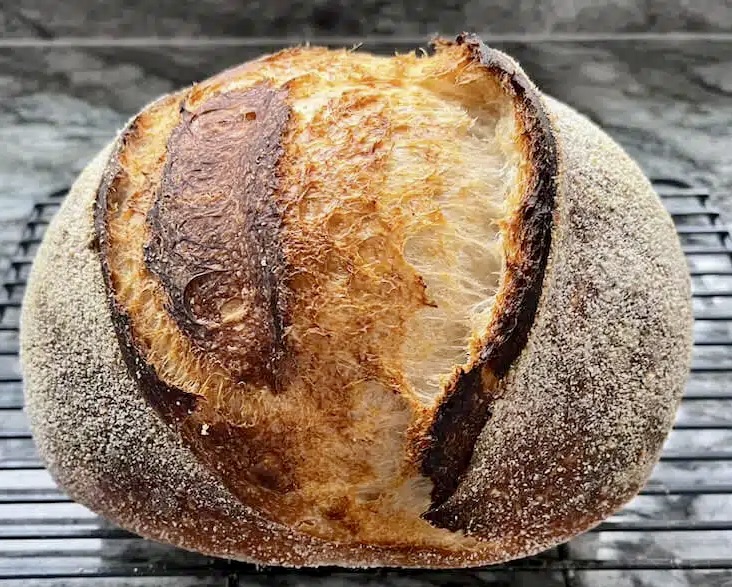
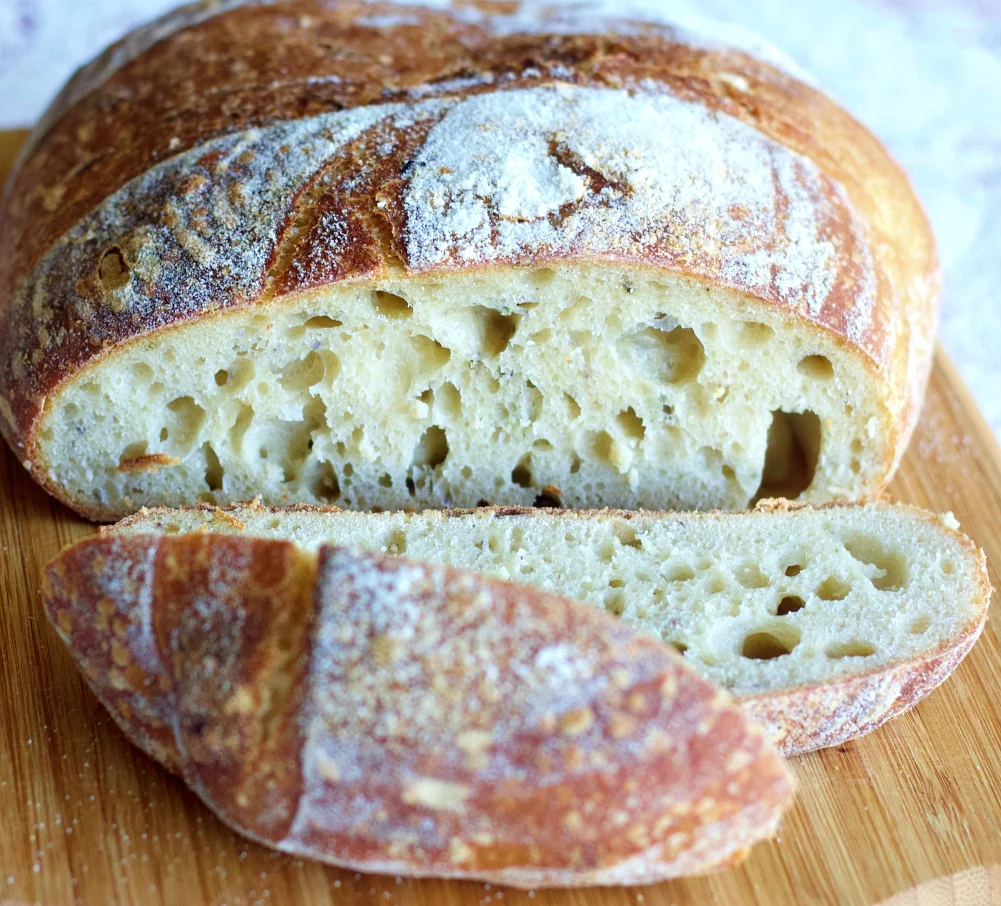
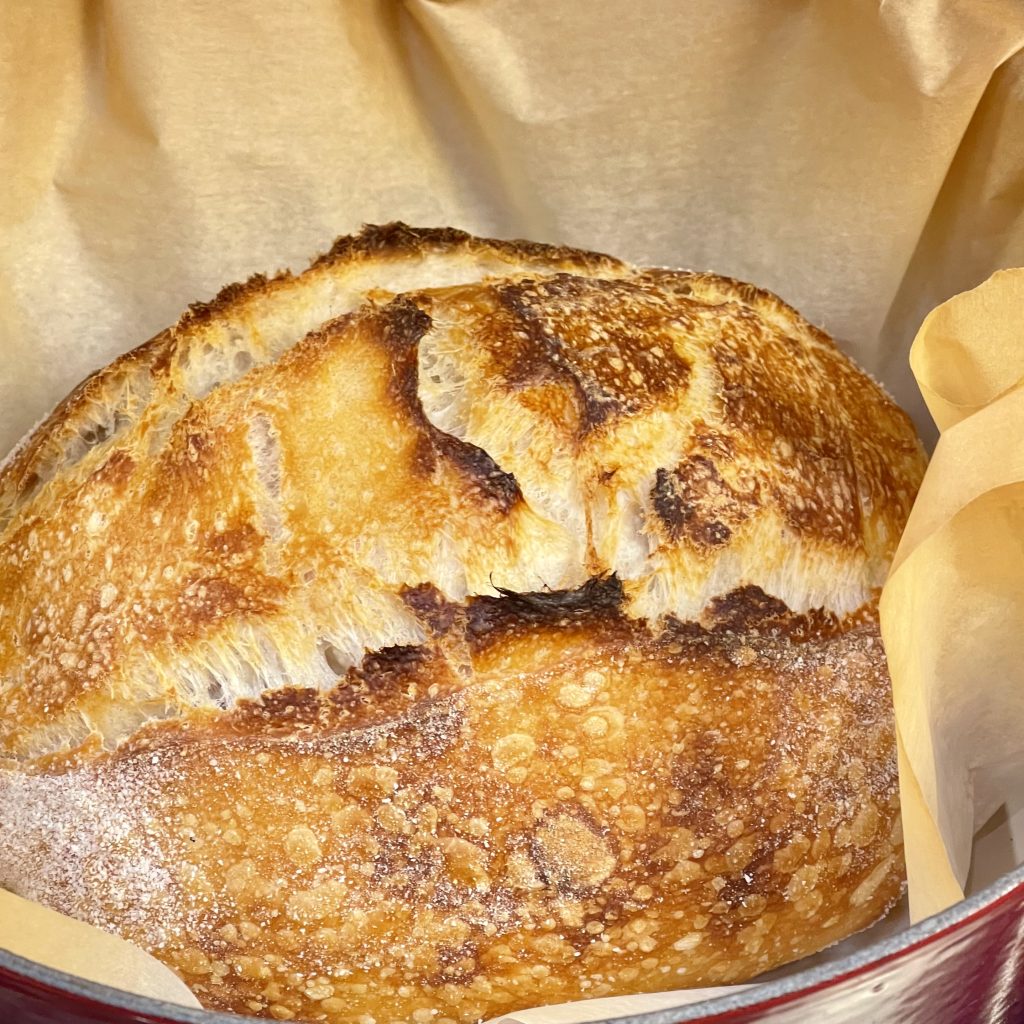
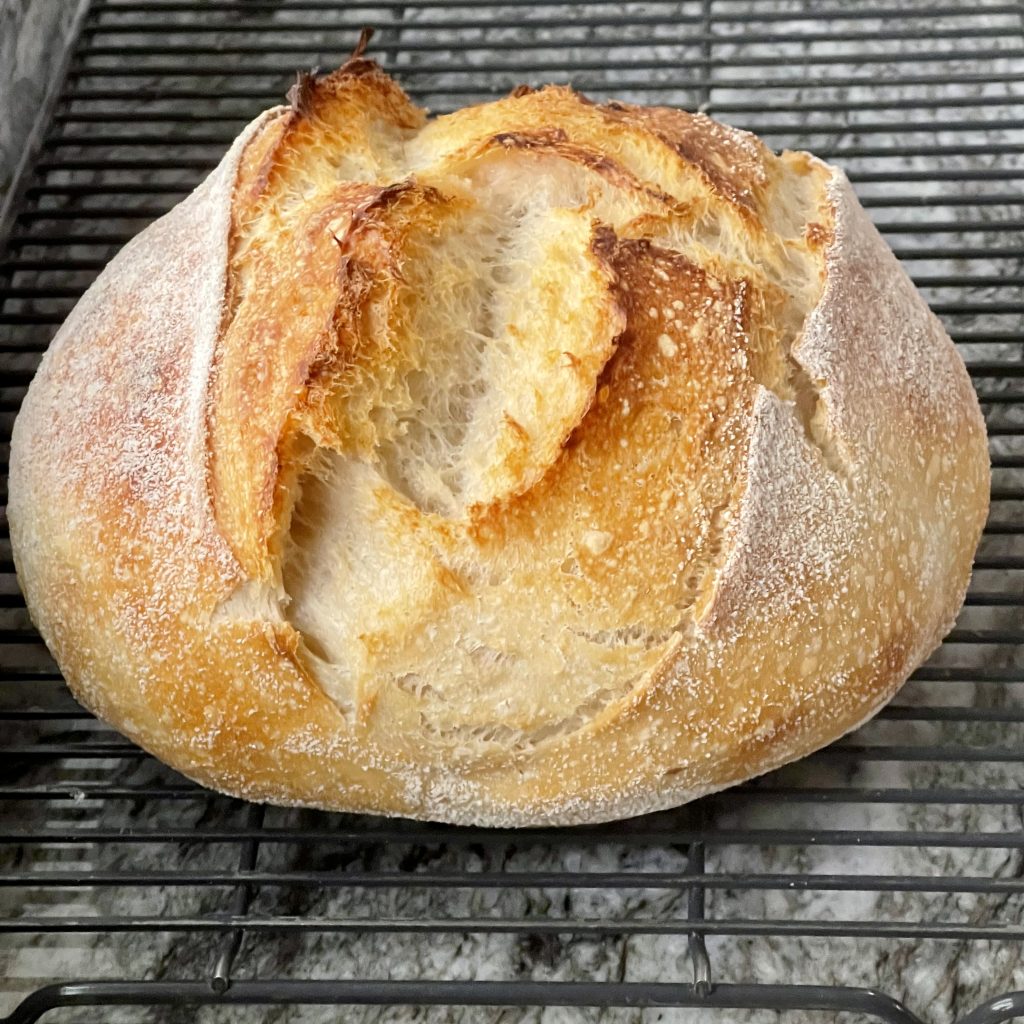
Sourdough boule 100% bread flour with strong starter and great oven spring. Modest ear.
Steam is used in sourdough baking to delay crust formation during the first part of baking, allowing the dough to expand fully in the oven. This process is called oven spring.
Oven spring is responsible for:
Good rise
Open crumb
Defined scoring
Proper crust development
Learning how to control steam—how much, when to use it, and how it works with oven temperature—gives you control over your final loaf.
Steam is not just a step in the process—it’s a tool you can adjust.
Why Steam Is Important in Sourdough Baking
Steam baking Sourdough bread is an old traditional method of baking using open hearths. Occasionally you’ll still find sourdough breads made with open hearth baking. However, Today it’s made more often in commercial steam-injected ovens.
Most Modern home ovens, however, are not designed to create steam.
Injecting steam directly into the baking chamber at the start of the bake, does good things to sourdough bread as it bakes. As Chad Robertson explains in his Tartine Bread Book, that early burst of steam is essential for proper oven spring and crust development.
How Steam Affects Oven Spring in Sourdough Bread
To recreate this steamy baking environment at home, bakers use methods like:
Dutch ovens
Combo cookers
Open steam methods
These techniques trap or introduce moisture during the early stage of baking. THIS is how home bakers steam bake sourdough at home.
Home bakers use steam as a tool to create artisan hearth breads just like the pros. But there is more to it. Steam baking sourdough bread must be done in certain ways for certain types of bread.
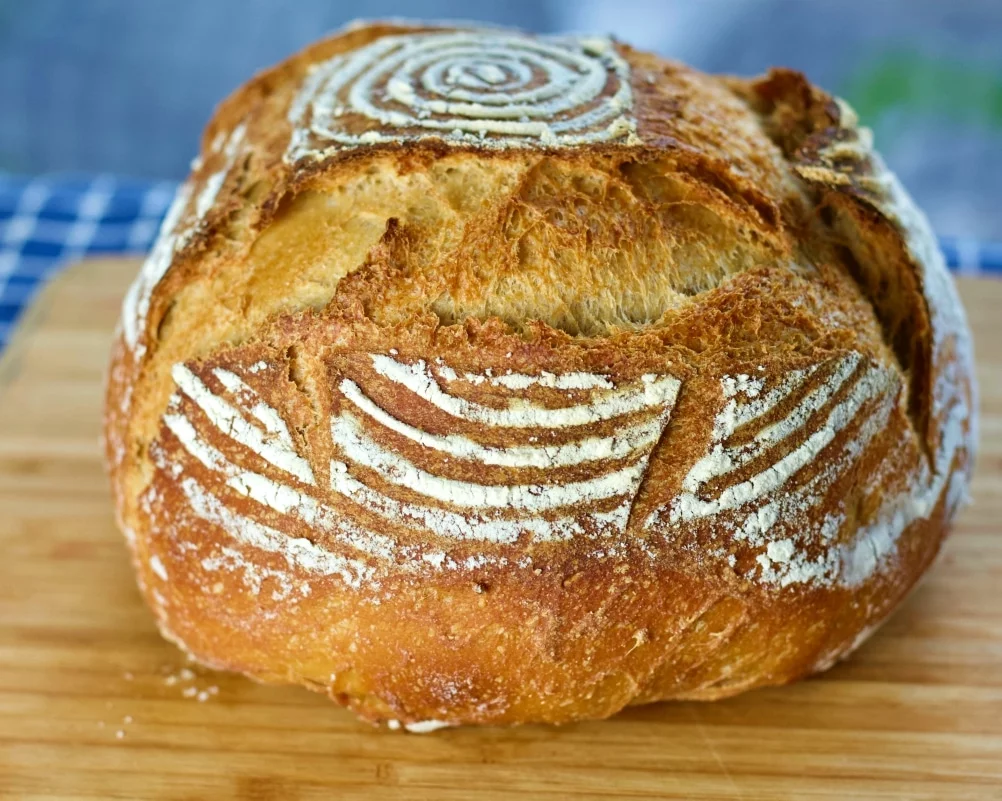
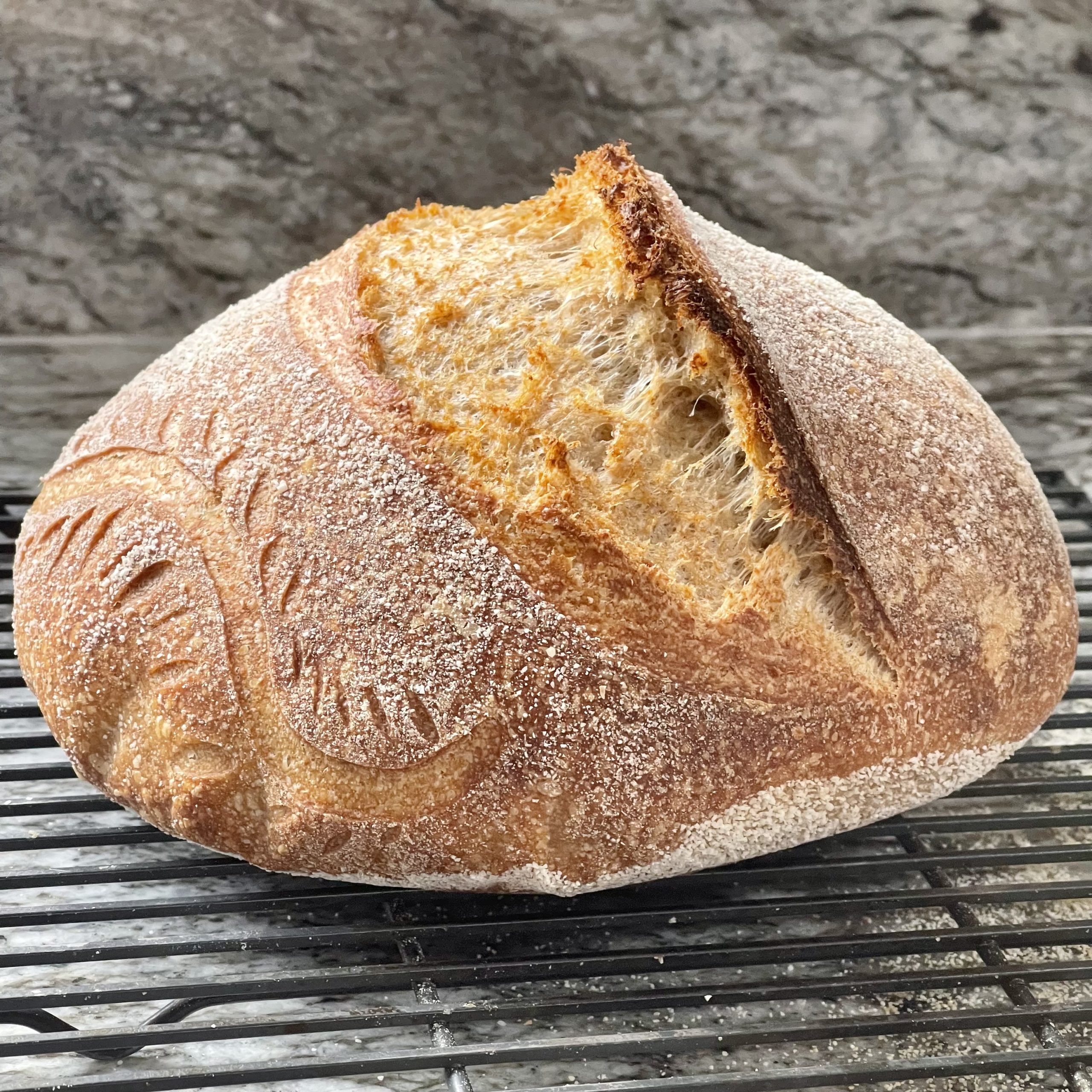
You can see the oven spring Easily in this 100% white whole wheat sourdough loaf.
What Steam Actually Does
During the first part of baking, steam:
Keeps the dough surface soft and flexible
Delays crust formation
Allows full expansion during oven spring
Helps your scoring open cleanly
Once the steam is removed, the crust begins to dry and brown, creating the texture and color of a finished loaf. Without steam, the crust forms too early—and once it sets, the loaf cannot expand properly.
Steam Baking sourdough bread rises the dough quickly so the crumb can develop and set properly during oven spring. Steam supports crumb expansion → see Sourdough Crumb Structure Guide
How Steam Works in Sourdough Baking
When your dough enters a hot oven, several things happen at once:
Heat causes trapped gases to expand rapidly
Yeast activity increases briefly
Water inside the dough turns to steam
At the same time, steam in the oven keeps the surface flexible so the dough can stretch instead of hardening too early.
This allows the loaf to expand fully before the crust sets—resulting in better rise, crumb, and structure.
What Happens If You Don’t Use Steam in Sourdough?
Steam baking sourdough bread directly affects how much it can expand in the oven.
Without steam:
The crust sets too quickly
Expansion is restricted
Oven spring is limited
The crumb becomes dense
With proper steam:
The dough expands fully
Scoring opens cleanly
Structure develops evenly
What Happens Without Steam
Without steam the oven spring is limited and the crumb structure will be dense. Usually unevenly, as the dough struggles to rise. Steam, at the proper temperature, accelerates and encourages the dough to rise quickly and build its structure early in the bake.
Feature
With Steam
Without Steam
Oven Spring
Strong
Limited
Crust
Thin, crisp
Thick, dull
Scoring
Opens cleanly
Tears randomly
Crumb
Open
Dense
you may see:
Flat or low-rise loaves
Thick, dull crust
Poor scoring or random tearing
Dense, uneven crumb
Even well-fermented dough can bake poorly if the crust forms too early. That’s the Why. Steam Baking Sourdough is essential for good oven spring.
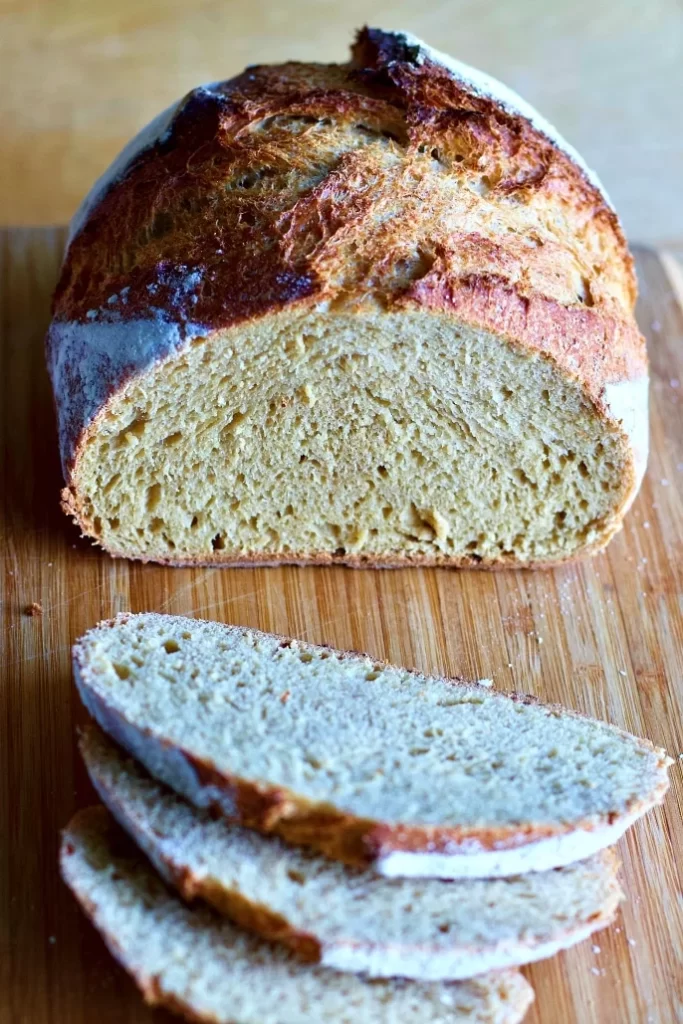
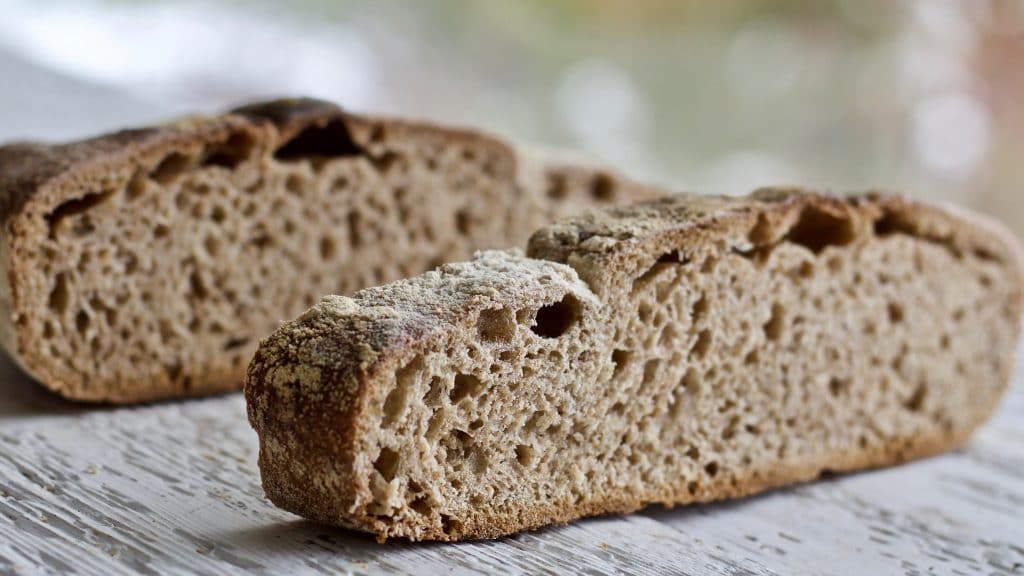
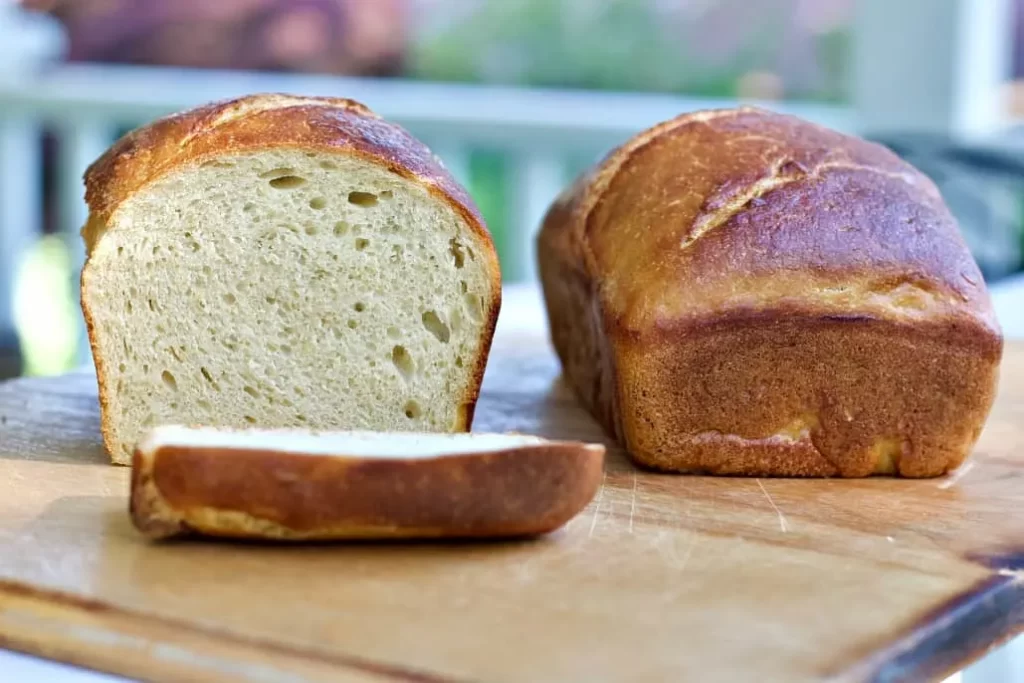
Whole Wheat Bread Milk and Honey bread
The above breads had very little oven spring and resulted in a dense crumb. The steam was not enough. OR The oven temperature was incorrectly calibrated to create optimal steam for these bakes. Lack of steam is a common cause of dense loaves → see more reason for dense crumb in Why Sourdough Bread Turns Dense.
Best Ways to Create Steam in a Home Oven
Baking in a Dutch oven is the most reliable way to create steam for steam baking sourdough at home.
The dough releases moisture as it heats, and the enclosed space traps that steam—creating the ideal environment for oven spring.
Dutch Oven Method (Artisan Bread)
Baking in high heat, a Dutch oven traps the moisture released by the dough itself, creating a high-humidity environment.
This method works because:
The dough generates its own steam
The sealed environment holds that steam close
High heat accelerates expansion
After the first part of the bake, the lid is removed:
Steam escapes
The crust dries and browns
The crumb finishes setting
Why this works:
Easy
Highly consistent
Ideal for crusty artisan loaves
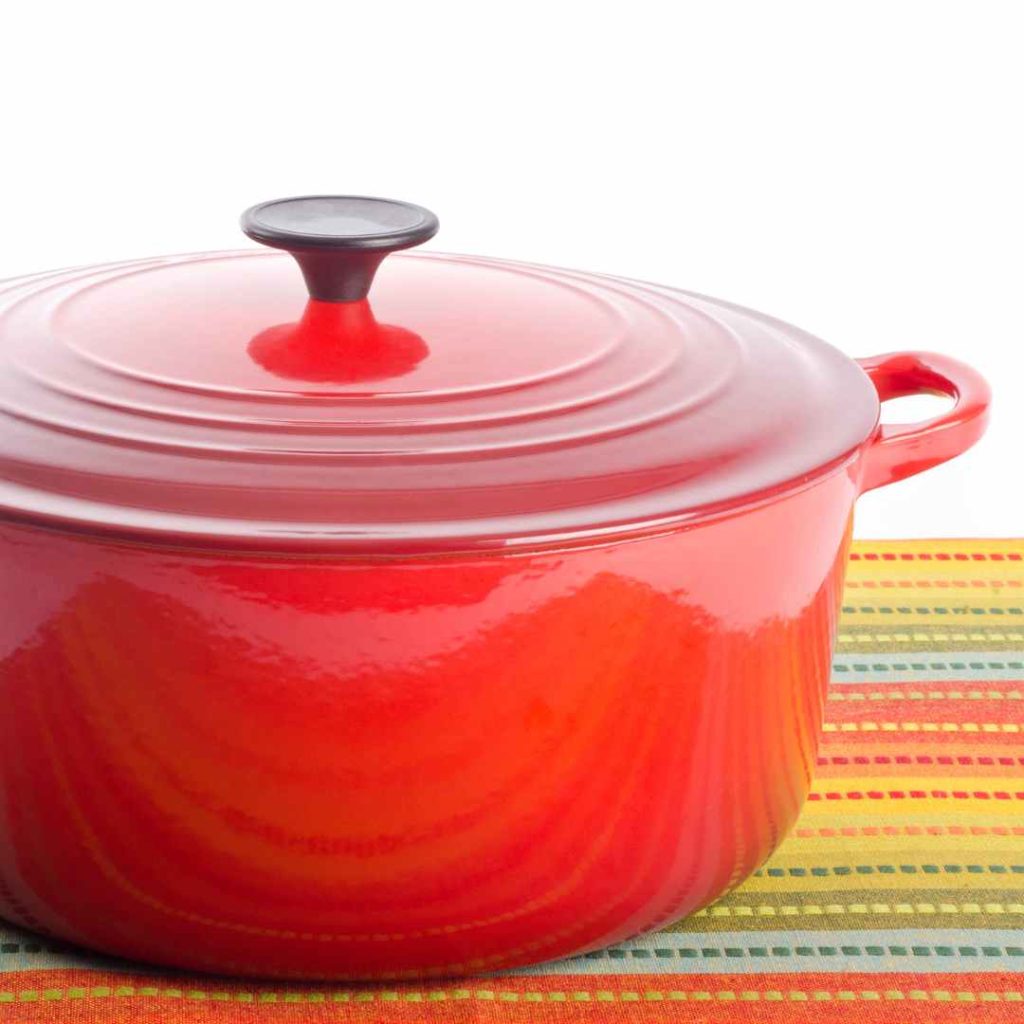
Le Crueset Dutch OvenLe Cuisnart Bread Baker
This steam baking sourdough bread method works because the hot, Preheated Dutch oven or combo pan traps the moisture released by the dough itself, creating a naturally steamy environment.
Caution! Always put your COLD dutch oven into a COLD oven and then begin your preheat for an hour. This will protect your dutch oven from cracking under too extreme heat exchange.
Dutch Oven vs Open Steam Baking (What’s the Difference?)
Open Steam Baking sourdough breads is a good method for baking sandwich breads and other loaves where you want a soft, sliceable crust rather than a crusty artisan loaf.
How it works: Steam softens and delays crust formation, but open baking allows moisture to escape from close to the dough—resulting in a thinner, softer crust instead of a thick, crusty one.
Steam is added using:
Preheated pan + boiling water
Lava rocks
Ice cubes
In this method:
Steam is present early
It dissipates more quickly
The crust forms more gradually
Result:
Softer crust
Even crumb
Controlled expansion
And yes, some people do use open steam methods for crustier sourdough artisan breads too. But you will find it less consistent than closed steam methods.
A Dutch oven creates a sealed, high humidity environment. Until you take off the lid, your loaf is baking in steam.
Contrarily, Open steam baking creates a temporary, lighter steam exposure. This makes a very different baking environment in your oven. The steam is less dense around the dough so the exposure to steam is much lighter and less consistent than is a dutch oven.
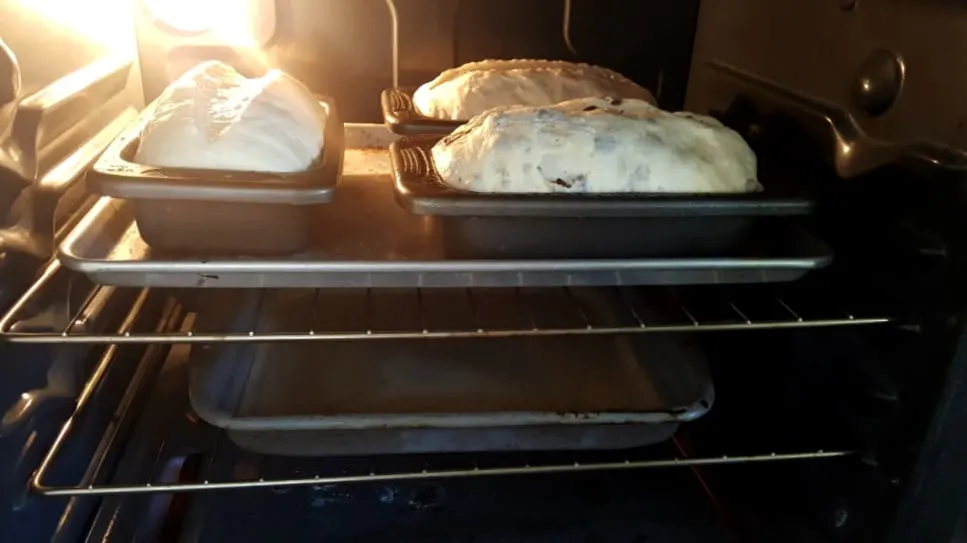
Open steam bath method creates a softer crustthe water bath creates a steamy humid environment for the first 20 minutes of the bake. Then remove it.
Why Open Steam Baking Works for Sandwich Bread
With some methods, like adding ice cubes when the bread goes in, or pouring water over hot lava rocks in a pan, the Steam dissipates quickly and the surface of the dough begins drying sooner. When steam baking sourdough, know what you want to bake and how to set your oven up properly.
Open Steam actually works pretty well for sandwich breads. Here’s the difference:
In a Dutch oven:
Steam is trapped
Crust stays soft longer
Result = thick, crisp crust
In open baking:
Steam is temporary
Moisture escapes
Result = thinner, softer crust
Because sandwich breads are baked in pans:
The structure is supported
Expansion is controlled
A softer crust is preferred
Steam and temperature control crust formation—not just oven spring.
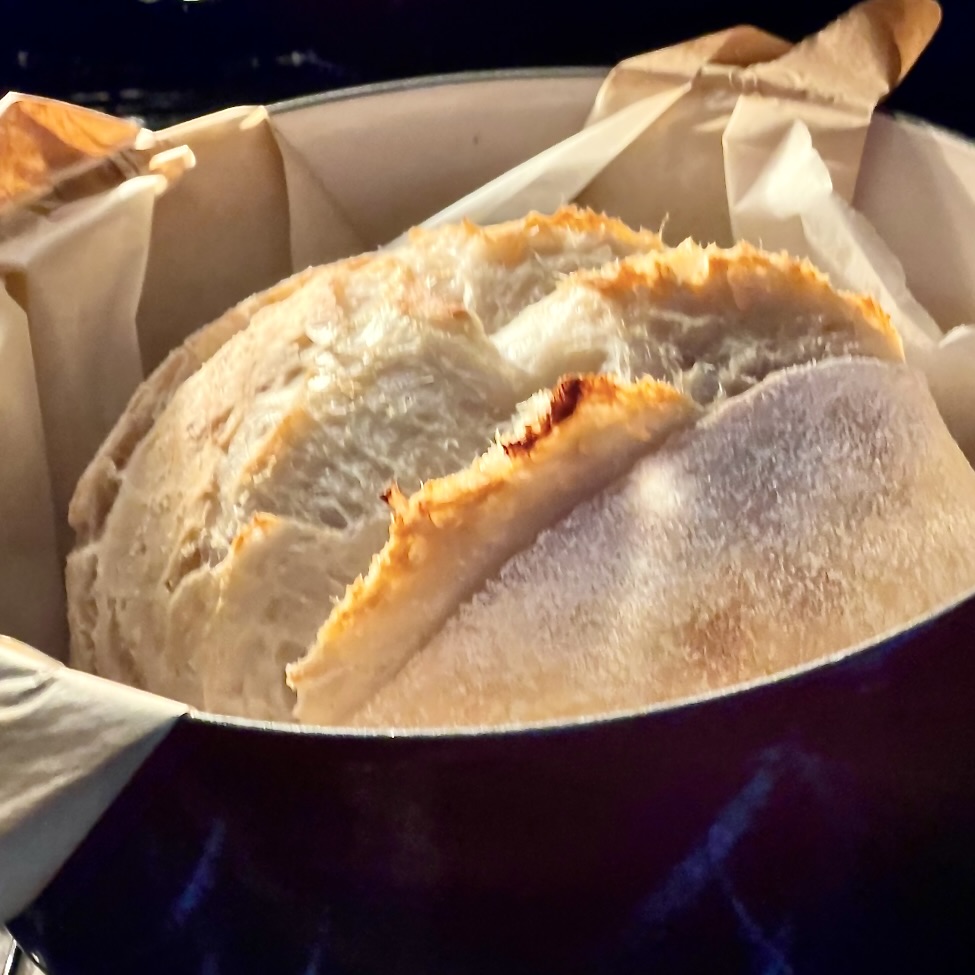
Halfway through the bake, take the lid off. Steam Baking is done. Now the crust and crumb will finish baking and brown. Temperature now drives how crusty and brown the crust is.
When to Remove Steam During Baking
Steam is only needed during the early stage of baking.
First 15–25 minutes → Steam ON
After that → Steam OFF
This allows:
Expansion to complete
Crust to dry
Browning to develop
This is the transition from expansion to crust formation
Bottom line: When steam baking sourdough bread, steam it in the first half of the bake. Then remove the steam to finish the bake.
Understanding the Mechanics of Steam Baking Sourdough
When sourdough enters a hot oven; This happens:
High Heat causes rapid gas expansion
Yeast activity spikes briefly
Water inside the dough turns to steam which expands the dough and creates the crumb structure.
This is oven spring.
If the crust sets too early, expansion stops and your bread bakes low and crumb is denser than ideal.
How Steam Affects Crust and Texture
Steam contributes to:
Glossy crust
Better color development
Blisters
Thin, crisp texture
Look for a slightly shiny surface, defined ear and well-opened scoring as signs of proper steam.
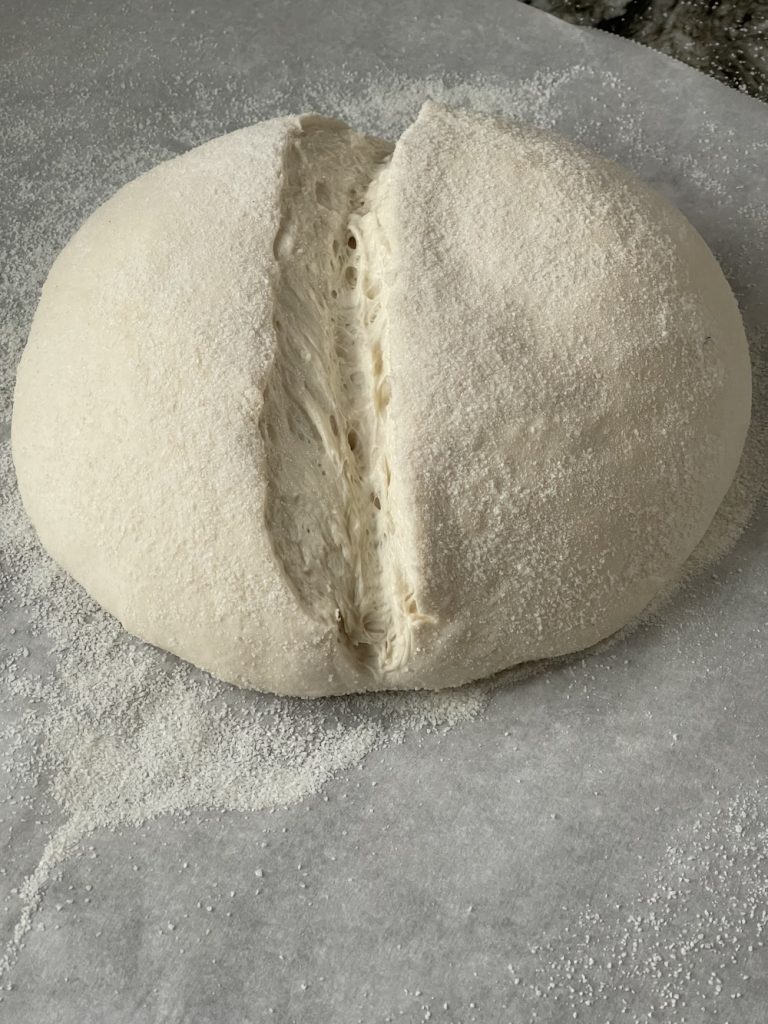
Deep Score Allows Good oven springLid Off MomentBaked Loaf
Steam, Scoring, and Shaping Work Together
Steam baking sourdough is only one part of the system. Making sourdough bread has a lot of processes. Most of them work all by themselves. But you need to help and understand what your bread dough is going through to succeed at your bake.
Factor
What It Does
Fermentation
Creates gas
Gluten
Holds gas
Shaping
Builds structure
Scoring
Directs expansion
Steam
Allows expansion
Without shaping → dough spreads
Without scoring → loaf tears unpredictably
Without steam → expansion stops too early
How Shaping Impacts Oven Spring
Steam plays an important role in oven spring—but it cannot fix poorly shaped dough. Steam doesn’t create oven spring—it allows it. Think of steam as giving your dough extra time to rise before the crust locks it in place.
Steam works by delaying crust formation, giving your loaf time to expand. However, that expansion depends on the strength and structure created during shaping.
Well-shaped dough with strong surface tension rises upward and expands through the score
Proper tension acts like a “skin,” holding the loaf together during rapid expansion
Weak shaping allows the dough to spread outward instead of rising
Poor structure results in low oven spring, even with perfect steam
If your bread bakes flat or lacks a strong ear, shaping is often the missing link—not your steam method.
Learn how to build the tension needed for strong oven spring here: How to Shape Sourdough Bread
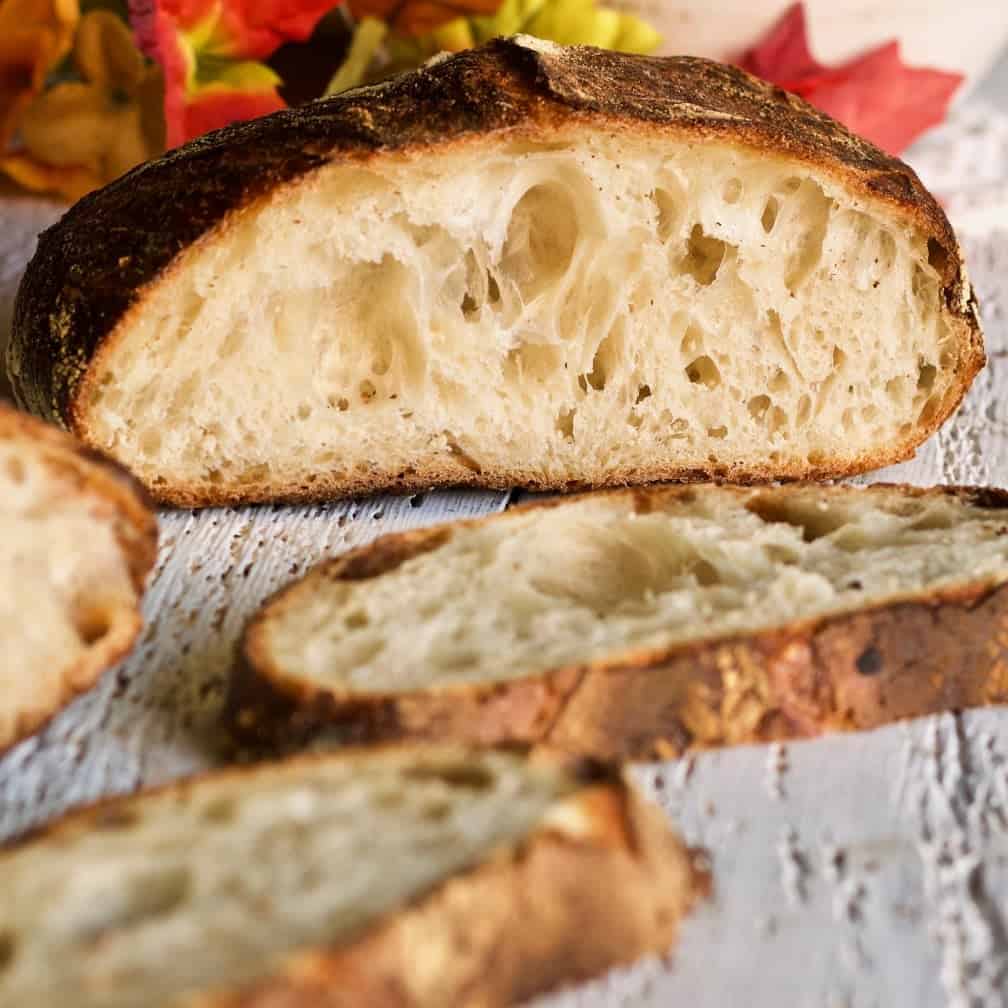
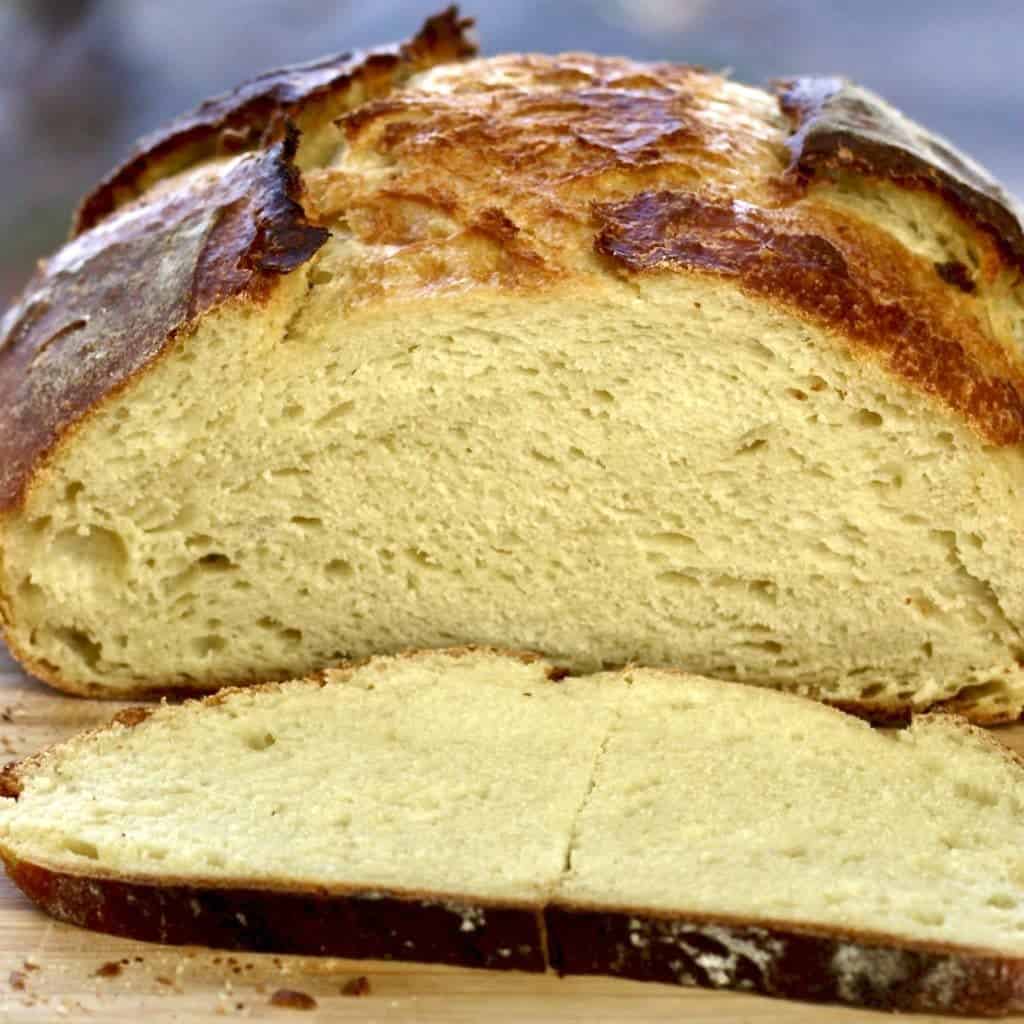
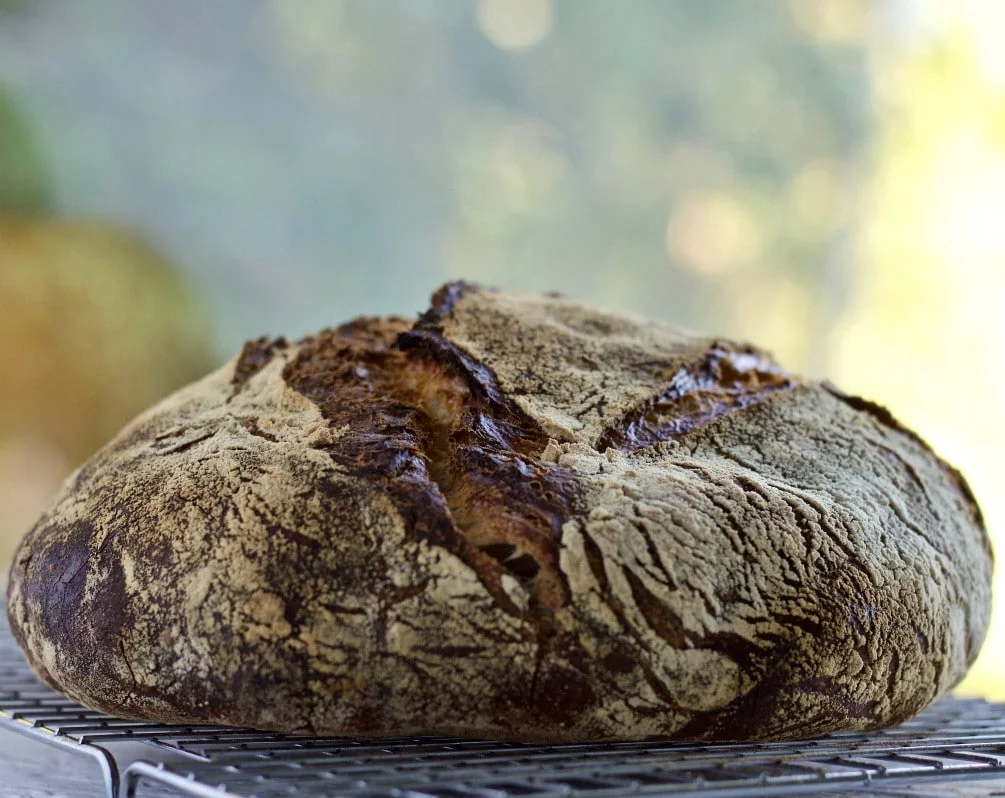
a loaf of Artisan Sourdough Bread with a thick crust and low rise. Delicious open crumb. Insufficient steam. Oven not well preheated with dutch oven.
Using Steam to Troubleshoot Sourdough Problems
Learning about Steam baking sourdough can help you diagnose problems in your bake, like this.
Flat Loaves
May indicate:
Insufficient steam
Early crust formation
Fix:
Improve steam during first 20 minutes
Ensure proper preheat
Weak Oven Spring
Weak Oven Spring
May indicate:
Steam not sustained long enough
Dough underproofed
Oven not fully preheated
Fix:
Increase early steam
Ensure full preheat
Check proofing stage
Dense Crumb
May indicate:
Expansion was restricted
Fix:
Maintain steam during initial bake phase
How Oven Temperature and Steam Work Together
30% spelt blend sourdough bread. Showing Ear and softer golden crust from good oven spring and temperature control. Temp reduced by 50 degrees F. after lid off to reduce browning.
Steam and temperature work together to control crust formation.
Steam controls when the crust forms. Temperature controls how fast it happens. And how crusty the crust gets and how brown, Malliard effect).
High Heat + Trapped Steam (Artisan Sourdough)
450–500°F
Dutch oven
High steam
Result:
Strong oven spring
Open crumb
Crisp crust
Moderate Heat + Light Steam (Sandwich Bread)
350–400°F
Open baking
Light steam
Result:
Even rise
Soft crust
Fine crumb
When Steam and Temperature Work Against You
High heat + low steam → dense loaf
Low heat + too much steam → pale crust
Opening oven early → lost heat and steam
How to Adjust Steam for Different Bread Results
This chart gives you a relationship between temp and steam to create different styles of bread and crusts when steam sourdough baking.
Goal
Heat
Steam
Artisan loaf
High
High
Open crumb
High
High early
Sandwich bread
Moderate
Light
Crisp crust
High
High → then dry
Soft crust
Moderate
Light
You have control of all these variables. Use them to create the exact bread you’re aspiring to. Steam and temperature and time all work together during your bake to make it happen.
Practical Guidelines
Here are a few tips for success in steam baking sourdough breads:
Fully preheat oven and baking vessel
Use strong steam early
Remove steam for browning
Match method to bread type
FAQ: Steam Baking Sourdough
Do you need steam for sourdough bread?
Yes, steam is essential for artisan sourdough baking. It delays crust formation during the early stage of baking, allowing the dough to expand fully and develop proper oven spring, crumb, and crust.
What happens if you don’t use steam in sourdough?
Without steam, the crust forms too quickly. This limits oven spring, resulting in a flatter loaf, dense crumb, and poor scoring.
Can you bake sourdough without a Dutch oven?
Yes. You can create steam in a home oven using a pan of hot water, lava rocks, or ice. While these methods are less consistent than a Dutch oven, they can still produce good results.
How long should you use steam when baking sourdough?
Steam is typically used during the first 15–25 minutes of baking. After that, it should be removed to allow the crust to dry and brown.
Does steam make sourdough crust crispy or soft?
Steam helps create a thin, crisp crust in artisan sourdough by delaying crust formation early in the bake. In open baking methods, lighter steam can result in a softer crust, especially in sandwich breads.
Where to Go Next
To improve your sourdough steam baking results even further, visit these posts:
Diane Williams is co-founder of Homemade Food Junkie and the primary editor and publisher of the site. She develops from-scratch recipes, sourdough baking tutorials, and garden-to-kitchen content designed to help home cooks succeed.