Sourdough Mixing Methods: How Bakers Develop Dough Strength and Structure
As an Amazon Associate and member of other affiliate programs we earn a small commission from qualifying purchases through our affiliate link. For more information read our Entire Affiliate Disclosure.
Learn how different sourdough mixing methods affect dough development, hydration, fermentation, and crumb structure. From autolyse and bassinage to slap and folds and no-knead techniques, here’s how experienced bakers choose the right mixing strategy for their bread.
Making great sourdough bread starts long before fermentation is complete or the loaf goes into the oven. Sourdough Mixing methods are one of the primary tools bakers use to influence dough structure.
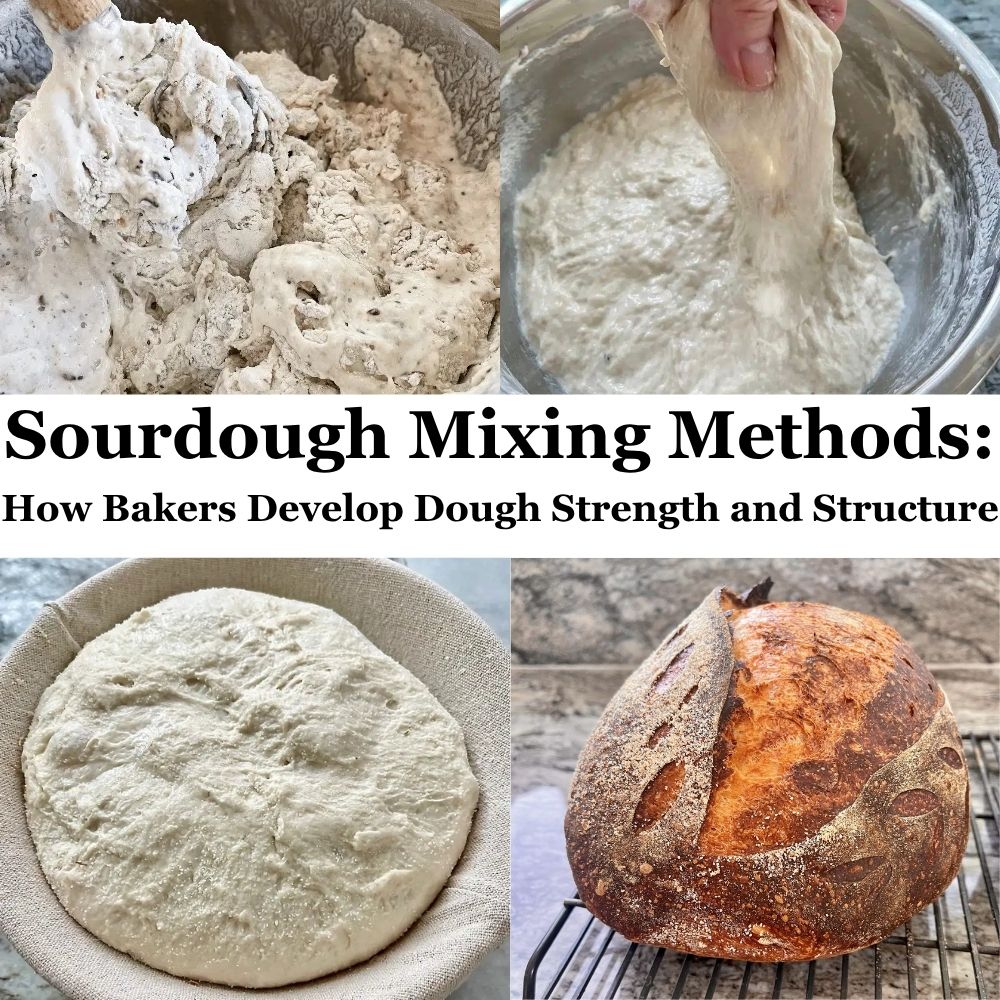
The way ingredients are mixed has a lot to do with how water is absorbed into the flour, how gluten develops, how easily the dough stretches, the crumb structure, and how much strength the dough can build throughout bulk fermentation.
Once you know these techniques you can adjust your dough building with these different mixing methods to attain your personal baking goals. A high-hydration artisan loaf may benefit from a completely different approach than a soft sandwich bread or a whole grain sourdough.
The goal is to create the type of dough needed for the finished bread you want to bake.
In this guide, we’ll explore the most common sourdough mixing methods, why bakers use them, and how each method influences dough development.
What Is a Mixing Method?
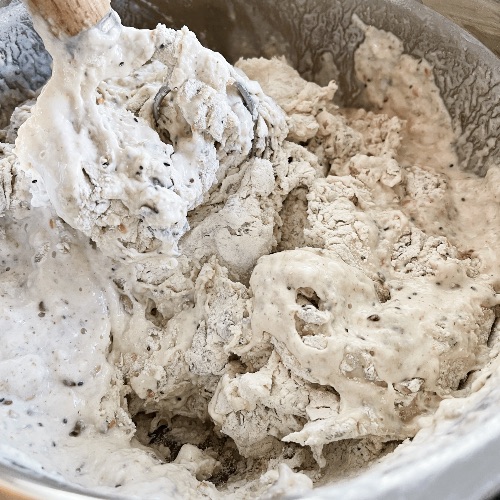
Sourdough mixing methods are the various processes used by bakers to combine ingredients to make sourdough bread.
The various mixing methods have specific uses for the type of bread dough you are creating. You will definitely want to familiarize yourself with them and learn how they apply to your baking goals.
But that is only part of it.
Sourdough mixing methods also include the methods bakers use throughout the process of developing the dough structure to create the dough they want to bake. Every different mixing method serves a purpose.
The method a baker chooses affects:
- Water absorption
- Dough strength
- Dough extensibility
- Fermentation activity
- Dough handling characteristics
- Crumb structure
- Final loaf shape and volume
Many bakers eventually develop a preferred workflow, but understanding the purpose behind each method makes it easier to adjust techniques when working with different flours, hydration levels, and desired bread styles.
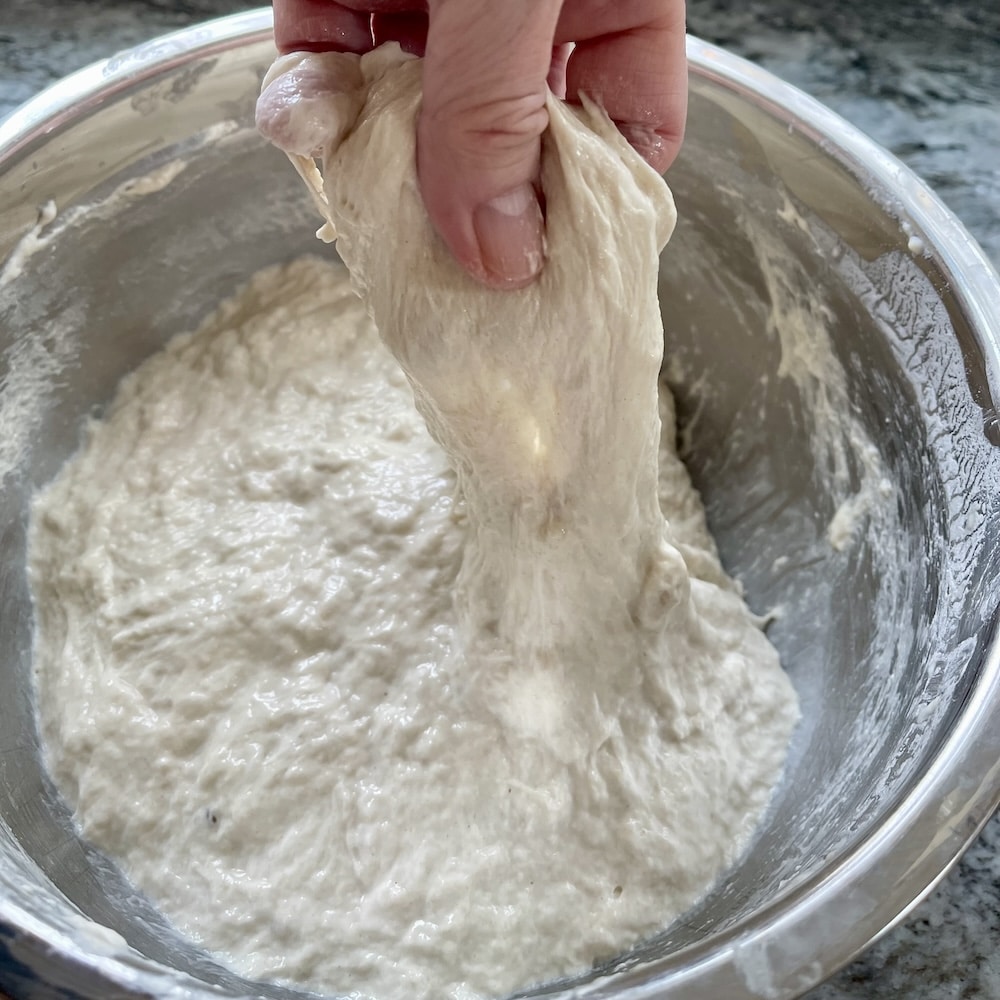
Why Bakers Use Different Sourdough Mixing Methods
What challenge does your recipe present? Before choosing a mixing method, realize these are dough building tools in your bakers toolbox. Identify what you’re trying to accomplish, then choose the correct tool for the job.
Are you trying to:
- Increase hydration?
- Build strength in a weak dough?
- Handle fresh milled flour?
- Create a more open crumb?
- Reduce hands-on work?
Each method addresses these. There are tradeoffs involved in these choices and sometimes you’re going to combine a few sourdough mixing methods to gain the nuance your recipe requires for what you want to do with it.
That’s the fun and science of sourdough. Endlessly Creative with a lot of ways to make your bakers vision work for you.
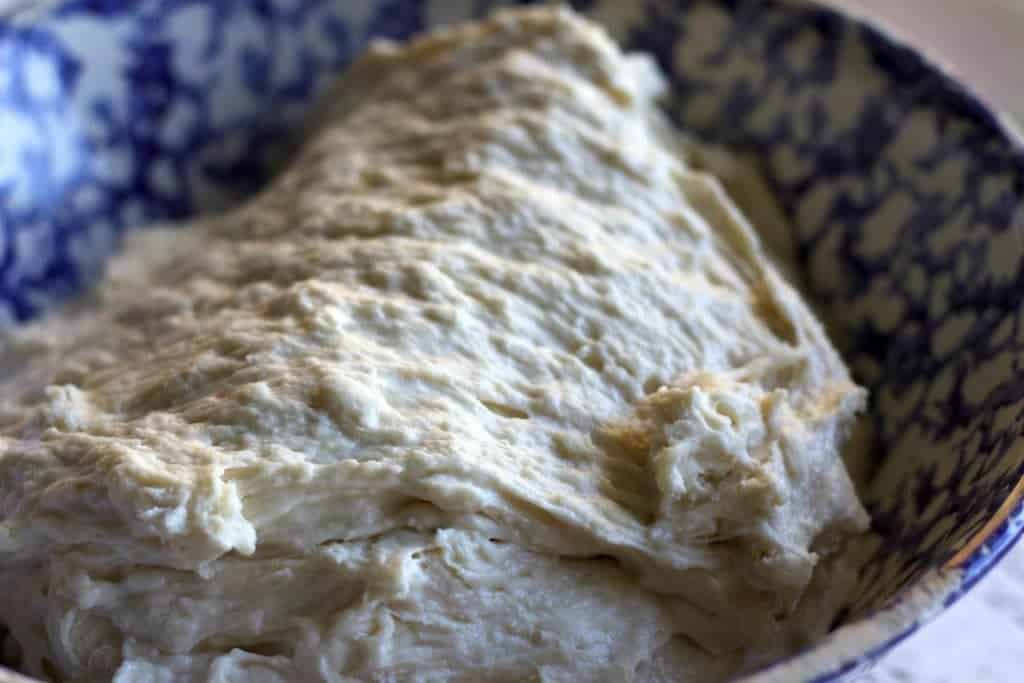
Which Mixing Method Should You Choose?
This all depends on your recipe and what you want to do with it. I have made a TON of sourdough bread in the last several months playing with these various methods. They can change your recipe a lot.
If you know where you want to take your bread, changing hydration, crumb structure, mixing in seeds or other inclusions, using whole grain flours, or changing the timing of your recipe, your sourdough mixing methods, techniques and timing will get you there.
The table below is a quick view of how different dough mixing methods are appropriate for your baking goals. But you need to also learn each method with hands on experience. Get ready for a learning curve.
| If Your Goal Is… | Consider Using |
|---|---|
| Better flour hydration | Autolyse, Saltolyse |
| Simpler workflow | Fermentolyse |
| Open crumb | Coil folds |
| Faster gluten development | Rubaud, Slap & Fold |
| High hydration dough | Bassinage, Coil folds |
| Fresh milled flour | Saltolyse, Bassinage |
| Minimal handling | No-knead |
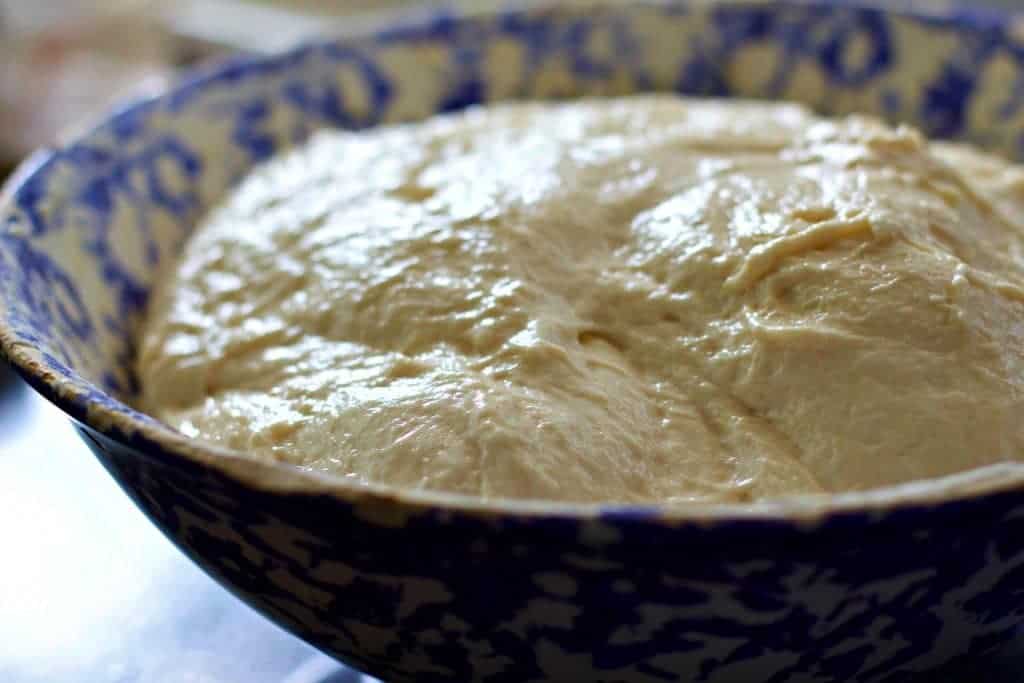
Most sourdough mixing techniques fall into one of four categories. Most of the time a dough will benefit from correctly combining these methods, as needed, to build your sourdough.
Let’s take a glance at them.
Rest-Based Sourdough Mixing Methods
These methods use time to improve hydration and begin dough development before active mixing begins.
Examples include:
- Autolyse
- Fermentolyse
- Saltolyse
These approaches allow flour to absorb water more completely before further handling. Our sourdough recipes, here at Homemade Food Junkie, mostly use the fermentalyse method. It works very well for beginner bakers, like in our Beginner Artisan Sourdough Recipe, and gives consistent results with our method.
Hand Development Methods
These methods physically develop dough strength through movement and manipulation.
Examples include:
- Rubaud mixing
- Slap and fold mixing
- Stretch and folds
- Coil folds
These techniques help organize and strengthen the developing gluten network while improving dough structure. Our method relies mostly on the stretch and fold method. Lately I’ve been adding in coils and the Rubaud method. Look for future recipes on this site to use new methods for more experienced bakers.
Hydration Management Methods
These methods control when water is added to the dough.
Examples include:
- Bassinage
- Double hydration
They are especially useful when working with thirsty flours or very high hydration doughs.
Minimal Sourdough Mixing Methods
These methods rely heavily on time and fermentation rather than intensive mixing. Our sourdough recipes often use this dough development method with the cold bulk fermentation for excellent results.
Examples include:
- No-knead sourdough
- Long fermentation development
- Long Cold rise Methods. Read more on those in this post comparing cold bulk vs. cold proof.
Instead of building strength quickly through mixing, dough structure develops gradually throughout fermentation.
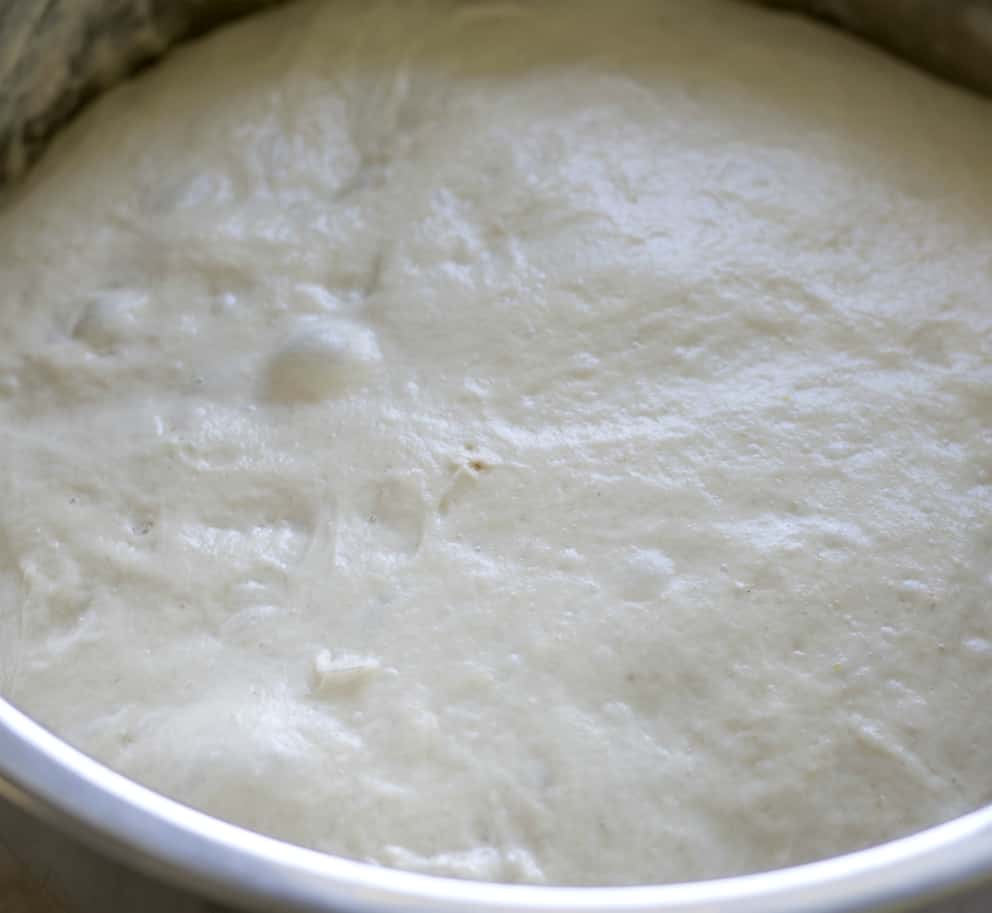
Choosing a Mixing Method
The best sourdough mixing methods for a certain recipe depends on several factors.
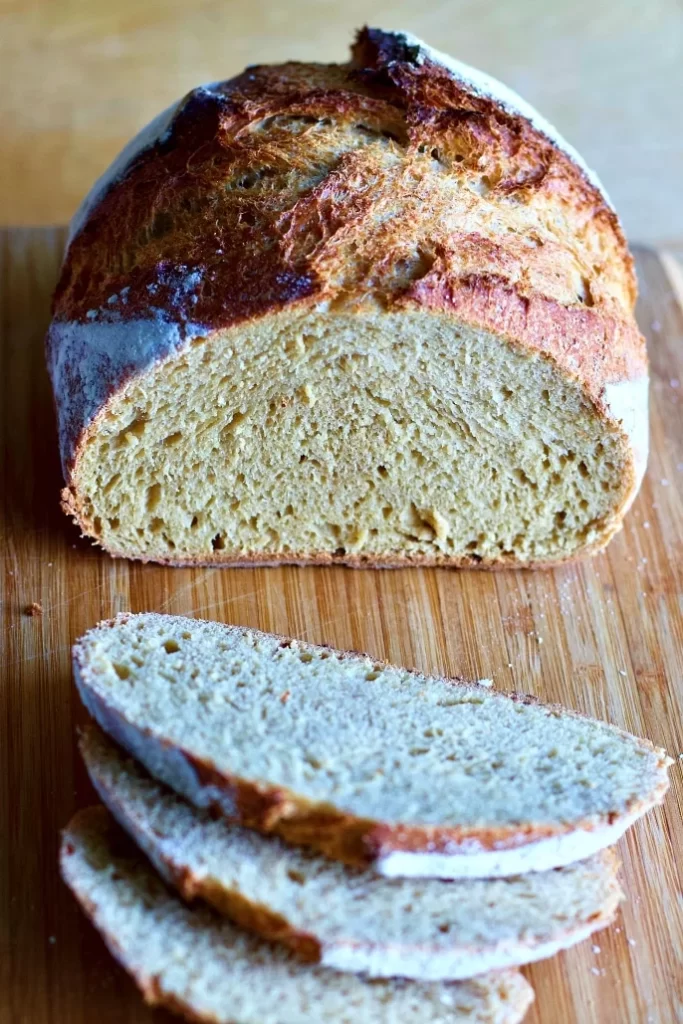
Flour Type
Different flours absorb water differently and develop gluten at different rates.
Bread flour, whole wheat flour, rye flour, spelt flour, and fresh milled grains may all benefit from slightly different mixing approaches.
Learn more about how sourdough flour types affect your baking methods.
Hydration Level
As hydration increases, dough becomes more difficult to handle and often requires different development strategies.
A 65% hydration sandwich loaf behaves very differently than an 80% hydration artisan loaf.
Learn more about how hydration affects your dough and mixing methods in our understanding hydration in sourdough guide.
Desired Crumb Structure
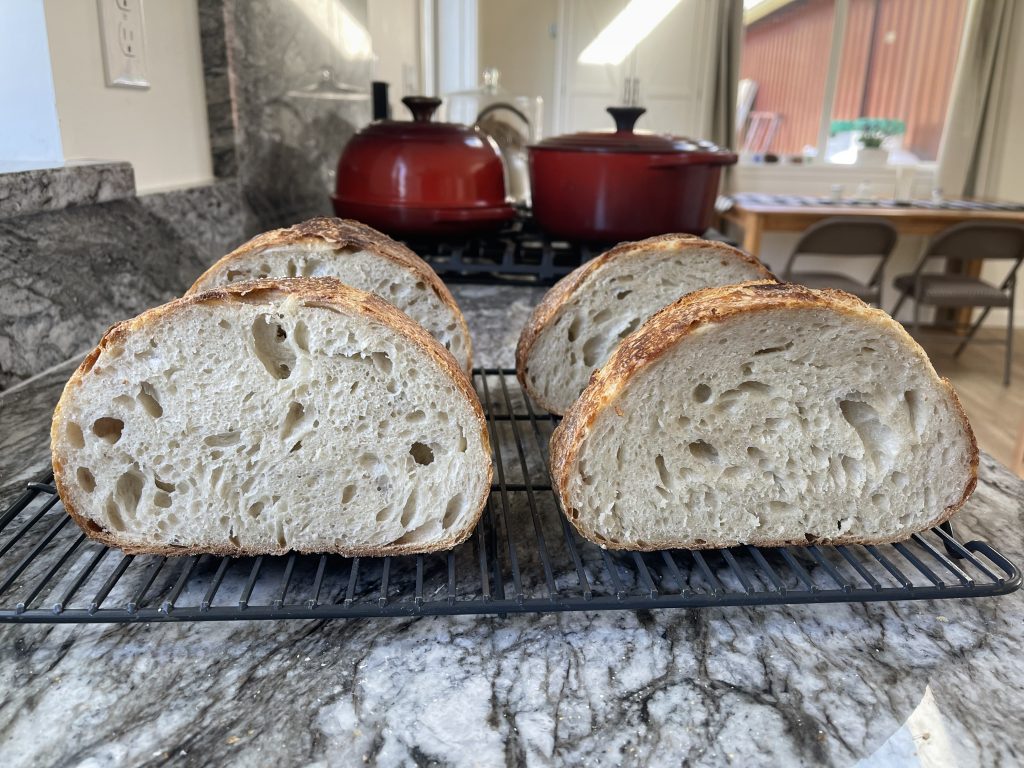
The crumb you’re trying to achieve matters.
An open artisan crumb, a soft sandwich crumb, and a whole grain loaf may each benefit from different mixing and development choices. If you want to learn more about How to Control your sourdough crumb, read our complete guide on How to control Sourdough Crumb.
Your Baking Style
Some bakers enjoy extensive hands-on dough development. Others prefer methods that rely more on time and fermentation.
Both approaches can produce excellent bread.
The key is understanding what each method contributes to the dough.
Understanding the Most Common Sourdough Mixing Methods
Most bakers eventually develop a preferred workflow, but every mixing method exists because it solves a specific problem. Some methods improve hydration, some build strength, and others help manage fermentation timing.
Autolyse
Autolyse is a rest period where flour and water are mixed together before the starter and salt are added. Bakers often use autolyse to improve hydration and extensibility, especially when working with whole grain or high hydration doughs. The autolyse method was popularized by French baking professor Raymond Calvel as a way to improve dough extensibility and hydration before active mixing begins.
Learn more: Autolyse vs Fermentolyse vs Saltolyse(post coming soon)
Fermentolyse
Fermentolyse combines flour, water, and starter before the rest period. This allows hydration and fermentation to begin at the same time. Many home bakers prefer fermentolyse because it simplifies the process while still producing excellent dough development.
Learn more: Autolyse vs Fermentolyse vs Saltolyse (post coming soon)
Saltolyse
Saltolyse includes the salt during the rest period before the starter is added. Some bakers use this method when they want flour hydration without beginning fermentation immediately. This is useful in hydration of home milled flours.
Learn more: Autolyse vs Fermentolyse vs Saltolyse (post coming soon)
Rubaud Mixing
Rubaud mixing is a hand-mixing technique that develops dough through a repeated lifting and scooping motion. It is particularly useful for wetter doughs that benefit from early strength development without intensive kneading. Trevor Wilson Uses this method quite a bit.
Slap and Fold
Slap and fold is a more vigorous mixing method often used with high hydration doughs. Repeatedly stretching and folding the dough against the work surface develops strength quickly and efficiently.
Stretch and Fold
Stretch and folds build strength during bulk fermentation by gently stretching the dough and folding it over itself. This remains one of the most common dough development methods used in sourdough baking.
Learn more: Stretch and Fold vs Coil Folds-(post coming soon)
Coil Folds
Coil folds are a gentler alternative to stretch and folds. They are especially popular with higher hydration doughs because they strengthen the dough while minimizing degassing.
Learn more: Stretch and Fold vs Coil Folds (post coming soon)
Bassinage
Bassinage is the practice of holding back part of the dough water and adding it later during mixing. This technique helps bakers increase hydration while maintaining control over dough strength and handling.
Learn more: Bassinage for High Hydration Sourdough (post coming soon)
Mechanical Mixing
Stand mixers and spiral mixers can quickly develop dough strength and are often used for sandwich breads, enriched doughs, or larger batches. Mechanical mixing can save time, but overmixing remains a concern.
No-Knead Development
No-knead methods rely primarily on hydration, time, and fermentation rather than intensive mixing. Given enough fermentation time, dough can develop excellent structure with very little hands-on work.
My Typical Mixing Workflow
Lately I’ve been expanding my sourdough mixing methods, as I’ve noted above, and I’m gaining a LOT of new ideas on how to build dough structure and what I want to do with it in my personal bread building. New recipes will be coming using these techniques.
Most of my currently published artisan sourdough recipes use a simple workflow. This is the process I’ve used for 10 years with excellent, consistent results. Highly recommend it for beginner bakers.
Workflow For Beginner Artisan Bread Recipe:
- Fermentolyse for 30-60 minutes
- Three to four rounds of stretch and folds
- Optional coil folds later if the dough becomes delicate
- Long cold bulk fermentation
This approach works well for beginner bakers because it balances dough strength, simplicity, and flexibility. The hydration is at 78% but this method makes the dough easy to handle for beginners with a more wild Tartine Style creamy open crumb.
Sourdough Mixing Methods Summarized
In summery, choose sourdough mixing methods based on your flour, hydration level, and baking goals. The table below gives you a quick glance. The rest is all hands in the dough experience.
| Goal | Methods Often Used |
|---|---|
| Beginner artisan bread | Fermentolyse + Stretch and Folds |
| Open crumb sourdough | Gentle mixing + Coil Folds |
| Whole grain sourdough | Autolyse or Bassinage |
| Fresh milled flour | Autolyse + Bassinage |
| High hydration dough | Bassinage + Coil Folds |
| Soft sandwich bread | Mechanical Mixing or Stretch and Folds |
| Minimal hands-on work | No-Knead Development |
Remember that experienced bakers often combine several methods in a single loaf. For example, a dough might use fermentolyse, stretch and folds, a long cold bulk fermentation, and a gentle final shaping. That combination becomes the baker’s overall mixing and development strategy.
In my high hydration doughs, I often start with stretch and folds early and move to coils if I need to add structure. Coil folds are a gentler method for proofier doughs. Learn the methods, and what they do. Then you can mix and match as needed.
Frequently Asked Questions About Sourdough Mixing methods:
What is the best sourdough mixing method for beginners?
Fermentolyse followed by stretch and folds is one of the simplest and most reliable methods for beginner bakers. It requires minimal equipment and produces consistent results. It’s the method we use for most of our beginner sourdough breads.
Is autolyse necessary for sourdough?
No. Many excellent sourdough breads are made without an autolyse. However, autolyse can improve hydration and dough handling, particularly in whole grain and higher hydration recipes.
What is the difference between stretch and folds and coil folds?
Both methods build dough strength during bulk fermentation. Stretch and folds are more assertive, while coil folds are gentler and often preferred for higher hydration doughs.
Can you overmix sourdough dough?
Yes. Excessive mechanical mixing can create a dough that feels tight and overdeveloped. Most home bakers are more likely to underdevelop dough than overmix it, when mixing by hand.
Which mixing method is best for high hydration sourdough?
Many bakers combine bassinage with coil folds when working with higher hydration doughs because these methods improve handling while still allowing strong dough development.
Final Thoughts
Sourdough Mixing methods are much more than combining ingredients.
Every mixing method gives the baker a way to influence hydration, fermentation, dough strength, and ultimately the finished loaf. Understanding why a technique is used is often more important than mastering the technique itself.
As your baking experience grows, you’ll likely combine multiple methods into a workflow that fits your flour, schedule, and baking goals. The best mixing method is not necessarily the most complicated one—it’s the one that creates the dough characteristics needed for the bread you want to bake.
Where to go next:
Visit our Sourdough Hub for a complete list of our Sourdough guides and links to recipes. Read our complete Sourdough Troubleshooting guide, to help track down problems in sourdough baking
- What Is dough Structure in Sourdough?
- How to Control Crumb In Sourdough
- Understanding Hydration in Sourdough
- Sourdough Flour Types