
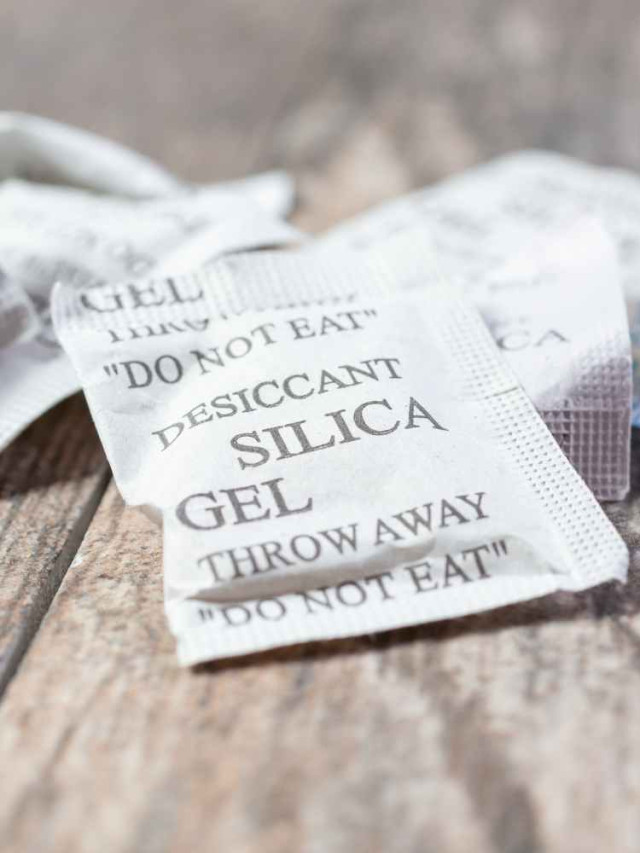
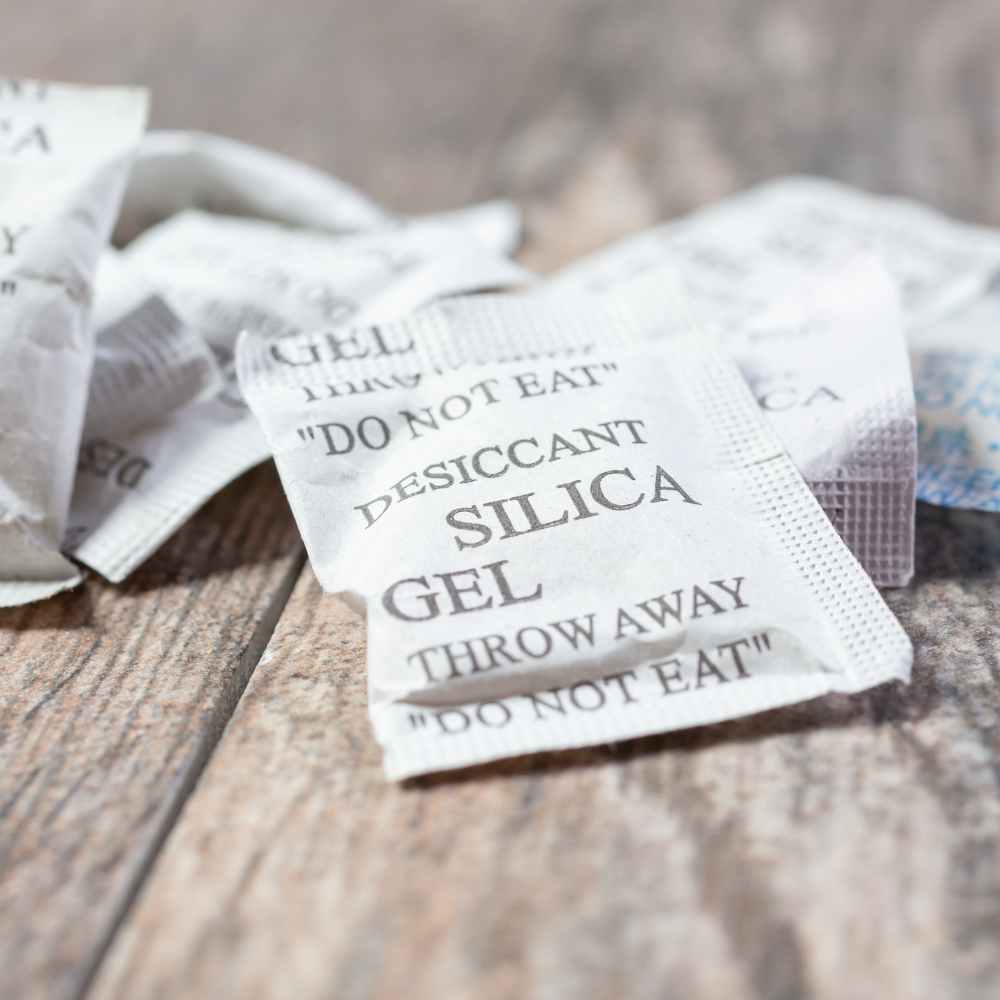
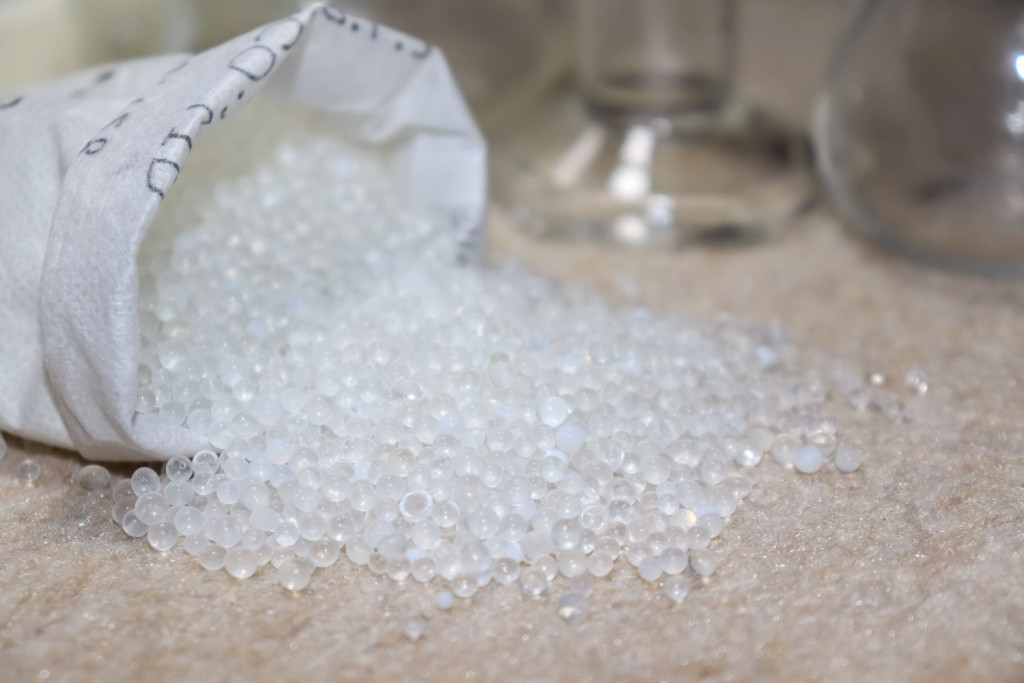
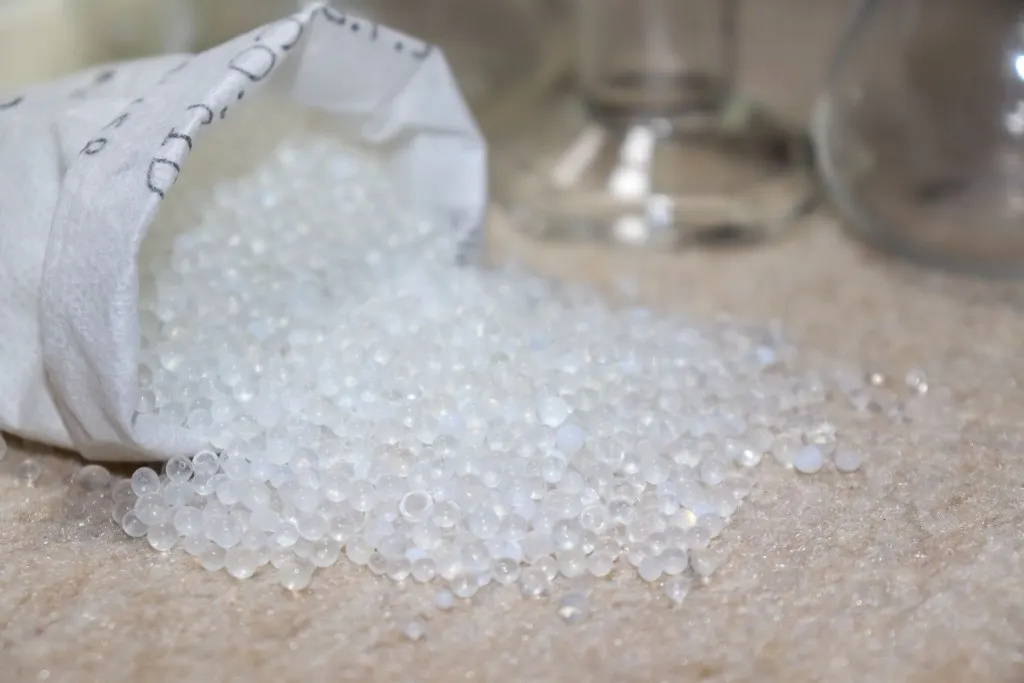
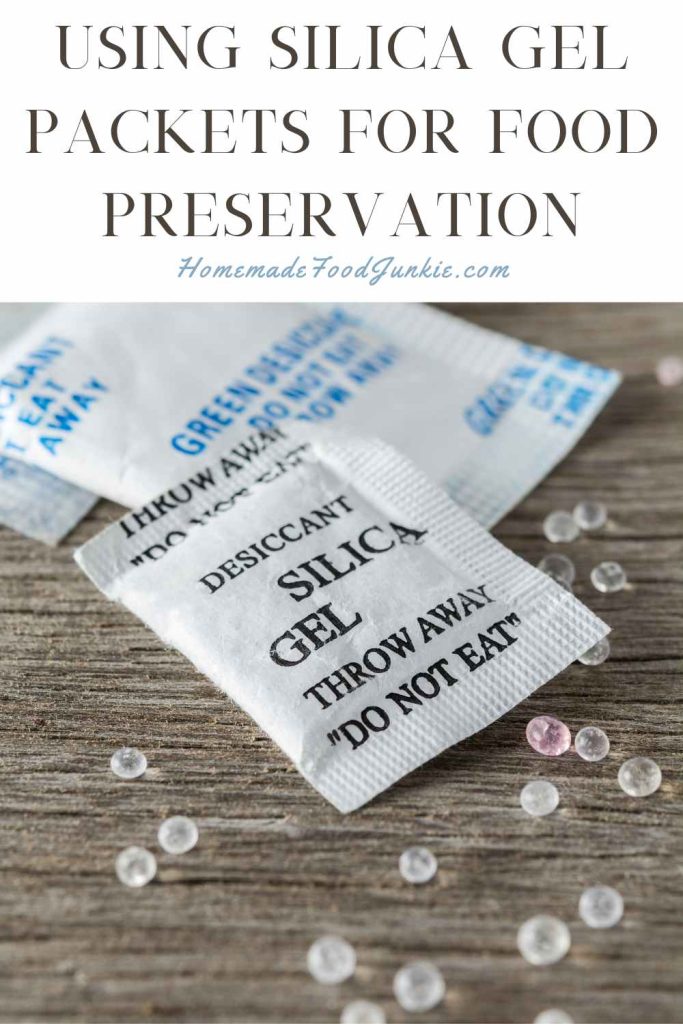
Silica gel for food storage is a highly absorbent form of silicon dioxide. We usually see silica gel food packets in commercially sold food products. They are desiccants, which means they remove moisture from the air inside a closed package or container.
You have probably found silica packets inside everything from vitamin bottles to electronics and packaged foods. Their job is simple: help keep the contents dry.
Silica gel packets are also useful for dry food storage. However, if you are storing freeze-dried food, it is important to understand what silica gel can—and cannot—do.
A silica packet can help control residual humidity inside a package. It cannot compensate for food that was not completely freeze dried before storage, a poor seal, or packaging that allows moisture to enter.
What Is Silica Gel for Food Storage Used For?
Silica gel attracts and holds water vapor from the surrounding air. When enclosed with a dry product, it can help maintain a low-humidity environment.
That is why desiccants are commonly included with moisture-sensitive products.
For home food storage, silica gel may be useful for certain dry foods or storage situations where controlling humidity is particularly important.
Silica gel also has uses outside the pantry. For example, loose silica gel can be used for drying and preserving flowers.
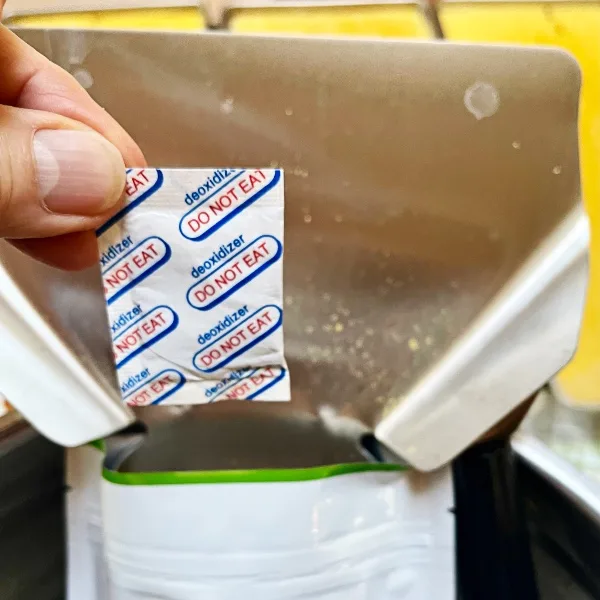
Silica Gel vs. Oxygen Absorbers
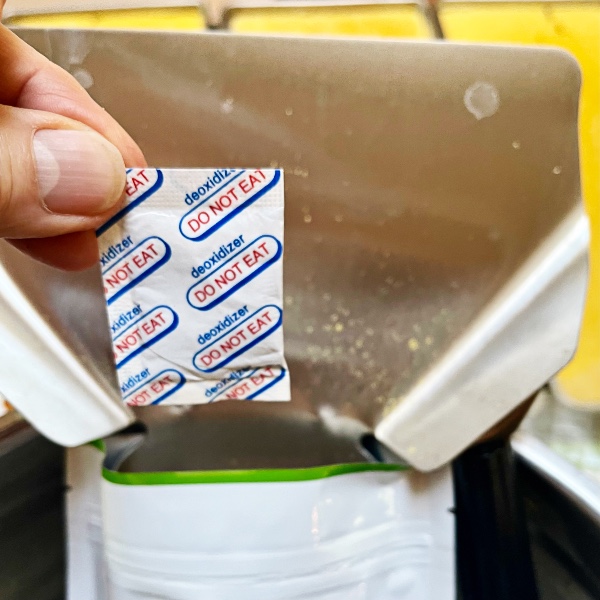
Silica gel packets and oxygen absorbers are sometimes confused because both are small packets that may be placed inside sealed food containers. But they perform completely different jobs. You will want to be sure you have the right tool for the job.
Silica gel controls moisture.
Oxygen absorbers remove oxygen. Read our guide about oxygen absorbers to learn more about how they work in dry food storage systems.
An oxygen absorber does not dry food, and silica gel does not remove oxygen.
That distinction is especially important when storing freeze-dried foods.
Do Freeze-Dried Foods Need Silica Gel Packets?
Not necessarily.
Properly freeze-dried food should already contain very little moisture when it comes out of the freeze dryer. The first priority is making certain the food is completely dry before packaging it.
For long-term storage, freeze-dried foods are commonly packaged in moisture- and oxygen-resistant containers such as Mylar-type foil pouches along with an appropriately sized oxygen absorber.
Utah State University Extension’s freeze-drying guidance recommends packaging freeze-dried foods promptly in appropriate containers and discusses the use of oxygen absorbers for long-term storage.
Once sealed, packages should be stored under good conditions, particularly away from excessive heat, light, moisture and physical damage.
Silica gel can provide additional moisture control in certain situations, but it should be considered an optional additional tool rather than the foundation of the freeze-dried food storage system. For more on freeze drying foods read How Does Freeze Drying Work?.
When Might a Desiccant Be Useful?
You may choose to use food-safe silica gel when:
- You live or package food in a particularly humid climate.
- A very dry bulk food is especially vulnerable to moisture.
- You frequently open and close a larger container of dry food.
- The manufacturer of the food, packaging system or desiccant recommends its use.
- You want an additional moisture-control measure for an appropriate dry-food storage application.
Always use silica gel products specifically intended for use with food, and follow the manufacturer’s recommendations for the amount required for your particular package or container.
Silica Gel Does Not Make Damp Food Safe to Store
This is one of the most important things to understand about desiccants.
Never use silica gel or an oxygen absorber as a way to make inadequately dried food safe for long-term storage.
Food intended for dry, reduced-oxygen storage must actually be sufficiently dry before it is packaged.
If freeze-dried food still contains moisture in the center of thick or dense pieces, adding more packets to the bag does not solve the underlying problem.
Return inadequately dried food to the freeze dryer and finish drying it before packaging.
This is also why checking food carefully at the end of a freeze-drying cycle is so important.
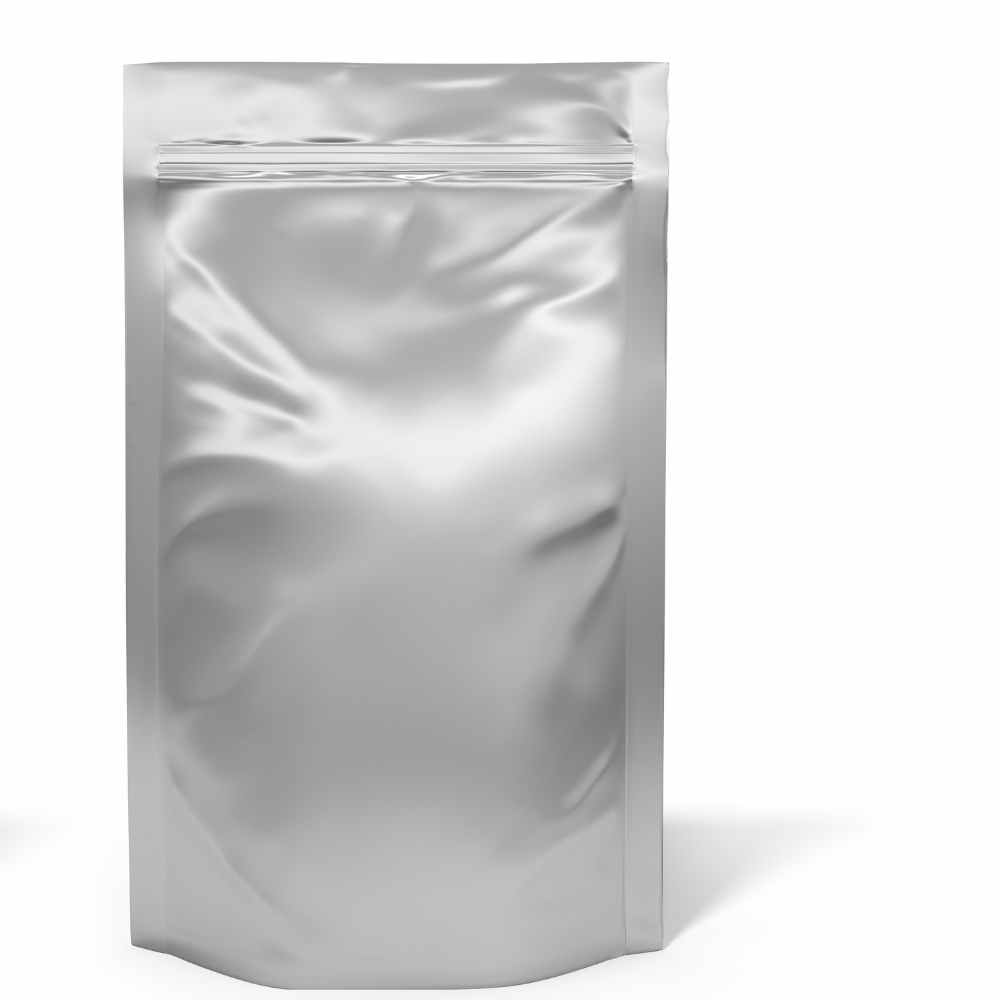
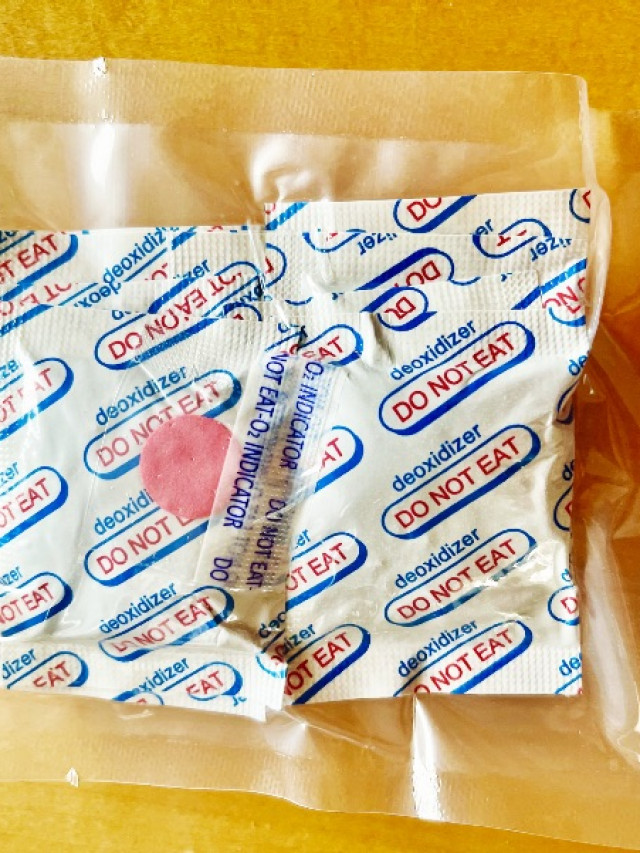
Mylar Bags, Oxygen Absorbers and Silica Gel Do Different Jobs
It helps to think of long-term food storage as a system rather than relying on one packet or product.
The dried food must begin sufficiently dry.
The packaging protects the food from the outside environment. High-quality foil-laminate or Mylar-type bags provide strong barriers against moisture, oxygen and light.
The oxygen absorber removes much of the oxygen remaining inside the sealed package.
A silica gel desiccant, when appropriate, helps control water vapor.
And finally, the storage location protects the package from heat, moisture, pests and physical damage.
Each part of the system has a different job.
Utah State University Extension has a useful guide to food-storage packaging that explains the roles of packaging materials, oxygen absorbers and moisture control in long-term dry-food storage.
Internal link: This is also a good place to link to our Mylar Bags: Best Storage Bags for Food article for a deeper discussion of choosing and sealing long-term food-storage bags.
How Much Silica Gel Should You Use for Food Storage?
There isn’t one reliable universal amount of silica gel that works for every food-storage container.
The amount required depends on several factors, including:
- Container or package size
- Amount of air space
- Permeability of the packaging
- Relative humidity during packaging
- Moisture sensitivity of the stored product
- Expected storage conditions
- Capacity of the particular desiccant
For that reason, use the sizing recommendations supplied by the manufacturer of a food-safe desiccant rather than adding an arbitrary number of packets based only on container volume.
And remember: adding more silica gel cannot correct food that contains too much moisture when it is packaged.
Silica Gel for Bulk Dry Foods
Desiccants can also have applications beyond freeze-dried foods.
Dry pantry foods need protection from moisture, insects, oxygen and environmental conditions, although the appropriate storage method varies considerably by food.
Rice, dried beans, grains, powdered foods and other dry staples should be stored in food-grade containers appropriate for that particular product.
A desiccant may be useful in some applications, particularly where humidity is a concern, but it isn’t automatically necessary for every bucket, jar or bag of dry food.
This is another reason to treat silica gel as one tool in your food-storage system rather than something that should be added to everything in the pantry.
Is Silica Gel Safe for Humans?
Food-grade silica gel is considered safe for use in food-storage applications when used as directed.
The silica gel itself is silicon dioxide and is generally considered nontoxic. However, the packets are not food and should not be eaten.
For food storage, use packets specifically labeled or sold for food applications rather than saving unknown desiccant packets from shoes, electronics or other consumer products and putting them into stored food.
What Happens If You Eat Silica Gel?
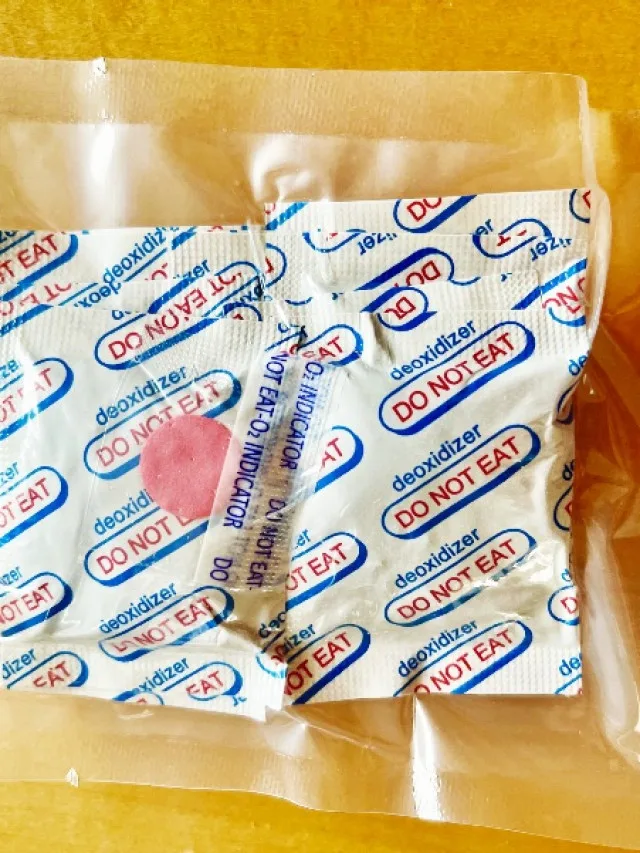
The familiar DO NOT EAT warning on silica packets sometimes makes people think the contents are highly poisonous.
Standard silica gel generally is not considered toxic if accidentally swallowed.
However, the packet itself can present a choking hazard, particularly for small children. In rare cases, swallowed packets can also cause an obstruction.
Poison Control explains silica gel exposure and safety, including what to do if a child or adult accidentally swallows silica gel or a packet.
Some indicating silica products can also contain additional chemicals, providing another reason not to eat them or use unknown industrial packets with food.
If someone swallows a silica gel packet and you are concerned about the exposure, contact Poison Control or your medical provider for guidance specific to the situation.
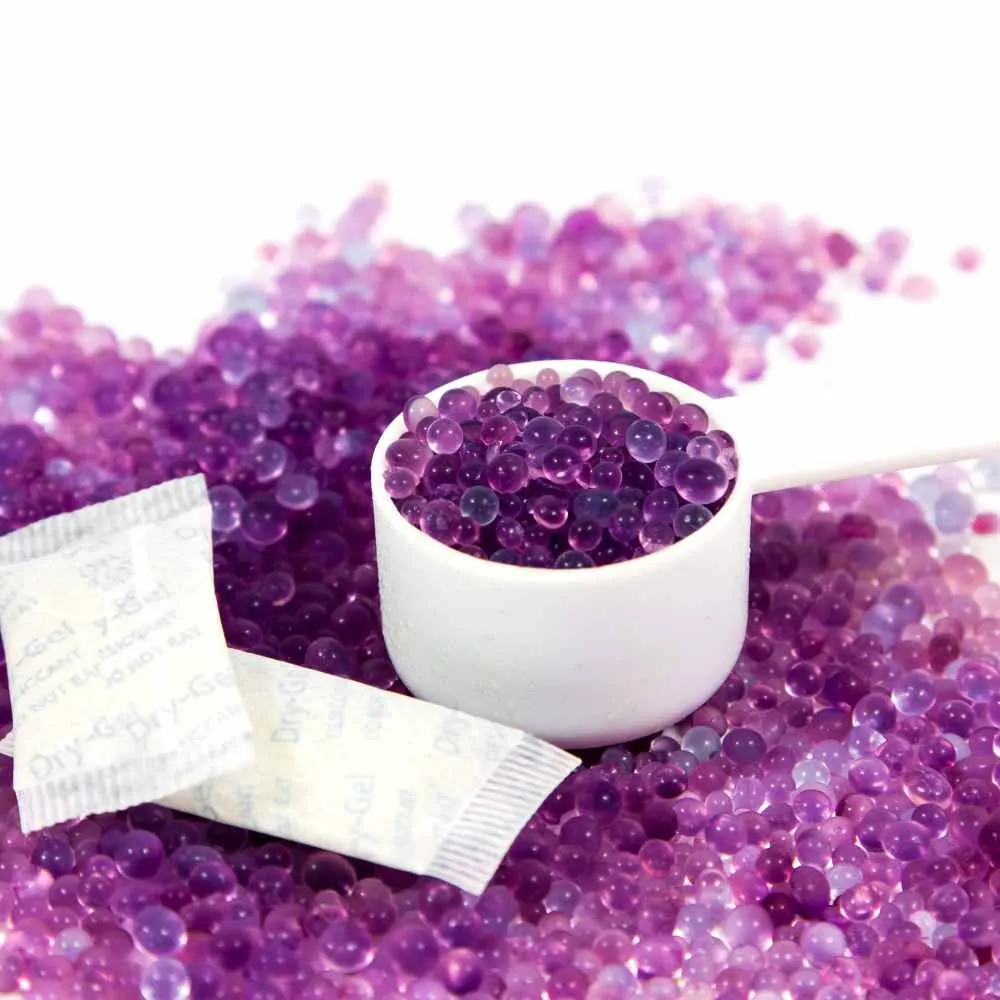
What About Colored Silica Gel?
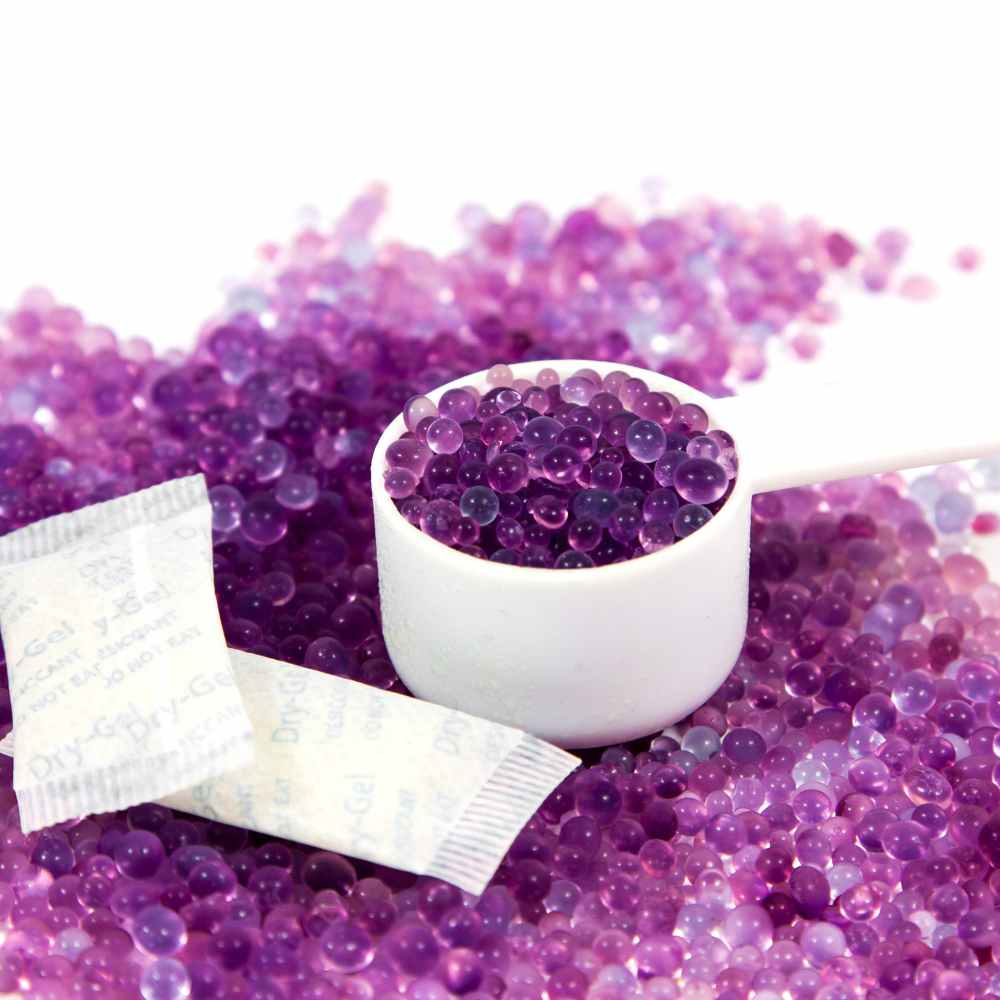
Some silica gel changes color as it absorbs moisture. This provides a visual indication that the desiccant is becoming saturated.
Historically, some blue indicating silica gel has contained cobalt chloride. Other indicating products use different compounds.
For food storage, I prefer the simpler approach: purchase food-safe desiccant specifically manufactured and labeled for food applications.
There is little reason to introduce an unknown indicator chemical into a food-storage container simply because you happen to have the packet available.
Can Silica Gel Packets Be Reused?
Some silica gel products can be dried and reused, but don’t assume that every packet can safely go into your oven.
The silica itself can release absorbed moisture when heated, but the packet material, adhesive, printing and indicator chemicals may have different temperature limitations.
If you purchase reusable silica gel, follow the manufacturer’s instructions for regenerating that particular product.
Do not heat an unidentified packet simply because it contains silica gel.
After reusable silica gel has been properly dried and completely cooled, store it immediately in an airtight container until you need it. Otherwise, it simply begins absorbing moisture from the surrounding air again.
A tightly sealed Mason jar works well for storing clean, reusable food-safe desiccant packets.
Silica Gel or Oxygen Absorber: Which One Do I Need?
A simple way to remember the difference is:
Moisture problem → silica gel desiccant.
Oxygen problem → oxygen absorber.
But food preservation is more complicated than choosing a packet.
For freeze-dried food intended for long-term storage, begin with food that has been thoroughly freeze dried. Package it promptly in an appropriate moisture- and oxygen-barrier container and use an oxygen absorber sized for the package when recommended.
Silica gel can be added when additional humidity control is useful and the product is appropriate for food storage.
A Note About Reduced-Oxygen Food Storage
Oxygen absorbers should only be used with foods that are sufficiently dry and appropriate for reduced-oxygen storage.
Removing oxygen from moist food does not make it safer.
In fact, improperly dried foods should not simply be sealed into reduced-oxygen storage and assumed to be safe because an oxygen absorber or desiccant has been added.
The Utah State University Extension food-storage packaging guide discusses this important relationship between moisture, oxygen and safe dry-food storage.
This is another reason we cannot rely on oxygen absorbers, silica packets or Mylar bags to correct mistakes made during the drying process.
Dry the food correctly first. Package it correctly second.
The packets are supporting tools.
How I Think About Silica Gel in My Food Storage System
As I work more deeply with long-term food storage and home freeze drying, I find it useful to separate the different jobs our storage supplies perform.
Silica gel manages moisture. Oxygen absorbers manage oxygen. Mylar-type bags create a protective barrier. Good storage conditions protect everything once it is packaged.
None of them replaces the others, and none can rescue food that was improperly prepared for storage.
That distinction makes silica gel easier to use wisely. It isn’t something we need to put automatically into every package. It is simply another useful tool we can choose when controlling humidity will improve the storage environment.
For me, where I live, humidity is a problem I most often face when using my canning jars for storing freeze dried food that I get into all the time. That’s where I find food safe silica gel packets work best. I drop them into my jars so they keep wicking away the moisture from the air when the food in a jar is frequently exposed. Like with counter snacks or powders I use for ingredients occasionally.
Readers who are putting together a larger storage system can continue with our guide Freeze Dried Food Storage Tips for Short and Long Term Storage
Frequently Asked Questions
Do I need silica gel packets with freeze-dried food?
Not always. Thorough drying, appropriate moisture- and oxygen-barrier packaging and proper storage are the priorities. Oxygen absorbers are commonly used for long-term freeze-dried food storage. Silica gel can provide additional humidity control when appropriate.
Can I use silica gel and an oxygen absorber in the same package?
They perform different functions: silica gel controls moisture while an oxygen absorber removes oxygen. Whether you need both depends on the food, packaging and storage conditions. Follow the recommendations for your food-storage system and the manufacturers of the packets you use.
Can silica gel make partially dried food safe?
No. Never rely on silica gel to compensate for inadequately dried food. Finish drying the food before packaging it.
Is silica gel poisonous?
Standard silica gel is generally considered nontoxic, but it is not food and should not be eaten. The packets can also present a choking hazard. Use only food-safe products around stored food.
Can I reuse silica gel packets?
Some products are designed to be regenerated and reused. Follow the manufacturer’s drying instructions for the specific packet rather than assuming every silica packet can safely be heated.
Should I save silica packets that come in packages I buy?
You can save packets for appropriate non-food household uses, but for direct use with stored food, purchase desiccants specifically intended and labeled for food applications.
The Bottom Line
Silica gel packets can be useful in a home food-storage system, but their job is narrower than it sometimes appears.
They control moisture in the air inside a package.
They do not remove oxygen. They do not make improperly dried food safe. And they do not replace good packaging. But they are handy for keeping moisture out of food that is opened often and exposed to humidity.
For long-term freeze-dried food storage, concentrate first on complete drying, appropriate packaging, oxygen control and good storage conditions. Then use food-safe silica gel when additional humidity control makes sense.
Understanding what each part of the storage system actually does makes it much easier to protect the food—and the work—you have put away for the future.
For more information on freeze drying and dry food storage read Freeze Dried Food Storage Tips for Short and Long Term Storage
Follow Us:
We enjoy meeting you on our social networks. Follow us on Facebook, Pinterest, Instagram . Tag us with your pictures of our recipes and comment on how it went for you. We would love to see what you do with them.
We often like, comment and share your posts of our recipes on our daily Instagram stories.
Ask questions and rate the recipe in the comments section below. Please share what you did with this recipe. We are always looking for more and better ways to make homemade food. Other cooks love your ideas!
Recent Posts:
Diane Donnell
Thursday 4th of January 2024
Please, please, PLEASE!! Keep away from children and pets!! Our son’s dog ate some silica cat litter and had to be admitted to the animal hospital for several days. The silica absorbed moisture like it’s supposed to. In this case it absorbed the moisture in the dog’s colon and got stuck. If they couldn’t get the silica to move through his system they’d have to operate. Finally, with several enemas and a doggie version of dulcolax, it moved through his system. It was touch and go for a while. If a child were to swallow the silica it could get stuck in their throat or any other part of their little body. So, please keep away from children and pets!
Diane
Thursday 4th of January 2024
Hello Diane, Thank you so much for emphasizing with your experience that silica gel is not intended to be eaten. I am going to go in and revise this post and let people know it can be dangerous to pets and children as you describe. Thats terrible that your son's pup went through that. I'm so happy he survived without surgery. Thanks again for sharing and Have a wonderful day!