
Freeze Drying Vs Dehydrating: What’s The Difference?
As an Amazon Associate and member of other affiliate programs we earn a small commission from qualifying purchases through our affiliate link. For more information read our Entire Affiliate Disclosure.
Freeze drying vs dehydrating; What is the difference? They are both dry food, but very differently, with vastly different results. Freeze drying and dehydrating each remove moisture from food to extend its shelf life. Each method of food drying helps us preserve garden harvests, seasonal produce, and other foods for future use. But they work differently, and the foods they produce have very different qualities.
The biggest difference between freeze drying and dehydrating is how the water is removed and how much moisture typically remains in the finished food.
Dehydrating uses air circulation and usually heat to evaporate moisture from food. Freeze drying freezes the food and removes the ice through a process called sublimation, using a vacuum and controlled heat.
These differences affect the food’s texture, flavor, appearance, nutritional quality, storage requirements, and usefulness in the kitchen.
I’ve used both methods for years. My dehydrator makes wonderful dried tomatoes and apple chips, while my home freeze dryer gives me additional ways to preserve fruits, vegetables, prepared meals, and cooking ingredients.
Both methods have earned their place in my kitchen.
Let’s take a closer look at how they work, their advantages and disadvantages, and how to decide which one makes sense for the food you want to preserve.
Editor’s Note: Originally published February 2024. This article was updated in September 2026 to clarify food-safety guidance for raw and cooked freeze-dried eggs, improve drying and storage instructions, and review nutrient-retention and shelf-life claims. The original preparation experience and photographs have been retained.

What Is Food Dehydrating?
Food dehydration is one of the oldest methods of preserving food. People have dried fruits, vegetables, herbs, and meats for thousands of years using the sun, circulating air, and other available sources of heat.
Modern food dehydrators make this process much easier to control.
A home food dehydrator circulates heated air around food, allowing moisture to evaporate gradually. As water leaves the food, it becomes smaller, lighter, and more concentrated in flavor.
Removing sufficient moisture reduces the water available for microorganisms to grow. This helps preserve the food, provided it is properly prepared, thoroughly dried, and protected from moisture during storage.
Dehydration does not necessarily destroy harmful microorganisms, however. Appropriate food handling and food-specific preparation instructions are still important.
How Does Dehydrating Change Food?
Dehydration changes both the structure and texture of food.
Fruits such as apricots, plums, and grapes often become smaller, wrinkled, and chewy. Thinly sliced apples may become pleasantly crisp. Tomatoes develop a concentrated flavor and can become leathery or crisp, depending on how they are prepared and dried.
Herbs become brittle and easy to crumble.
Removing water also concentrates naturally occurring sugars, acids, and flavor compounds. This is one reason dried fruits and vegetables can have such intense flavors.
These changes are often exactly what we want.
Dried tomatoes add wonderful flavor to sauces, soups, pasta dishes, and homemade breads. Apple chips make a delicious snack without needing to be rehydrated.
Advantages of Food Dehydrating
- Lower equipment costs. Home dehydrators are generally much less expensive than freeze dryers.
- Simple operation. Most home dehydrators require relatively little setup or maintenance.
- Concentrated flavor. Removing water can intensify the natural flavor of fruits and vegetables.
- Enjoyable textures. Dehydration produces chewy, leathery, or crisp foods that many people prefer for snacks and cooking.
- Compact storage. Many dehydrated foods shrink considerably, making them easier to store.
- Versatile applications. Dehydrators work well for herbs, fruits, many vegetables, fruit leathers, and appropriately prepared jerky.
Disadvantages of Food Dehydrating
- Heat and exposure to air can reduce certain heat-sensitive nutrients.
- Foods often shrink and undergo substantial texture changes.
- Some dehydrated foods do not return to their original texture when rehydrated.
- The finished food may retain more moisture than a comparable properly freeze-dried product, affecting its storage characteristics.
- Proper drying and moisture-resistant packaging are essential to prevent spoilage.
Dehydrating also has limitations when preserving complete meals, dairy products, and other foods that may be more practical to process in a freeze dryer.

Why I Still Use My Food Dehydrator
I have a Cabela’s food dehydrator, and it works wonderfully for making homemade sun-dried tomatoes, apple chips, dried pears, and other foods from our garden.
Our dehydrated apple chips are still a favorite fall snack.
I generally freeze my dehydrated tomatoes, apples, and other produce for longer storage because I’ve experienced mold developing in dried foods stored in bags.
Properly dried and packaged foods can often be stored at room temperature, but I prefer the additional protection of freezer storage for much of my dehydrated produce.
For foods that we enjoy eating dried, dehydration makes perfect sense.

What Is Freeze Drying?
Freeze drying, also called lyophilization, removes moisture from food through a process that is quite different from conventional dehydration.
Rather than using circulating warm air to evaporate water from the food, a freeze dryer freezes the food and then removes the frozen water under reduced pressure.
The process has three main stages:
- Freezing: The food is frozen so that its water becomes ice.
- Primary drying: The machine creates a vacuum and applies controlled heat. Under these conditions, ice changes directly into water vapor without first becoming liquid. This is called sublimation.
- Secondary drying: Additional moisture is removed to further dry the food.
The resulting food is typically very dry, lightweight, and porous. Many foods retain much of their original shape and color, although their texture changes significantly.
Because freeze drying uses relatively low processing temperatures, it can preserve certain heat-sensitive nutrients and quality characteristics better than conventional hot-air drying.
However, nutrient retention varies with the food, preparation, processing conditions, and storage. Freeze drying does not preserve every nutrient completely.
For a more detailed explanation of the process, see our guide to How Does Freeze Drying Work?.
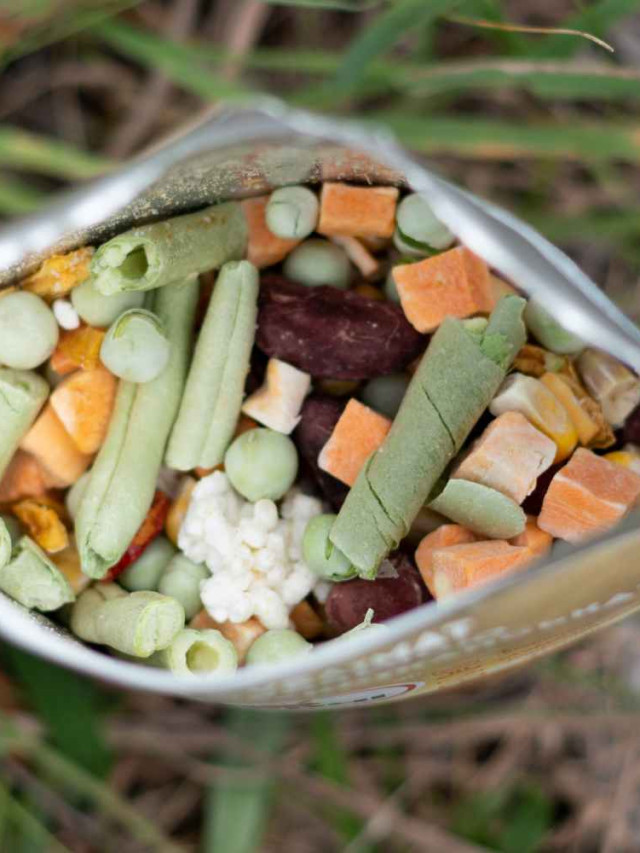
A homemade freeze-dried meal offers a lightweight way to store prepared food for later use.
How Does Freeze Drying Change Food?
Freeze-dried foods often retain much of their original appearance, but their texture becomes light, dry, and porous.
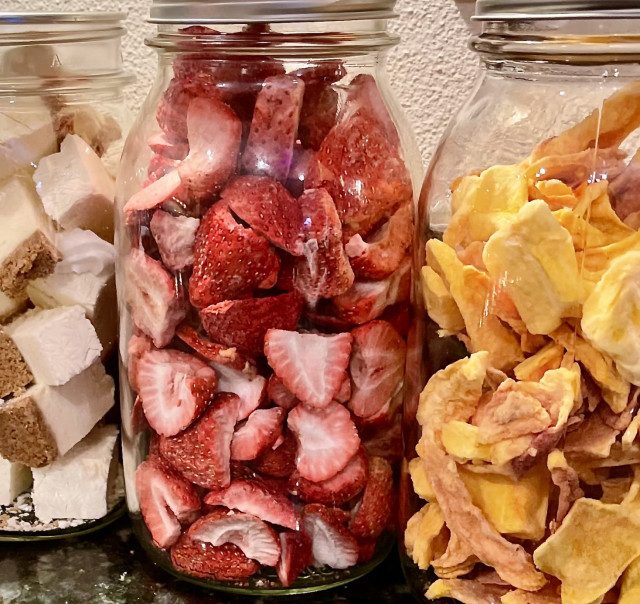
Strawberries may become crisp and airy. Freeze-dried apples have a distinctly different texture from dehydrated apple chips.
Some foods can be enjoyed directly from the package when they were safely prepared as ready-to-eat foods. Others are intended to be rehydrated and cooked or used as ingredients.
The porous structure of freeze-dried food allows many products to absorb water readily.
This is particularly useful for ingredients such as vegetables, sauces, and prepared meals. However, not every food returns to its original texture after rehydration. The results depend on the food and how it was prepared.
Advantages of Freeze Drying
- Very low moisture content. Proper freeze drying removes a large proportion of the food’s water, making many foods suitable for extended storage when correctly packaged.
- Good retention of shape and color. Many fruits and vegetables retain more of their original appearance than conventionally dehydrated foods.
- Nutrient retention. The relatively low processing temperatures can help preserve certain heat-sensitive nutrients.
- Versatility. A freeze dryer can process many fruits, vegetables, meats, dairy products, sauces, and prepared meals that are difficult or impractical to preserve by ordinary dehydration.
- Lightweight finished foods. Freeze-dried foods are useful for camping, hiking, and other situations where reducing food weight matters.
- Convenient ingredients. Many freeze-dried foods can be rehydrated and incorporated into everyday cooking.
A particularly valuable advantage for me is the ability to freeze dry prepared foods and cooking ingredients.
Freeze drying also gives me ways to preserve foods such as meat and eggs. In my guides to How to Freeze Dry Beef and How to Make Freeze Dried Eggs, I share my firsthand experience preparing and processing these foods.
I’ve successfully preserved foods such as spaghetti sauce, tomato purée, roasted peppers, pumpkin, butternut squash, and prepared meals. These give me additional options when I want to put dinner together.
Disadvantages of Freeze Drying
- High initial equipment cost. Home freeze dryers require a substantially larger investment than ordinary food dehydrators.
- Electricity use. Freeze dryers use electricity for refrigeration, vacuum operation, and heating. Processing a batch can take many hours.
- Maintenance and supplies. Depending on the machine, ongoing costs may include vacuum-pump maintenance, replacement parts, packaging, and other supplies.
- Space requirements. Freeze dryers require dedicated operating space, and the finished foods still need appropriate storage space.
- Food limitations. Foods with high fat or sugar content can be difficult or unsuitable to freeze dry successfully.
- Texture preferences. Some people enjoy the crisp, airy texture of freeze-dried foods, while others prefer the chewy texture of dehydrated products.
Freeze drying also requires attention to food safety. The process does not reliably kill harmful microorganisms, and raw foods remain raw after freeze drying.
For detailed guidance, read our Freeze Drying Food Safety article.

Freeze Drying vs. Dehydrating: Side-by-Side Comparison
Although both methods remove moisture, their different processes produce different results.
| Feature | Dehydrating | Freeze drying |
|---|---|---|
| How it works | Removes moisture through evaporation using air circulation and usually heat. | Freezes food and removes ice through sublimation under vacuum. |
| Finished texture | Often chewy, leathery, shriveled, or crisp. | Usually light, porous, and crisp. |
| Appearance | Foods commonly shrink and change shape. | Many foods retain more of their original shape and color. |
| Flavor | Often concentrated, with some changes from heating. | Often retains more fresh-food flavor characteristics, although flavor can change. |
| Nutrient retention | Some heat-sensitive nutrients may be lost during drying. | Often retains certain heat-sensitive nutrients better, depending on the food and process. |
| Rehydration | Results vary; some foods remain chewy or firm. | Many foods absorb water readily, although original texture is not guaranteed. |
| Storage | Many properly dried foods can be stored at room temperature for months with appropriate packaging. | Many properly freeze-dried foods can be stored for extended periods with suitable packaging and storage conditions. |
| Equipment | Generally inexpensive and relatively simple. | More expensive, complex, and maintenance-intensive. |
| Processing | Generally uses less energy per batch, although actual consumption varies. | Often requires longer processing and greater energy use per batch. |
Both methods can produce excellent preserved foods. Their value depends on the food you are preserving and what you want to do with it afterward.
Dehydrating and Freeze Drying Produce Distinctly Different Textures:
Dehydrated foods often become chewy, leathery, dense, or hard as they lose moisture and shrink.
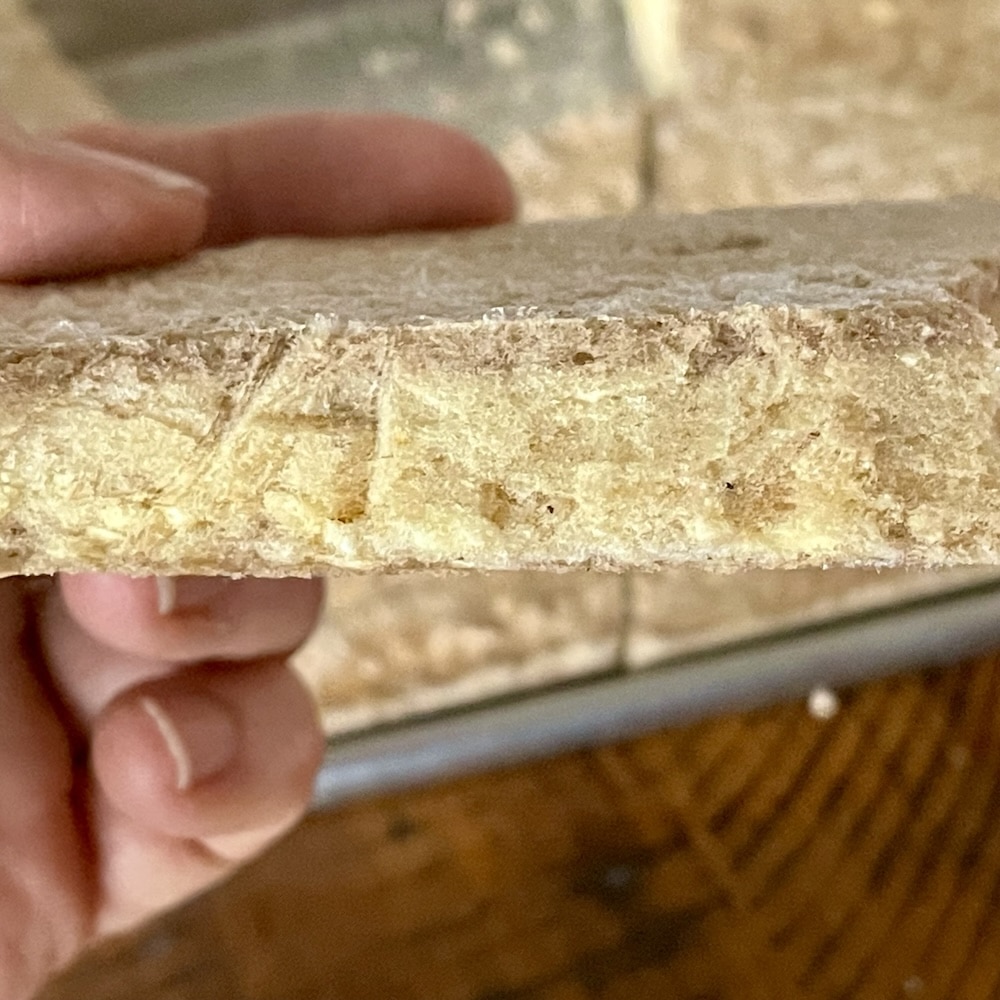
Freeze-dried foods generally retain more of their original shape but develop a light, porous structure. They are typically dry and crisp, sometimes with an airy texture almost like Styrofoam. Depending on the food, they may also be brittle, flaky, or crumbly.
These differences are especially noticeable in foods like apples and tomatoes, where each preservation method produces a very different eating experience.
Does Freeze-Dried Food Last Longer Than Dehydrated Food?
Freeze-dried foods generally have the potential for longer storage because the process can remove more moisture and produce very low water activity.
Water activity describes how much water is available to support microbial growth. It is not exactly the same thing as the food’s total moisture content.
However, the preservation process alone does not determine shelf life.
The food itself, residual moisture, fat content, packaging, temperature, and exposure to oxygen all influence how long a dried product will maintain its quality and stability.
Home freeze-dryer manufacturers sometimes advertise storage lives of 20 to 25 years. Those estimates should not be treated as guarantees for every food produced in a home machine.
Research establishing reliable shelf lives for the wide variety of foods prepared in home freeze dryers is still limited.
Properly dehydrated foods can also be stored successfully at room temperature. Depending on the food and storage conditions, recommended storage periods commonly range from several months to about a year.
For more detailed storage information, see our Tips for Freeze Dried Food Storage article.
The National Center for Home Food Preservation also provides research-based guidance for packaging and storing dehydrated foods.
Does Freeze Drying Preserve More Nutrients Than Dehydrating?
Freeze drying can retain certain nutrients better than conventional hot-air dehydration because it generally exposes food to less heat.
This can be particularly important for heat-sensitive compounds such as vitamin C and some other plant compounds.
However, the amount retained depends on the particular food, its preparation, drying conditions, and subsequent storage.
Dehydration also preserves valuable nutrients. Both methods produce foods that can make meaningful contributions to a healthy diet.
Neither process should be described as preserving all nutrients or guaranteeing that food will retain its original nutritional value indefinitely.
For me, nutrient retention is an important consideration because growing and preserving food requires considerable time and effort. I want to preserve as much of the food’s value as practical.
But nutrition is only one factor. Flavor, texture, equipment costs, and how I intend to use the finished food also matter.
What Foods Are Best for Freeze Drying or Dehydrating?
Some foods work well with either method, but the finished products can be very different.
Apples are a good example.
Dehydrated apple slices can be chewy or crisp, depending on their preparation. Freeze-dried apple slices are typically much lighter and more porous.
Our family prefers dehydrated apple chips for snacking, although some enjoy freeze-dried apple slices.
Tomatoes offer another useful comparison.
My dehydrator produces delicious dried tomatoes with concentrated flavor. My freeze dryer gives me other options, including freeze-dried tomato pieces, purée, and spaghetti sauce.
Neither method replaces the other.
When I Choose Dehydrating
I tend to reach for my dehydrator when I want:
- Apple chips and other dried fruit snacks.
- Concentrated tomato flavor.
- Dried herbs.
- Foods with the particular chewy or crisp textures that dehydration produces.


When I Choose Freeze Drying
I reach for my freeze dryer when I want:
- Lightweight fruits and vegetables.
- Prepared meals for future use.
- Tomato sauce, pumpkin purée, and other cooking ingredients.
- Foods that are practical to rehydrate and use in recipes.
- Additional options for storing foods without occupying freezer space.
I also freeze dry some foods that were previously frozen or cooked, provided they have been safely prepared and handled.
Not every food is suitable for freeze drying. High-fat foods such as butter and peanut butter, and high-sugar foods such as honey and syrups, can be particularly problematic. Fat is not removed by freeze drying, and high sugar concentrations can interfere with effective drying.
For more information about choosing suitable foods, see our guide to What Foods Can You Freeze Dry?.
Is Freeze Drying Worth the Extra Cost?
Home freeze dryers require a substantial initial investment, while a conventional food dehydrator is generally much more affordable.
The cost of freeze drying also includes electricity, packaging, equipment maintenance, and the time required to prepare and process food.
Whether the investment makes financial sense depends on how frequently you use the machine, what foods you preserve, and what those foods would otherwise cost.
There is no guarantee that a freeze dryer will pay for itself quickly.
For someone who already owns the equipment, the calculation is different.
I’ve had both machines for years, and my preservation needs have changed as our household has changed.
Our children are grown, and our garden harvests are smaller than they used to be. I no longer need to process the enormous quantities of produce we once harvested.
Now I can be more selective about which method produces the food I actually want to use.
Both machines remain valuable to me, but for different reasons.
Where Do Canning and Freezing Fit In?
Canning and freezing offer additional ways to preserve food, often producing finished products that are quite different from either freeze drying or dehydrating.
For example, apples can become dehydrated chips, freeze-dried slices, canned applesauce, or frozen pie filling.
I use all of these preservation methods, choosing the one that gives me the finished food I want.
Canning relies on a tested heat-processing method appropriate to the food. High-acid foods may be suitable for boiling-water canning, while low-acid foods require pressure canning.
For safe, research-tested canning instructions, visit the National Center for Home Food Preservation.
Canning and freezing deserve their own comparisons. Here, our focus is on understanding the differences between freeze drying and dehydrating.
Freeze Drying vs. Dehydrating: Which Should You Choose?
The answer depends on what you want from the finished food.
If you enjoy dried fruit snacks, herbs, and concentrated vegetable flavors, a food dehydrator may provide everything you need at a relatively modest cost.
If you want to preserve a wider variety of foods, including many prepared meals and cooking ingredients, a freeze dryer offers additional possibilities. But those benefits come with higher equipment and operating costs.
For me, the two methods complement one another.
Over the years, I’ve preserved thousands of tomatoes, hundreds of peppers, and wheelbarrows of squash and pumpkins. Freeze drying gave me valuable new options for managing those harvests and reducing the amount of food competing for space in my freezers.
Today, our harvests are smaller, but I still appreciate having both machines.
My dehydrator makes the apple chips and dried tomatoes we enjoy. My freeze dryer gives me pumpkin purée, spaghetti sauce, fruits, vegetables, and prepared foods that I can bring back into my cooking.
Freeze drying and dehydrating are not interchangeable. They remove moisture in different ways, produce different textures, and offer different advantages.
Once you understand those differences, you can choose the method that gives you the food you actually want to preserve, store, and use.
Continue Learning About Freeze Drying:
- Freeze Drying Food Safety: How to Preserve Food Safely at Home
- Freeze Dried Food Storage Tips for Short and Long Term Storage
- How Does Freeze Drying Work?
- What Is good to Freeze Dry?
Follow Us:
We enjoy meeting you on our social networks. Follow us on Facebook, Pinterest, Instagram . Tag us with your pictures of our recipes and comment on how it went for you. We would love to see what you do with them.
We often like, comment and share your posts of our recipes on our daily Instagram stories.
Ask questions and rate the recipe in the comments section below. Please share what you did with this recipe. We are always looking for more and better ways to make homemade food. Other cooks love your ideas!
Recent Posts:
Hi,
I give alcohol tastings where we try to identify some of the trace elements of fruits, herbs or jerky that were used to make various alcohols. As part of this process, we have the participants smell various dried fruit. What is the best way to dry fruit so that it is really fragrant and aromatic during our tastings? Thanks!
Hi James, For aroma identification, try freeze-drying if you have access to it. Freeze drying removes moisture at very low temperatures, which preserves many of the volatile aromatic compounds that give fruits their distinctive smell. Traditional dehydration uses heat, and some of those delicate aroma compounds can be lost during the drying process.
If freeze drying isn’t available, dehydrate fruit at the lowest practical temperature (typically around 95°F–115°F for aromatic fruits) and stop drying as soon as the fruit is shelf stable. Higher temperatures tend to drive off the very aromas you’re trying to showcase.
For tasting events, another trick is to store dried fruit in airtight containers until just before the session. Crushing or breaking the fruit immediately before participants smell it often releases a much stronger aroma than leaving the pieces whole.
Some fruits also perform better than others. Citrus peel, apples, berries, cherries, and stone fruits generally retain recognizable aromas well. Herbs are often best dried at very low temperatures, while jerky develops its own aroma profile through the drying process.
If your goal is maximum fragrance rather than long-term storage, freeze-dried fruit is usually the closest representation of the fresh fruit’s aroma. the texture differences between freeze drying vs, dehydration in fruits especially are pretty dramatic.
Practically speaking, I’d buy small samples of each freeze dried and dehydrated varieties to test out your own preferences before making a final determination. I hope this helps.