
How to Score Sourdough Bread (Techniques for Better Oven Spring)
As an Amazon Associate and member of other affiliate programs we earn a small commission from qualifying purchases through our affiliate link. For more information read our Entire Affiliate Disclosure.
Learn how to score sourdough bread for better oven spring, clean cuts, and beautiful loaves. Simple techniques, tools, and tips that actually work are all you need to create your own beautifully shaped loaves. Many home bakers think bread scoring is just decorative—but scoring actually controls how your bread rises in the oven. Which also impacts your crumb development. And to some degree your crust.
Although scoring sourdough bread is an art form, to be sure, it also directly controls how your bread expands in the oven.
Technique matters. When a lame blade drags, sticks, or forces you to go back over the same cut, your bread will reflect that. This is one of the most common frustrations for home bakers. If you’ve ever had a loaf burst unpredictably, have a less than stellar oven spring, your loaf flattens out, or refuses to open where you scored it, this guide will show you exactly why that happens when your sourdough bread scoring is at fault—and how to fix it.
The good news is: Clean, confident scoring is a skill you can fix quickly with a decent lame, and a bit of experience. Let’s get into it.
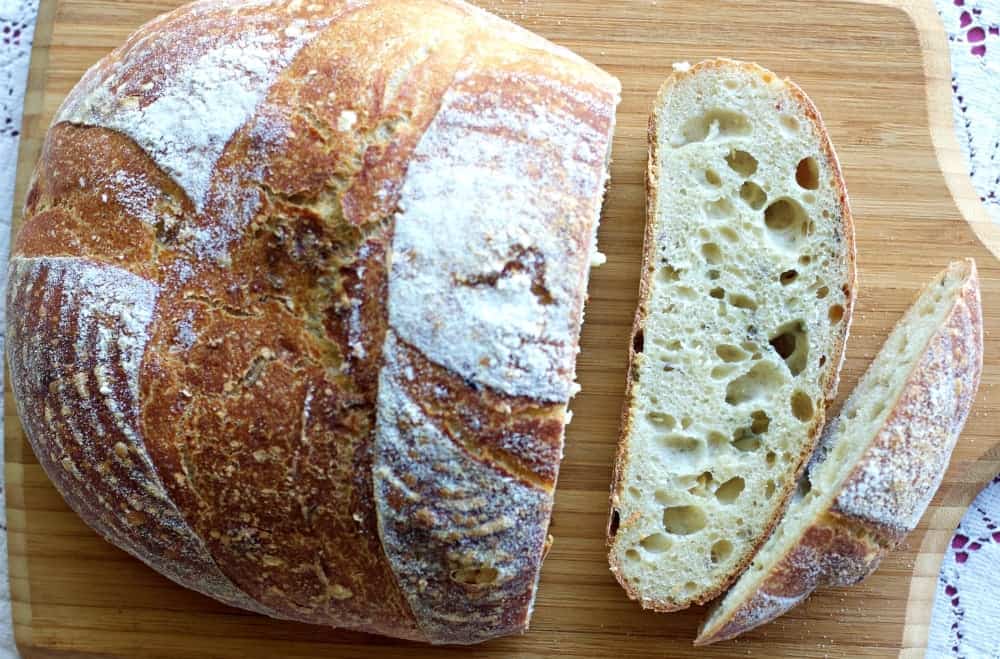
What Is Scoring in Sourdough Bread?
Scoring is the act of making deliberate cuts in the surface of your dough just before baking.
These cuts:
- Direct where the bread expands
- Prevent random tearing
- Help create structure and shape
- Influence crust and appearance
Without scoring, your bread will still rise—but not in a controlled or predictable way.
Watch the video above to see Kayti score a loaf of our Beginner Artisan Sourdough bread
Why Do We Score Sourdough Bread?
The functional reason for scoring sourdough bread is to direct how your bread dough expands as it bakes. Without bread scoring, the loaf has no choice but to create its own path and often expands poorly, hampering oven spring, or bursts out of the crust in unpredictable ways. Here is how that works.
To Control Oven Spring:
When sourdough hits a hot oven, it expands rapidly. This is called oven spring. The outer surface (the “skin” of the dough) begins to set quickly.
If there’s no weak point for dough expansion, the outer surface (the “skin” of the dough) begins to set quickly:
- Pressure builds inside
- The loaf bursts at its weakest spot
- You get uneven shape and poor structure
Scoring creates and directs that weak point—on your terms.
To Improve Crumb Structure
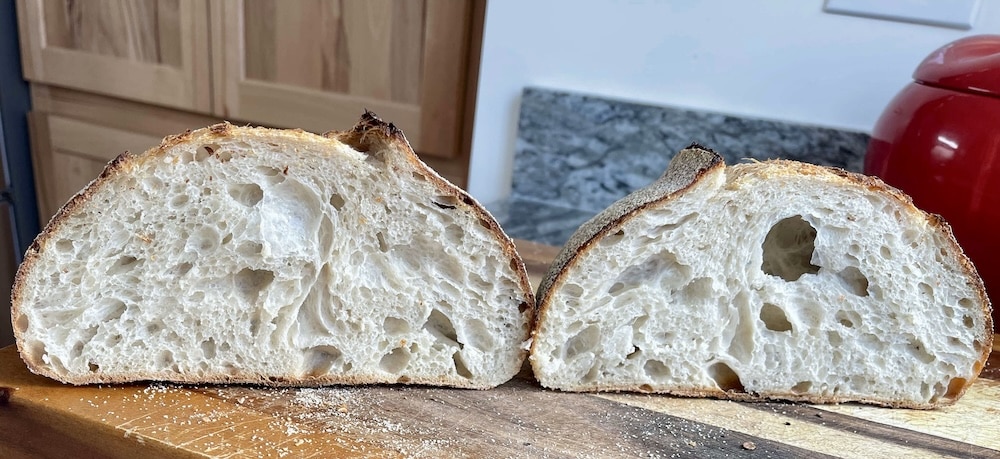
Controlled expansion = better internal structure.
When your loaf opens properly:
- Gas pockets expand evenly
- The crumb becomes lighter and more open
- You avoid dense or compressed areas
Read our crumb structure guide to learn more about proper crumb development.
To Support Proper Crust Development
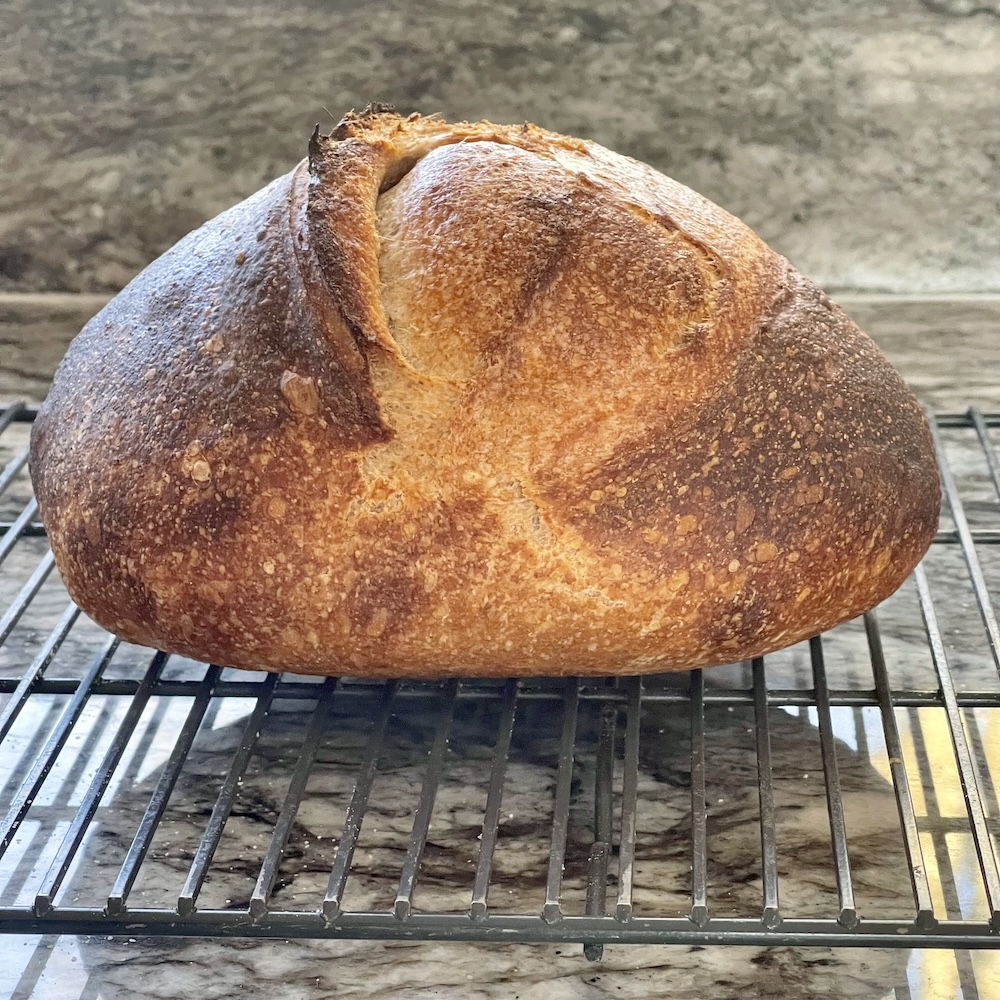
Scoring allows the crust to stretch before it hardens.
Without it:
- The crust sets too early
- The loaf can’t expand fully
- You lose volume and texture
This is why scoring works hand-in-hand with steam baking sourdough. That’s why we do it.
To Shape the Final Loaf
Your score determines how the loaf spreads and lifts. This is how the crust and crumb are affected by the score.
For example:
- A long score → oval expansion
- Cross scores → rounded loaf
- Multiple cuts → controlled spreading
You are literally shaping the final result of your bake with your blade.
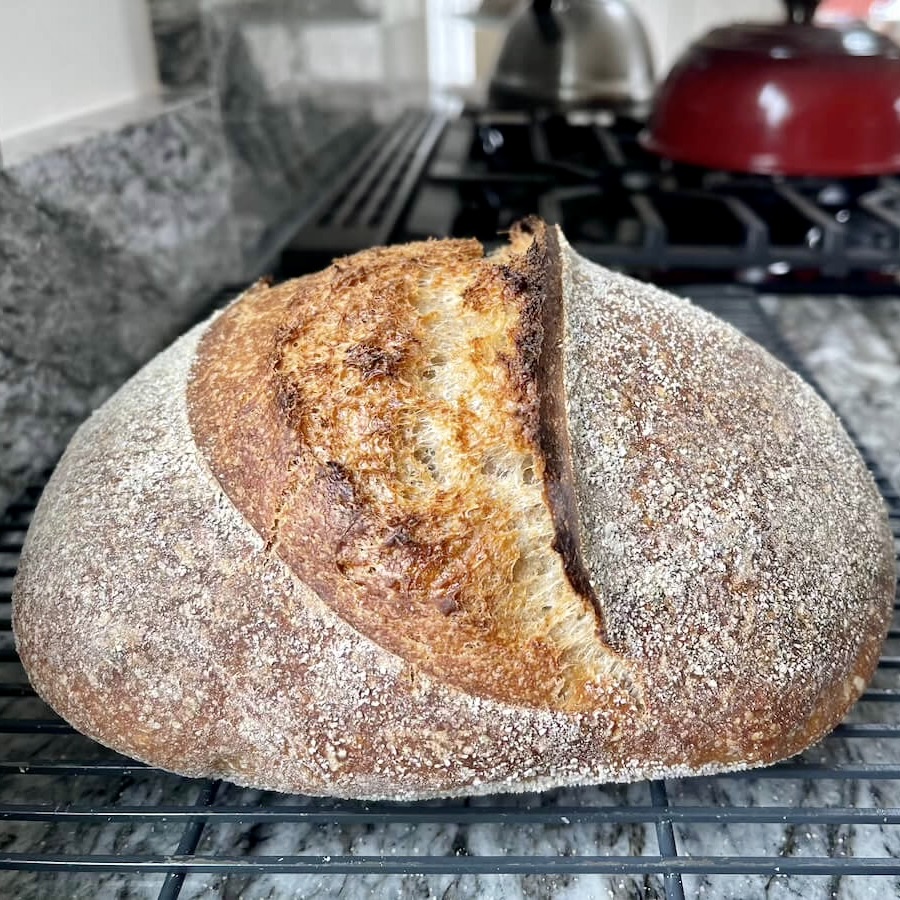
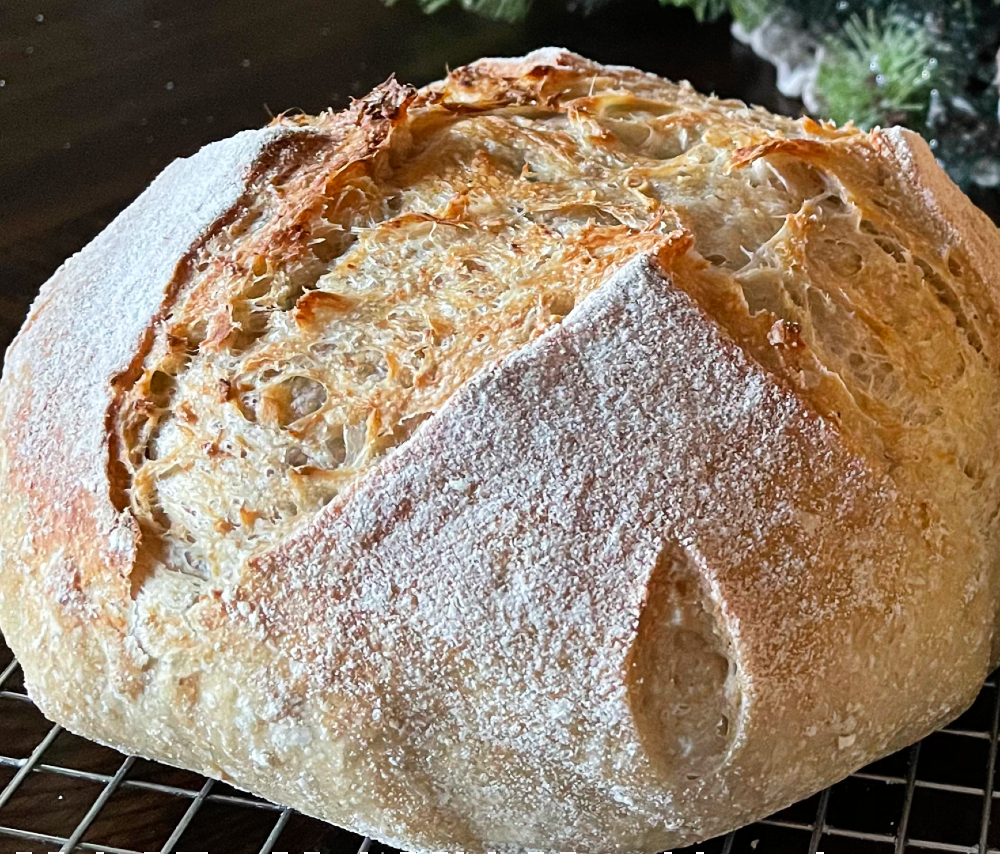
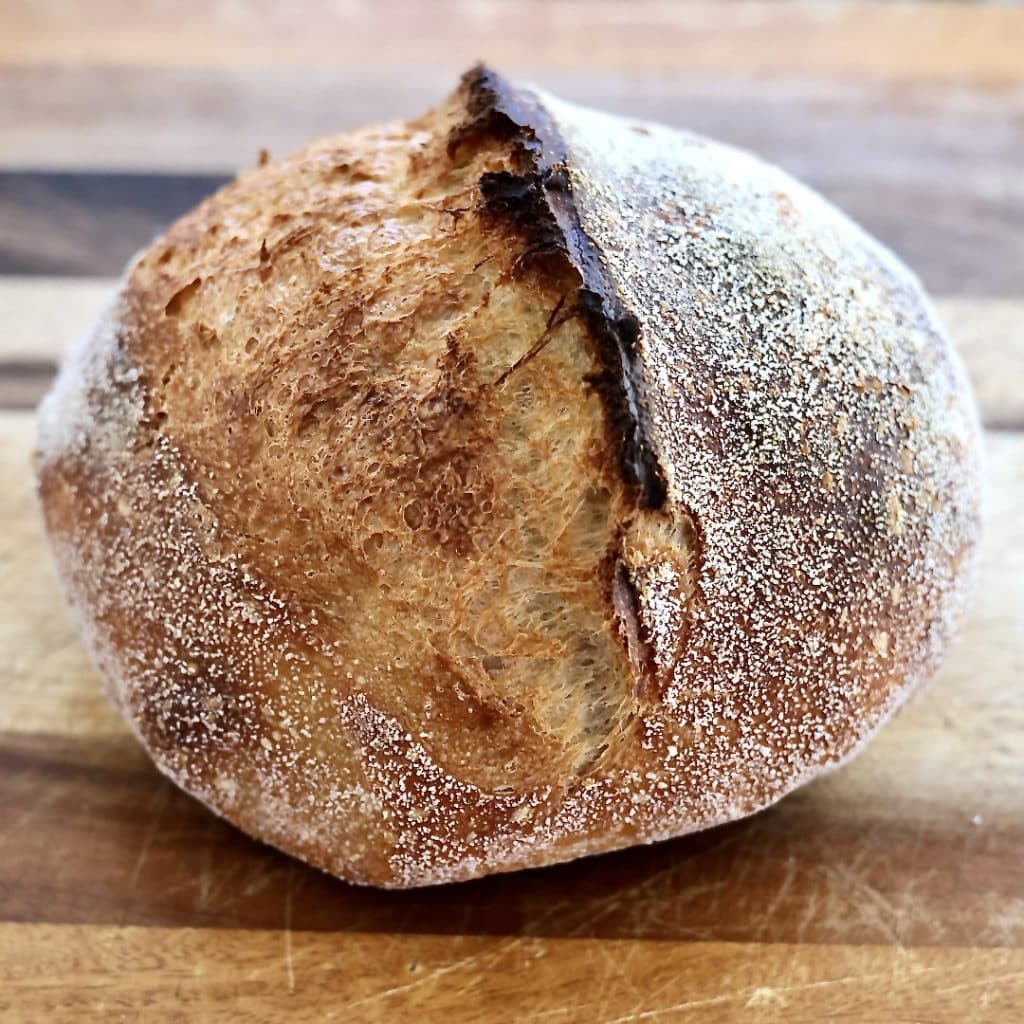
How Scoring Works (Simple Science)
Inside your dough are trapped gases from fermentation.
In the oven:
- Heat expands those gases rapidly
- Steam keeps the crust flexible
- The dough pushes outward
Your score acts like a pressure release valve—directing that expansion upward instead of outward or randomly. Challenger Breadware Has an excellent discussion on this.
The Most Common Sourdough Scoring Styles
You don’t need dozens of patterns. These core styles cover almost everything and give you full control. You can also make up your own versions of the score. Do what works best for the bread you want to make.
The Single Slash (Classic Ear Score)
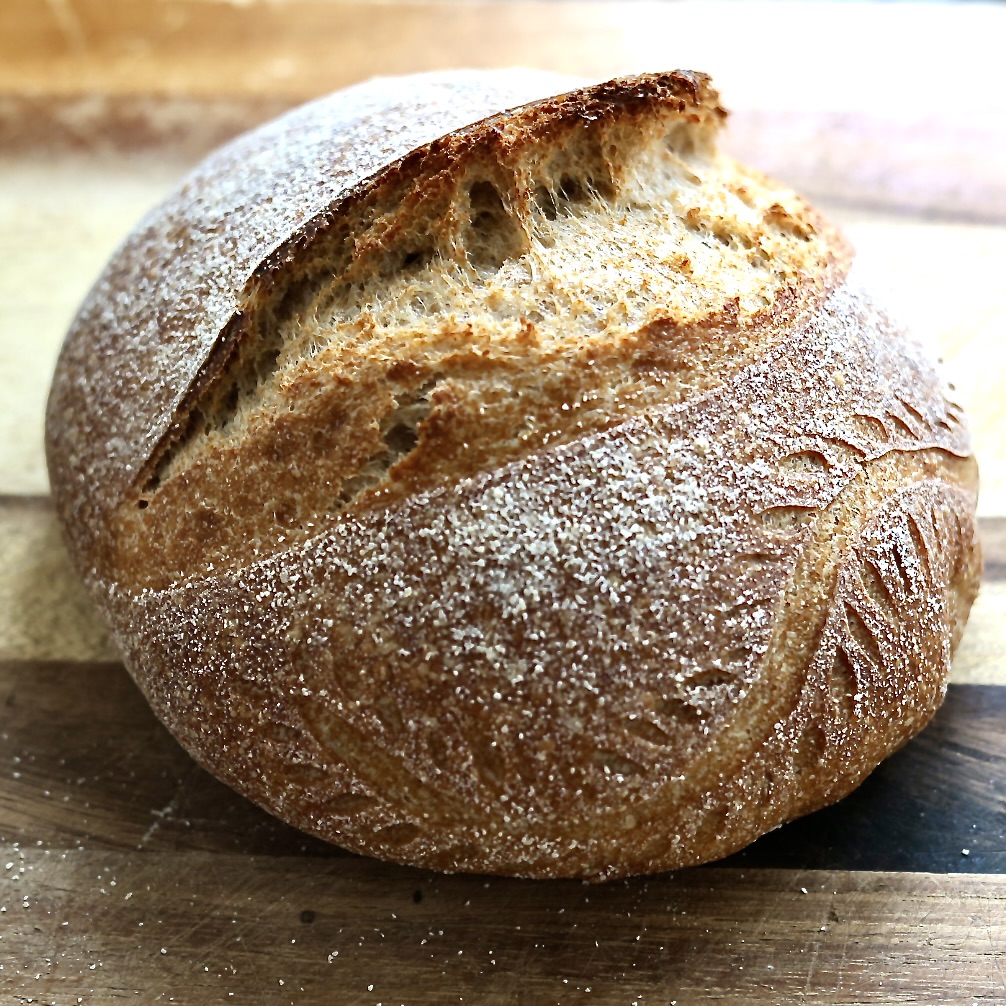
Best for: Oval loaves (batards) and boules (round loaves)
- One long cut along the side or down the center of the dough
- Scored at a shallow angle (30–45°)
- Produces the classic “ear”
Why it works:
Creates a flap that lifts as the bread expands. This is called an Ear.
Cross Score (X Pattern)
Best for: Round loaves (boules)
- Two intersecting cuts
- Even expansion in all directions
Why it works:
Releases pressure symmetrically, helping the loaf rise evenly.
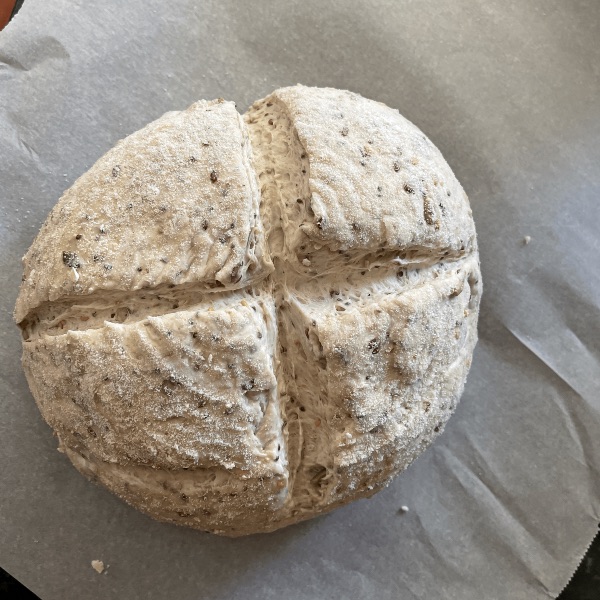
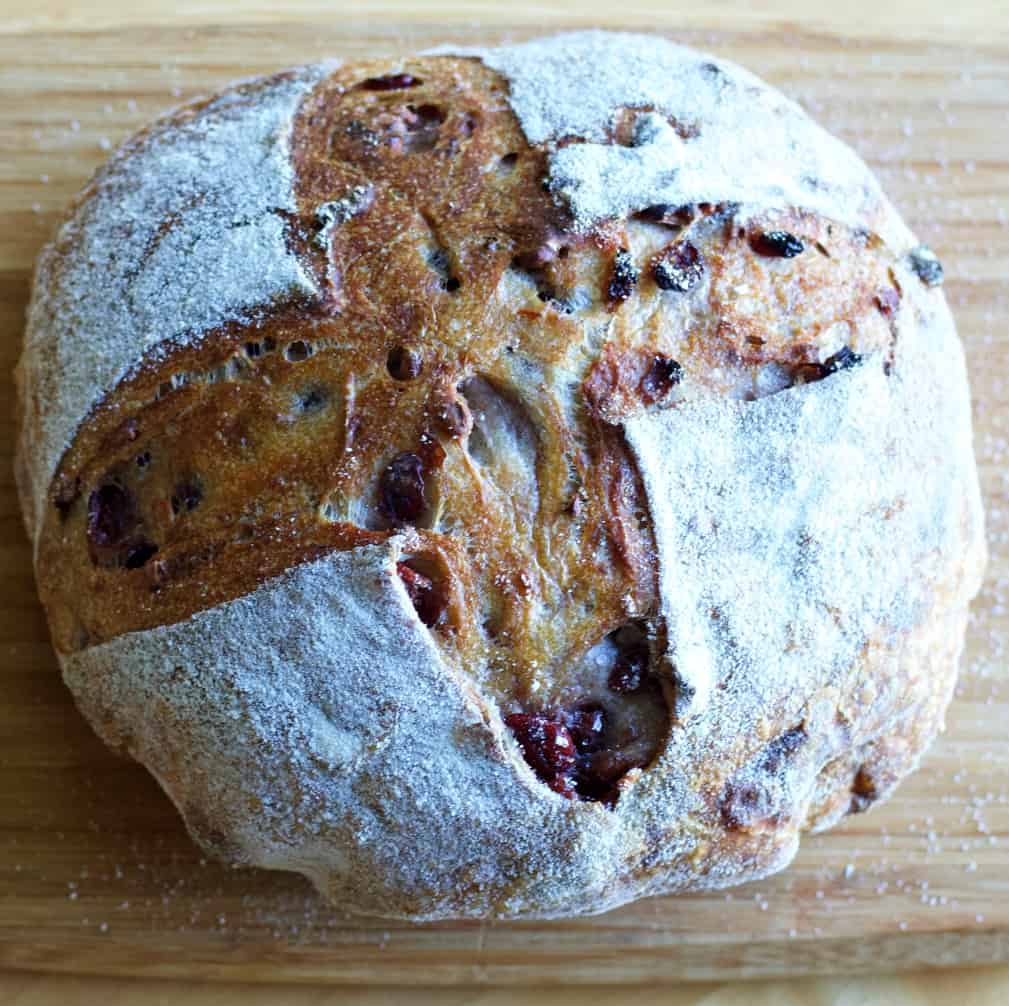
The cross cut score is a popular and easy score technique. It works very well for round boules.
Box Score (Square Pattern)
Best for: Controlled bloom + decorative look
- Four cuts forming a square
- Encourages center lift
Why it works:
Focuses expansion upward while keeping structure tight.
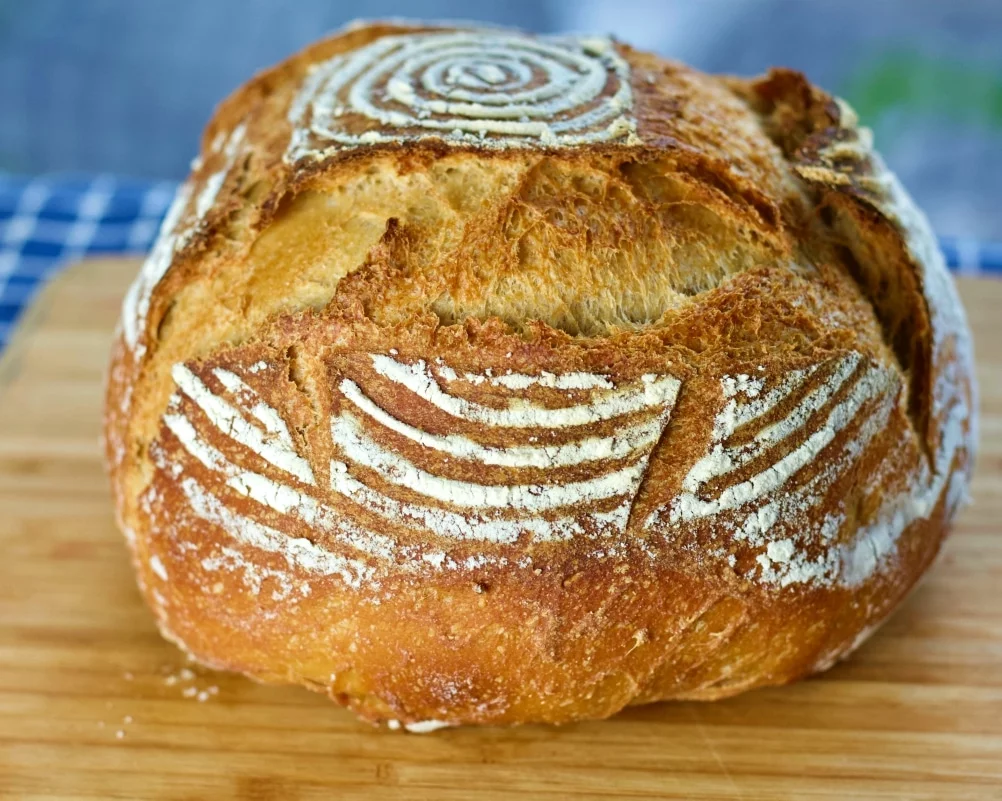
Wheat Pattern (Decorative + Functional)
This can be a gorgeous way to score your bread. and when combined with properly deep scores for expansion it is a beautiful, functional score.
Best for: Visual appeal + moderate control
- Central line with small angled cuts
- Combines function and design
Why it works:
Main score controls expansion; smaller cuts relieve surface tension. The first loaf below does not use the wheat pattern for function. just some decoration.
In the loaf on the right, two deep expansion scores provide the dough a way to open. It could have benefitted from more or deeper expansion cuts.
The wheat pattern is usually a shallow score for decorative purposes. It can be done like a vine, as you see here, or as a straight sheaf of wheat. It’s a really pretty way to spruce up your loaf. But don’t count on it alone for proper dough expansion.
Multiple Parallel Scores
This is a great scoring method for bread pan loaves. As you can see it helps doughs structured by loaf pans to open fully and gain proper height without ruining the bread loaf shape.
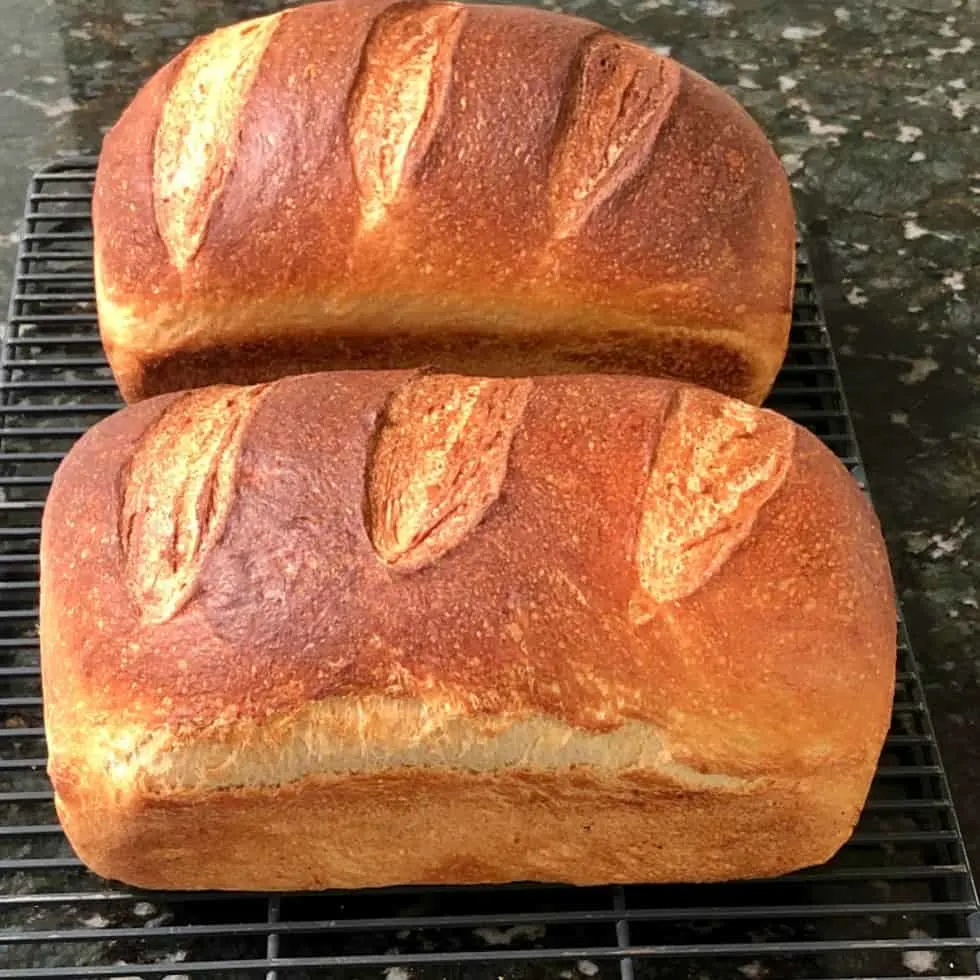
It also works well for boules when properly spaced across the dough before baking.
Best for: Wider expansion
- Several evenly spaced cuts
- Creates a rustic look
Why it works:
Distributes expansion across the loaf.
No Score (Intentional Rustic Split)
I don’t do this method. I prefer scoring for best oven spring and crumb development. but if you want a really rustic loaf, this may be the way to go.
Best for: Rustic breads
- No scoring at all
- Let the loaf split naturally
Why it works (sometimes):
Relies entirely on natural weak points—less control, more randomness.
Expansion Scoring: What is it? When to do it:
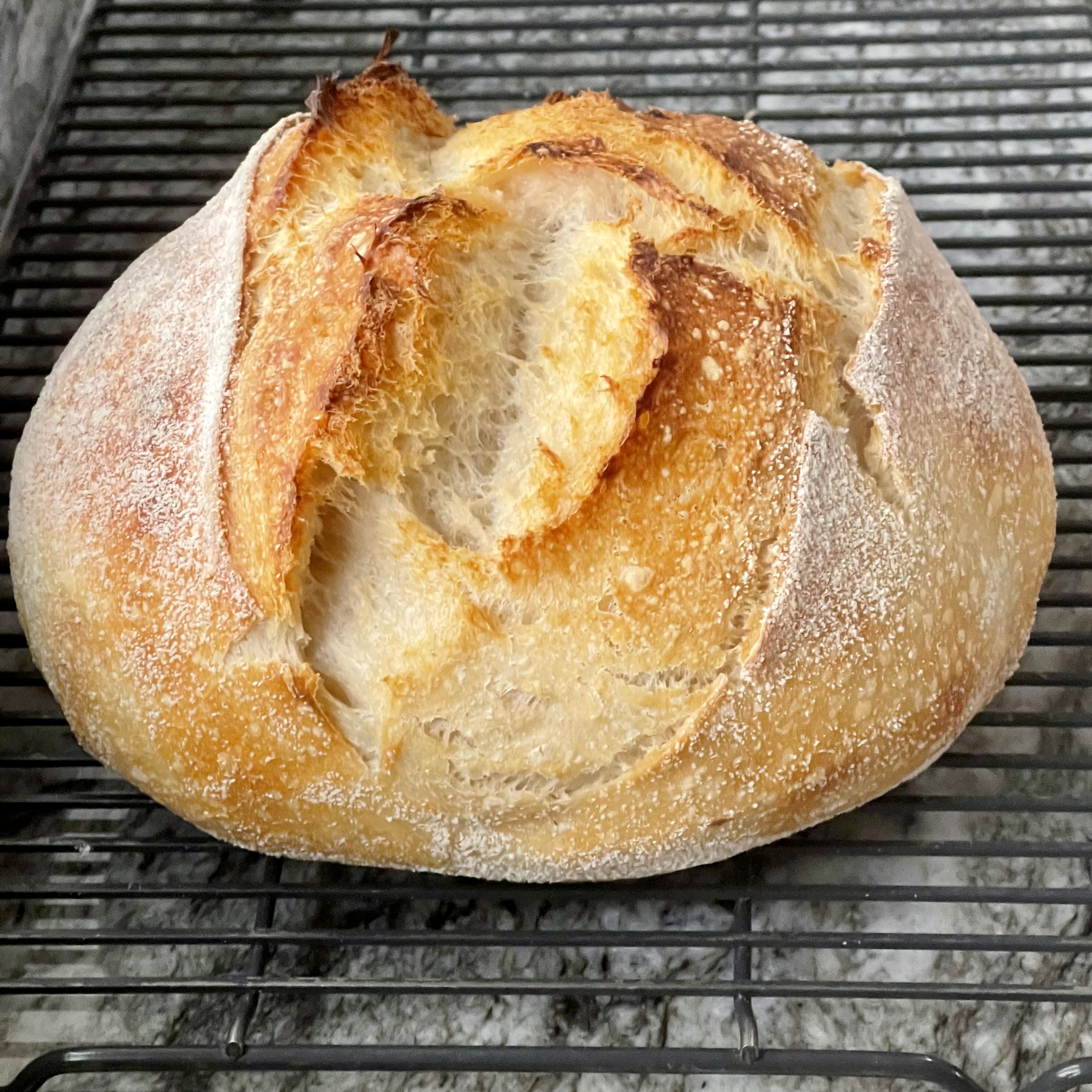
A single slash is the most common type of expansion score, but expansion scoring is about function, not pattern. Whether you use one long slash or a combination of cuts, every loaf needs at least one intentional expansion point to control oven spring.
You can use more than one expansion score in your dough, but it is more difficult to shape a loaf evenly this way. As you can see pictured below, I used two expansion scores with a bit of decoration for fun. But the loaf was somewhat restricted in its spring. I need a better understanding of how to use multiple expansion scores properly.
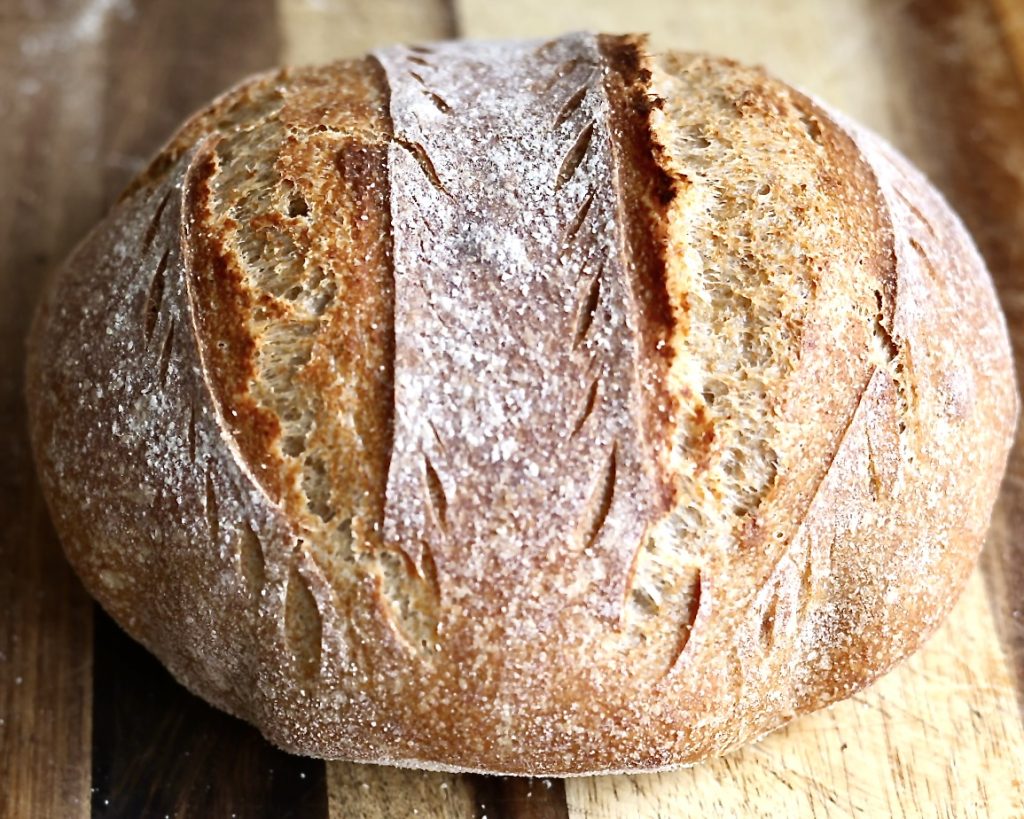
Some bakers combine expansion scoring with decorative scoring techniques to make stunning, artistic loaves that are absolutely lovely. This type of expansion scoring is more advanced and requires some skill, confidence and a good knowledge of your dough.
Start baking several loaves a week, you’ll get lots of practice and quickly learn your dough and what works best for it.:)
How Hydration Impacts Your Scoring:
Part of learning your dough, and how to score it includes hydration. Flour blends also create a set of challenges for dough scoring, but that is going to take you making and learning your particular flour blend to figure out how best to score it.
Hydration is the amount of liquid in your dough. It has an enormous affect on all parts of the dough making process and how your bake turns out. Learn more about hydration here. With regards to scoring, let’s take a look.
Why Scoring Works Better At Lower Hydration:
At lower hydration (~65%):
- Dough is firmer-usually also less sticky
- Holds shape more rigidly
- Surface sets faster in oven
Result:
- cleaner second cuts- especially helpful with twin or triple expansion cuts
- sharper decorative patterns- dough edge is a bit stiffer so the cut lines are clean
At Higher Hydration Scoring Is More difficult:
For decorative scoring with several expansion scores, the lower hydration doughs 65%, work well. Once the dough gets over 70% hydration, it tends to be stickier, (depending on your sourdough flour type . A high hydration sourdough whole wheat flour loaf, like we make on this blog, is a good example of a sticky high hydration dough. Score these doughs cold for best results.
High hydration doughs:
- Dough is more extensible
- Expands more freely
- Surface is softer longer
Result:
- second scoring can:
- smear
- distort
- or not hold clean lines
| Hydration | Expansion Scoring |
|---|---|
| ~65% | Excellent for designs |
| ~70% | Works with skill |
| ~75%+ | Less reliable |
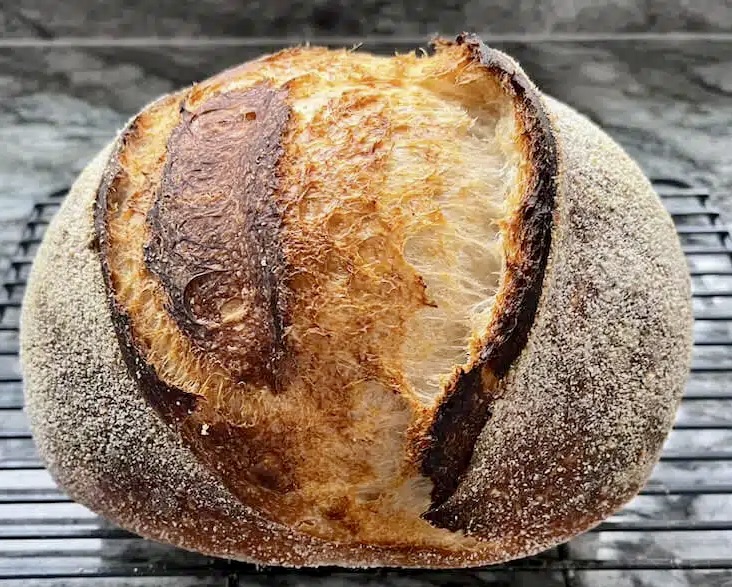
Many times, a single slash is the best answer for the best bake results.
Confident Scoring-How to Get There:
Confident scoring comes with experience. Here is a pathway to getting there.
A proper score should feel like:
- One smooth, uninterrupted motion
- No resistance or pulling
- A clean, slightly lifted edge (not torn or jagged)
If you’re sawing back and forth or going over the same cut multiple times, something in your setup—not your ability—is working against you.
Cold Dough Is Easier to Score
Cold dough holds its shape and resists sticking.
That’s why scoring works best:
- Right out of the fridge
- After a cold proof (8–12 hours is ideal)
If your dough warms up too much before scoring, it softens and grabs the blade—leading to tearing instead of slicing.
Angle Is Everything (This Is the Big One)
For an ear and controlled expansion, don’t cut straight down.
Instead:
- Hold the blade at about a 30°–45° angle
- Think almost horizontal, not vertical
- Score slightly under the surface, not deep into the loaf
This creates a “flap” of dough that lifts during oven spring.
Commit to the Cut
This is where most bakers hesitate.
You want:
- One quick, confident motion
- No stopping halfway
- No going back to “fix” it
Think of it like slicing through soft butter—not carving wood.
If you hesitate, the blade drags. If you commit, it glides.
Don’t Fight Slight Resistance
Even with perfect technique, you might feel a little resistance. That’s normal.
What you don’t want:
- Tugging
- Dough sticking and stretching
- Jagged edges
If that’s happening consistently, it’s usually:
- Blade quality
- Dough too warm
- Not enough surface tension from shaping
Your Shaping Affects Your Scoring
A well-shaped loaf creates surface tension—this is what allows clean scoring.
If your dough feels slack or loose:
- It will collapse slightly when you score
- The blade will drag instead of slice
Good shaping = easier scoring + better oven spring.
Steam Finishes the Job
Scoring sets the direction of expansion. Steam allows it to actually happen.
Without enough steam:
- The crust sets too early
- Your score won’t open well
- You lose that dramatic ear
This is why scoring, oven temperature and steam always work together—not separately.
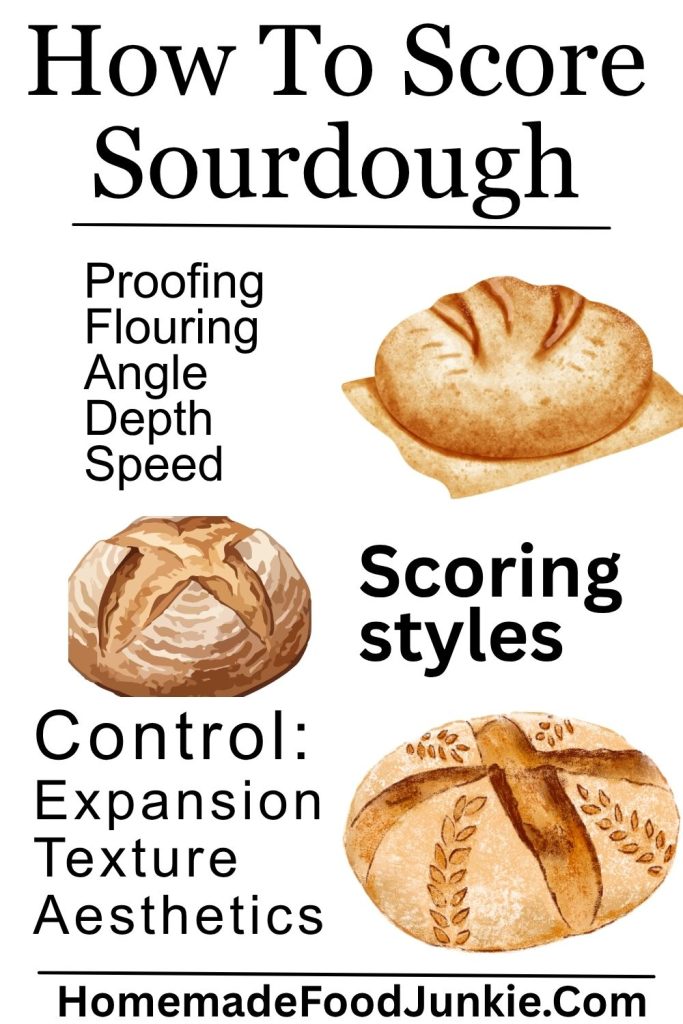
Quick Fix Checklist (If Your Blade Keeps Dragging)
If you’re still struggling, run through this, run through this checklist and see if you can’t discover the problem:
- Dough is cold
- Blade is sharp and high qualityYou’re scoring at an angle
- You’re using one smooth motion
- Dough has good surface tension
Fixing even one of these usually makes an immediate difference.
Best Lame Tools for Clean Scoring
Cheap lames and low-quality razor holders often cause drag—even with a new blade.
Look for:
- A rigid handle (no wobble)
- Thin, sharp replaceable blades
- A slight curve option (helps create an “ear”)
A good lame lets the blade glide through the dough instead of fighting it.
Your Blade Matters More Than You Think
Your lame is a tool. There are several kinds and bakers all have their favorites due to how they love to score bread dough. I have the two pictured below. The inexpensive white one with the extended blade (KacNacPro), is really great for deep straight cuts and shallow decorative work.
The curved blade lame is a Baker Of Seville, (it can be straight as well with adjustment). It is better for angled scoring but a bit pricier. King Arthur also carries an excellent Lame in their shop.
Both are good tools for scoring bread. the blades are very stable and the handles easy to grip as I cut into the dough.
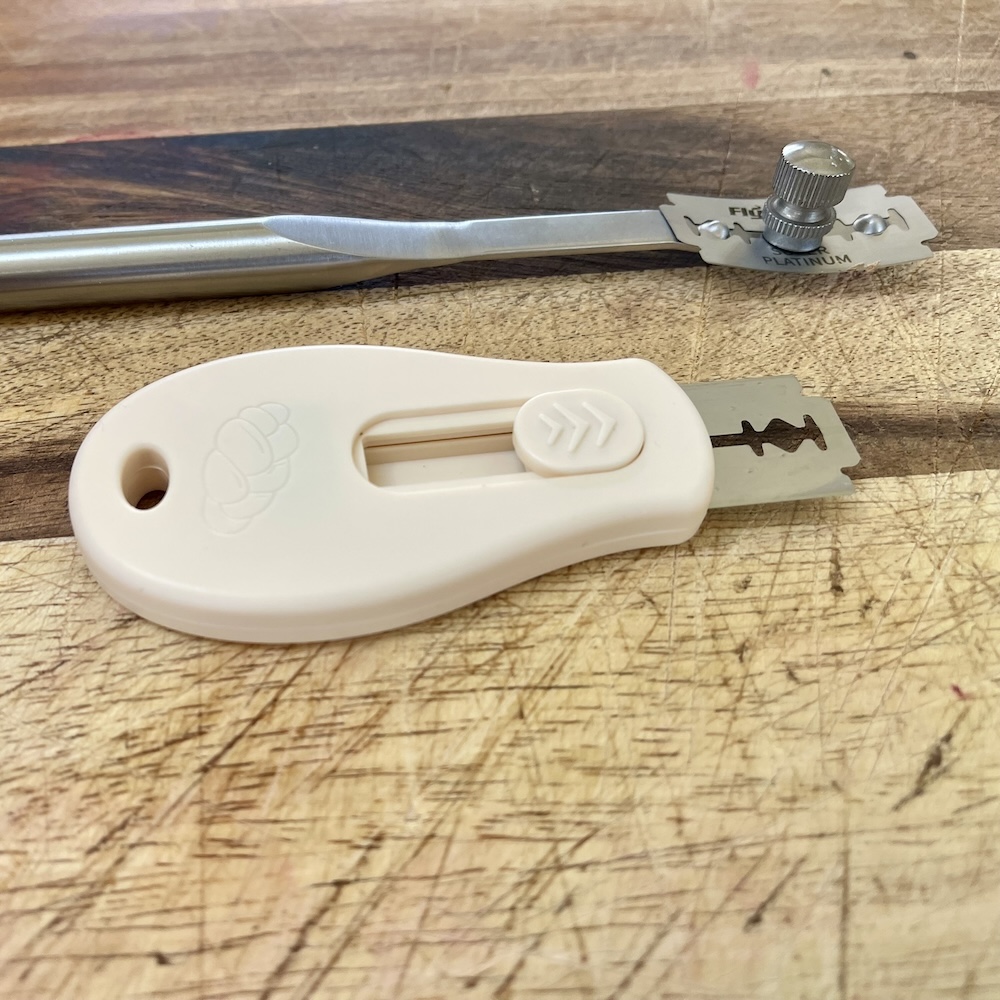
If your blade drags, skips, or forces you to rescore, your tool, the dough itself, or the condition of your razor is likely the problem—not your technique.
If you need a new Lame, Here are reliable Lame options bakers consistently get good results with:
UFO Bread Lame
- Circular design with exposed blade edge
- Extremely stable and easy to control
- Great for confident, single-motion scoring
Best for: Beginners struggling with dragging
Wire Monkey Bread Lames
Wire Monkey has several well made lames.
- Premium build, excellent balance
- Slight flex helps create clean ears
- Comfortable for repeated use
Best for: Frequent bakers
Saint Germain Bread Lame
Not as stable as pricier ones, but may work for you.
- Affordable, reliable, widely used
- Comes with replacement blades
- Solid entry-level upgrade
Best for: Budget-friendly improvement
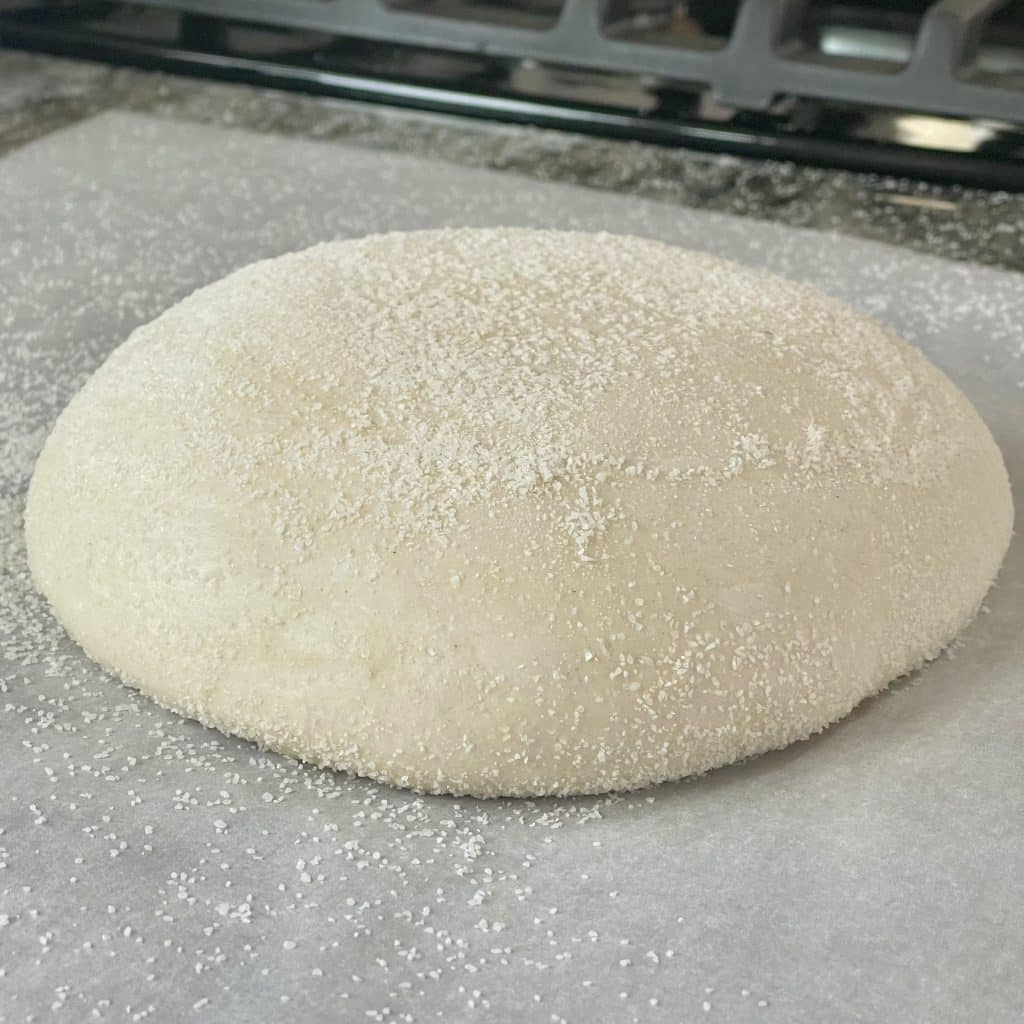
Common Scoring Problems (and What Causes Them)
Blade Tip (Important)
This is an annoying fact. Lame blades MUST be very sharp to go through bread dough without dragging.
No matter the tool:
- Change lame blades frequently-every one or two uses if cleaning doesn’t help
- A dull blade = dragging, tearing, frustration
Some Helps for overcoming scoring issues:
Keep the blade sharp, clean and use either water or a. bit of oil to increase the slide into the dough without dragging. Especially higher hydration doughs.
Blade drags / dough tears-Whats the Problem?
- Dough too warm
- Poor quality lame
- Dull or Dirty blade
- Not enough surface tension
- improper blade placement or angle
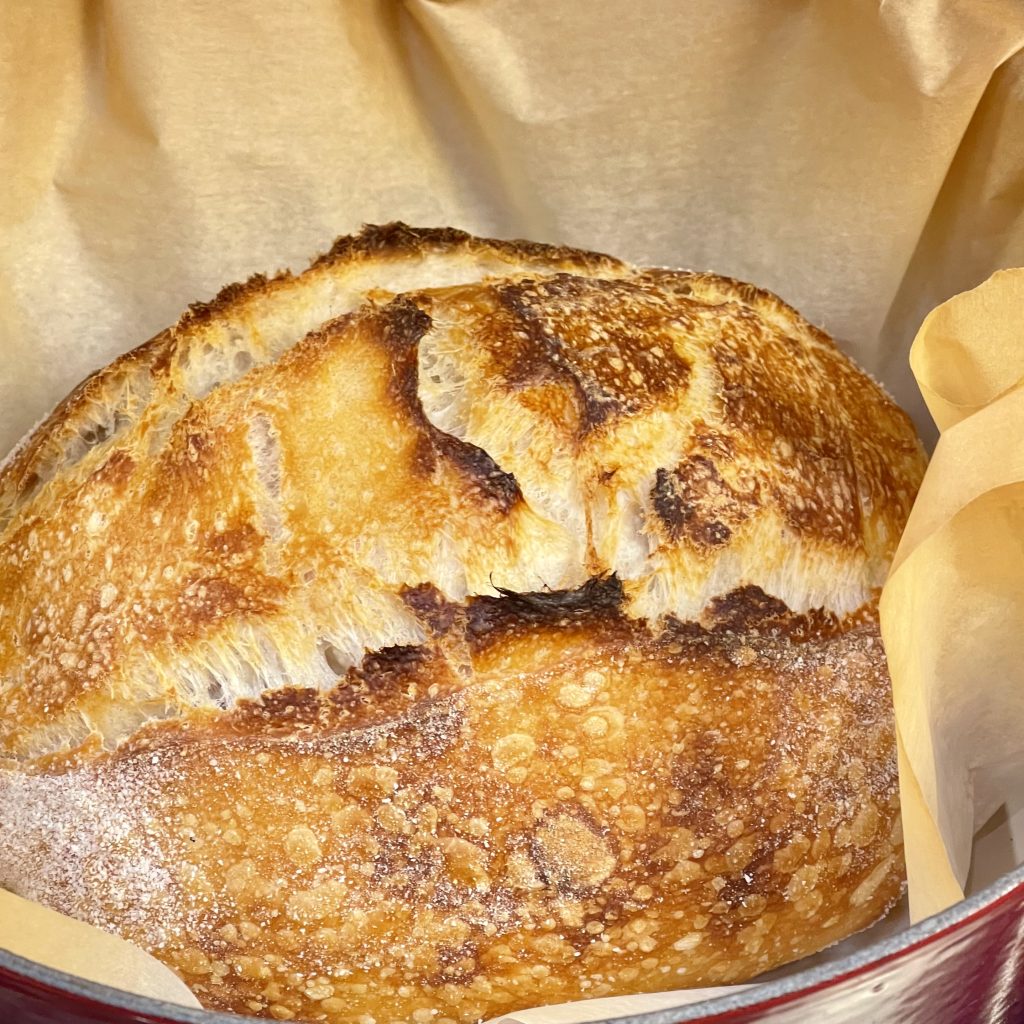
still a nice round loaf, but the score was not ideal. this was due to a shallow score.
Score doesn’t open
- Underproofed dough
- Not enough steam
- Cut too shallow-deep cuts of 1/2 inch are best if scoring for oven spring or a good ear. shallow cuts work for artistry or subtle relief cuts.
When your rise, crust or crumb is just not what you’re hoping for, there may be more to it. There usually is. Go to these posts for more on underproofed bread problems.
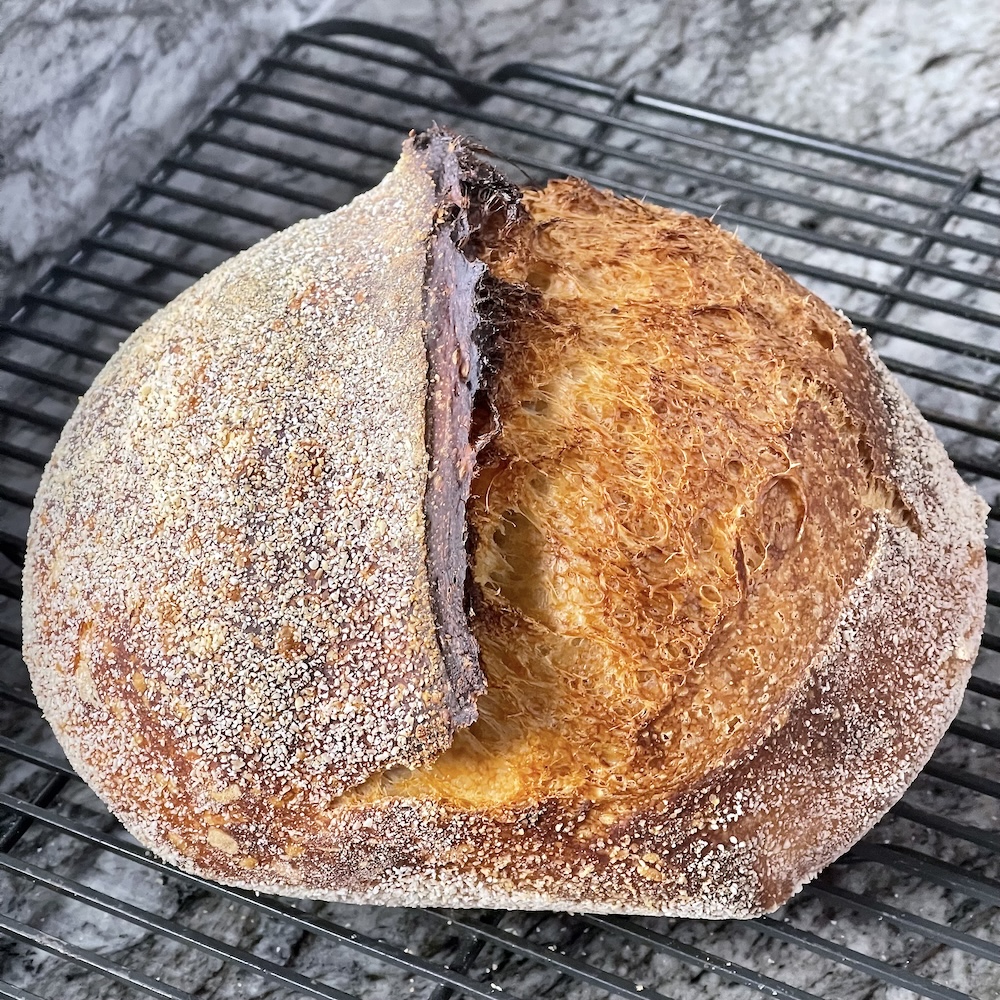
Loaf bursts elsewhere
- Score too small or misplaced
- Weak shaping
- Insufficient scoring
How to Score Sourdough Confidently
Start with the Right Tool
A stable, sharp blade makes a noticeable difference.
If your blade is dragging or requiring multiple passes, the issue is often:
- A dull blade
- An unstable lame
- Or hesitation during the cut
Switching to a more secure lame—like a magnetic or fixed-blade design—helps keep the blade steady so you can score in one smooth motion.
A clean score comes from a sharp blade and a confident cut—not pressure.
Score with Speed, Not Pressure
One of the most common mistakes is scoring too slowly.
Instead:
- Use a quick, deliberate motion
- Let the blade glide across the surface
- Avoid going back over the same cut
A slow cut drags and tears the dough.
A fast cut slices cleanly.
Use the Right Angle
For most sourdough loaves, especially if you want a good ear:
- Hold the blade at about a 30–45° angle
- Score slightly under the surface, not straight down
This creates a flap of dough that lifts during baking and forms the ear.
For decorative scoring:
- A more vertical cut is fine
- Expansion will be less dramatic
Depth Matters More Than You Think
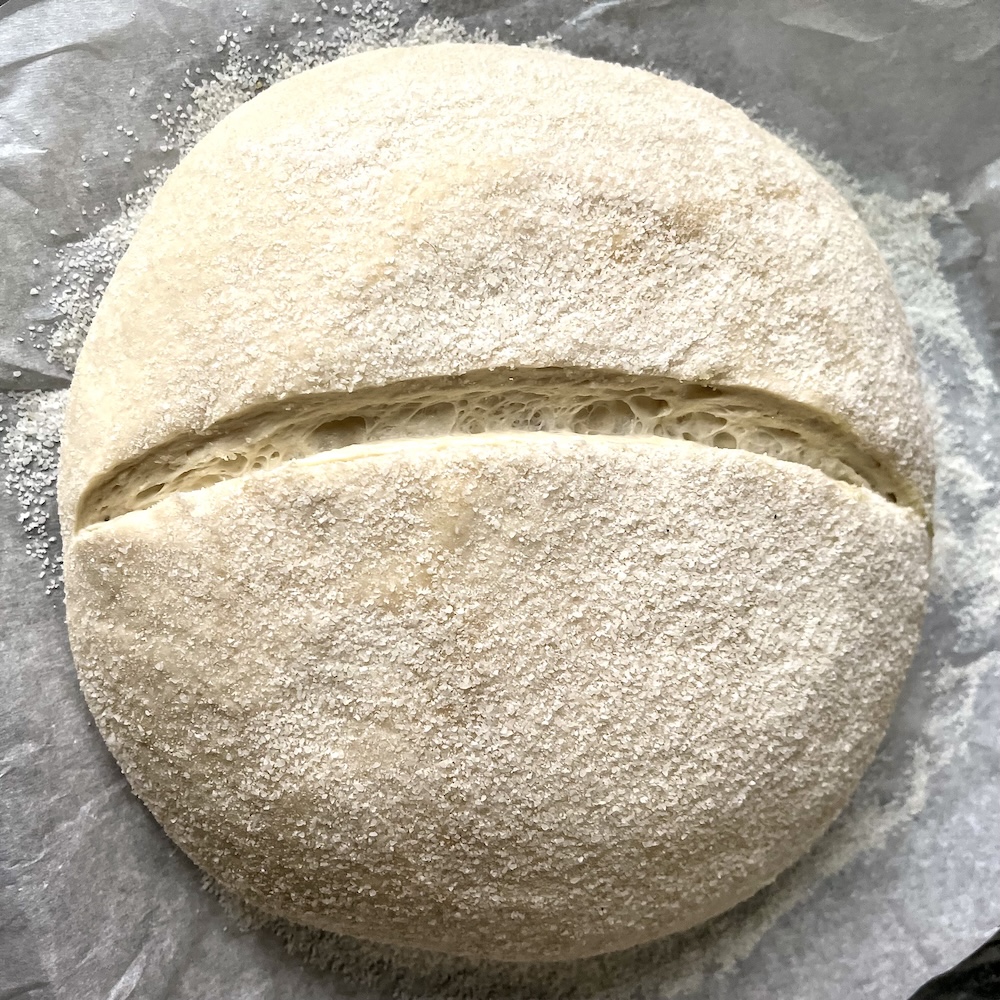
A shallow score won’t open well.
A deeper score gives the dough room to expand.
Aim for:
- About ¼ to ½ inch deep
If your scores aren’t opening:
- Try slightly deeper cuts
- Make sure steam is adequate
Score Cold Dough When Possible
Scoring cold dough is IMMENSELY easier than scoring room temperature, fully proofed dough. When the dough is cold the structure and skin are naturally stiffer and will provide a stable surface to cut through.
Cold dough is easier to score cleanly.
If your dough has been cold proofed:
- Score it directly from the refrigerator
- The surface will be firmer and easier to cut
Warm dough tends to:
- Stick to the blade
- Collapse slightly during scoring
Match Scoring to Steam and Heat
Scoring doesn’t work on its own—it depends on your baking environment.
- Good steam + high heat → score opens fully
- Low steam or low heat → score may seal or tear
Steam baking sourdough allows the score to open. Your oven heat drives the expansion.
Common Scoring Problems (and Fixes)
When a lame is not stable enough to hold the blade steady through the dough, or if the dough itself is too sticky, scoring doesn’t work well. Higher hydration dough and some home milled flour doughs can also be very sticky, even with a good sharp razor.
When Your Blade is dragging or tearing dough:
For sticky dough run the blade through either water to wet the edge, or a bit of oil to reduce the drag.
More ideas include:
- Use a fresh blade
- Score faster
- Check blade stability-cheap lames are often unstable.
Score not opening
- Increase depth slightly
- Improve steam in early bake
- Check oven temperature
Loaf tearing in random places
- Score deeper or more intentionally
- Improve shaping tension
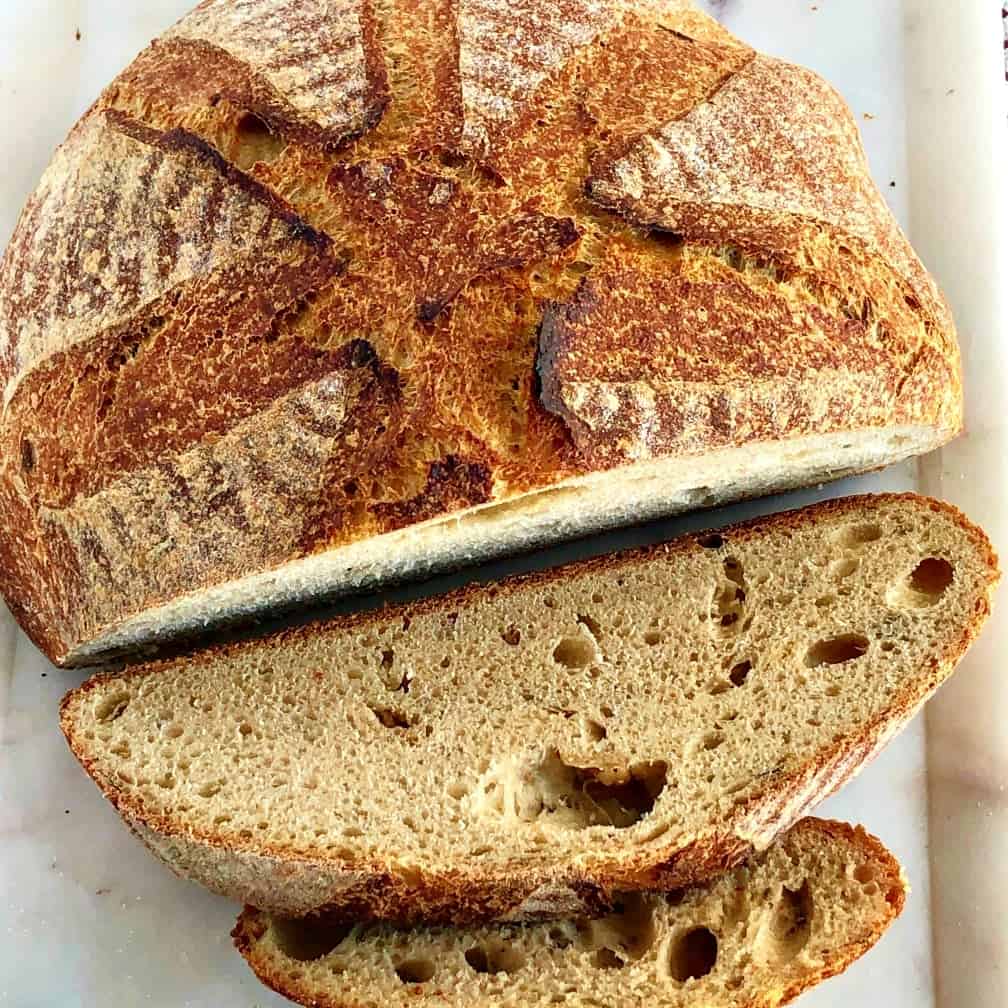
Why Your Sourdough Isn’t Getting an Ear
If your sourdough isn’t forming a pronounced ear, the issue is usually not just your scoring—it’s how your entire process is working together.
An ear forms when your dough expands rapidly in the oven and lifts along the score line. For that to happen, three things must work together: structure, scoring, and steam.
1. Weak Dough Structure (Shaping Issue)
If your dough spreads instead of rising, it won’t build enough pressure to lift an ear.
- Dough lacks surface tension
- Loaf flattens after turning out
- Score doesn’t open much during baking
👉 Fix: Build stronger tension during shaping
→ See: How to Shape Sourdough Bread
2. Incorrect Scoring Technique
Even well-shaped dough won’t form an ear without the right cut.
- Score too shallow → won’t open
- Score straight down instead of angled → no lift
- Blade drags → uneven expansion
👉 Fix: Use a confident, angled score (about 30–45°)
→ See: How to Score Sourdough Bread Confidently
3. Poor Steam or Oven Setup
Without steam, the crust sets too early and traps the loaf before it can expand.
- Crust hardens too quickly
- Score seals instead of opening
- Limited oven spring
👉 Fix: Bake with proper steam (Dutch oven or equivalent)
→ See: How to Steam Bake Sourdough Bread
4. Overproofed Dough
Overproofed dough lacks the strength to spring in the oven.
- Dough feels slack and overly relaxed
- Score opens slightly, then collapses
- Loaf bakes flat with little lift
Fix: Shorten proof time or improve dough strength earlier in the process
Getting an ear isn’t about one trick—it’s about alignment across your process.
- Shaping builds the strength
- Scoring creates the weak point for expansion
- Steam allows that expansion to happen
When all three are working together, your ear forms naturally.
Do You Need an Ear on Sourdough Bread?
No—you do not need an ear to make excellent sourdough bread.
An ear is simply a visual sign that your dough expanded with strength and control during baking. It forms when shaping, scoring, and steam work together to direct oven spring through the score line.
However, a loaf without an ear can still have great flavor, proper fermentation, and a beautiful crumb.
Why Didn’t My Sourdough Get an Ear?
If your loaf didn’t form an ear, the issue is usually not just your scoring
Common causes include:
Weak shaping (not enough surface tension)
Scoring too shallow or straight down
Poor steam or dry oven environment
Overproofed dough with low strength
For a full breakdown, see: Why Your Sourdough Isn’t Getting an Ear
What Angle Should You Score Sourdough for an Ear?
For a pronounced ear, score your dough at a shallow angle—about 30° to 45° to the surface.
A shallow angle creates a “flap” of dough that can lift
A straight-down cut tends to open evenly without forming an ear
Confidence matters just as much as angle. A smooth, decisive cut will open better than a hesitant one.
How Deep Should You Score Sourdough Bread?
Most sourdough loaves benefit from a score about ¼ to ½ inch deep.
Too shallow and the score won’t open properly
Too deep and the loaf may collapse or spread
Depth can vary slightly depending on dough strength and hydration, but consistency is key.
Why Does My Score Close Up Instead of Opening?
If your score seals during baking, it usually means one of these things:
-The crust set too quickly (not enough steam)
-The dough lacked strength or tension
-The score was too shallow
Steam and shaping both play a major role in keeping the score open long enough for expansion.
Why Does My Blade Drag When Scoring
Blade drag is a very common issue and can ruin an otherwise good loaf.
It’s usually caused by:
-Sticky or overproofed dough
-Dull or low-quality blade
-Scoring too slowly or hesitantly
Fixes for Blade Drag:
-Use a sharp lame or fresh razor
-Score quickly and confidently
-Lightly flour the dough surface if needed
Can You Score Sourdough Too Much?
Yes. Too many cuts can weaken the structure of your dough.
-Excess scoring releases too much gas
-The loaf may spread instead of rising
-Oven spring can be reduced
Stick to one primary score for expansion, with optional shallow decorative cuts if desired.
Does Scoring Affect Crumb Structure?
Scoring mainly controls how the loaf expands, not how the crumb forms.
However, poor scoring can:
Restrict oven spring → slightly denser crumb
Cause uneven expansion → irregular crumb patterns
For full crumb control, see: Sourdough Crumb Structure Guide
When Should You Score Sourdough Bread?
-Score your dough immediately before baking, after it’s fully proofed.
-Scoring too early means the cut may seal over (this happens when the dough is scored and left on the counter overlong.) Score and BAKE!
-Scoring too late means the dough may deflate. Same issue. Dough left on the counter too long can deflate. Your score will not open.
-Cold dough (from the fridge) is often easier to score cleanly and easily since dough surface tension is strong.
Final Thought
In summary, Scoring is one of the final steps before baking—but it has a major impact on oven spring, crust, and the overall shape of your loaf. Steam is what creates oven spring in the correct conditions. Scoring directs HOW the loaf opens, where that spring springs, so to speak. 🙂
For many home bakers, scoring feels awkward at first. The blade drags, the cut isn’t clean, or the dough resists. But with the right setup and approach, scoring becomes simple and consistent very quickly.
Scoring isn’t about precision—it’s about confidence. And it can be a lot of fun to come up with decorative scoring designs that you enjoy.
With a stable, sharp blade, proper angle, and quick motion, scoring becomes a natural part of your process.
A confident score sets the stage for everything that happens in the oven.
Where to Go Next
To fully master scoring, you need to understand how it connects to the rest of the process.
Start with these posts:
- → How to Proof Sourdough Bread
- → Why Sourdough Bread Turns Dense
- → Sourdough Crumb Structure Guide
- → Steam Baking Sourdough Bread
With better scoring technique and confidence you will start getting consistent, beautiful loaves every time. Visit out sourdough Hub to find all of our sourdough guides, Sourdough Bread Recipes, and ways to use up your sourdough discard in recipes.