
If you’ve spent any time watching artisan bakers, you’ve probably seen someone rhythmically scooping dough upward with one hand while rotating the bowl with the other. I first encountered this technique while watching Trevor J. Wilson, author of Open Crumb Mastery. At first glance it looks unusual—almost hypnotic—and it raises an obvious question: What is the purpose of this mixing action?
The technique is called the Rubaud Method and its purpose is initial dough organization. This method is used after the direct mix of ingredients and the resting stage. Rubaud can be done while incorporating the salt, starter and/or bassinage.
Why Dough Organization Matters
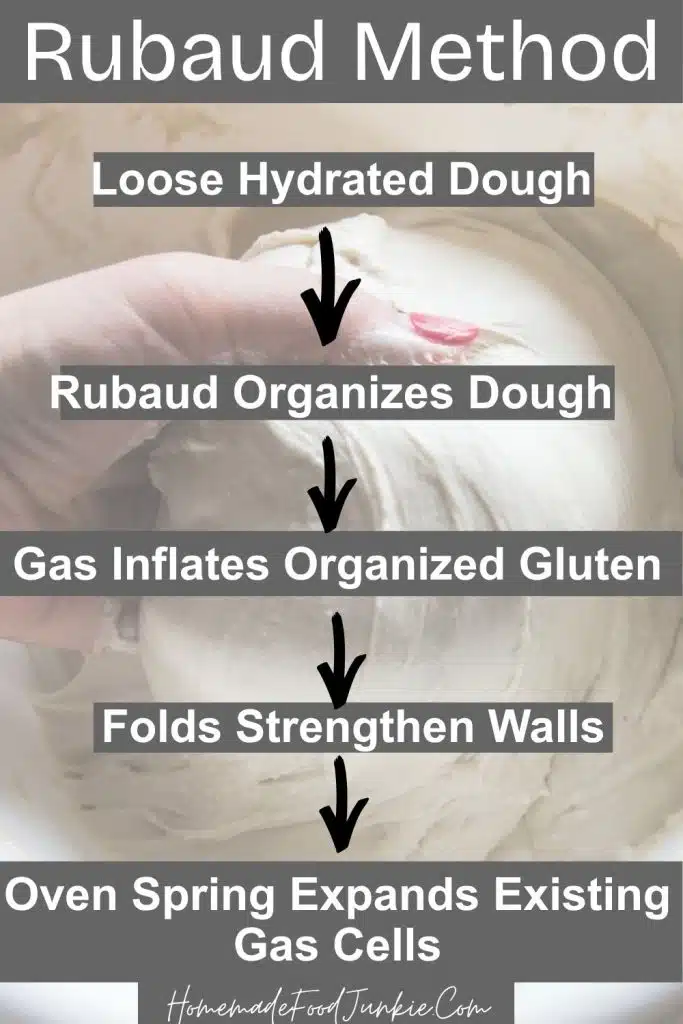
During the first hour or two of mixing, gluten is still developing into a continuous network. The more evenly that network is organized early in the process, the easier it becomes for the dough to trap fermentation gases, support its own weight, and respond to later strengthening techniques like stretch and folds or coil folds.
Think of the Rubaud Method as a building tool. rubaud mixing helps create the framework that will eventually support your loaf. During the initial mixing stage, the gluten network becomes more organized and connected. Later, stretch and folds or coil folds strengthen and refine that network as fermentation progresses.
As wild yeast and bacteria produce carbon dioxide, those gases inflate the tiny pockets within the gluten network. The dough expands because the elastic gluten stretches to contain the growing gas cells. This balance between a strong, extensible gluten network and steadily expanding fermentation gases gives the dough its volume, internal tension, and ultimately determines much of the loaf’s final crumb structure.
By the time the loaf reaches the oven, thousands of gas cells are already trapped within that gluten framework. During oven spring those cells expand rapidly before the gluten and starches set permanently, creating the height, openness, and texture of the finished loaf.
A better-organized gluten network doesn’t necessarily create more gas. Fermentation does that. But it may do a better job of supporting, distributing, and containing that gas as it accumulates.
That’s why many artisan bakers perform the Rubaud Method before bulk fermentation rather than waiting for folds alone to organize the dough.
How to Do The Rubaud Method
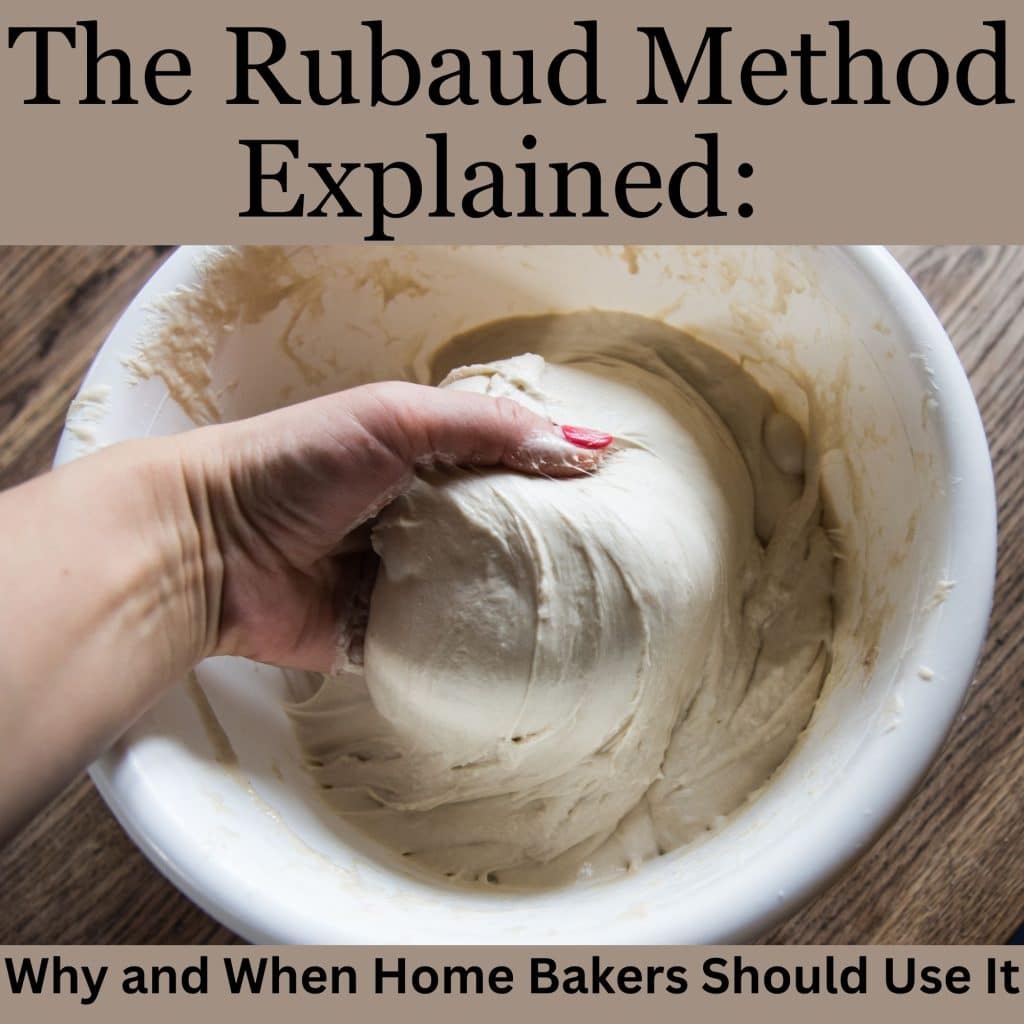
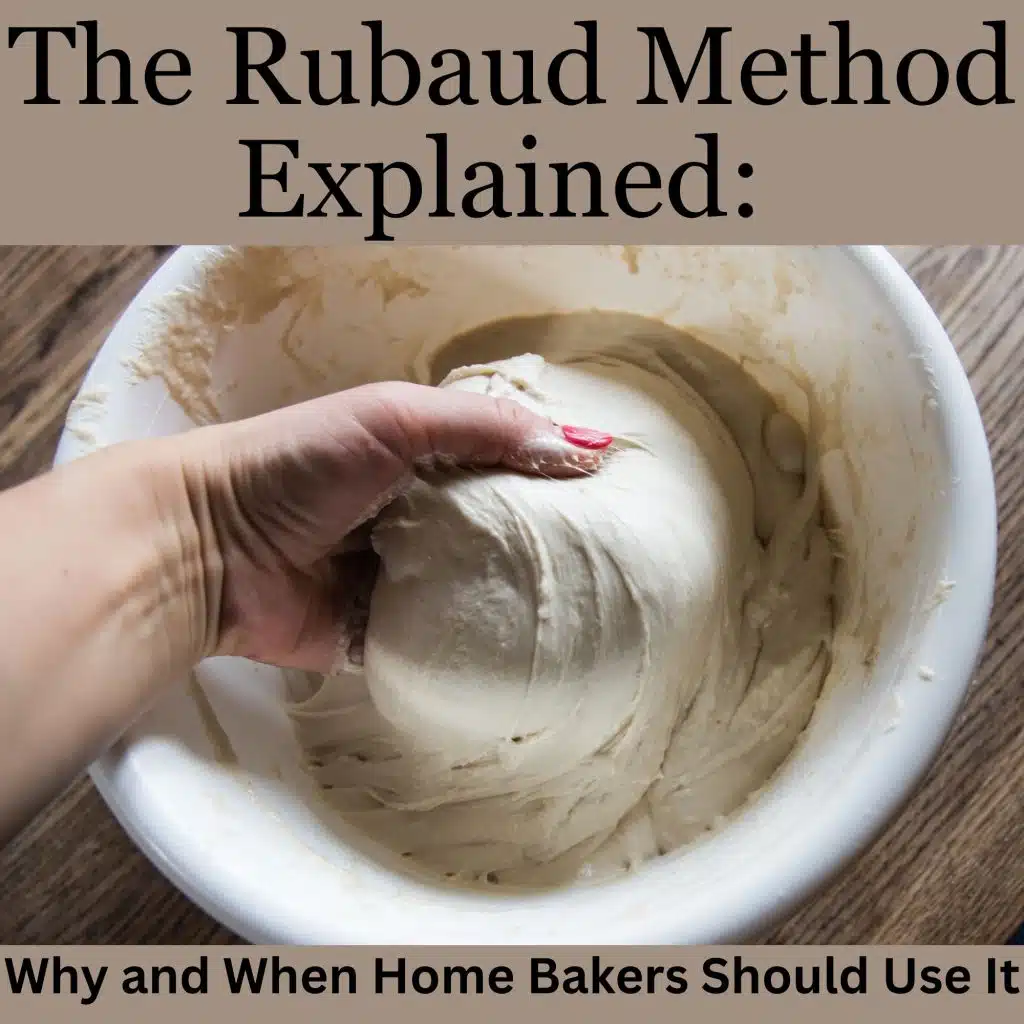
To do the rubaud method of mixing, The baker lifts the dough with an open hand, gently stretching the dough upward before allowing it to fold back into the bowl, as the bowl is continuously rotated. Rather than kneading on the countertop or a mechanical mixer, the dough is mixed and strengthened entirely in the bowl by hand, with a smooth, rhythmic up and down, twisting and stretching motion. Trevor Wilson compares the action to the gentle folding motion of a professional diving arm mixer.
Although the movement is simple, the purpose is more significant than it first appears. The goal isn’t simply to mix in new ingredients like the starter or salt—it’s to give the dough an organized foundation that can better withstand the fermentation, folding, shaping, and baking that follow.
For home bakers, that’s where the real value lies. Whether your goal is a more consistent crumb, stronger high-hydration dough, or simply better control throughout the baking process, the Rubaud Method is another practical tool that can help you build dough strength early and bake with greater confidence. You can Rubaud mix for whatever time the dough requires. this will change according to the needs and desires of you, the baker, and the dough goals you are working to achieve.
My Experience Using the Rubaud Method
When I first began experimenting with the Rubaud Method, my goal was simple: achieve a more open crumb. What I discovered was something I hadn’t expected. Rather than focusing on the finished loaf, I began noticing the dough became more cohesive and stronger earlier than my previous Tartine style doughs.
After a one-hour fermentolyse, followed by about two minutes of Rubaud mixing, my high-hydration white dough already felt noticeably more cohesive before the first coil fold. The dough handled differently than my previous batches. It felt more organized, responded better to each fold, and maintained its structure throughout a long cold bulk fermentation with less intervention.
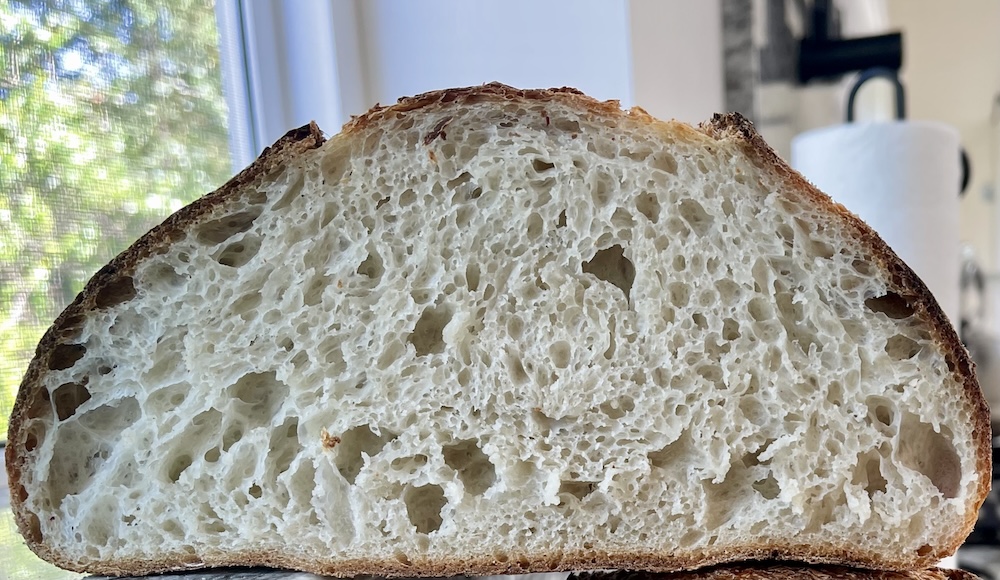
Those early improvements carried through to the finished bread. My loaves developed stronger shoulders, a creamier, more organized crumb, and fewer large, random tunnels. While crumb structure is influenced by many factors—including fermentation, flour choice, hydration, shaping, and baking—I found that improving the initial mixing stage made the entire process more predictable and easier to manage.
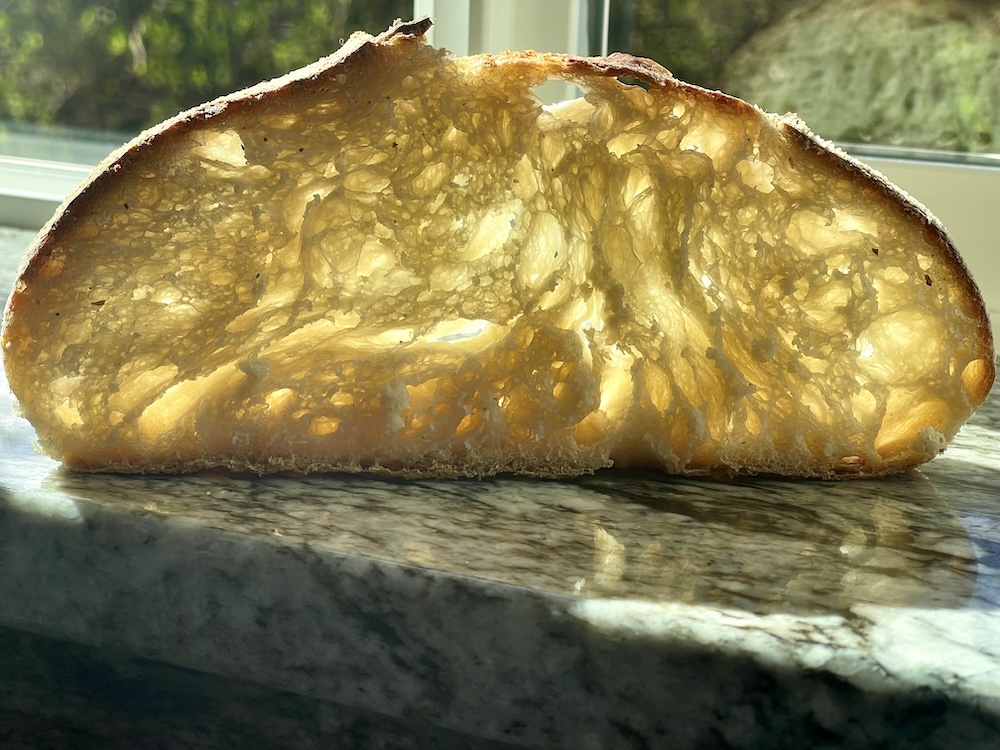
I noticed, even my tartine style breads had less tunneling and the loaves had better structure after using the rubaud mixing method. I use the Long cold bulk method of fermentation rather than counter bulking to the final bake, or a long cold proof after shape. My doughs, consequently, benefit from the early structure attained through the Rubaud method. I discovered fewer actual folds are necessary when I do the rubaud, so my whole process is simplified.
Trevor J. Wilson, who learned the technique as an apprentice to Gérard Rubaud, demonstrates the Rubaud Method in the video below. Watch the motion first, then continue reading to learn why modern artisan bakers use this technique and how to decide whether it belongs in your own baking process.
Where the Rubaud Method Fits in the Baking Process
So when is the best time to bring this method into your baking at home? After the initial mix and rest. So your dough is started and building the gluten but not the gas yet.
| Stage | Goal | Tool |
|---|---|---|
| Flour hydration | Let water hydrate proteins | Autolyse / Fermentolyse |
| Initial dough organization | Build early gluten strength | Rubaud Method |
| Increase hydration | Add reserved water | Bassinage |
| Continue strengthening | Build structure | Stretch & Fold |
| Preserve gas | Maintain structure | Coil Fold |
| Final shaping | Build surface tension | Shaping |
Why the Rubaud Method Follows the Resting Stage
Mixing bread dough isn’t simply about combining ingredients. The early stages of mixing are designed to hydrate the flour and begin developing gluten. Whether you use an autolyse, fermentolyse, or another resting method, time allows the flour to absorb water and the gluten-forming proteins to begin organizing naturally before intensive mixing takes place.
By the end of this resting period, the dough has already changed. Instead of a rough mixture of flour and water, it has become softer, more extensible, and capable of developing a stronger gluten network with relatively little effort.
This is where the Rubaud Method fits into the process. Rather than forcing dry flour and water together, the dough is already hydrated and ready to be organized. The rhythmic lifting and folding motion gently aligns and strengthens the developing gluten network before bulk fermentation continues.
This approach is especially useful with high-hydration doughs and formulas that use bassinage, where additional water is incorporated after the initial hydration. Instead of fighting a loose, sticky dough, the Rubaud Method helps transform it into a smoother, more cohesive dough that is easier to strengthen with later folds.
When I first tried the technique, one of the biggest surprises was how quickly the dough changed. Using the Rubaud Method transformed what began as a ropey, sticky dough into one that felt smoother, more cohesive, and noticeably more extensible after only a few minutes. If you have a difficult dough that needs more structure than folds can give it, Rubaud mixing may help.
Here is a Pinnable Graphic to help visualize how the Rubaud method affects your work flow as a baker.

When I Wouldn’t Use the Rubaud Method
The Rubaud Method is designed to organize and strengthen dough during the earliest stages of hand mixing. If that isn’t a challenge in your process, you may not gain much from adding another technique.
I generally wouldn’t use the Rubaud Method when:
- Mixing primarily with a stand mixer or other mechanical mixer. Most mixers already develop the dough during the initial mixing stage, making additional Rubaud mixing unnecessary.
- Working with lower-hydration doughs. Stiffer doughs are naturally easier to organize and strengthen. Because they already offer more resistance, conventional mixing or a few rounds of stretch and folds often provide all the development they need.
- Following a recipe with intensive mechanical mixing. Some formulas are intentionally mixed until the dough is nearly fully developed before fermentation begins. In those cases, the Rubaud Method offers little additional benefit.
Like any baking technique, the Rubaud Method isn’t something to use simply because it exists. It is one tool among many. Understanding what problem it solves helps you decide when it belongs in your own process.
Frequently Asked Question On The Rubaud Method
Does the Rubaud Method replace stretch and folds?
No. The Rubaud Method organizes and strengthens the dough early in the mixing stage. Stretch and folds or coil folds continue strengthening the gluten network during bulk fermentation while helping the dough manage the expanding fermentation gases.
How long should you use the Rubaud Method?
Most home bakers mix for one to five minutes, but there is no fixed time. Continue until the dough becomes smoother, more cohesive, and begins resisting the lifting motion. Every dough will benefit from more or less time, depending on the ingredients, recipes prices and bakers goals.
Can beginners use the Rubaud Method?
Yes. Although it takes a little practice, many beginners find it easier than kneading because everything happens inside the bowl. It is particularly helpful for wetter sourdoughs where traditional kneading becomes difficult. Learning what it can do for you as a baker will take experience.
Does the Rubaud Method create an open crumb?
Not by Itself. Open crumb depends on flour strength, fermentation, hydration, shaping, baking, and many other variables. The Rubaud Method simply helps organize the gluten network that supports those later stages.
The Rubaud Method doesn’t replace good fermentation or careful handling. It simply gives the dough a better starting point so every step that follows has a stronger foundation to build upon.
Continue Building Your Mixing Skills
Read all of the Articles in this list for More Information On Dough Structure building:
- Autolyse vs Fermentolyse
- Bassinage
- Stretch & Fold vs Coil Folds
- Dough Temperature
- Sourdough Mixing Methods: How Bakers Develop Dough Strength and StructureDough Structure
- What Is Dough Structure in Sourdough?
- How to Shape Sourdough Bread (Build Tension for Better Oven Spring and Crumb)
- How to Control Sourdough Crumb (Open vs Soft Sandwich Style)
- How to Get Crispy Sourdough Crust (Fix Soft, Hard, Thick, and Chewy Problems)