
Bassinage in Sourdough Bread: Why Bakers Add Water Later
As an Amazon Associate and member of other affiliate programs we earn a small commission from qualifying purchases through our affiliate link. For more information read our Entire Affiliate Disclosure.
Learn how the French bassinage technique helps develop stronger high-hydration dough, when it’s worth using, and why adding water later can sometimes produce better bread than adding it all at once.
If you’ve spent much time reading artisan sourdough recipes, you’ve probably come across the term bassinage. At first glance, the technique seems almost backwards. Why would you intentionally leave water out of your dough, only to add it back later?
After all, isn’t hydration simply a matter of mixing flour and water together?
As it turns out, hydration is much more than a percentage on a recipe. It’s an ongoing process that continues from the moment flour first meets water until your dough is fully developed.
That’s where bassinage comes in.

Rather than adding all of the water at the beginning of mixing, bassinage intentionally reserves a small portion of the recipe’s water until after the dough has gone through the initial mix and resting phase. The reserved water is then worked into the dough, allowing bakers to increase hydration while maintaining dough strength and handling characteristics.
Professional bakers have used this French mixing technique for decades, particularly when producing high-hydration artisan breads. But bassinage isn’t simply about adding water later.
Understanding why it works also sheds light on several other sourdough techniques, including autolyse, fermentolyse, gluten development, and dough hydration. Once you begin thinking of hydration as a process rather than a single mixing step, many pieces of bread dough development start making sense.
In this guide, we’ll explore both the traditional purpose of bassinage and how modern home bakers can use it as another tool for building stronger, more manageable sourdough dough.
Key Takeaways
- Bassinage is a French technique that reserves part of the water until after initial gluten development.
- It helps manage very wet doughs and provides flexibility with different flours.
- The dough may temporarily become sticky and ropey after the reserved water is added—this is usually a normal transition.
- Professional bakers often rely on continued mechanical mixing to rebuild the gluten network. Home bakers can often achieve similar results with techniques like the Rubaud method or an appropriate stand mixer.
- Bassinage isn’t required for every loaf, but understanding it gives you another way to control dough development.
New to sourdough? Start with our Sourdough Baking Hub for a complete overview of dough development and fermentation.
What Is Bassinage?
Bassinage (pronounced bah-see-NAHZH) is a French bread-making technique in which a portion of the recipe’s water is held back during the initial mix and added later, after the dough has already begun developing.
Instead of combining all of the flour and water at once, the baker intentionally reserves a small amount—often between 2 and 10 percent of the total water—until later in the mixing process.
The reserved water is gradually incorporated through continued mixing, allowing the developing gluten network to expand as the dough reaches its final hydration.
Although the finished dough reaches the same final hydration percentage as the original formula, the path it takes to get there is different.
That difference in timing is what makes bassinage unique. The dough eventually reaches the same final hydration as it would if all of the water had been added at the beginning.
Is Bassinage the Same as Double Hydration?
You may also hear bassinage described as double hydration. The two terms are closely related, but they emphasize different aspects of the process.
Bassinage is the traditional French baking term for reserving a portion of the formula’s water and adding it later during mixing.
Double hydration is a more descriptive term often used by artisan bakers and bread educators. It highlights the idea that the dough receives its water in two stages rather than all at once.
In practice, many bakers use the terms interchangeably because both describe the same general specialized technique.
Some instructors reserve the term double hydration for doughs where a significant amount of water is added during the second stage, while bassinage may refer to holding back only a small percentage of the total water. In everyday baking, however, the distinction is rarely important.
The goal is the same: develop the dough first, then gradually incorporate the remaining water.
The Moment Bassinage Looks Like a Bad Idea
The first time I tried bassinage, I was convinced I had ruined the dough.
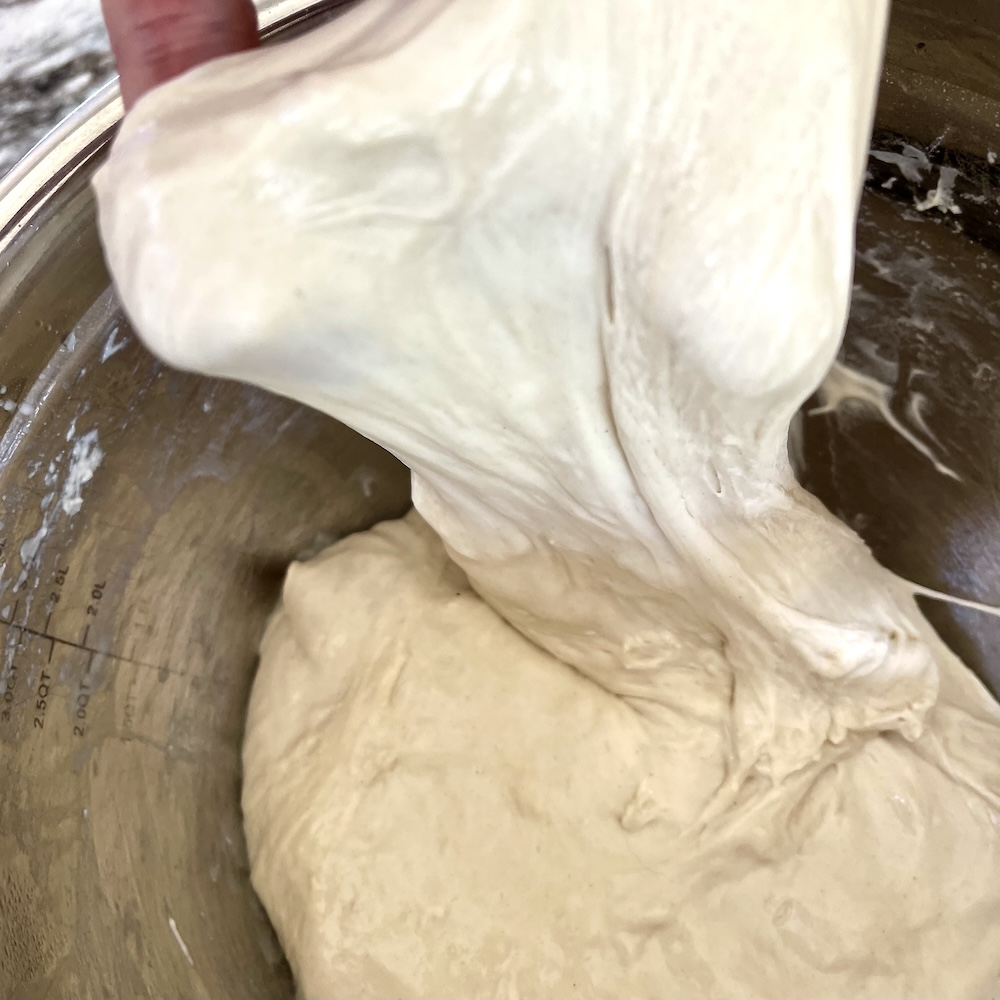
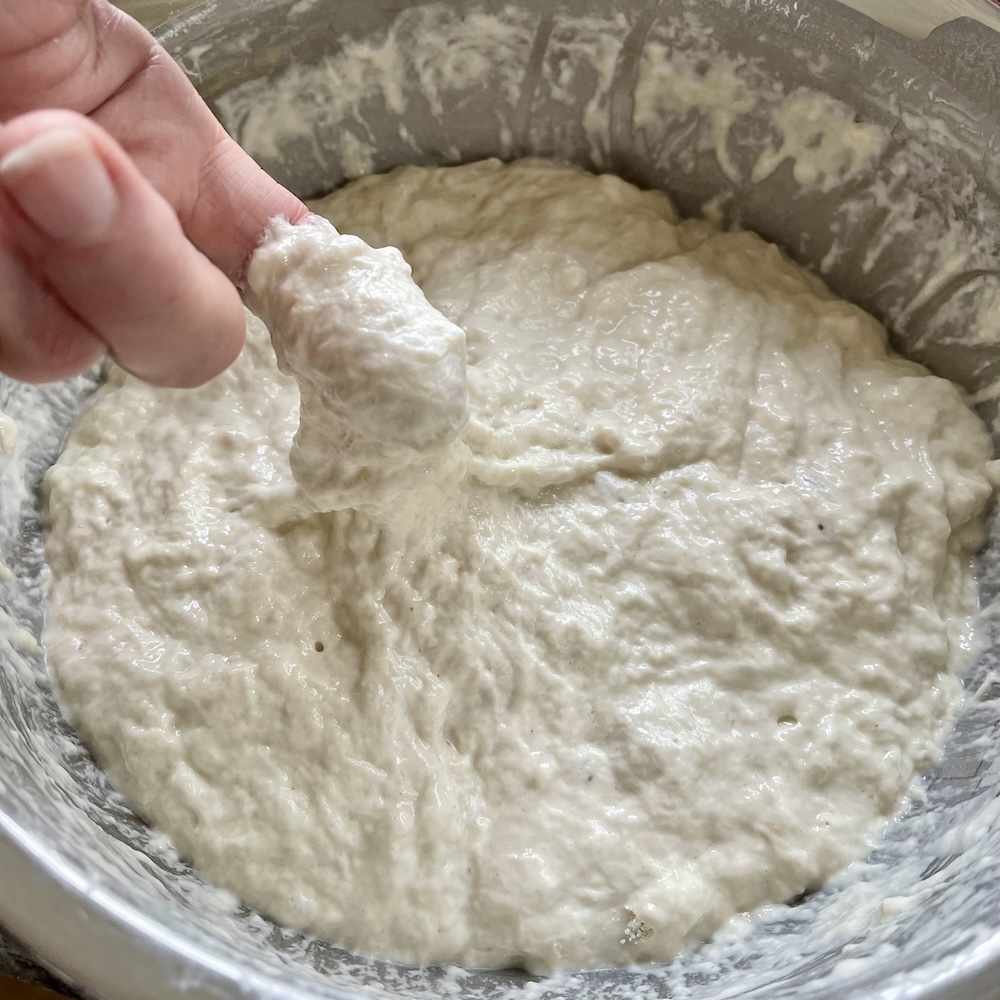
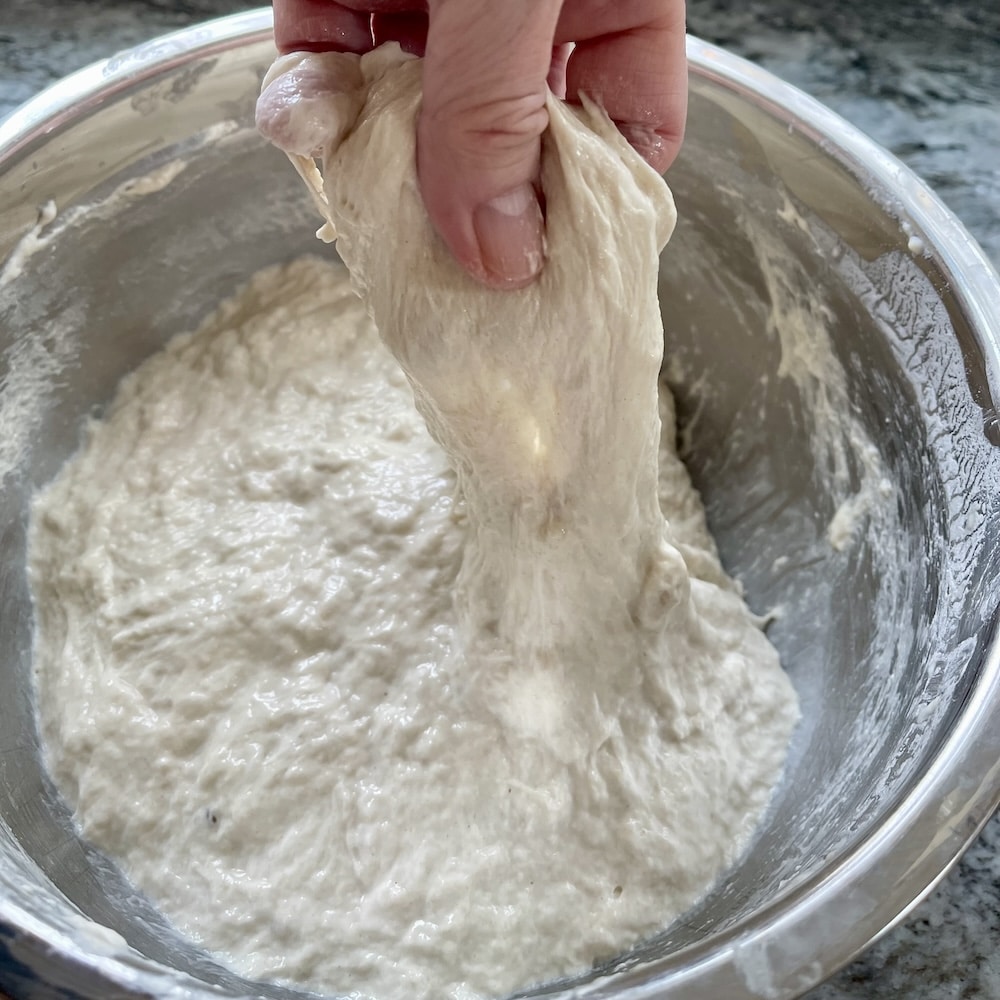
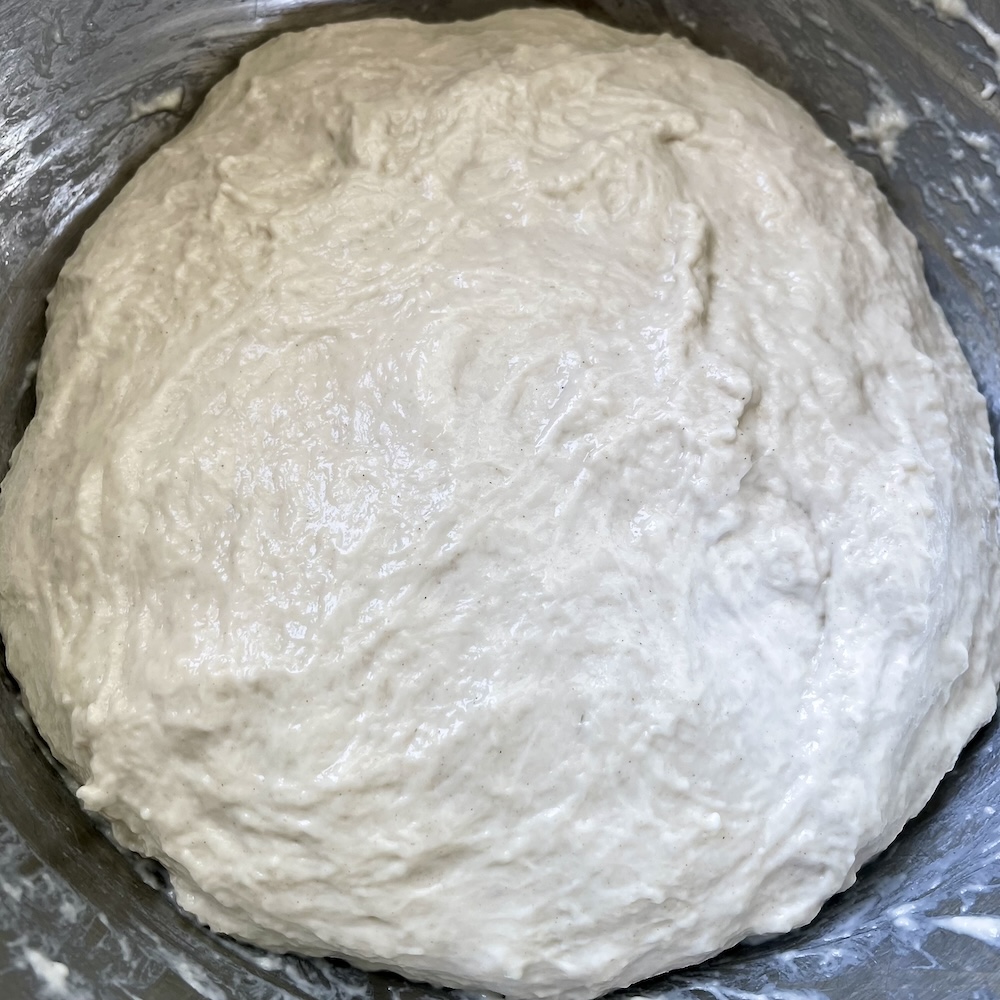
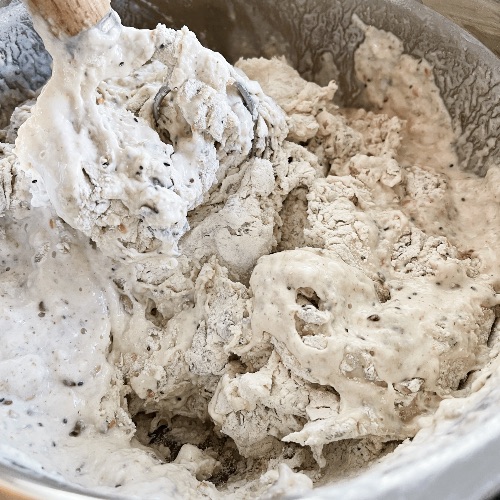
After building what felt like a strong dough, I added the reserved water. Within seconds the dough seemed to fall apart. It became sticky, stringy, and almost impossible to handle. Instead of a smooth ball, I had a wet, ropy mass that clung to everything it touched.
If you’ve experienced something similar, you understand why that awkward stage is one of the reasons many home bakers abandon bassinage after their first attempt.
The surprising part?
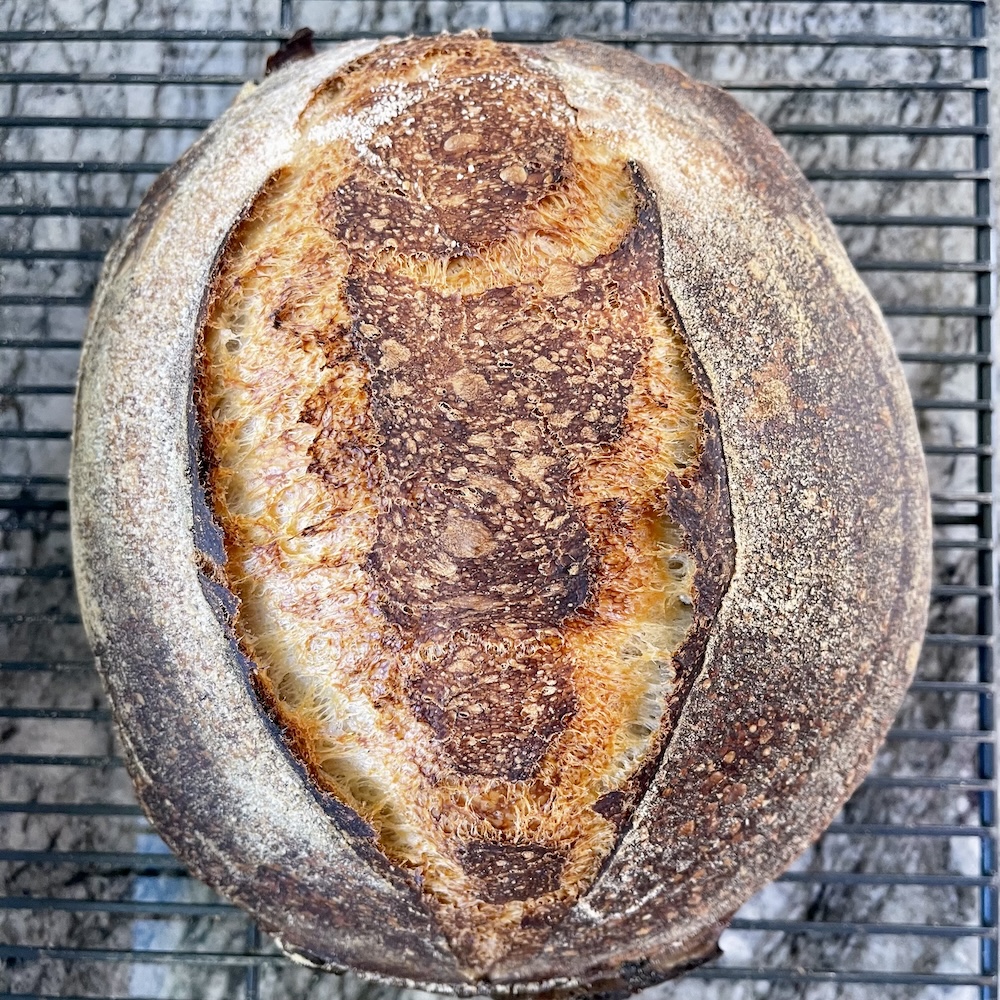
That “failure” is often a normal part of the process.
Understanding why the dough behaves this way—and how professional bakers recover from it—is the key to making bassinage work.
If the technique creates such an awkward stage, why have professional bakers, over centuries, used it for decades? Here is why.
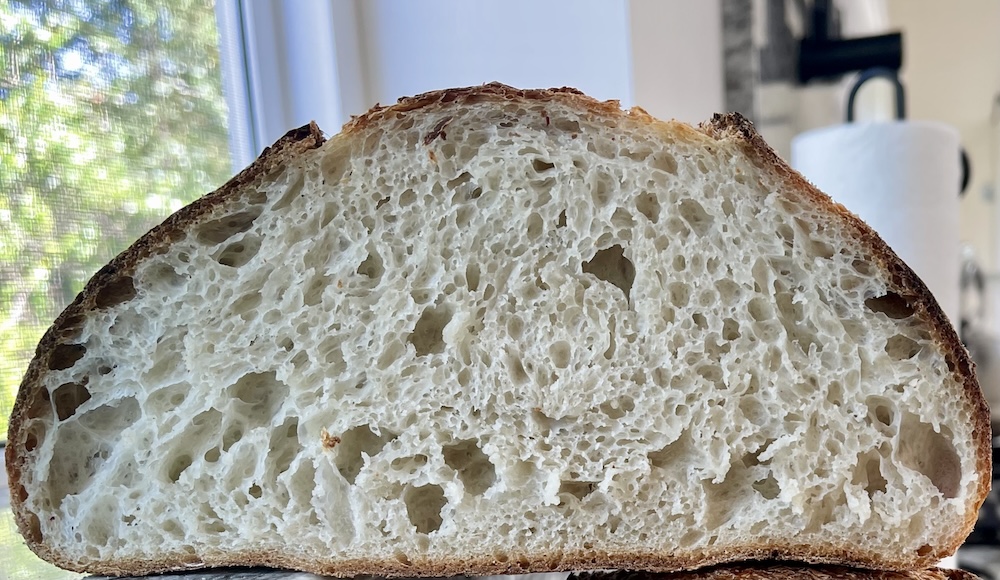
A Brief History of Bassinage
Bread has been made with natural fermentation for thousands of years, long before recipes were written or baking techniques were given formal names. The living history of sourdough continues today through efforts such as the Puratos Sourdough Library in Belgium, which preserves historic sourdough cultures from around the world for future generations
Early bakers almost certainly adjusted water during dough building as flour, weather, and grain quality changed from one batch to the next. Over generations, these practical observations evolved into repeatable techniques. Within the French artisan baking tradition, one of those methods became known as bassinage…
The technique was eventually incorporated into scaled baking because it solved practical problems encountered during commercial production.
Large batches of high-hydration dough can be difficult to develop efficiently if all of the water is added immediately. By reserving a small portion of the water, bakers allowed their mixers to establish gluten strength first before gradually incorporating the remaining water.
Why Professional Bakers Continued Using Bassinage:
- Not every bag of flour behaves exactly the same.
- Protein levels vary.
- Whole grain flours absorb moisture differently than white flour.
- Freshly milled flour is often thirstier than aged flour.
- Even seasonal humidity can influence how much water a dough ultimately needs.
Holding back a small amount of water gave bakers flexibility. After observing how the dough behaved during the initial mix, they could decide whether the flour would benefit from all of the reserved water or whether the dough was already sufficiently hydrated.
Today, home bakers often encounter bassinage while searching for techniques to achieve more open crumbs or higher hydration artisan loaves. Those are certainly good reasons to learn it.
In my experience as a home baker, however, we’ll take a slightly broader view.
Rather than thinking of bassinage as simply “adding water later,” we’ll use it to better understand how flour hydrates over time and why the timing of hydration influences dough development throughout the entire mixing process. Bassinage can provide the home baker with a valuable baking lever to pull when needed.
Hydration Is More Than a Percentage
Professional bakers refined bassinage because it helped solve a practical mixing problem.
When most bakers hear the word hydration, they immediately think of math. A dough made with 750 grams of water and 1,000 grams of flour is a 75% hydration dough. That’s correct—but it only tells part of the story.
Hydration percentage tells us how much water is in the dough. It doesn’t tell us how that water is absorbed. This is why that matters:
The moment flour and water are combined, hydration begins—but it does not end.
- Water gradually migrates into starch granules.
- Proteins begin aligning to form gluten.
- Bran particles slowly soften.
- Enzymes become active.
These changes continue for minutes and even hours after the initial mix.
That’s why dough often feels noticeably different after resting.
A shaggy, rough mixture that barely held together twenty or thirty minutes earlier may become smooth, extensible, and easier to handle without any additional mixing.
Understanding this concept helps explain why dough mixing methods, like autolyse, saltolyse and fermentolyse, are so effective.
They aren’t just resting periods. They’re hydration periods.
How Bassinage Fits Into the Hydration Process
Once you begin thinking of hydration as an ongoing process, bassinage becomes much easier to understand.
Professional bakeries usually use commercial mixers to integrate bassinage water into the mixed and rested dough.
Instead of giving the flour all of its water immediately, bassinage changes when some of that water is introduced.
The flour first begins hydrating with a slightly lower amount of water, allowing gluten to organize into an initial network while the dough remains easier to mix and control.
Only after that foundation has been established is the remaining water gradually incorporated.
Their mixers continue working until the dough gluten reorganizes itself. Home bakers often don’t have a professional mixer designed for this.
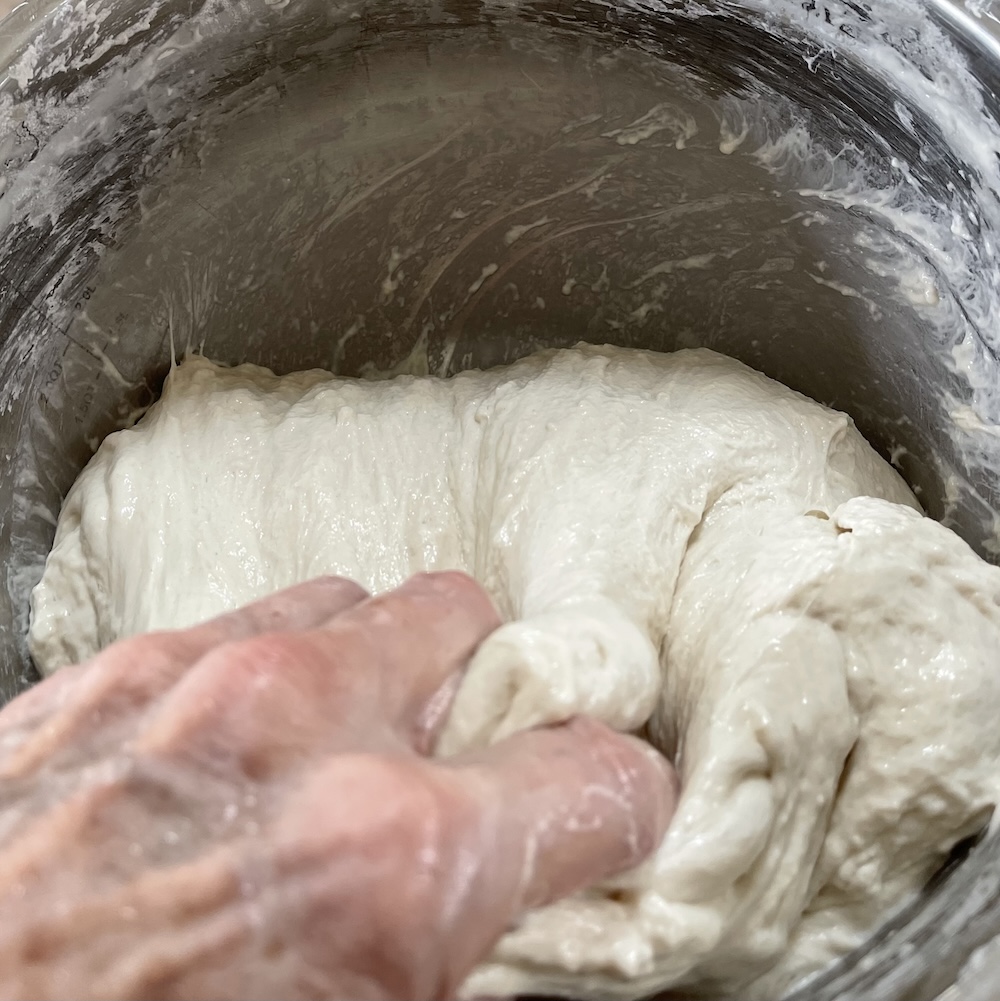
That’s where I discovered something that completely changed how I approach bassinage.
Instead of waiting through several rounds of coil folds for the dough to recover, I began incorporating the reserved water with several minutes of Rubaud mixing. The dough became cohesive much sooner while still reaching the same final hydration. This made the dough MUCH easier to handle and quickly built a nice dough structure. It also reduced the number of folds for many of my bakes.
With bassinage, the dough eventually reaches exactly the same hydration as the original recipe—but it arrives there in stages.
Dough hydration occurs in three phases:
- Initial hydration begins the moment flour first meets water during mixing.
- Passive hydration continues while the dough rests during an autolyse, saltolyse or fermentolyse as flour particles continue absorbing moisture.
- Active hydration occurs when reserved water is intentionally incorporated through bassinage after gluten has already begun developing.
Viewed this way, bassinage isn’t interrupting hydration. It’s managing hydration. That small shift in perspective helps connect several important sourdough techniques that are often taught separately.
Autolyse, fermentolyse, and bassinage all influence the same process. They simply do it at different points during dough development.
Is Bassinage Necessary for Every Loaf?
No. Bassinage is a valuable technique, but it isn’t one that every sourdough recipe requires.
Many excellent breads are mixed successfully by adding all of the water at the beginning of the mix. If your dough develops good strength, handles well, and produces the crumb you’re looking for, there may be little advantage to changing your process.
Where bassinage becomes useful is when the dough presents a problem to solve. High-hydration formulas, unfamiliar flours, thirsty whole grains, or recipes that are difficult to organize during mixing are all situations where reserving a portion of the water can give the baker greater control.
Think of bassinage as another option in your baking toolbox—one that becomes increasingly useful as you begin adapting recipes instead of simply following them.
When You Should Consider Using Bassinage
As your baking experience grows, you’ll begin to recognize situations where reserving a portion of the water gives you greater control over dough development. Think of bassinage as another baker’s lever—a tool you can pull when the dough or recipe suggests it.
Here are some signs that bassinage may be worth considering.
High Hydration Dough:
- As hydration increases, dough becomes progressively more difficult to organize during the initial mix.
- Rather than fighting a very wet dough from the beginning, you can build an initial gluten network first before asking the dough to absorb the final portion of water.
- The higher the hydration, the more useful this approach often becomes.
Thirsty Flours:
- Whole wheat, rye, freshly milled flour, and some high-protein bread flours continue absorbing water long after the initial mix.
- Holding back a small amount of water lets you observe how the dough develops before deciding whether it truly needs every gram of the planned hydration.
Trying a New or Different Flour:
- Even two bread flours with similar protein percentages can behave differently.
- Rather than committing to full hydration immediately, reserve a small percentage of the water until you understand how that particular flour is responding.
- Professional bakers do this regularly because flour naturally varies from lot to lot.
Dough Develops Slowly During Mixing:
- If your dough remains slack and disorganized despite a good autolyse or fermentolyse, it may benefit from developing some gluten strength before reaching its final hydration. Try using bassinage.
- Bassinage gives the dough an opportunity to organize first before stretching that gluten network with additional water.
Control Over Dough Development:
- As you move beyond beginner recipes, you’ll discover that experienced bakers rarely think in terms of rigid instructions.
- Instead, they learn to observe the dough, feel the dough and consider all the variables involved; then make adjustments as they mix.
- Bassinage gives you one more opportunity to respond to what the dough is telling you rather than simply following the recipe exactly.
You’re Learning to Read Dough:
- All Recipes are written for an average flour, an average kitchen, and an average baker.
- Your dough is none of those things, so you may need to adjust for conditions.
- The longer you bake, the more you’ll recognize that every batch behaves a little differently, due to the variables of each particular bake. That’s what keeps it fun. 🙂
Learning when to use bassinage marks an important shift in your baking. Instead of asking, “What does the recipe say?” you begin asking, “What does this dough need?”
Final Thoughts:
Bassinage is more than simply adding water later in the mixing process. It’s a practical technique that gives bakers another way to manage dough development, particularly when working with higher-hydration doughs or flours that absorb water differently.
For many recipes, you’ll never need it. Plenty of excellent sourdough breads are mixed successfully with all of the water added from the beginning.
But as your baking experience grows, you’ll discover that recipes are only the starting point. Different flours, changing seasons and other variables, along with your individual baking goals sometimes call for small adjustments. Bassinage is one of those tools that gives you that flexibility.
Whether you use it to make a high-hydration dough easier to develop, to evaluate an unfamiliar flour before committing to the final hydration, or to build strength before incorporating additional water, the principle remains the same.
The goal is to help the dough develop enough strength to successfully absorb that water.
Like every sourdough technique, bassinage is simply another tool in a baker’s toolbox. The value is in recognizing when using it can solve a problem.
Frequently Asked Questions About Bassinage
What does bassinage mean?
Bassinage (pronounced bah-see-NAHZH) is a French bread-making term that refers to reserving a portion of a recipe’s water and adding it later during the mixing process instead of incorporating all the water at the beginning.
How much water should I hold back?
Generally 2–10% of the total formula water, depending on the recipe and flour.
Can beginners use bassinage?
Yes, but it’s easier once you’re comfortable recognizing dough development. Beginners may want to practice with small amounts of reserved water first.
Do I need bassinage for every sourdough recipe?
No. Many excellent loaves are made by adding all the water at once. Bassinage is a technique to use when it offers an advantage, not a requirement.
Can I use bassinage with a stand mixer?
Absolutely. In fact, that’s how many professional bakeries traditionally incorporate the reserved water.
Can I use bassinage with hand mixing?
Yes. Techniques like the Rubaud method, slap-and-fold, or patient stretch-and-folds can all work, although they produce slightly different dough development.
Does bassinage increase the hydration of my recipe?
No. It doesn’t change the total hydration unless you intentionally add more water than the recipe calls for. Bassinage only changes when that water is incorporated.
When should I consider using bassinage?
When working above roughly 80% hydration, with fresh-milled or whole-grain flours, or whenever you want flexibility to adjust hydration after seeing how the dough behaves.
Can I skip the last portion of water if my dough already feels wet enough?
Yes. That’s actually one of the practical advantages of holding water back. If your flour doesn’t need it, you don’t have to force the dough to absorb it.
Continue Building Your Dough Development Skills
If you’d like to explore the techniques that work alongside bassinage, these guides are a great next step:
- Hydration in Sourdough Bread – Learn how hydration affects dough handling, crumb, and fermentation.
- Autolyse vs. Fermentolyse vs. Saltolyse – Understand how resting dough improves hydration and gluten development.
- Stretch and Fold vs. Coil Folds – Learn how folds continue building strength after mixing.
- How Dough Temperature Affects Sourdough Bread – See how temperature influences dough development from mixing through fermentation.
- Sourdough Dough Structure – Discover how gluten development and fermentation work together to create an open, well-supported crumb.
If you have more general questions or Sourdough Baking problems, read our Sourdough TroubleShooting Guide.
More Useful Sourdough Baking Guides:
- Sourdough Mixing Methods: How Bakers Develop Dough Strength and Structure
- What Is Dough Structure in Sourdough?
- How to Get Crispy Sourdough Crust (Fix Soft, Hard, Thick, and Chewy Problems)
- How to Control Sourdough Crumb (Open vs Soft Sandwich Style)
- How to Shape Sourdough Bread (Build Tension for Better Oven Spring and Crumb)