
Sourdough Dough Temperature: How Bakers Use Temperature to Build Better Bread
As an Amazon Associate and member of other affiliate programs we earn a small commission from qualifying purchases through our affiliate link. For more information read our Entire Affiliate Disclosure.
Sourdough dough temperature is one of the more important control levers in bread making. While many home bakers pay close attention to their kitchen temperature, professional bakers measure the temperature of the dough itself because that’s where fermentation actually happens. Learning how dough temperature influences every stage of development gives you another powerful way to build the bread you want to bake.
Sourdough dough temperature affects fermentation, dough strength, flavor, and proofing. How we use dough temperature as a baker’s control lever helps us make our best breads.
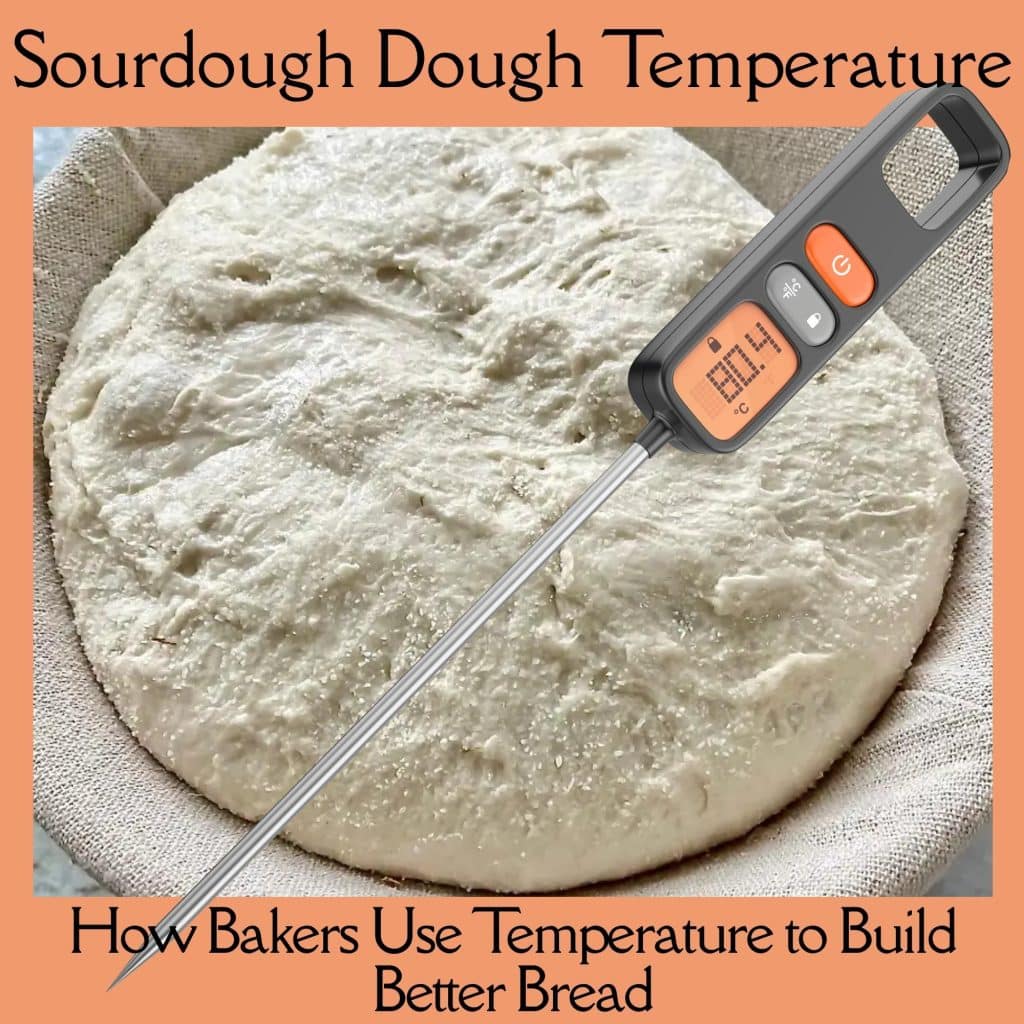
How Sourdough Dough Temperature Affects Sourdough Bread
There are countless ways to make excellent sourdough bread. Experienced bakers don’t follow a single “best” method—they learn how different variables affect the dough so they can choose the process that produces the bread they want. Sourdough doesn’t ferment according to a clock. It ferments according to the conditions and variables the microorganisms you inoculate it with experience.
Dough temperature is one of the most powerful of those variables. like hydration, flour choice, or mixing methods, temperature influences every stage of bread making, from the moment flour meets water until the loaf goes into the oven. However, unlike those other recipe elements, Temperature can be manipulated WITHIN the recipe process.
Learning how to use temperature intentionally gives you a powerful way to guide fermentation, dough strength, flavor, and ultimately the character of your finished bread.
Temperature affects every stage of fermentation—from starter activity and bulk fermentation to final proof and flavor development.
Learning to manage sourdough dough temperature helps you predict fermentation, improve consistency, and better understand why recipes behave differently from one kitchen to another.
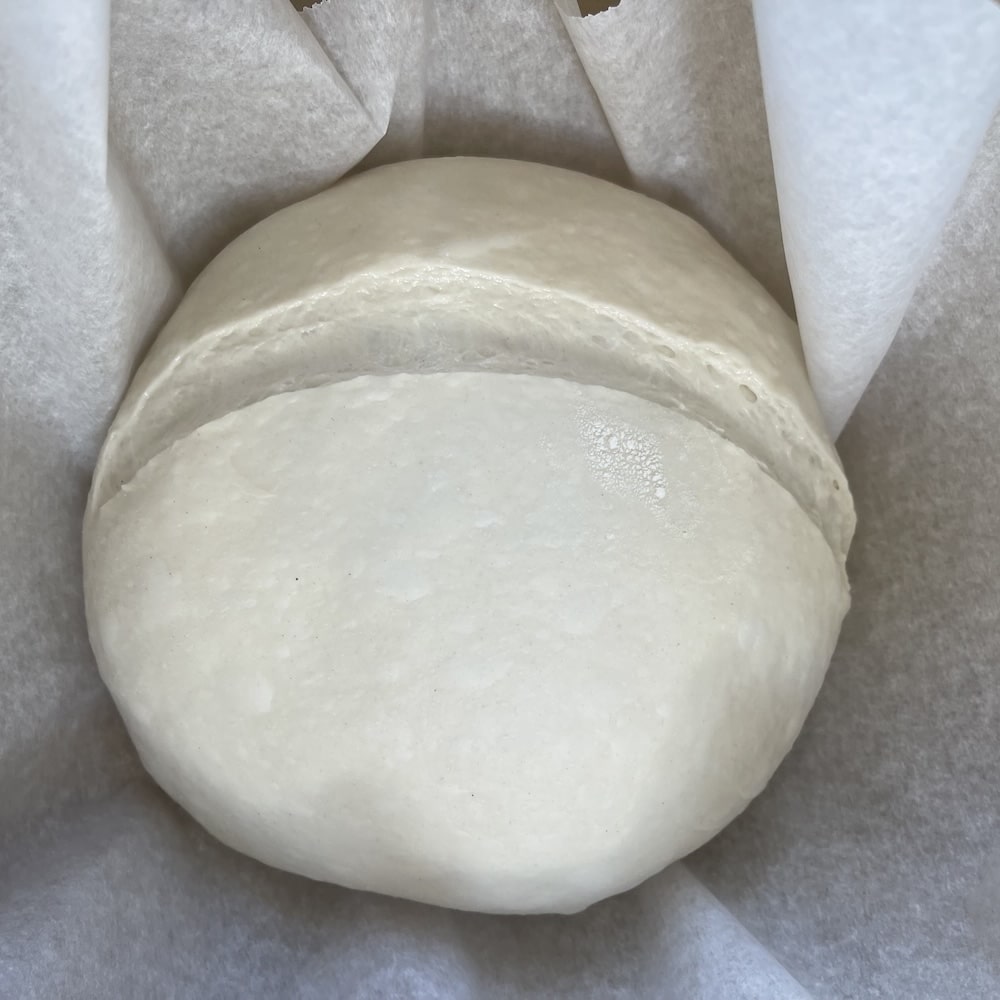
What Is Sourdough Dough Temperature?
When discussing or considering a sourdough recipe, we are discussing a lengthy process of dough building. Each part if the process is impacted greatly by temperature. Keep in mind, kitchen temperature is important, but not the entire picture.
Professional bakers monitor internal dough temperature with a baking probe as they go through the process. This is because the microorganisms bakers are managing don’t live in your kitchen. They live in the dough.
Dough Is a Living System
Sourdough dough temperature is one of the baker’s creative controls. By warming or cooling the dough at different stages, a baker influences how fast the dough develops, how much flavor and acidity the dough builds, how extensible or strong the dough feels, and how much time they have to shape it before the dough degrades. And, of course, proper baking temperatures finish the loaf, during steam baking, using oven temperature strategies as well.
The Baker’s Control Panel
Think of your Sourdough bread recipe as a control panel with lots of levers. There is no single “correct” dough temperature. There is only the temperature that helps this dough become the bread you want.
Once you learn how temperature affects the dough building at each stage of development and what that gives you at the end, you have a lot more control over the finished bake.
| Control | Primary Influence |
|---|---|
| Flour | Flavor, strength, nutrition |
| Hydration | Extensibility, crumb, handling |
| Mixing | Initial gluten development |
| Folds | Strength and organization |
| Starter percentage | Fermentation speed |
| Salt | Gluten behavior and fermentation rate |
| Temperature | The rate at which every other process unfolds |
THIS is why dough temperature is a very important variable that home bakers rarely consider. Temperature controls the pace of development of EACH and EVERY step of building your dough. It impacts flavor, extensibility, gluten and gas development, oven spring and loaf structure. It affects it all!
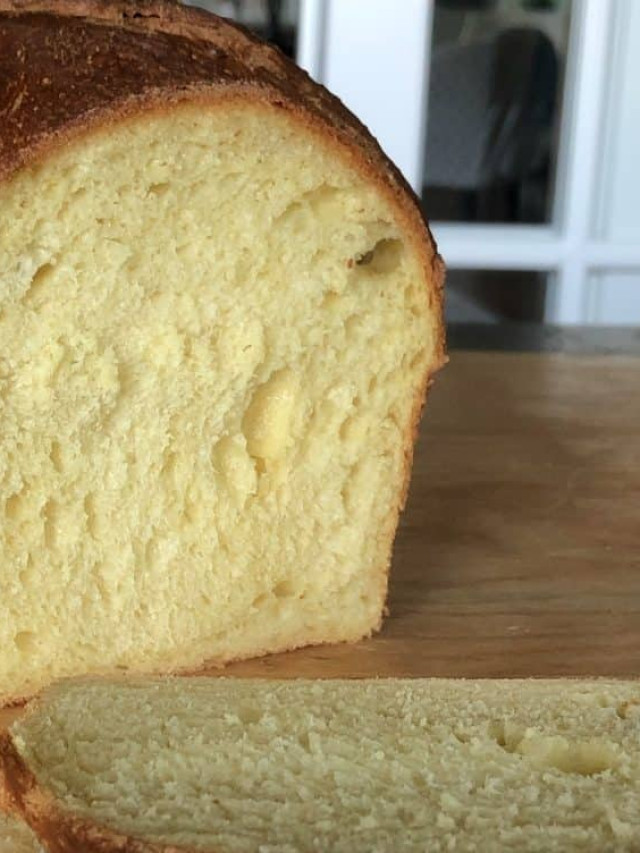
Temperature is the baker’s speed and outcome control. It lets you manage the rate of change in the dough so you can encourage the qualities you want: a mild soft sandwich loaf, a stronger artisan loaf, a longer fermented flavorful bread, or a high-hydration open crumb dough that stays manageable long enough to shape.
Why Your Sourdough Has A Mind Of It’s Own
Recipes don’t tell you when your dough will be ready. They tell you when the author’s dough was ready.
That’s frustrating for recipe followers. Sourdough bakers need to learn how to read the dough and adjust as necessary to complete the recipe vision they have. This is why:
The author’s dough existed under a unique set of conditions:
- Kitchen temperature
- Dough temperature
- Starter strength
- Starter percentage
- Hydration
- Flour type
- Whole grain percentage
- Mixing method
- Dough strength
Change any one of those and the dough clock changes. These elements and variables all work together. While the clock is ticking, The dough is simultaneously going through all of this:
| Process | What is happening |
|---|---|
| Gluten develops | Mixing and folds organize structure. |
| Enzymes activate | Flour begins changing internally. |
| Yeast produces CO₂ | Dough inflates. |
| Bacteria produce acids | Flavor develops. |
| Gluten slowly softens | Dough gradually becomes more extensible. |
Temperature is a largely responsible for the speed of your dough clock. That is WHY temperature matters.
Temperature Changes Every Bread-Making Process
It’s easy to think of dough temperature as simply something that speeds up or slows down fermentation. In reality, temperature influences nearly every stage of bread making. It changes the pace at which the dough develops—from hydration and gluten formation to fermentation, flavor development, dough strength, and even how long you have to shape and bake the loaf.
Temperature isn’t just speeding up one process. It’s influencing all of them, sometimes together and sometimes independently, depending on the workflow you’ve chosen.
That means temperature becomes another tool you can use to guide your bread toward a specific outcome.
Baking Is a System of Interacting Variables
One of the central ideas throughout our sourdough guides is that there is no single “best” way to make bread. There are many excellent methods because each one changes the dough in a different way.
Experienced bakers don’t memorize one perfect process. They learn how each variable influences the dough, then combine and use those variables to create the bread they want to bake.
Think of these as the baker’s control panel:
- Hydration changes dough extensibility, handling, and crumb structure.
- Mixing methods control initial gluten development and dough strength.
- Autolyse, Saltolyse, and Fermentolyse influence hydration, gluten development, enzyme activity, and fermentation.
- Folding methods strengthen and organize the gluten network.
- Cold bulk and cold proof slow the pace of fermentation while extending flavor development and increasing scheduling flexibility.
Each of these techniques acts as a tool the baker can adjust.
Temperature is different.
Temperature doesn’t simply become another control. It changes how every one of the other controls behaves.
An 85% hydration dough made with 40% fresh-milled whole wheat at a dough temperature of 80°F will develop very differently than that same formula mixed to 70°F. The recipe hasn’t changed—but nearly every process inside the dough has.
That’s why experienced bakers think about dough as a living system rather than a list of separate techniques.
Once you begin understanding how hydration, flour, mixing, inoculation, strength building, and temperature interact, troubleshooting becomes much easier. Instead of memorizing target times or temperatures, you begin making intentional adjustments that help produce the loaf you want.
Dough Temperature vs. Kitchen Temperature
Sourdough baking requires us, as bakers, to learn the difference between kitchen temperature and dough temperature.
The microorganisms responsible for fermentation don’t experience the temperature of your kitchen—they experience the temperature inside the dough.
Because dough contains a large amount of water and flour, it has considerable thermal mass. That means it changes temperature much more slowly than the air around it.
Imagine placing a cold bowl of dough into an 80°F kitchen. The room becomes warm immediately, but the dough may take an hour or more to warm significantly. The center of the dough may take much longer to warm, depending on how large the dough mass is. During that time, fermentation gradually accelerates as the dough itself warms, from the outside in.
The opposite is also true. A warm dough placed into a cooler room or fridge doesn’t suddenly stop fermenting. It continues developing while the dough slowly cools.
This means our sourdough dough temperature is unequal in various parts of the dough, as we work with it after mix and when we let it sit, since kitchen temps may be changing throughout bulk rise.
How you work your dough affects the dough temperature hot spots and fermentation may not be completely equal through the dough at bench or shape.
Understanding this delayed response explains why recipes don’t always behave the way we expect. Dough density impacts how temperatures permeate the dough structure as it is building. That’s the take away here.
Why Warm Water Changes Everything
Adjusting the dough mixing water temperature is one of the easiest ways to influence dough temperature initially.
Warm water doesn’t magically make better bread. What it does is change the entire dough’s starting temperature, allowing the biological and enzymatic processes to begin working sooner, throughout the dough.
Cooler water delays those same processes, giving the baker more time to build strength, develop flavor, or fit the dough into a preferred schedule.
Professional bakers adjust water temperature every day because they know the finished dough temperature influences everything that follows.
When Variables Begin Stacking
Most dough variables don’t work in isolation. They build on one another.
One accelerator is usually manageable.
Several accelerators working together create a completely different dough.
| Variable | How It Influences the Dough |
|---|---|
| Warm dough temperature | Increases the pace of every biological process. |
| High hydration | Creates a softer, more extensible dough that changes more quickly. |
| Whole grain or fresh-milled flour | Provides more nutrients and enzyme activity for fermentation. |
| Strong, active starter | Produces gas more rapidly and shortens fermentation. |
| Higher inoculation (more starter) | Increases the initial microbial population, speeding fermentation. |
| Long fermentolyse in a warm kitchen | Advances hydration, enzyme activity, and fermentation simultaneously. |
A dough mixed at 85% hydration, containing 40% fresh-milled whole wheat, using a strong starter, and beginning at 80°F is experiencing several accelerators at once. That dough will not behave like the same recipe mixed with cool water in a 68°F kitchen.
Understanding how these variables stack—and learning when to encourage or moderate them—is one of the biggest steps from simply following recipes to baking with confidence.
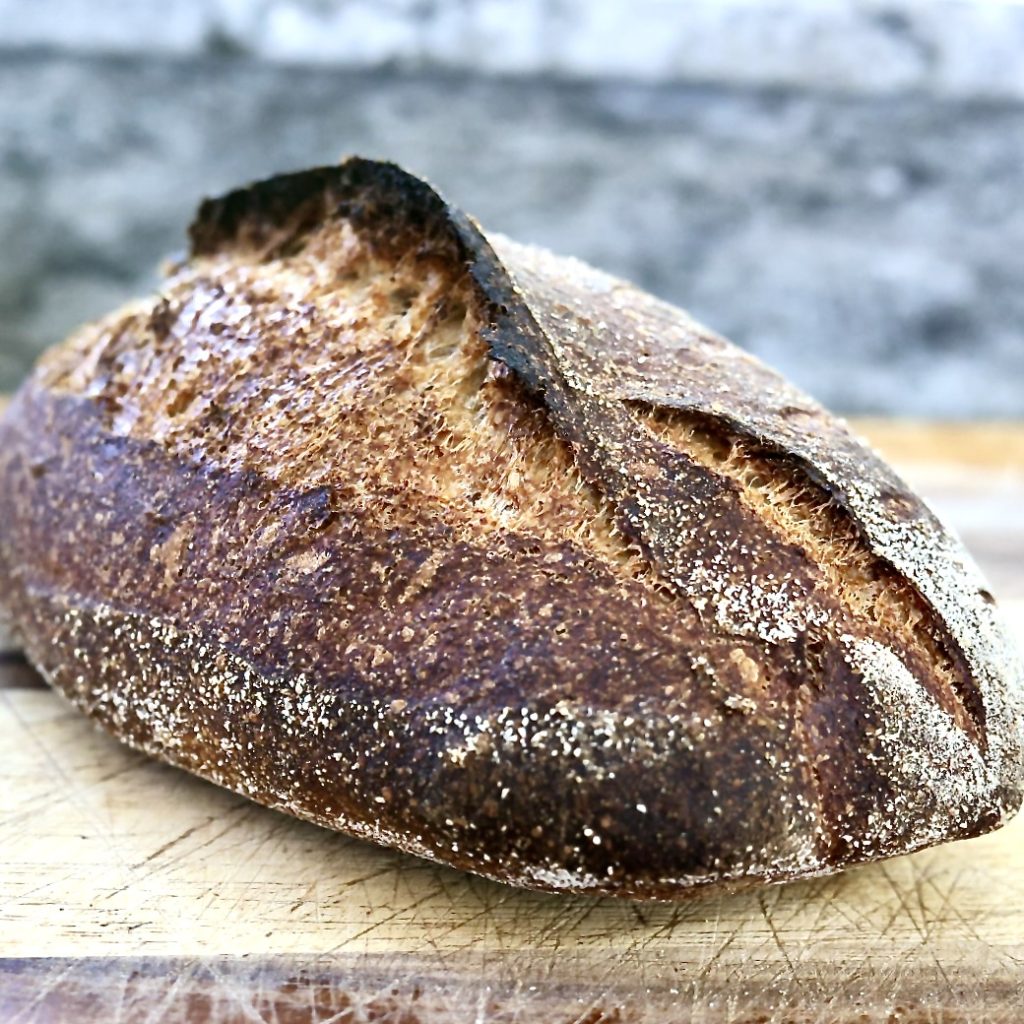
High-Activity Doughs vs. Low-Activity Doughs
One of the biggest breakthroughs in sourdough baking for a baker, is realizing that recipes don’t create predictable timelines—the combination of your control levers does. The recipe can give us a predictable process and dough formula. But a recipe cannot create consistent kitchen or dough temperatures.
Every dough develops at its own pace depending on the ingredients you choose, how you build strength, and especially the temperature of the dough.
As more “accelerators” are combined, the dough changes more quickly. As those accelerators are reduced, the dough develops more slowly and gives you a larger window to work.
A High-Activity Dough
Imagine this dough:
- 85% hydration
- 40% fresh-milled whole wheat
- Strong, recently fed starter
- Warm mixing water
- Dough temperature around 80°F
Nothing about this formula is wrong. In fact, it can produce a wonderfully open crumb and excellent flavor. But you’ve intentionally stacked several control levers that all encourage rapid dough development.
The whole grain flour contributes additional nutrients and enzyme activity. The high hydration keeps the dough highly extensible. The strong starter introduces an active population of yeast and bacteria. Beginning with a warm dough temperature allows all of those biological processes to become active immediately.
The result is a dough that develops strength, produces gas, and matures quickly. It may also become softer sooner and offer a much shorter window for shaping before it becomes over-fermented.
If you’ve ever wondered why a dough suddenly seemed to “take off,” this is often the reason. It wasn’t one variable—it was several working together.
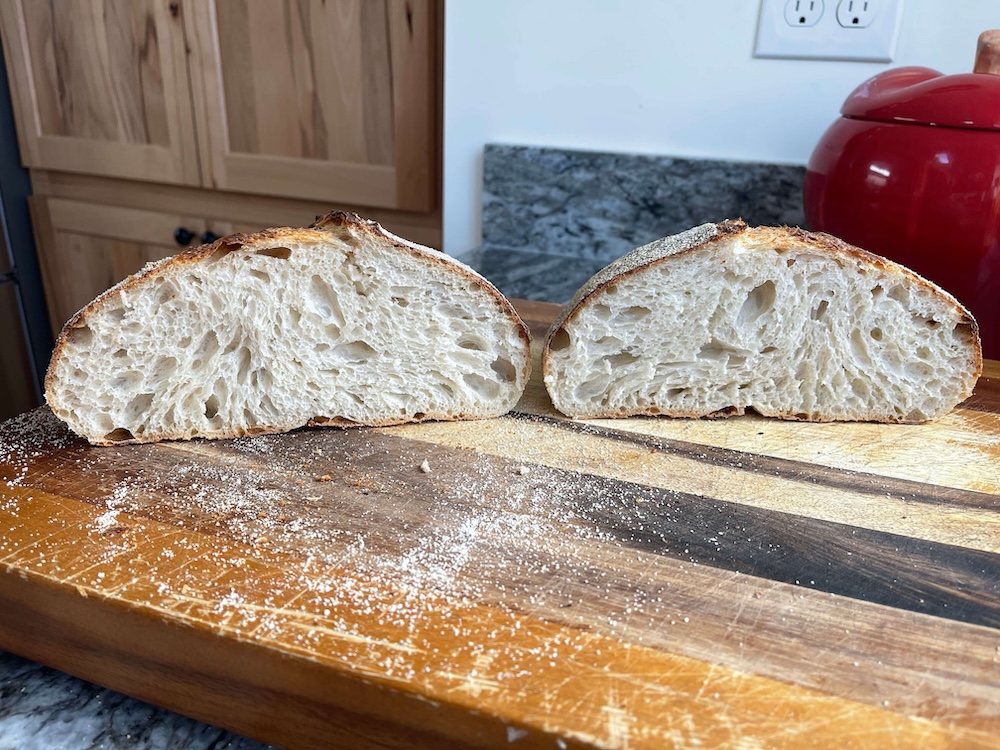
A Low-Activity Dough
Now compare that to this dough:
- 70% hydration
- White bread flour
- Cooler mixing water
- Young starter
- Dough temperature around 70°F
This dough develops at a much gentler pace.
Because fewer accelerators are working together, you’ll usually have more time to complete folds, evaluate fermentation, shape the loaf, and make adjustments along the way. Many beginning bakers find these doughs easier to learn because the dough changes gradually instead of rapidly.
Neither approach is better.
They’re simply different ways of using the Baker’s Control Panel to produce different styles of bread.
The more you understand how these control levers interact, the more intentionally you’ll be able to choose the pace of dough development that matches your recipe, your schedule, and the loaf you’re trying to create.
Why Professional Bakers Measure Dough Temperature
Walk into a commercial bakery and you’ll often see bakers checking the temperature of the dough immediately after mixing. This measurement is called the Final Dough Temperature (FDT) and is compared to the baker’s planned Desired Dough Temperature (DDT)—the target temperature they want the dough to reach before bulk fermentation begins.
For many lean artisan sourdough breads, professional bakers often aim for a finished dough temperature between 75°F and 78°F (24–26°C). That range provides an excellent balance between fermentation activity and dough strength, giving the baker enough time to build structure, develop flavor, and complete the remaining steps before fermentation advances too far.
Notice that professional bakers aren’t chasing a magic number because it’s the only “correct” temperature. They’re creating consistency.
If yesterday’s dough finished mixing at 76°F, they want today’s dough to begin at about the same temperature. They accomplish that by adjusting the temperature of the mixing water to compensate for seasonal changes, flour temperature, room temperature, and even the heat generated by mechanical mixers.
Home bakers can benefit from the same principle without worrying about hitting exactly 76°F every time.
The goal isn’t perfection.
The goal is understanding what happens when your dough begins bulk fermentation at 68°F versus 80°F.
Once you understand that relationship, you’ll begin making intentional choices. You may decide to use cooler water on a hot summer day, warm the dough in a proof box during winter, or refrigerate a fermentolyse that would otherwise become too active.
Temperature becomes another control lever you can use to create the bread you want—Don’t ignore it.
Practical Temperature Strategies for Better Sourdough
Kitchen temperatures change with the seasons, but your sourdough dough temperature doesn’t have to be at the mercy of those changes. And you should not allow sourdough dough temperature to change drastically unless you are purposefully creating that change or you will not have consistent baking results.
Experienced bakers manipulate temperature intentionally throughout the bread-making process to manage the pace of dough development.
Think of these ideas as adjustments you can make when one part of your Baker’s Control Panel begins pushing the dough too quickly—or not quickly enough.
| Situation | Temperature Strategy | Why It Helps |
|---|---|---|
| Hot summer kitchen (78–85°F+) | Use cooler or even ice water. Chill the flour, mixing bowl, or even your dough scraper if necessary. Move the dough to the refrigerator sooner during bulk. | Prevents the dough from starting too warm and racing through fermentation before enough strength develops. |
| Cool winter kitchen (below 68°F) | Use slightly warmer mixing water, ferment in a warm location or proof box, and expect a longer bulk fermentation. | Helps the dough reach an active fermentation temperature sooner without dramatically changing the recipe. |
| Fresh-milled or high whole-grain doughs | Consider cooler dough temperatures, shorter warm rests, or earlier refrigeration during long fermentations. | Whole grains naturally encourage faster biological activity. Cooler temperatures provide a more manageable pace. |
| High-hydration doughs (80%+) | Keep the dough slightly cooler and monitor it closely throughout bulk fermentation. | Warm, wet dough becomes extensible and difficult to handle much sooner than cooler dough. |
| Using a stand mixer | Check the dough temperature after mixing. If necessary, begin with cooler water because the mixer itself adds heat through friction. | Helps maintain a predictable starting temperature for fermentation. |
| Hand mixing or Rubaud mixing | Dough generally warms less during mixing, although your hands still transfer some heat. Adjust your water temperature as needed. | Gives you greater control over the dough’s starting temperature. |
| Long autolyse | During warm weather, refrigerate a long autolyse or begin with cooler water. | Slows enzyme activity while allowing the flour to hydrate thoroughly. |
| Fermentolyse | Shorten the fermentolyse in warm kitchens or refrigerate it if extending the rest. | Once starter is added, fermentation has already begun. Cooling slows the pace without stopping development. |
| Saltolyse | Saltolyse is generally more forgiving in warm conditions, but extended rests may still benefit from refrigeration. | Salt naturally moderates microbial activity while hydration continues. |
| Cold bulk fermentation | Move the dough into refrigeration after sufficient gluten strength has developed. | Cold bulk slows the pace of development while allowing fermentation, flavor, and dough maturation to continue over a much longer window. |
| Final proof | Proof in a warm location when the dough needs encouragement, or refrigerate after shaping to extend the proof and better fit your schedule. | Controlling sourdough dough temperature gives you flexibility without changing the formula itself. |
Notice that almost every adjustment involves changing the pace of development—not changing the recipe.
That’s exactly how experienced bakers use temperature.
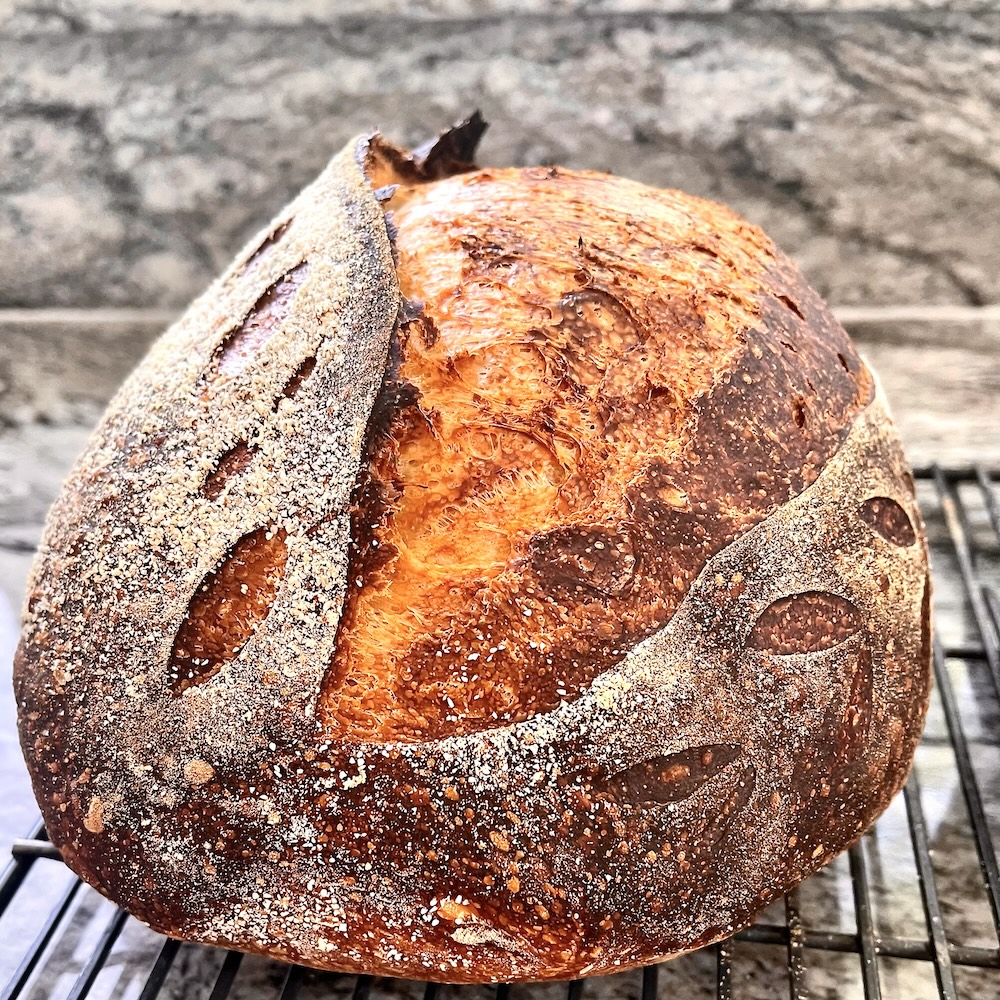
Final Thoughts
Temperature is one of the most influential control levers on the Baker’s Control Panel because it affects nearly every stage of bread making.
It changes how quickly gluten develops, how actively yeast and bacteria work, how rapidly enzymes modify the dough, and ultimately how much time you have to shape, proof, and bake your loaf.
Once your dough is mixed, you’re no longer simply combining flour and water.
You’re managing a living system.
The more you understand how dough temperature interacts with hydration, flour choice, starter activity, mixing methods, and fermentation, the more confidently you’ll adjust those control levers to create the bread you want.
That’s how you unlock sourdough recipes. You will learn how to tweak and adjust them to fit the conditions in your own kitchen. Rigid instructions become flexible guides.
Consequently, you begin thinking more like a baker and how to make your best bake.
Frequently Asked Questions
What is the ideal dough temperature for sourdough?
Many professional bakers target a finished dough temperature between 75°F and 78°F (24–26°C) for lean artisan sourdough because it provides a good balance between fermentation speed and dough strength. Home bakers don’t need to chase one exact number, but learning how different dough temperatures affect development will make your baking much more predictable.
Does sourdough dough temperature matter more than room temperature?
Yes. The yeast and bacteria responsible for fermentation live inside the dough, not in the surrounding air. Because dough warms and cools slowly, its temperature is often quite different from the temperature of your kitchen.
Why isn’t my dough rising even though my kitchen is warm?
Your dough may still be cold from mixing with cool water or from refrigeration. Dough has thermal mass, so it takes time to warm. Fermentation usually accelerates as the dough itself becomes warmer.
Should I use warm or cold water when mixing sourdough?
Neither is always correct. Warm water speeds early dough development, while cooler water slows it. Choose your water temperature based on your kitchen conditions, flour choice, dough hydration, and the style of bread you’re trying to bake.
Can dough be too warm?
Yes. Very warm dough develops quickly, which can shorten your handling window and increase the risk of over-fermentation before you’ve finished building strength and shaping the loaf.
Why do whole-grain doughs seem to ferment faster?
Whole-grain flours contain more nutrients and naturally occurring enzymes than refined white flour. Combined with warm dough temperatures, these factors can create a much more active dough.
Should I refrigerate my dough in hot weather?
Often, yes. Refrigeration is one of the easiest ways to slow the pace of dough development and regain control when warm temperatures are accelerating fermentation faster than you’d like.
For more Sourdough Help read our Sourdough Troubleshooting guide or visit our Sourdough Hub for a complete list of all our helpful guides and recipes.
More Helpful Sourdough Guides:
- Hydration
- Flour Types
- Mixing Methods
- Dough Structure
- Autolyse vs Saltolyse vs Fermentolyse
- Stretch & Fold vs Coil Folds
- Cold Bulk vs Cold Proof
- Proofing
- Starter Guide
New to sourdough? Try This Step by Step Beginner Artisan Recipe
Further Reading: Trevor Wilson Mastering Bulk Fermentation