
How to Make Freeze Dried Eggs
As an Amazon Associate and member of other affiliate programs we earn a small commission from qualifying purchases through our affiliate link. For more information read our Entire Affiliate Disclosure.
Having freeze dried eggs on hand for recipes and quick meals provides you with options when the fresh eggs are gone. Freeze drying eggs is also a practical way to preserve extra eggs for cooking and baking, especially when your hens are laying more than your household can use.
I’ve freeze dried both raw and cooked eggs in my Harvest Right freeze dryer. Raw eggs can be freeze dried and powdered for use in recipes, while cooked scrambled eggs can be preserved for meals and camping trips.
The two methods have different preparation and food-safety requirements.
One important food safety thing to understand is that freeze drying does not cook or sterilize eggs. Raw freeze-dried eggs remain raw and must be thoroughly cooked before eating, whether you use them for scrambled eggs or add them to a recipe. University of Minnesota Extension explains that freeze drying has no heat-treatment step capable of killing illness-causing microorganisms. If bacteria are present in the food, they can survive the process and begin growing again when moisture is restored. Raw freeze-dried eggs therefore remain raw and must be thoroughly cooked before eating.
In this guide, I’ll share my experience preparing eggs for the freeze dryer, checking that they are thoroughly dried, packaging them for storage, and rehydrating them for cooking and baking.
We’ll also look at the differences between freeze drying raw and cooked eggs so you can choose the method that suits how you plan to use them.
Editor’s Note: Originally published January 2024. This article was updated in September 2026 to clarify food-safety guidance for raw and cooked freeze-dried eggs, improve drying and storage instructions, and review nutrient-retention and shelf-life claims. The original preparation experience and photographs have been retained.
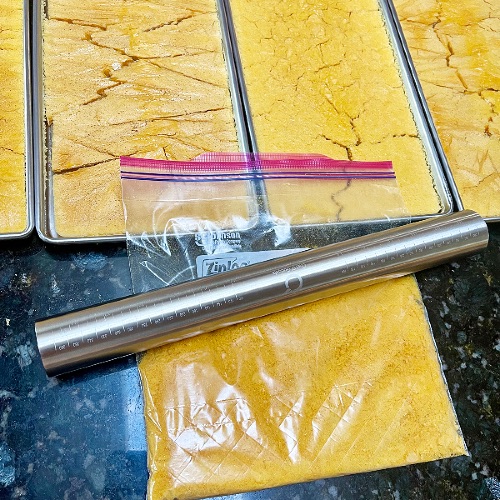
How to Freeze Dry Raw Eggs
Freeze drying raw eggs at home is straightforward, but the food-safety rules still apply. Freeze drying does not cook or sterilize raw eggs. Any bacteria present before freeze drying can survive the process, so reconstituted raw egg must be handled and cooked just as you would fresh raw egg.
What You Need
- Fresh, clean, uncracked eggs
- Blender
- Freeze-dryer trays
- Home freeze dryer
- Tray lids, if you use them for pre-freezing
- High-barrier storage bags or airtight Mason jars
- Oxygen absorbers appropriate for your package size
- Heat sealer or vacuum jar sealer, depending on your storage method
Prepare the Eggs
Keep the eggs refrigerated until you are ready to work with them.
Use clean, uncracked eggs. I no longer recommend immersing eggs in a bowl of water to wash them or using a float test to decide whether they are safe. Floating tells you something about the age and size of the egg’s air cell, but it does not tell you whether the egg contains harmful bacteria. USDA advises consumers not to wash commercially processed shell eggs at home because additional washing can increase the risk of contamination.
Crack the eggs one at a time into a small bowl before adding them to the blender. This makes it easier to catch a damaged or obviously spoiled egg before it goes into the whole batch.
I usually work in manageable batches rather than trying to blend a large number of eggs at once.
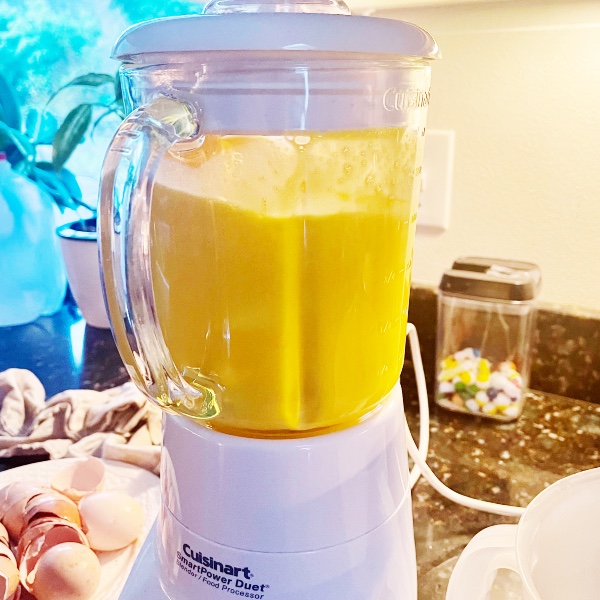
Blend the Eggs
Blend or pulse the eggs briefly, just until the yolks and whites are evenly combined.
There is no need to whip a lot of air into them. We simply want a smooth, uniform liquid that can be spread evenly over the trays.
I previously listed a fixed volume for a dozen blended eggs. Egg size varies, so it is more accurate to work with the number or weight of eggs you actually use rather than assume every dozen will produce the same volume.
Fill and Pre-Freeze the Trays
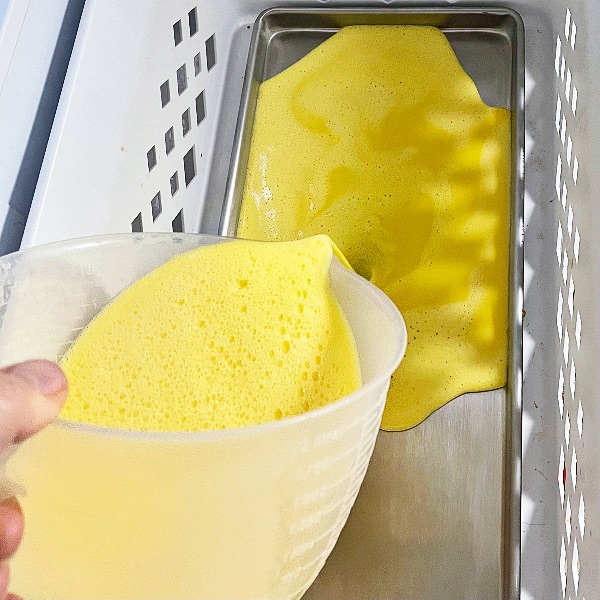
Pour the blended eggs onto the freeze-dryer trays in an even layer without exceeding the capacity recommended for your machine.
I prefer to put the empty trays into my chest freezer first and fill them there. Carrying a tray full of liquid raw egg across the kitchen is an adventure I don’t need.
Once one tray is filled, I cover it with a tray lid, stack the next tray above it and continue until they are all filled.
Pre-freezing is optional with machines designed to freeze the food themselves, but I find it convenient and it can save some processing time. Pre-freezing also works well for speeding up batches when you are running them back to back. For example, if you have two tray sets you can have one running in the machine while another is prepped, prefrozen and ready to go in the freezer.
It also gets this very liquid food safely solid before I move the trays into the freeze dryer.
Freeze the trays until the eggs are completely solid.
Freeze Dry the Eggs
Load the frozen trays into your freeze dryer and run the appropriate cycle according to the instructions for your machine.
Processing time varies. The amount of egg on the trays, thickness of the layer, whether the eggs were pre-frozen, room conditions and the freeze dryer itself can all affect how long a batch takes.
Rather than relying on a particular number of hours, concentrate on the condition of the eggs when the cycle is finished.
How to Tell When Freeze Dried Eggs Are Completely Dry
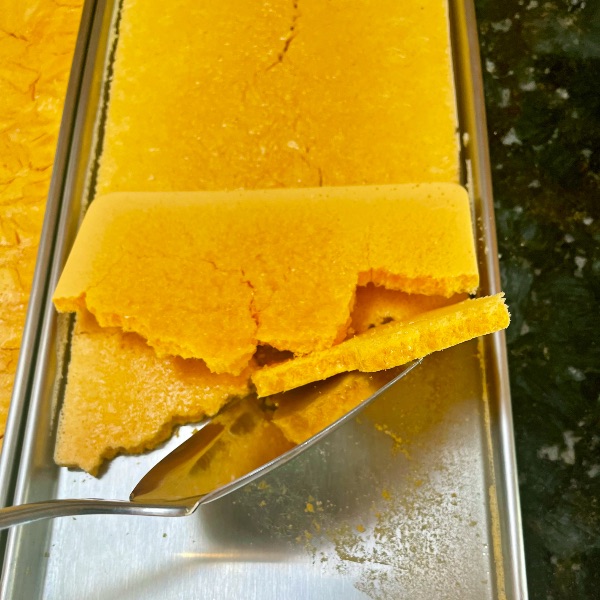
This is one of the most important steps.
Finished raw egg usually comes off my trays as a very light, dry, brittle sheet or “board.” It should crack or crumble easily. Do Not check only the edges. University of Michigan specifically recommends, and I can tell you from my own experience, you need to check through the entire tray to make sure every bit of the processed egg is absolutely dry.
What to Look For:
- When the freeze dryer machine says the dry cycle is complete, take the trays out, one by one and examine them.
- The dried eggs should leave a gap around the edges as you see pictured above. Just like a baked bread or cake will pull away from the baking dish, so do freeze dried eggs.
- Now Break the sheet of eggs into the thickest areas from several places and check samples from each tray. The center should be completely dry with no soft, gummy, damp or suspiciously cold areas.
If any part of the batch makes you question whether it is completely dry, put the trays back into the freeze dryer and add more drying time.
A completed machine cycle is not a guarantee that every part of every tray is equally dry.
Once the eggs are thoroughly freeze dried, package them promptly. Freeze-dried food readily pulls moisture back out of humid room air.
Should You Powder Freeze Dried Eggs?
You don’t have to.
The dried egg sheets can be broken into pieces and stored that way, or you can turn them into powder with a blender, food processor or rolling pin.
I like egg powder because it is compact and easy to measure for cooking and baking.
If you make a powder, work quickly and transfer it immediately into your prepared storage containers.
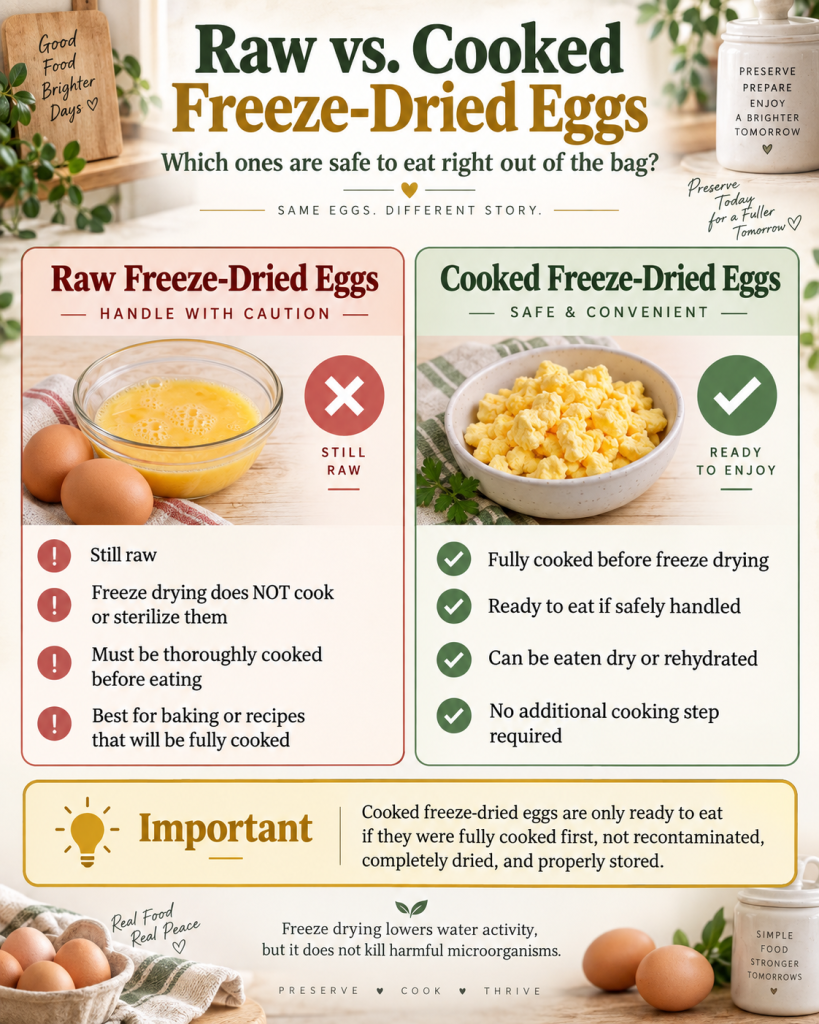
Freeze Drying Cooked Eggs
You can also freeze dry cooked eggs.
Scrambled eggs are particularly convenient for camping meals or prepared food storage. Cook the eggs thoroughly before freeze drying them. You can add seasonings and other ingredients, although foods containing substantial amounts of fat may have different drying and storage characteristics.
Spread the cooked eggs evenly on the trays, pre-freeze them if desired, and freeze dry them according to your machine’s instructions.
Check them for complete dryness just as carefully as you would raw eggs.
There is an important difference between the two products:
Raw freeze-dried eggs are still raw eggs. Cooked freeze-dried eggs have already received a cooking step. Cooked freeze dried eggs are food safe and can be eaten right out of the bag without reheating.
Label your packages clearly so you never have to rely on memory later.
For a fuller explanation of why this matters, see our guide to Freeze Drying Food Safety.
How to Store Freeze Dried Eggs
If you are confident your raw or cooked eggs follow the safe handling methods outlined above, the next step is properly storing your freeze dried eggs. It’s very simple.
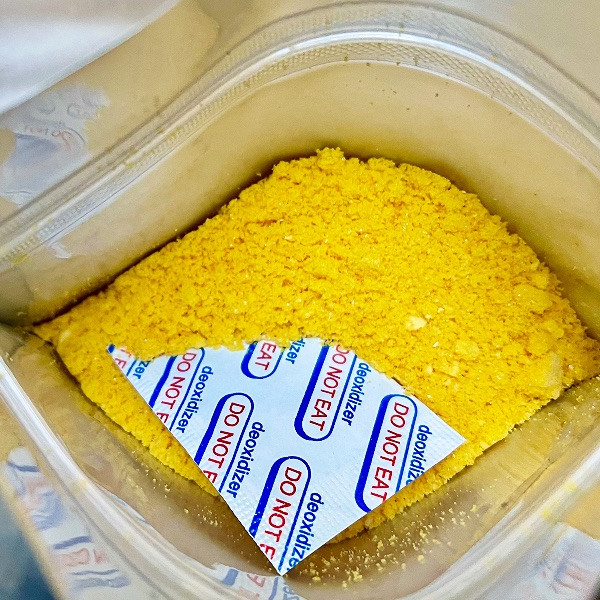
Prepare a Dry Packaging Station Before Removing the Eggs
Have your packaging supplies ready before you remove the finished eggs from the freeze dryer.
Freeze-dried foods absorb moisture from the surrounding air very readily. University of Minnesota Extension notes that even normal kitchen humidity can affect properly freeze-dried food, which is why it should be packaged promptly in moisture-resistant containers.
This is something I recently ran into while powdering a batch of freeze-dried tomato sauce. I had cleaned my equipment, but a few drops of water were still present. That is enough to teach you very quickly that clean equipment also has to be completely dry.
Before I remove a batch from the freeze dryer, I now set up my entire packaging station:
- Completely dry Mylar bags or other storage containers
- Heat sealer
- Labels and marker
- Oxygen absorbers, kept sealed until I am ready to use them
- A completely dry scoop
- Disposable gloves
- A dry food processor, blender, or rolling pin and heavy bag if I am making a powder
If you’re using a food processor, check the bowl, blade, lid, and every crevice carefully. A single drop left from washing is moisture being added right back to food you just spent hours drying.
I use a large dry scoop to transfer the eggs in mylar bags and disposable gloves when I need to handle the food directly. Gloves help reduce direct hand contact and the chance of recontaminating the finished food. They should be clean and dry, and they don’t replace proper handwashing or clean equipment.
Once I’ve confirmed that the eggs are completely dry, I leave them protected in the freeze dryer until my work area is ready. Then I remove, powder if desired, package, add the oxygen absorber, and seal the food as efficiently as possible.
For experienced canners and freezer preservers, this is one of the biggest adjustments when learning to freeze dry food. With canning and freezing, we’re accustomed to working around water during preparation. With finished freeze-dried food, the goal reverses: once that moisture has been removed, you need to keep it out.
The food can leave the freeze dryer perfectly dry and still lose that advantage if moisture is introduced while you are processing or packaging it.
My basic process is:
- Make sure the eggs are completely dry.
- Break or powder them as desired.
- Transfer them promptly into clean, dry storage containers.
- Add an appropriately sized oxygen absorber when using a storage system that calls for one.
- Seal the container.
- Check the seal.
- Label it with the contents, date and, importantly, whether the eggs were freeze dried raw or cooked.
- Store the package in a cool, dry, dark location.
For longer storage, I prefer high-barrier Mylar-style bags with oxygen absorbers. Mason jars are very useful for foods I expect to access more regularly, especially when they are properly sealed.
Our guides to oxygen absorbers, Mylar bags and freeze-dried food storage explain these systems in much more detail.
How Long Do Home Freeze Dried Eggs Last?
This is an area where I would be careful about making promises.
Commercially manufactured freeze-dried foods may be assigned very long shelf lives based on controlled processing, packaging and product testing. We should not automatically apply those numbers to eggs freeze dried in a home machine.
Research establishing reliable shelf-life limits for the wide variety of foods processed in home freeze dryers is still limited.
Eggs also contain fat, and fats can oxidize and eventually develop rancid flavors. Good drying, oxygen protection, high-barrier packaging and cool storage all help protect quality, but I would not promise that every package of home freeze-dried eggs will remain good for a particular number of years.
The practical approach is to package them correctly, store them well, rotate your supply and use what you preserve. And with a home freeze dry machine that rotation system makes sense. Rather than storing long term, keep your freeze dried foods rotating through your kitchen. Then if you need freeze dried foods for an emergency you will have the freshest to rely on.
How Do You Know If Stored Freeze Dried Eggs Have Gone Bad?
Check the package before using it.
Discard the eggs if you find:
- A failed or damaged package seal
- Evidence that moisture has entered the package
- Soft, sticky or unexpectedly clumped powder
- Mold or insect activity
- An abnormal or rancid odor
- Any other condition that makes you question how the food was processed or stored
Do not taste questionable freeze-dried food to determine whether it is safe.
Some foodborne pathogens cannot be detected by appearance, smell or taste.
How to Rehydrate Freeze Dried Eggs
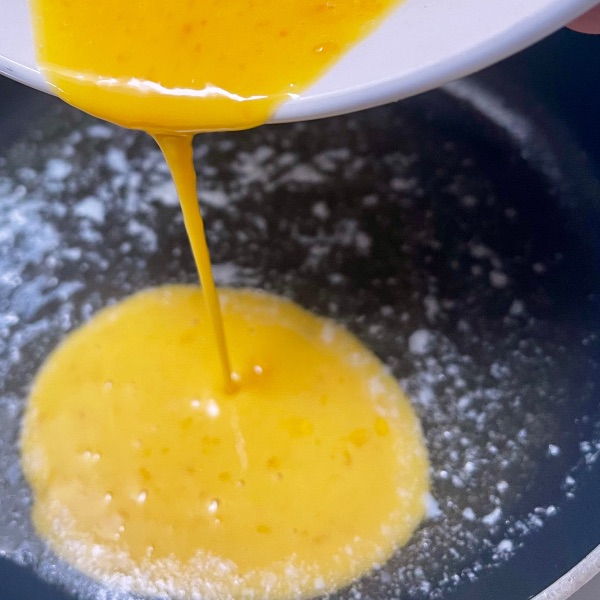
Raw freeze-dried egg powder can be rehydrated and used much like beaten fresh egg, provided it is subsequently cooked thoroughly.
One thing I would change from my original instructions is the idea that a single volume measurement, such as two tablespoons of powder plus two tablespoons of water, will always equal one egg. As a rule of thumb that works but for precise baking ingredients, not so much.
The density of homemade egg powder can vary depending on the eggs, how thoroughly they were dried and how finely the finished product was powdered.
A More Accurate Way to Calculate One Egg
If you want dependable measurements for baking, record the batch when you make it.
For example, if you freeze dry 12 eggs:
- Weigh the blended raw eggs before freeze drying.
- Weigh the completely dry egg solids after freeze drying.
- Subtract the dry weight from the original weight. The difference is approximately the amount of water removed.
- Divide the dry egg weight by 12 to determine the amount of powder representing one egg.
- Divide the water removed by 12 to determine how much water to add back for one egg.
This gives you a conversion based on your own eggs and your own batch, rather than relying on a universal spoon measurement.
Write those measurements on the package or in your freeze-drying notes. The next time you bake, you’ll know exactly how much powder and water from that batch represent one egg.
For scrambled eggs, you can rehydrate the measured egg powder with its calculated amount of water, allow it to absorb the liquid, and then cook it thoroughly.
For baking, you can either reconstitute the egg first or add the measured egg powder to the dry ingredients and its corresponding water to the recipe’s liquids.
Remember: rehydrated raw freeze-dried egg is raw egg. Cook it thoroughly before eating and don’t use it in recipes intended to remain raw. Treat reconstituted eggs as raw eggs and cook egg dishes to 160°F (71°C).
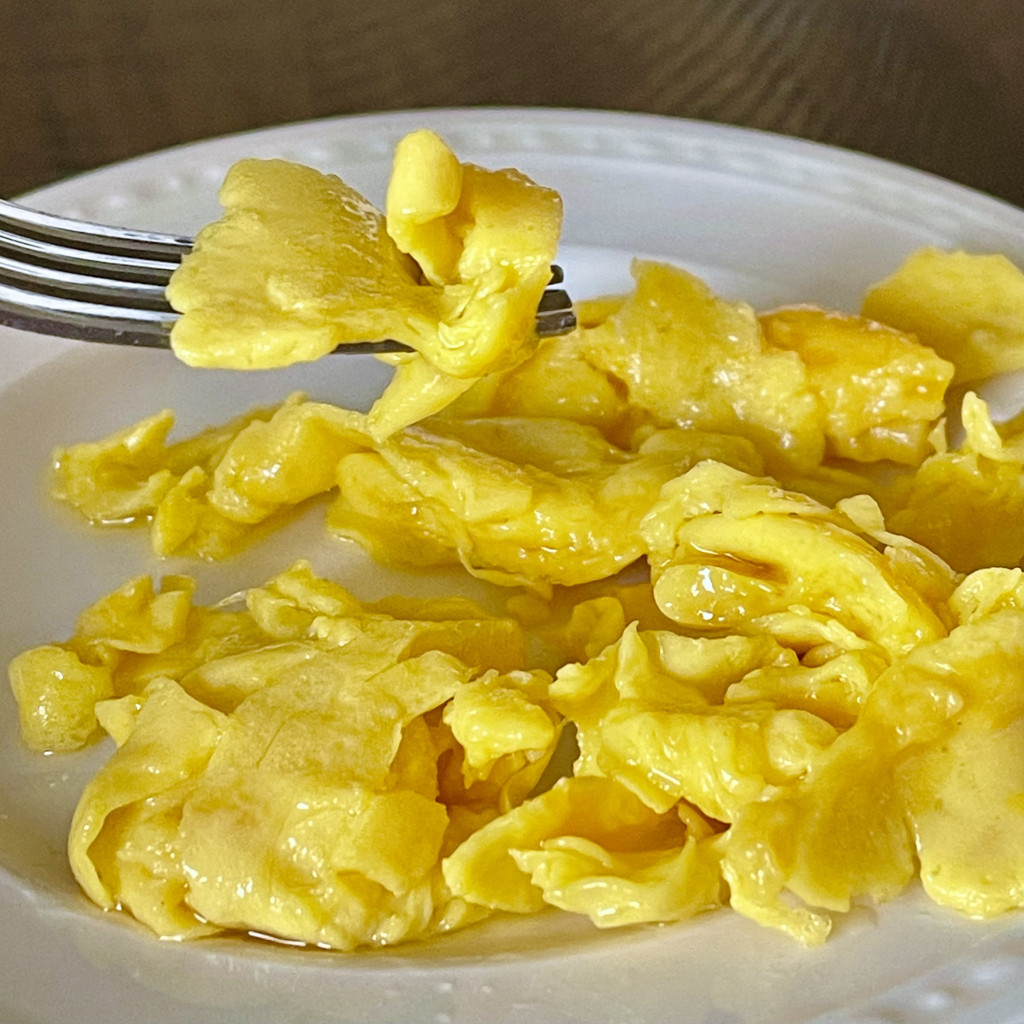
Once reconstituted, freeze-dried eggs can be used to make Quiche, frittata or omelets and other fully cooked egg dishes.
Freeze Drying Eggs at Home
Freeze drying gives us home preservers another practical way to preserve eggs for cooking, baking, camping meals, and longer-term food storage.
The most important distinctions are simple: raw freeze-dried eggs are still raw and must be thoroughly cooked, while eggs that were fully cooked before freeze drying can be ready to eat when they have been safely handled, completely dried, and properly stored.
Just as important is protecting the food after the drying cycle is complete. Check every batch carefully for dryness, keep your tools and packaging completely dry, and package the eggs promptly so they do not begin absorbing moisture again.
Once you understand those steps, freeze-dried eggs become a very useful ingredient to keep on hand.
Further Reading In Freeze Drying:
- The Complete Guide To Oxygen Absorbers
- Silica Gel Packets
- Mylar Bags: Best Storage Bags For Food
- Considering A Freeze Dryer for Home Use
- Essential Home Freeze Drying Equipment
- How Does Freeze Drying Work?
- Freeze Drying Food Safety: How to Preserve Food Safely at Home
- Freeze Dried Food Storage Tips for Short and Long Term Storage
Follow Us:
We enjoy meeting you on our social networks. Follow us on Facebook, Pinterest, Instagram . Tag us with your pictures of our recipes and comment on how it went for you. We would love to see what you do with them.
We often like, comment and share your posts of our recipes on our daily Instagram stories.
Ask questions and rate the recipe in the comments section below. Please share what you did with this recipe. We are always looking for more and better ways to make homemade food. Other cooks love your ideas!
Recent Posts: