
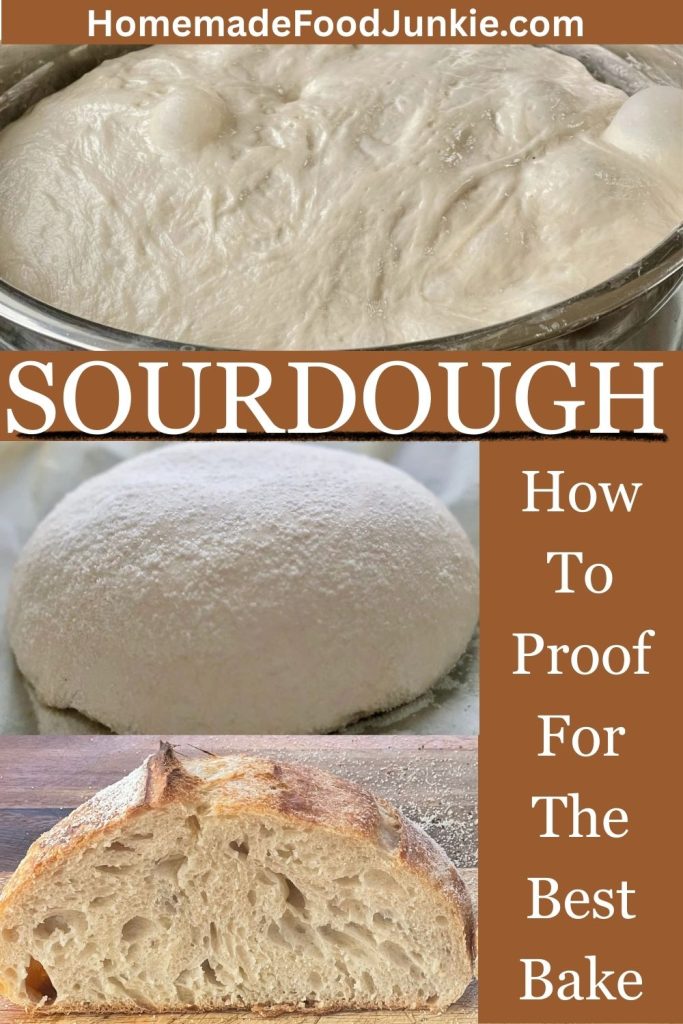
This guide will help you learn how to proof sourdough by reading your dough structure through each fermentation stage. Proofing is where bakers often get tripped up—not because it’s complicated, but because it isn’t a clock-based step. but rather a process that goes through some changes to get it where you want it.
Sourdough proofing has two stages:
Bulk fermentation (before shaping) and final proof (after shaping). Instead of relying on a timer, watch for dough cues like bubbles, doming, jiggle, and an airy feel during bulk—then a plump dough that holds its shape during final proof. Use the poke test as a supporting check, and use the fridge (cold fermentation) to make timing easier and scoring more predictable.
Learning how hydration impacts fermentation speed and dough handling? Read our guide on Understanding Sourdough Hydration here. To see all our sourdough baking guides, visit our Sourdough Baking hub.
“Proofing at a Glance” Quick Reference
How to Proof Sourdough at a Glance: What to Look For
Bulk fermentation is done when:
- Dough is puffy and aerated (lighter feel)
- Visible bubbles along the sides/bottom of the container
- Noticeable rise (commonly ~30–75%, method-dependent)
- Dough jiggles when you gently shake the container
Final proof is ready when:
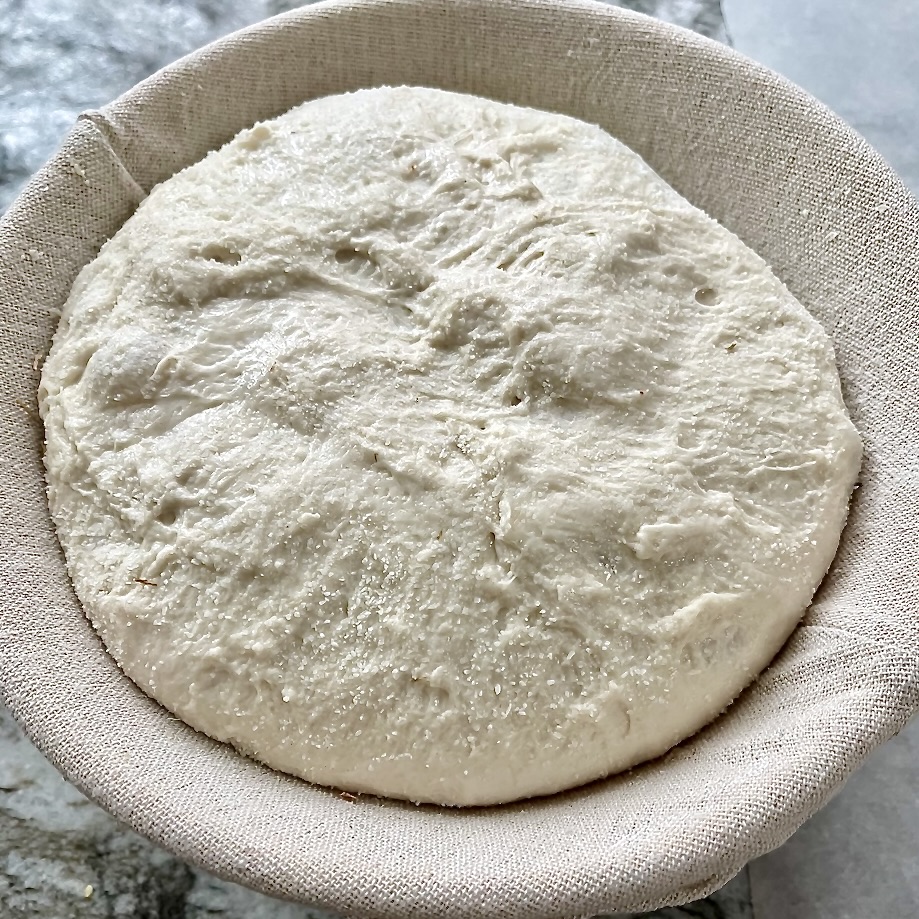
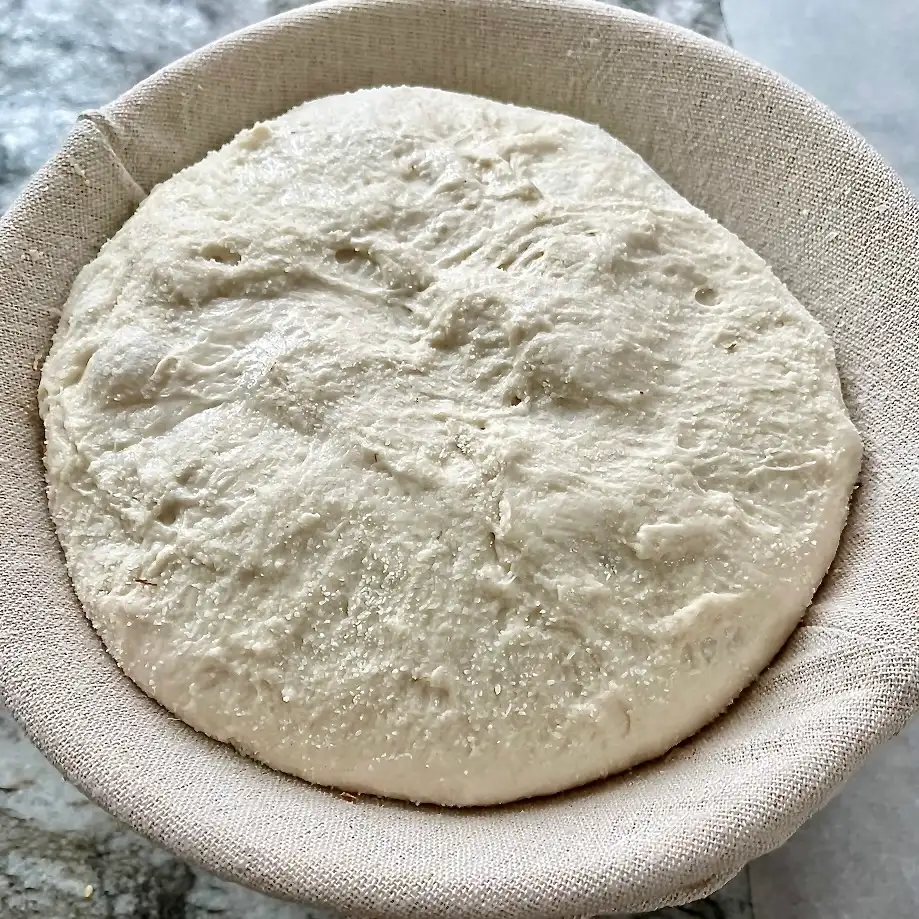
- Dough looks plump and expanded in the banneton
- Poke test leaves a slow-springing indent (slight dent remains)
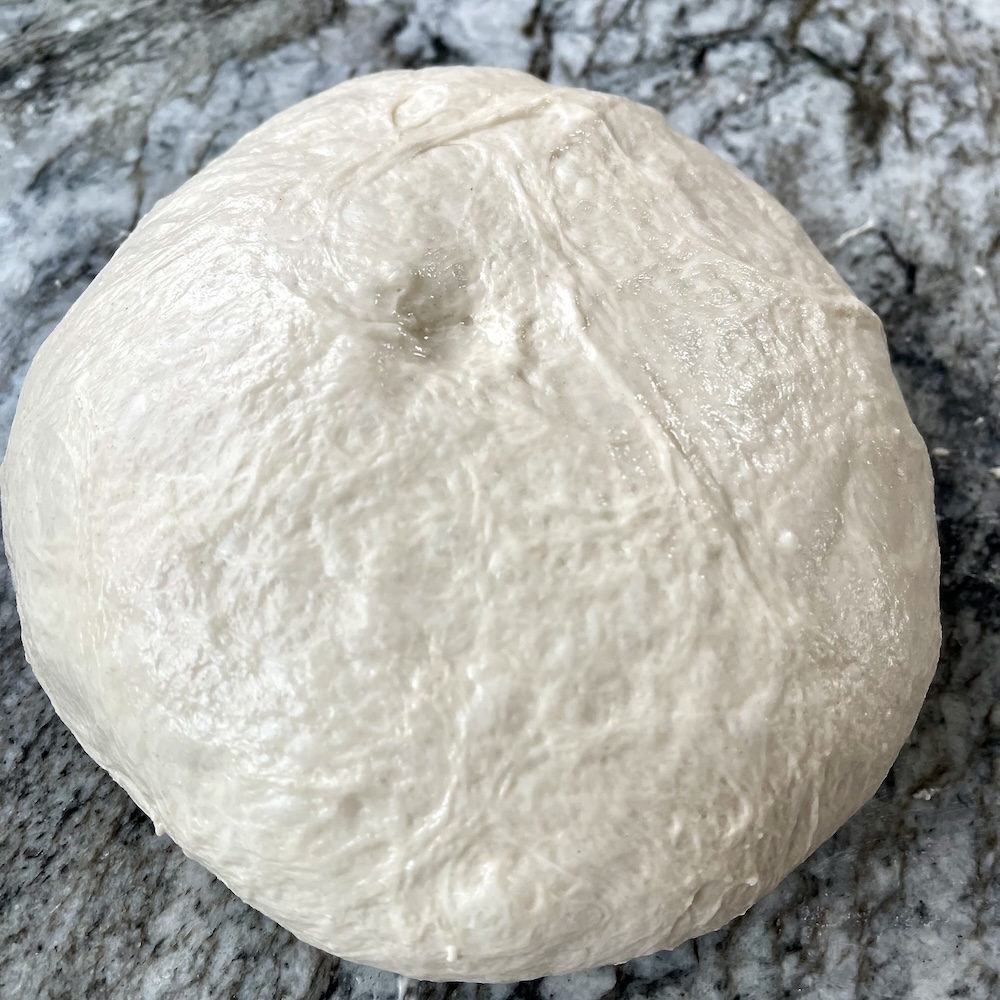
- When turned out, dough holds shape (doesn’t immediately puddle/spread)
If it’s underproofed, you’ll often see:
- Blowouts, dense or gummy crumb, tight interior
Do this: extend fermentation, warm the dough slightly, confirm starter strength.
If it’s overproofed, you’ll often see:
- Flat loaf, spreading, weak oven spring, fragile scoring
Do this: shorten proof time, refrigerate earlier, build more strength during bulk/shaping.
What “proofing” means in sourdough
“Proofing” means letting dough ferment until it’s ready to bake. In sourdough, that happens in two phases:
- Bulk fermentation (the first rise, before shaping)
- Final proof (after shaping, usually in a banneton or loaf pan)
Both phases matter because you’re balancing:
- Fermentation: natural yeast + bacteria producing gas and acids
- Strength: gluten development + dough structure holding that gas as the dough expands
Learning how to proof sourdough properly takes some experience. You will learn your doughs when you learn the signs of a perfect proof.
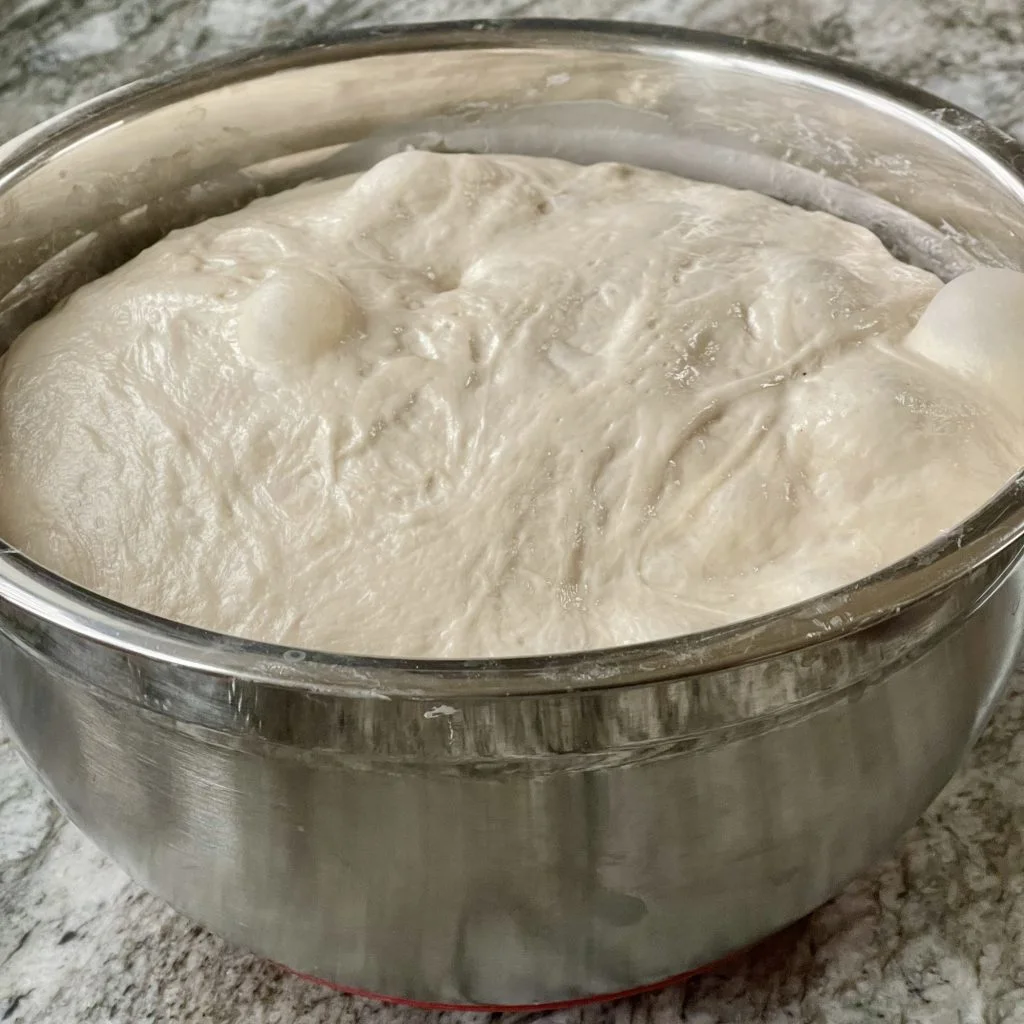
Bulk fermentation vs final proof
Bulk fermentation (first rise)
Bulk rise begins when you mix the dough, and ends when you shape. This is where you build most of the dough’s strength and make major fermentation progress.
Bulk fermentation does three big jobs:
- Builds gas inside the dough
- Develops flavor and acidity
- Creates dough that’s strong enough to shape and score
These jobs must be done properly or the bread will suffer. learning how to proof sourdough will give you an edge on getting closer to your perfect loaf.
Final proof (after shaping)
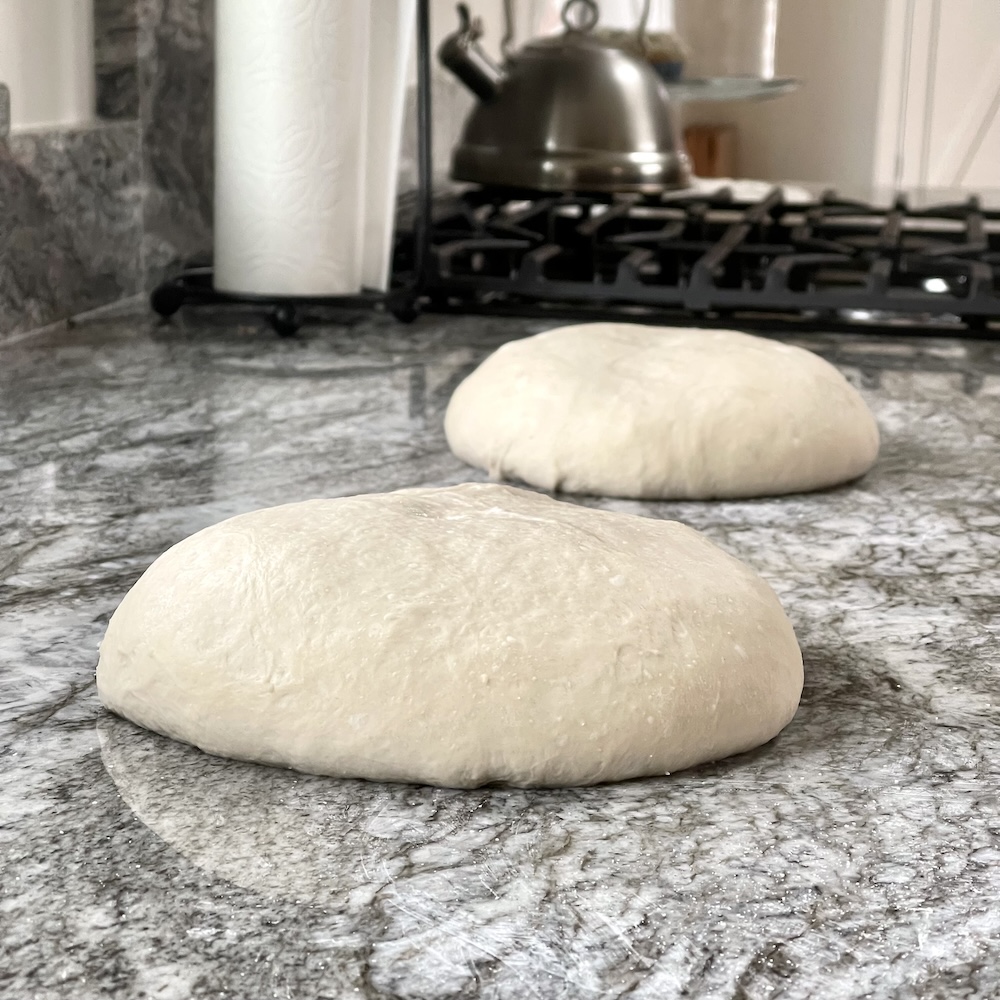
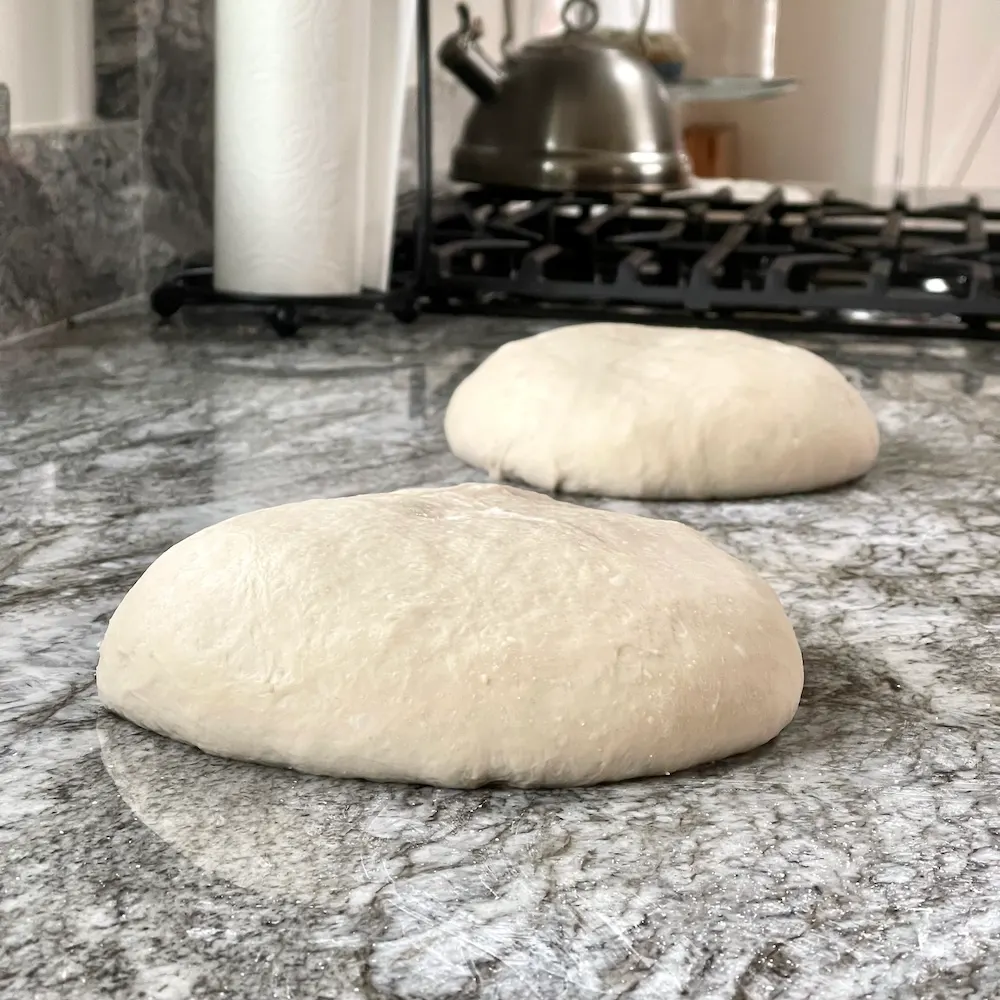
Final proof begins after shaping and ends when you bake. It’s where you “finish” fermentation so the loaf is bake-ready without losing the tension you built during shaping.
Final proof is also where loaves can get ruined if you wait too long. A perfectly fermented dough can still overproof in the basket and bake up flatter with weak oven spring
Read our Sourdough Troubleshooting Guide for even more helpful ideas on “why did my loaf…” problems.
What Controls Proofing Speed
If you only remember one thing: temperature drives fermentation.
Temperature -How to use it:
Temperature matters because sourdough fermentation is powered by living microbes (yeast + bacteria). These beasties react to temperature. So Warmer dough ferments faster and can move from “not ready” to “overproofed” quickly. Cooler dough ferments slower, which gives you a wider timing window and often improves consistency.
The most useful number is dough temperature, not just room temperature. A 70°F kitchen can still produce a warmer or cooler dough depending on water temperature, flour temperature, and mixing time.
How to control proofing speed (simple tools):
- To speed it up: use slightly warmer water, proof in a warmer spot (oven light on), or extend room-temperature bulk.
- To slow it down: move dough to the fridge earlier (cold bulk or cold proof), use cooler water, or proof in a cooler area.
- To make it predictable: keep your method consistent and track dough cues (bubbles, doming, jiggle, airy feel) rather than relying on a fixed timeline.
Important: temperature is a dial, not a trick. If dough is under-fermented, chilling it won’t magically fix it. It just slows everything down. Part of learning how to proof sourdough correctly is learning how to control this accelerator.
Other Factors That Change Timing:
These variables explain why the same recipe can proof faster or slower from one kitchen to another.
- Dough temperature (most important)
- Starter strength and activity
- Hydration (wetter dough often ferments faster and “feels” proofed sooner)
- Flour type (whole grain ferments faster; different flours absorb water differently)
- Salt (slows fermentation slightly)
- Mixing and strength building (strong dough holds gas longer)
Mindset shift: Proofing time is a range, not a rule. For a clear overview of bulk fermentation, King Arthur has an excellent explainer:
Bulk fermentation: Signs it’s done
Bulk is done when the dough has enough fermentation and enough strength to shape.
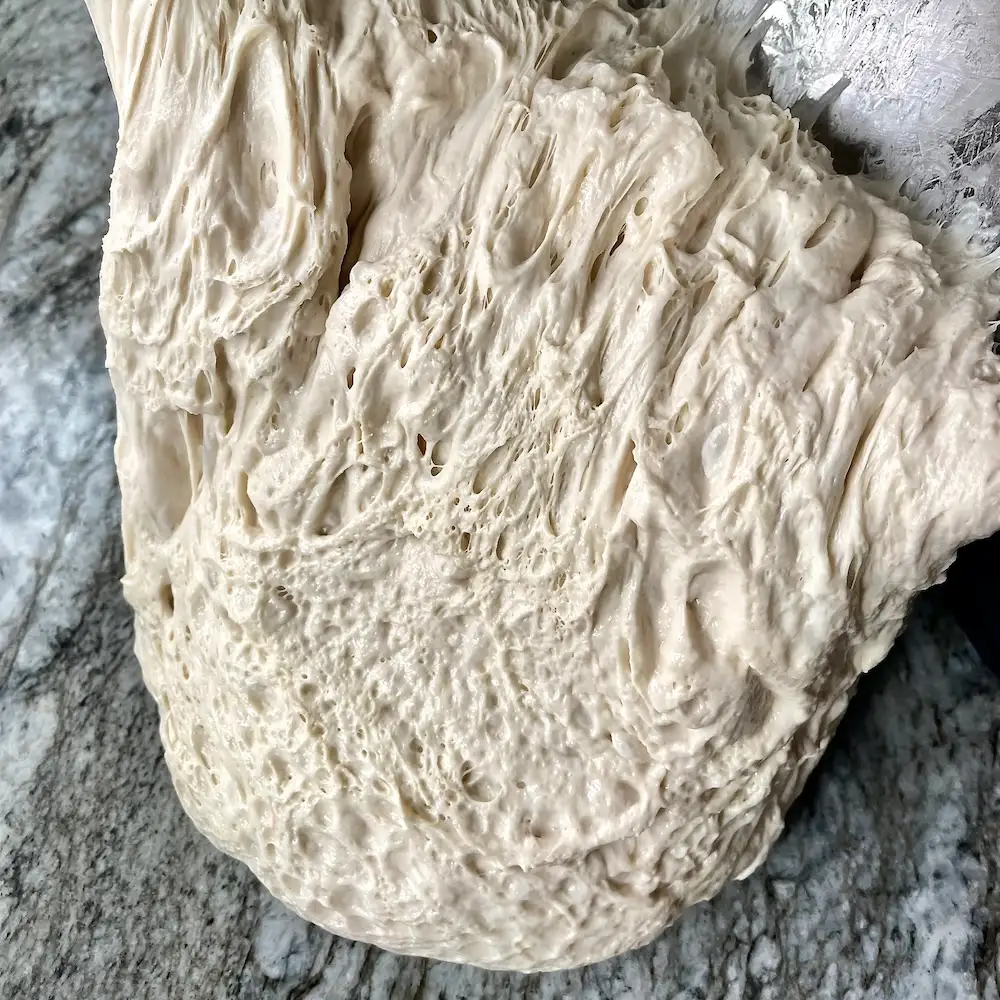
What to look for (reliable signs)
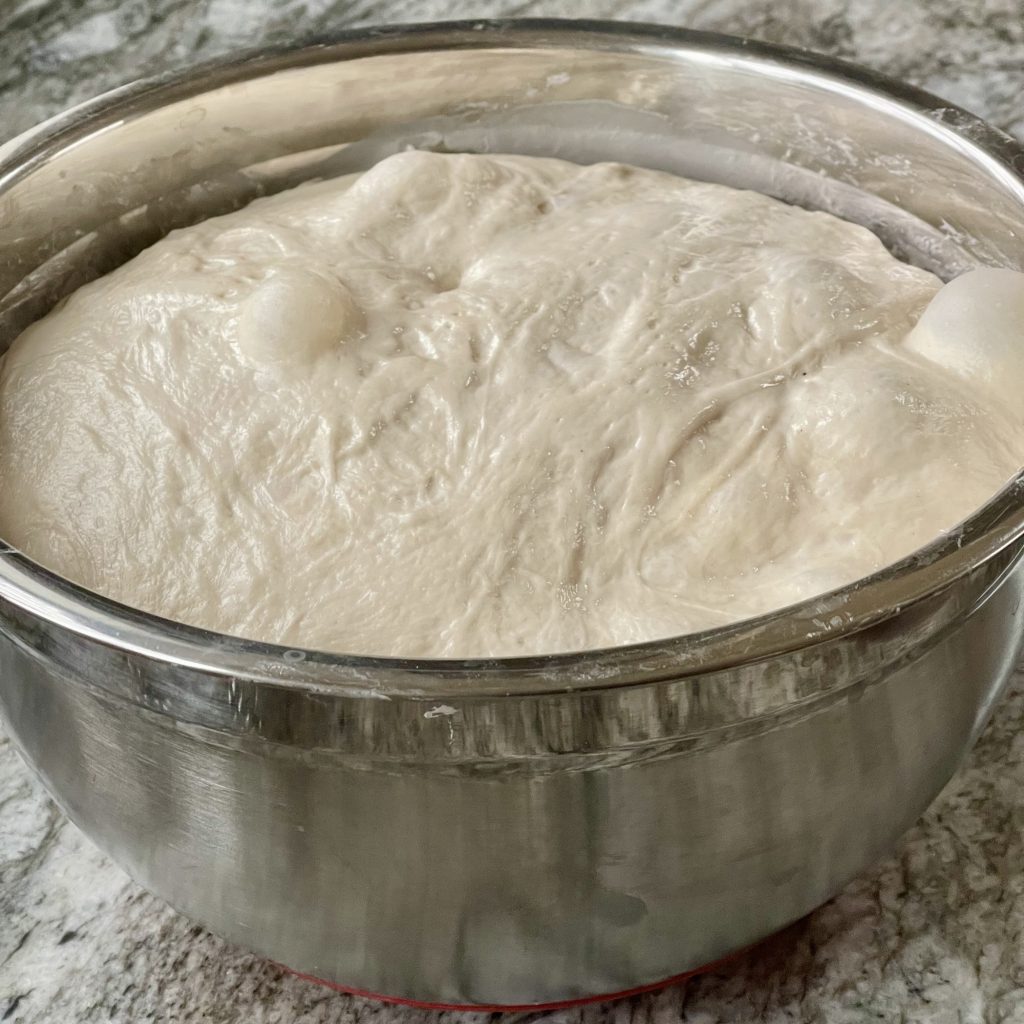
- Dough looks puffy and slightly domed in the bowl/tub
- Noticeable volume increase (often ~30–75%, method-dependent)
- Dough feels lighter and airier when you lift it
- Surface shows bubbles (especially along the sides/bottom of a clear container)
- Dough jiggles when you gently shake the container
What NOT to rely on
- A strict “double in size” rule
- A timer alone
- A poke test during bulk (often inconsistent in slack dough)
Optional Tip: straight-sided container
A straight-sided container with a rubber band marker can make bulk rise easier to track while you’re learning. If you use a round bowl, that’s totally fine—just rely more on cues like bubbles, doming, jiggle, and airy feel instead of a strict percent-rise target.
Your starter has a lot to do with how well your dough develops. Learn how Properly feeding and maintaining your starter impacts starter strength and activity.
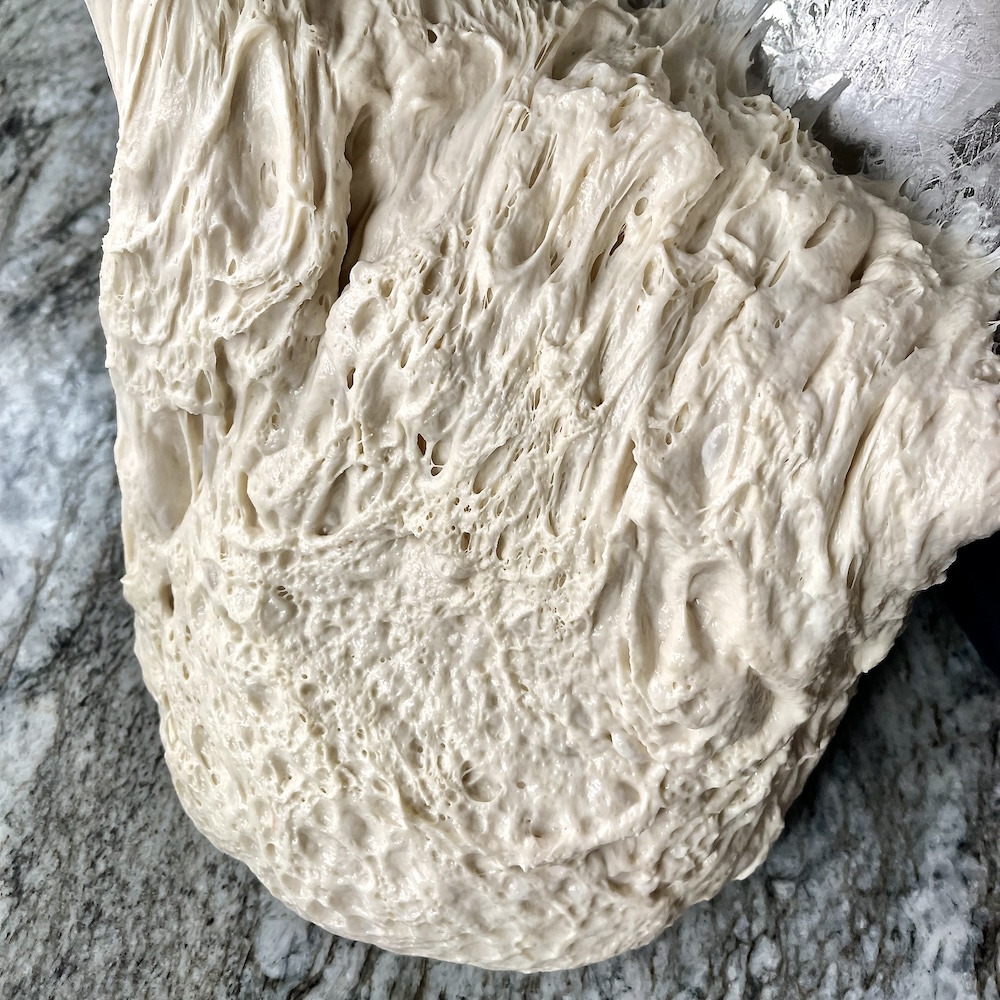
Final Proof: Banneton Signs
Final proof is about choosing the best bake moment—proofed enough to spring, but not so proofed it collapses.
Note: The banneton stage is the final proof after shaping. Cold fermentation can happen either after shaping (cold proof) or before shaping (cold bulk / long cold rise)—same fridge, different stage. Read more on this in our post on Cold Bulk vs. Cold Proof Sourdough.
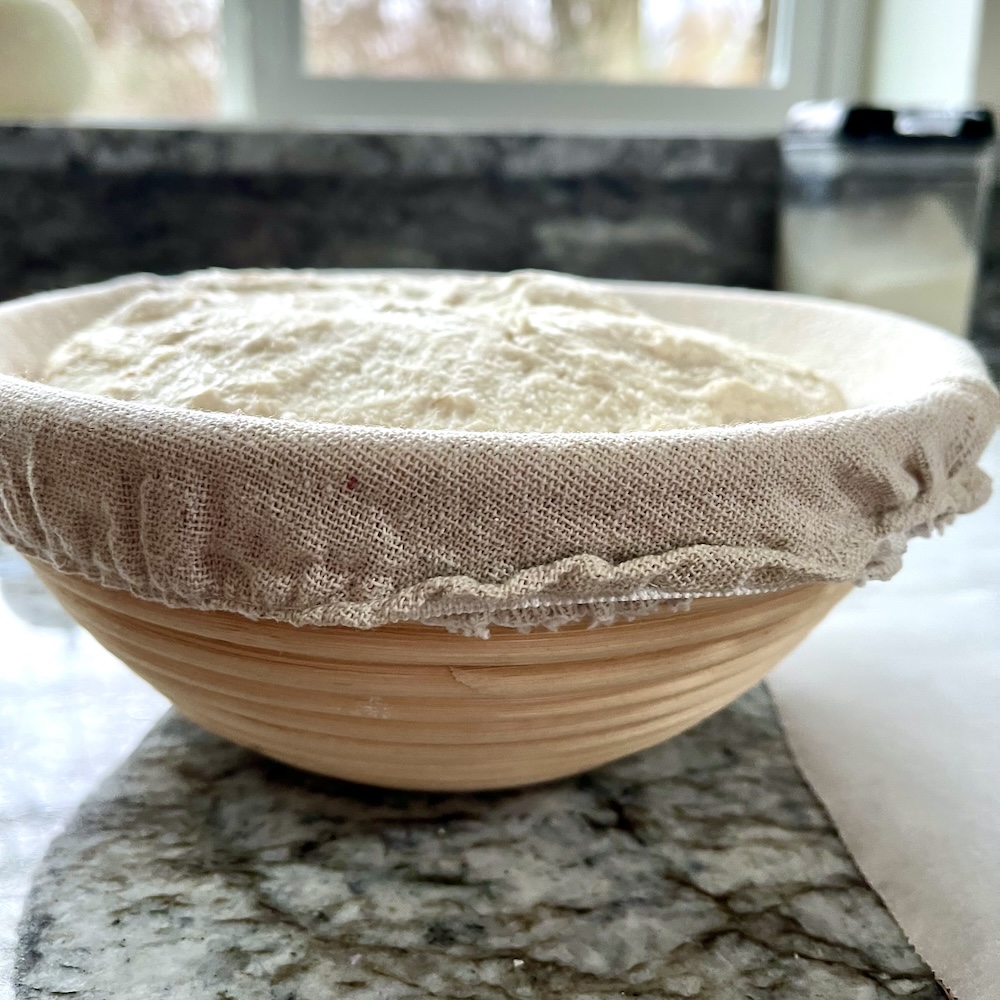
Signs final proof is ready
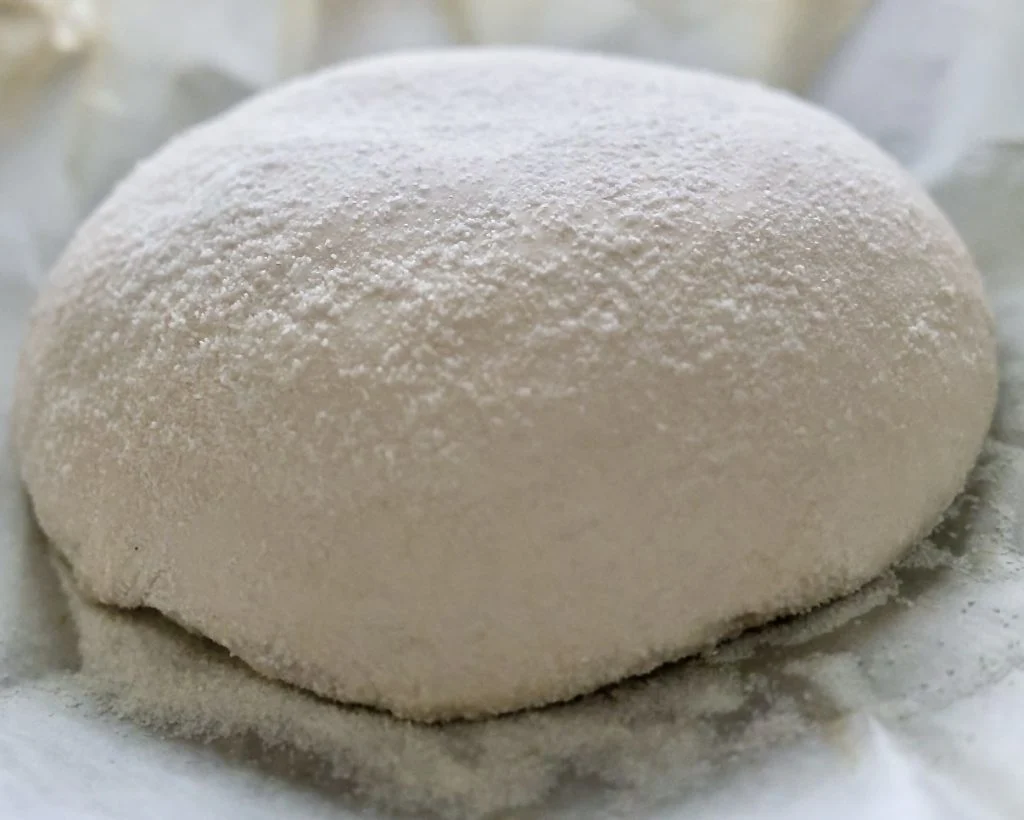
- Dough has expanded and looks plump
- Dough feels lighter in the basket (you can sense the aeration)
- Surface looks smooth and slightly risen, not tight and dense
- When turned out, dough holds its shape and doesn’t spread instantly
If it’s not ready yet
- Dough looks compact
- Dough feels heavy and tight
- When turned out, it looks dense and may tear during scoring
If it went too far
- Dough looks very soft and fragile
- When turned out, it spreads more than usual
- Scoring drags, deflates, or won’t open cleanly
The poke Test:
The poke test is helpful—but only if you understand its limits.
How to do it
With a floured finger, gently press the dough about 1/2 inch.
How to Read It
- Springs back quickly and fills in completely: likely underproofed
- Springs back slowly and leaves a slight dent: typically ready
- Doesn’t spring back / dent stays deep: likely overproofed
When the poke test lies
- Very high hydration doughs
- Very cold dough (cold slows rebound)
- Weak-structure dough (dents easily even when underfermented)
Use the poke test as one data point, not the only decision-maker.
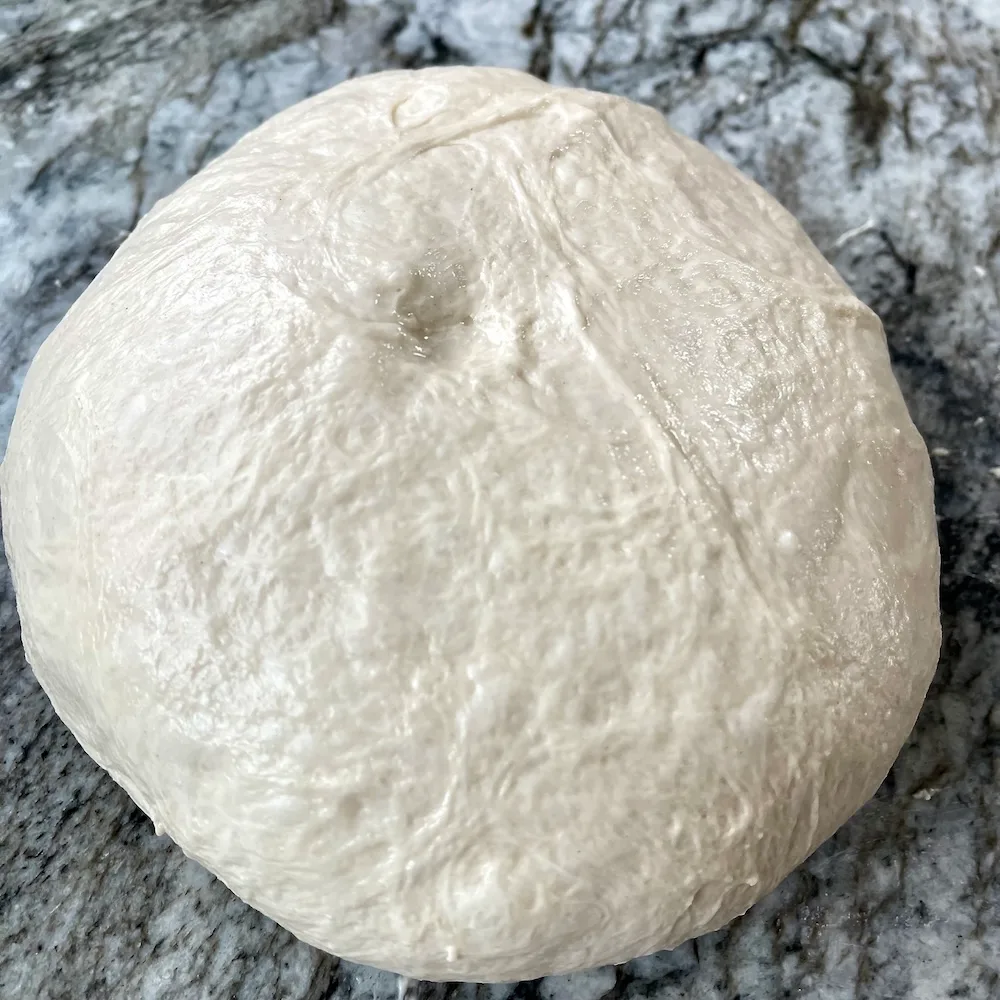
Cold Fermentation Overnight + LCR
Cold fermentation (retarding) is one of the best tools for consistent sourdough. Refrigeration slows fermentation, improves flavor, develops structure, and firms the dough so it’s easier to handle and score.
Why cold fermentation helps
- Slows fermentation, making timing easier
- Improves flavor development
- allows structure development
- Firms up dough, making scoring easier and more predictable
Two common cold setups Cold Proof vs. Cold Bulk
1) Cold proof (final proof in the fridge after shaping)
Many recipes shape the dough, refrigerate overnight (often 8–16 hours), and bake straight from the fridge.
2) Long cold rise during bulk (cold bulk fermentation before shaping)
Other methods refrigerate dough during bulk fermentation (before shaping) to develop flavor slowly on a flexible schedule.
Main difference: fridge time happens after shaping (cold proof) or before shaping (cold bulk / long cold rise).
Our Long Cold Rise No-Knead workflow
Most of our Homemade Food Junkie artisan sourdough recipes use a long cold rise during bulk, followed by a short final chill after shaping for better oven spring and easier scoring.
Here’s the basic process we use:
- After initial mixing and stretch-and-folds, then bulk fermentation — typically 60–90 minutes
- Overnight long cold rise in the bowl (cold bulk) ~12 hours to 24 Hrs. (Can go longer for schedule)
- Optional counter warm-up as needed to finish fermentation and relax dough for shaping
- Bench rest + final shaping
- Final chill after shaping (about 2–4 hours) to firm dough and improve oven spring
- Score and bake (cold dough is often easiest to score)
If your cold bulk runs long (24–36 hours and dough is proofed), you may shape and bake the dough cold with good results—use dough cues to decide.
For the complete step-by-step process and our 78% hydration artisan loaf, see Our Beginner Artisan Bread Recipe
NOTE: Timing varies by kitchen temperature and starter strength—use dough cues alongside any timeline.
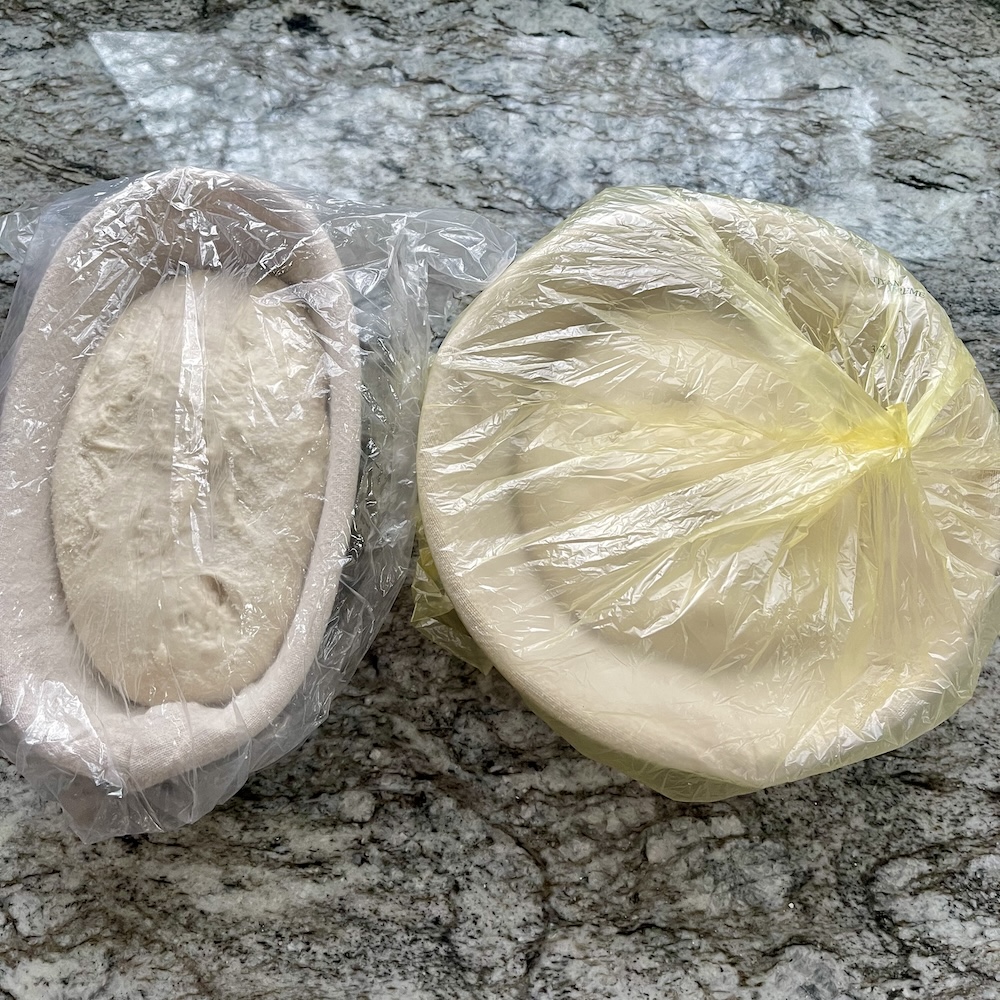
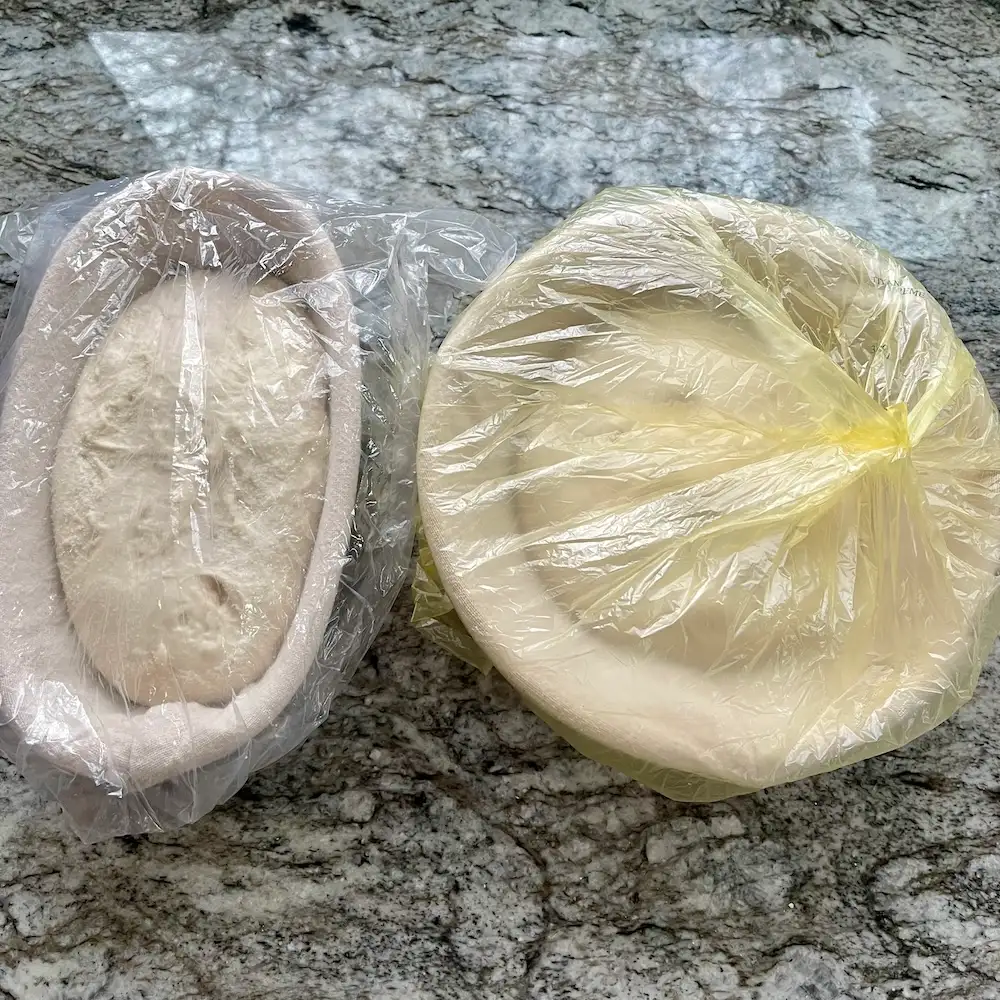
Underproofed vs Overproofed:
When learning how to proof sourdough you will make mistakes along the way. This section helps you diagnose what went wrong. Don’t rely on a timer—learn your dough.
Common signs of an underproofed loaf
- Big blowout on the side or bottom
- Tight, dense crumb with gummy patches
- Very strong oven spring but uneven openings
- Tunneling near the top
Fixes
- Extend bulk fermentation (or final proof, depending on where you cut it short)
- Increase dough temperature slightly
- Confirm starter strength and activity
Common signs of an overproofed loaf
- Flat loaf, poor oven spring
- Spreads when turned out
- Weak scoring ear (or scoring deflates the dough)
- Crumb can look very even and sometimes “tight” despite long fermentation
Fixes
- Shorten final proof (or shorten bulk if the dough is already over-fermented before shaping)
- Refrigerate earlier / use colder proofing
- Build more strength early and shape with good tension
Common Proofing Mistakes (and Fixes)
Mistake: “I followed the timeline exactly.”
Do instead: Use time as a guideline, then confirm with dough cues.
Mistake: Proofing in a cold kitchen and wondering why it takes forever.
Do instead: Track dough temperature and plan for longer fermentation.
Mistake: Changing hydration/flour and expecting the same proofing results.
Do instead: Keep variables steady while learning; change one thing at a time.
Mistake: Overproofing in the basket because bulk went too long.
Do instead: If bulk runs long, shorten final proof or move to the fridge sooner.

FAQS About How To Proof Sourdough:
How long should sourdough bulk fermentation take?
Bulk time varies widely. Some methods do most bulk fermentation at room temperature, while others use a long cold rise during bulk to slow fermentation and fit your schedule.
How long should final proof take?
Final proof can be 30 minutes to a few hours at room temp, or 8–16 hours in the fridge for a cold proof.
Can I bake sourdough straight from the fridge?
Yes—many bakers prefer it because cold dough is easier to score and holds shape better.
Should sourdough double during bulk?
Not necessarily. Many successful sourdough methods shape at 30–75% rise, depending on the dough and temperature.
What if my dough is always underproofed?
Your starter may not be strong enough, your dough may be colder than you think, or you’re cutting bulk short. Check starter activity, dough temp, and look for bubbles + aeration before shaping.
Is “long cold rise” the same as “cold proof”?
Not always. Cold proof usually means refrigerating the dough after shaping (final proof in the fridge). A long cold rise can refer to a longer cold fermentation schedule and may happen during bulk (before shaping) or during final proof depending on the method.
Does dough rise in the fridge during a long cold rise?
Yes, but it can be subtle. Cold temperatures slow fermentation, so you may see less visible rise than at room temperature. Focus on dough cues (aeration, bubbles, strength, shape retention) rather than expecting dramatic expansion in the fridge.
Can I do a long cold rise before shaping instead of after shaping?
Yes. Some recipes (like ours) refrigerate during bulk fermentation (cold bulk) and shape later, while others shape first and refrigerate for cold proof. Both can work—the key is to avoid moving dough to the fridge too early (under-fermented) or too late (over-fermented/slack).
If my dough cold-fermented for 24–36 hours, can I shape and bake it cold?
Often yes, especially with strong flour and good structure. Cold dough is easier to handle and score, but use dough cues—if it’s very fragile and spreads quickly, it may be over-fermented and need gentler handling and shorter final proof.
Why is my dough slack and hard to shape after a long cold rise?
Long cold fermentation can make dough more extensible (stretchy). If it feels overly slack, bulk may have gone too far for that flour/hydration, or the dough lacked strength early. Build more strength earlier (folds), shorten cold time, or reduce hydration slightly.
Should I always warm the dough after the fridge?
Not always. Some doughs benefit from a short warm-up to relax for shaping; others can be shaped cold. The right choice depends on dough strength, fermentation level, and how the dough feels when you handle it
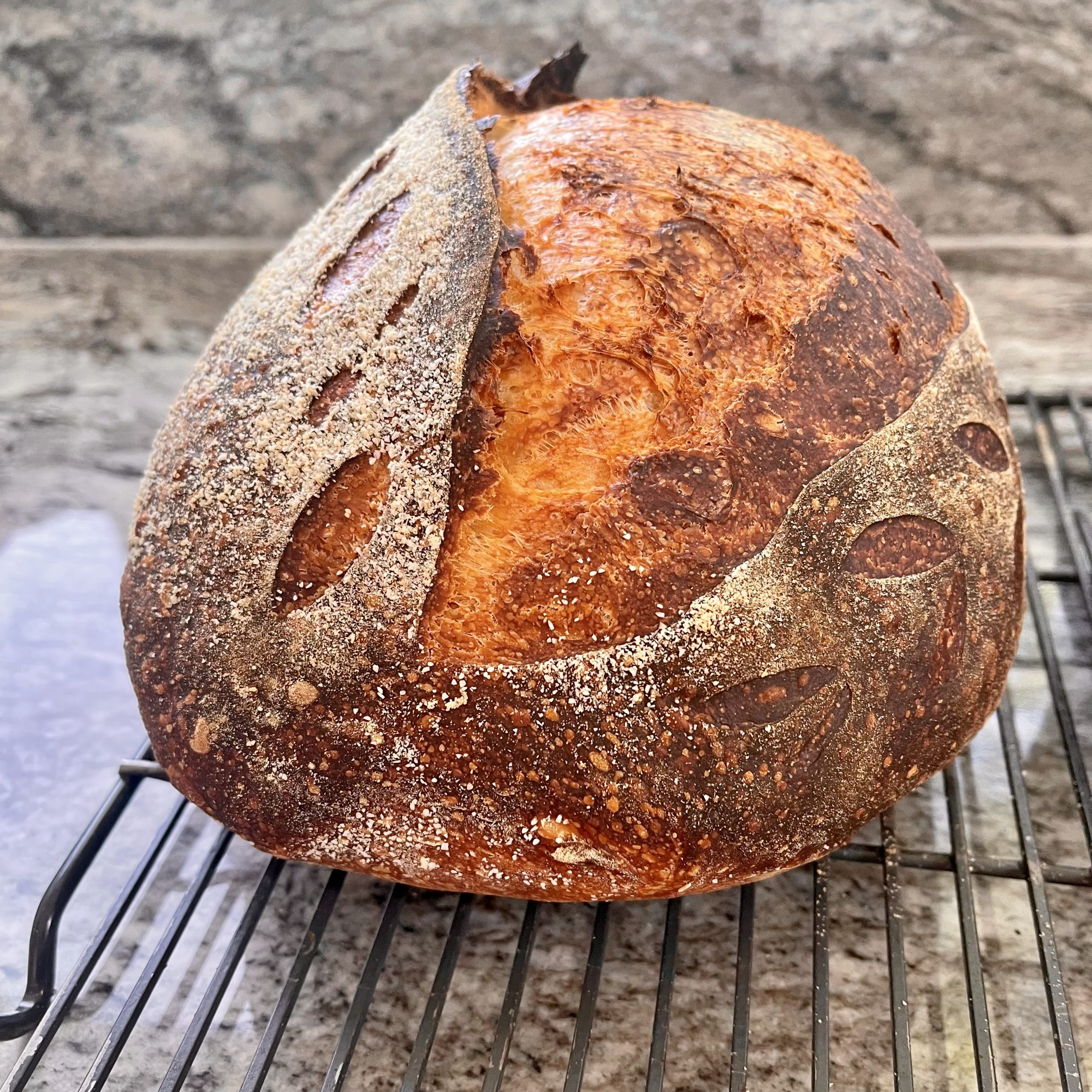
Final Takeaway: How to Proof Sourdough Confidently
If you remember only a few things from this guide, remember these:
- Proofing has two stages: bulk fermentation (before shaping) and final proof (after shaping).
- Use dough cues, not the clock: bubbles, doming, jiggle, and an airy feel matter more than a set time.
- Temperature is your dial: warmer dough proofs faster; cooler dough proofs slower and gives you more flexibility.
- Use the poke test as support: it’s helpful, but it can “lie” with very cold dough, very wet dough, or weak structure.
- Cold fermentation is a tool, not a fix: refrigerate to manage timing and handling once fermentation is on track—don’t use cold to “rescue” under-fermented dough.
If your dough is consistently too fast or too slow, keep one variable steady (flour + hydration + salt) and adjust temperature and time next. After a few bakes, you’ll start recognizing what “ready” looks like in your kitchen.
Sourdough Troubleshooting (Start Here)
If your bread doesn’t turn out the way you expect and you need more ideas, start with our complete Sourdough Troubleshooting Guide
Or jump to the specific issue you’re seeing:
- Bread turns out dense –Why Is My Sourdough Bread Dense?
- Learn Bread Structure changes-What Is Dough Structure in Sourdough?
- Dough spreads instead of rising – How to Shape Sourdough Bread
- Score won’t open – How to Score Sourdough Bread
- Crust is soft or pale – How Steam Baking Sourdough Affects Oven Spring and Crust
- Not sure what your crumb means – How to Read Sourdough Crumb Structure
- Want a specific crumb style?-How to Control Sourdough Crumb (Open vs Soft Sandwich Style)
- No ear on your loaf – Do You Need an Ear on Sourdough Bread?