
Understanding Sourdough Hydration
As an Amazon Associate and member of other affiliate programs we earn a small commission from qualifying purchases through our affiliate link. For more information read our Entire Affiliate Disclosure.
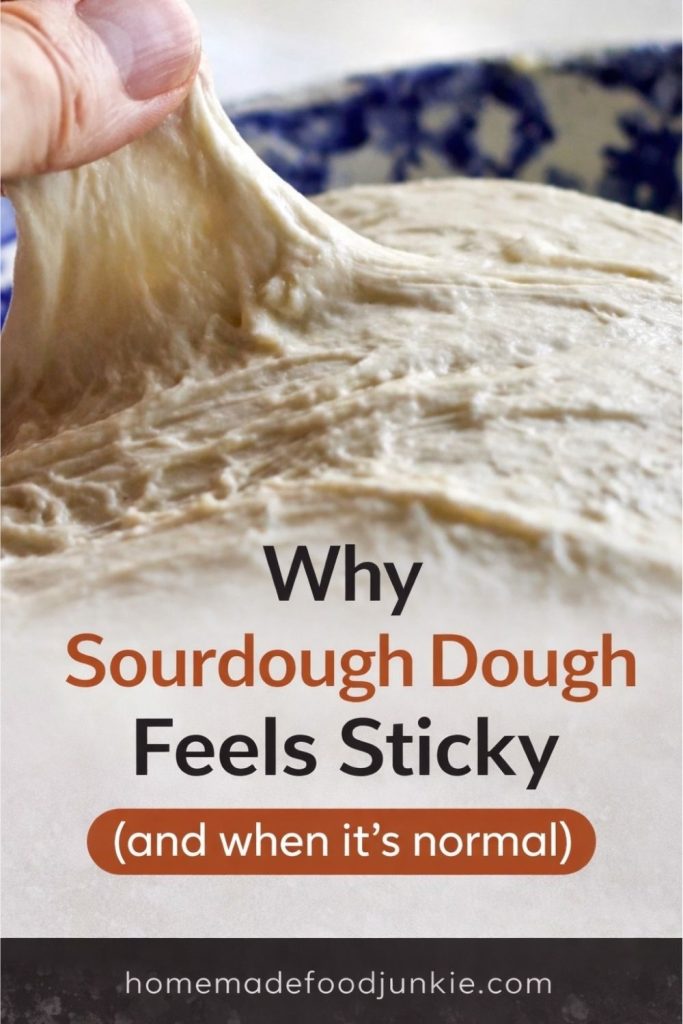
Sourdough hydration is one of the most confusing concepts in sourdough baking—especially for U.S. home bakers used to measuring by cups and following exact timelines.
If you’ve ever wondered why your dough feels sticky, looks different than recipe photos, or behaves unpredictably even when you follow instructions, hydration is usually the reason.
This guide explains what sourdough hydration actually means, how it affects dough over time, and why long cold-rise sourdough often feels wetter than expected—without turning this into a math lesson. Use the table of contents to explore specific topics, or read straight through for a complete understanding of sourdough hydration.
What Does “Hydration” Mean in Sourdough?
In sourdough baking, hydration refers to the ratio of water to flour by weight in a dough.
- Higher hydration means more water relative to flour, resulting in softer, stickier dough.
- Lower hydration means less water and a firmer, easier-to-handle dough.
Hydration affects dough structure and feel, fermentation speed, crumb structure, and oven spring. It does not determine whether a recipe is good or bad.
Because sourdough relies on long fermentation instead of kneading, sourdough hydration tends to be higher than in most yeast breads. This is normal—and intentional.
Why Sourdough Dough Often Feels Wetter Than Expected
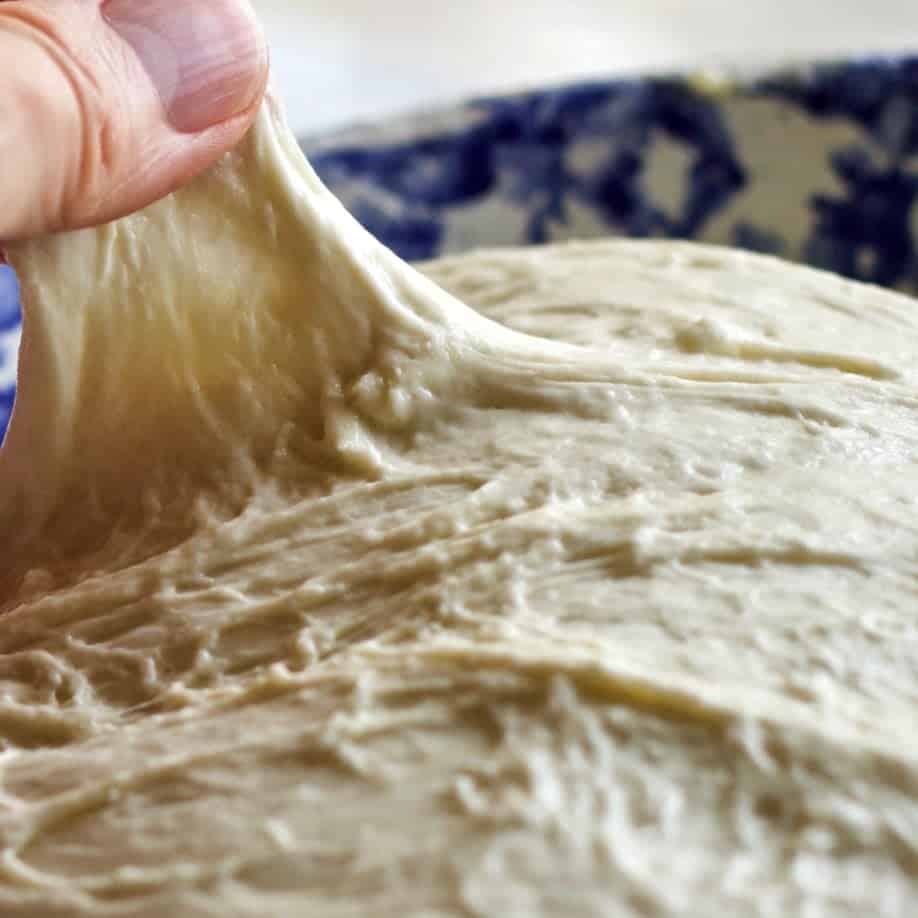
Sourdough recipes — especially artisan loaves — use higher hydration than typical yeast breads. This is intentional. Many artisan sourdough recipes use higher sourdough hydration because water supports long fermentation and dough building:
- Gluten develops gradually over time
- Enzymes work more efficiently
- Dough strength comes from rest, not kneading
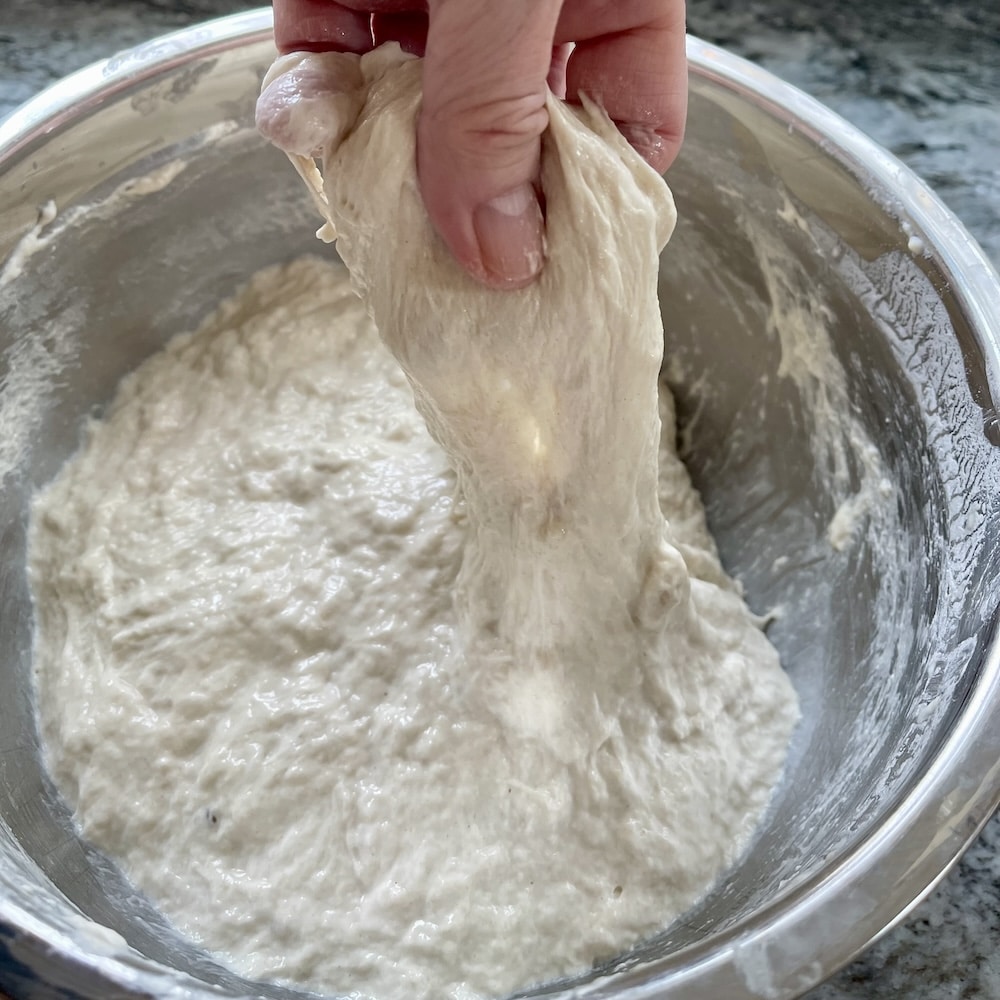
As a result, sourdough dough often feels sticky early on, slack during bulk fermentation, and stronger later than expected. This surprises many bakers, but it’s normal—especially in long cold-rise methods.
Our Sourdough Troubleshooting Guide walks through how hydration, fermentation timing, gluten development, and flour choice interact so you can identify the actual cause of your problem if you are not happy with your sourdough.
Hydration Is a Range — Not a Rule
Hydration is not a fixed number that works for everyone. The same hydration can behave very differently depending on:
- Flour type and protein content
- Room temperature
- Fermentation time
- Measurement method (weight vs volume)
- Various dough handling techniques
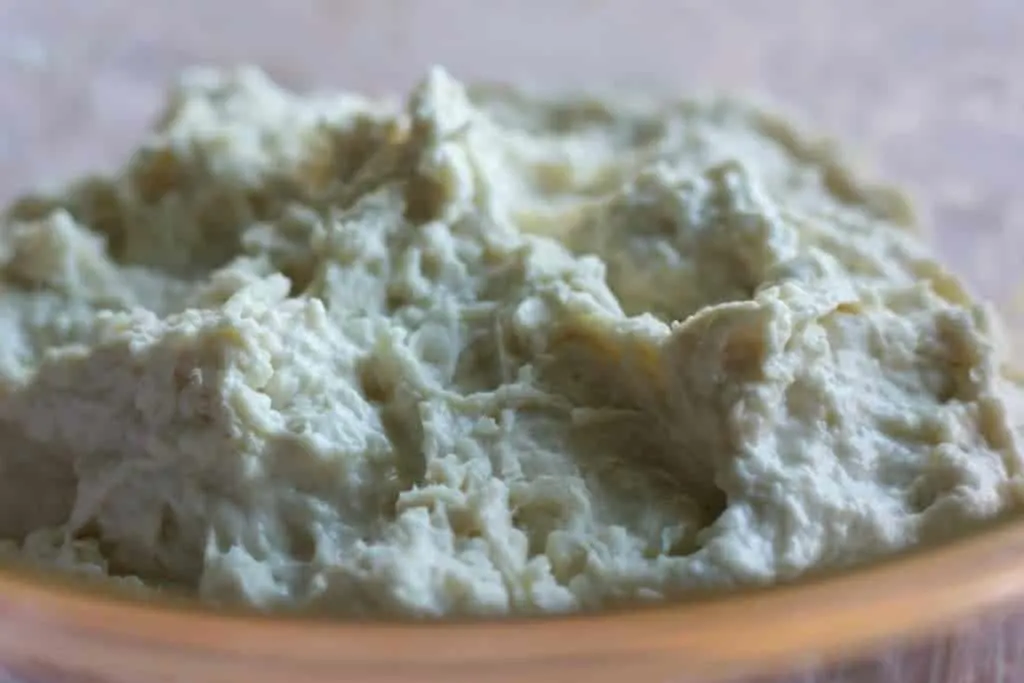
This is why two bakers can follow the same recipe and get a different dough. The more water you try to force into the your flour, the more it changes the processes need to accommodate that extra moisture. You need a high protein flour to increase hydration significantly.
Advanced Perspective: Sourdough Hydration Is a Lever, Not a Target
For experienced bakers, hydration is best understood as a lever rather than a fixed percentage. Changing hydration alters how fermentation expresses itself, how gluten develops, and how dough responds to time and temperature.
Higher hydration amplifies flour differences, fermentation speed, and handling errors. This means it’s trickier to work with high hydration doughs. Lower hydration dough is much easier to handle and increases beginner success.
Mastery comes from choosing hydration intentionally based on flour choice, fermentation method, and desired crumb structure. Our table further down this post will help with that.
Using a Real Recipe to Understand Sourdough Hydration (Math vs. Behavior)
Our Beginner Sourdough Artisan Bread is at 78% hydration. This is high for a beginner loaf. However,
It works exceptionally well for beginners because the process is designed to support that hydration. Here’s How it works:
- A long autolyse fully hydrates the flour, salt is added after extensibility develops. Salt also impacts dough strength and fermentation speed. If your dough feels overly slack or spreads, review: Salt in Sourdough Bread: Why It Matters.
- Gluten strength is built gradually through structured stretch-and-folds.
- Finally, fermentation is slowed with a cold bulk rise.
The result is a dough that behaves more like a moderate-hydration dough—elastic, resilient, and predictable—despite its higher hydration number. This is why hydration should be evaluated not just by the numbers, but by how the dough is developed, fermented, and handled.
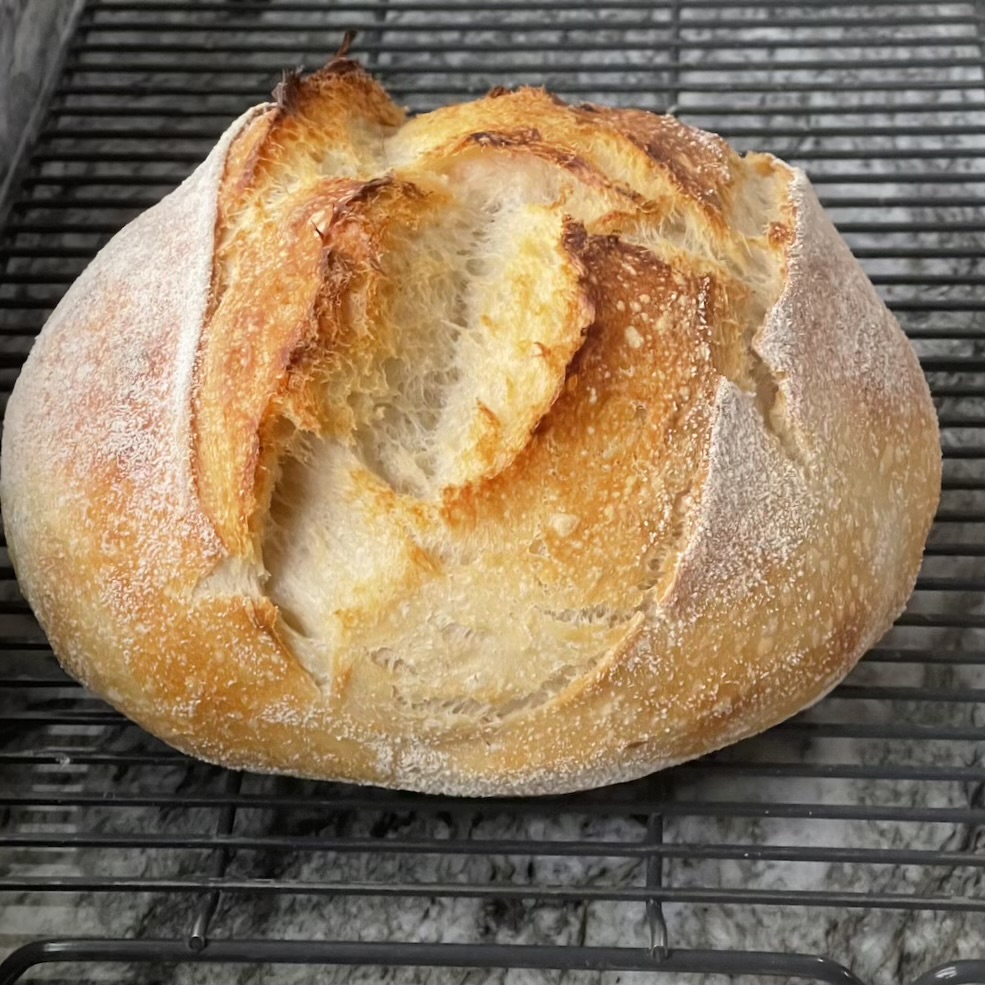
This recipe is a good example of why the hydration table below focuses on dough behavior, not just percentages.
Sourdough Hydration Comparison: Low vs. Medium vs. High
Hydration is not an isolated knob. Changing water alone affects gluten strength, fermentation speed, crumb texture, loaf shape, and flavor. The comparison section below is designed to help you predict those changes, at a glance, before you mix the dough—so hydration becomes a tool, not a surprise.
Low Hydration Sourdough (60–65%)
- Dough Feel:
Firm, tight, strong structure, easy to handle. - Gluten Strength:
Develops quickly and holds shape well. - Crumb Texture:
Tight, even crumb with smaller air pockets. - Fermentation Behavior:
Slower and more forgiving. Wider timing window. - Oven Spring & Shape:
Strong vertical rise. Tall, defined loaf. - Flavor Impact:
Milder acidity. Clean wheat flavor. - Best For:
Sandwich loaves, pan breads, cooler kitchens, beginner bakers.
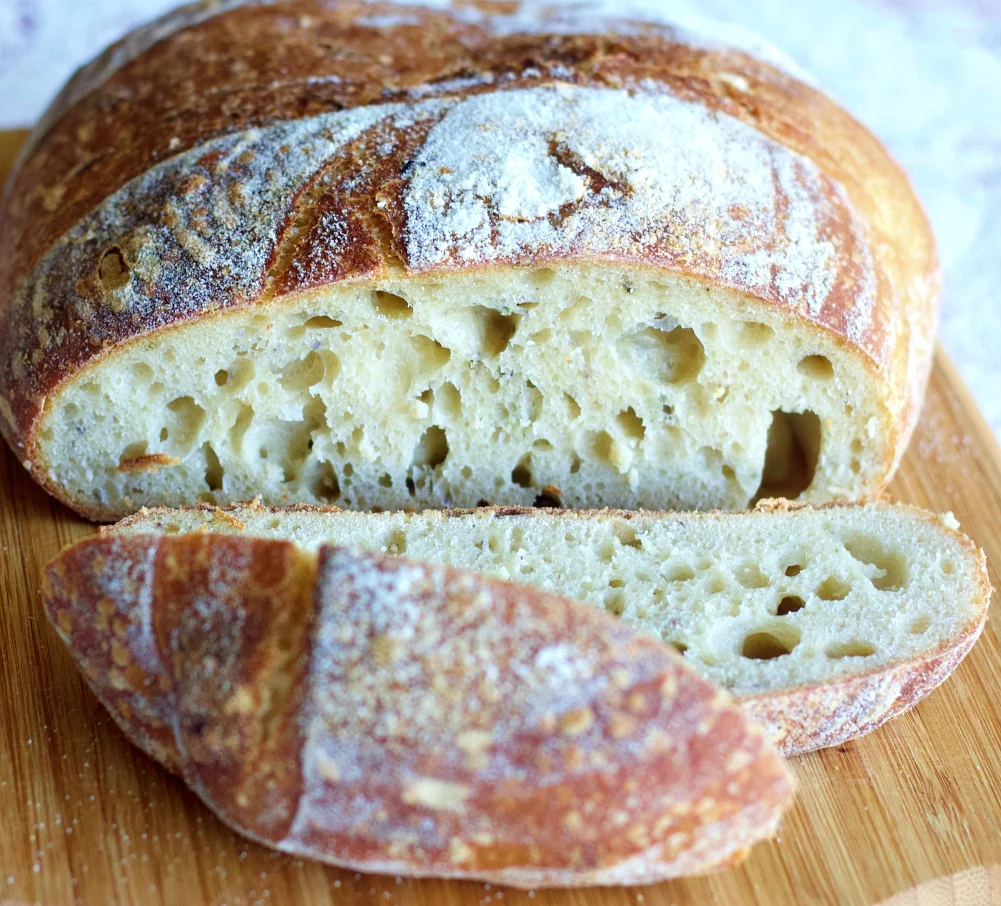
Medium Hydration Sourdough (66–72%)
- Dough Feel:
Elastic, extensible, manageable with light stickiness. - Gluten Strength:
Balanced strength and flexibility. - Crumb Texture:
Moist, creamy crumb with moderate openness. - Fermentation Behavior:
Predictable and easy to control. - Oven Spring & Shape:
Excellent spring with good structure retention. - Flavor Impact:
Balanced sweetness and acidity. - Best For:
Everyday artisan boules and bâtards, consistent results, skill-building.
High Hydration Sourdough (73–85%+)
- Dough Feel:
Loose, sticky, fragile unless well-developed. - Gluten Strength:
Requires deliberate development and strong flour. - Crumb Texture:
Very open crumb. Risk of gumminess if under-fermented. - Fermentation Behavior:
Faster fermentation. Narrow margin of error. - Oven Spring & Shape:
Can spread or bake flatter if structure is weak. - Flavor Impact:
More pronounced fermentation notes and sharper acidity. - Best For:
Rustic loaves, advanced bakers, very strong bread flour.
Hydration should be chosen intentionally based on flour strength, fermentation method, and your skill level — not simply pushed higher for open crumb.
How to Use This Section Intentionally
To use the comparison section, first decide what you want to change, then adjust hydration intentionally for the results you are going for.
Remember:
- Lower hydration increases structure and timing tolerance but sacrifices crumb openness.
- Medium hydration balances moisture, strength, and fermentation control—this is why we favor it for reliable results.
- Higher hydration increases extensibility and gas expansion only if gluten development, flour strength, and fermentation are adjusted alongside the water.
Real-Life Hydration Test: What Happens When Water Increases Without Process Adjustment
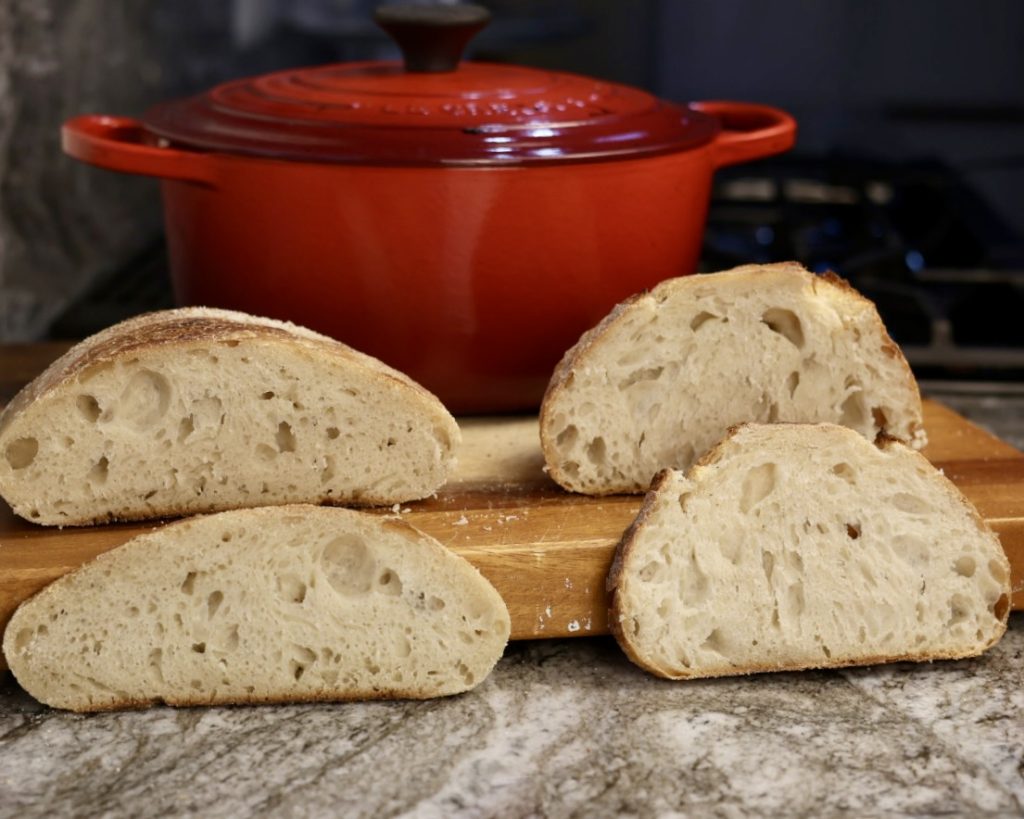
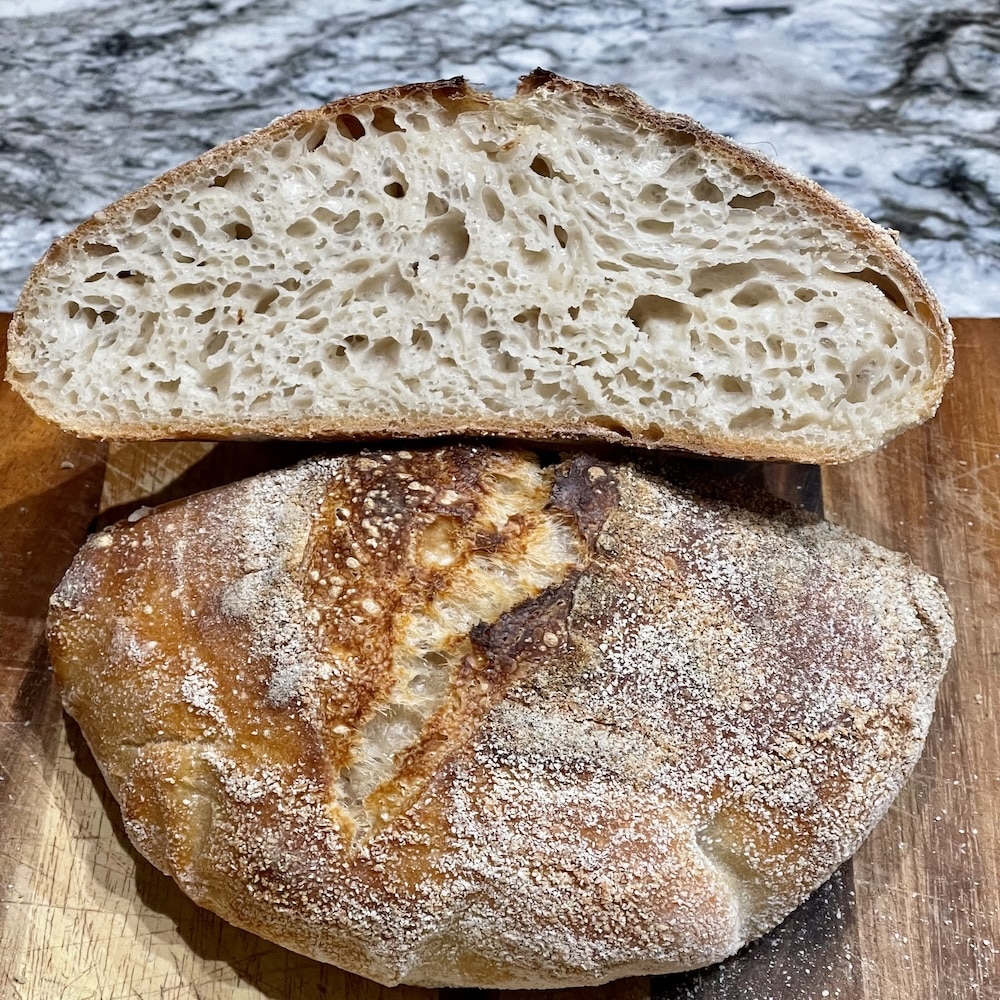
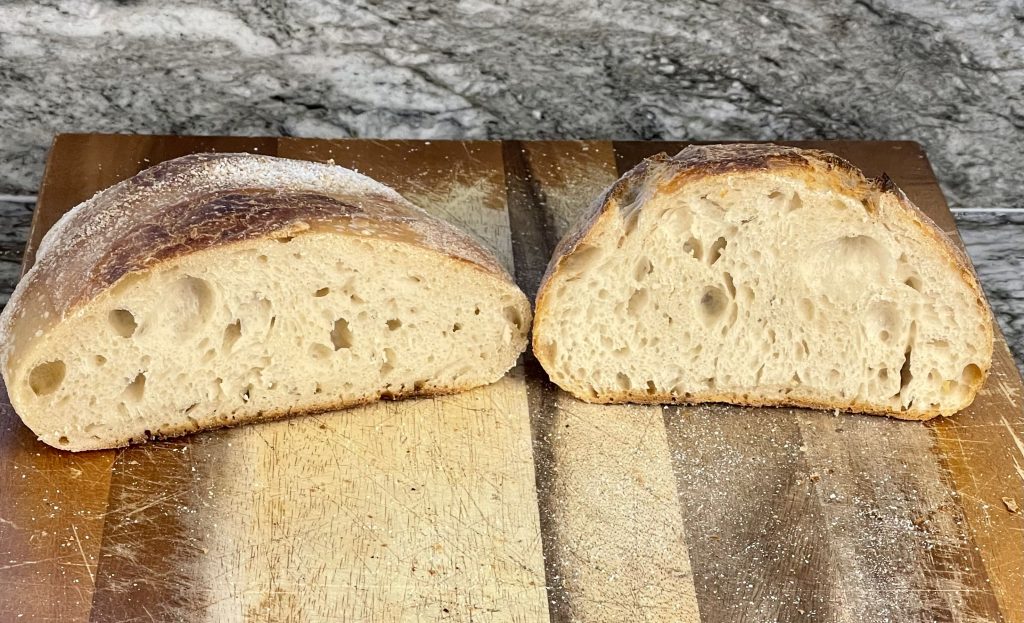
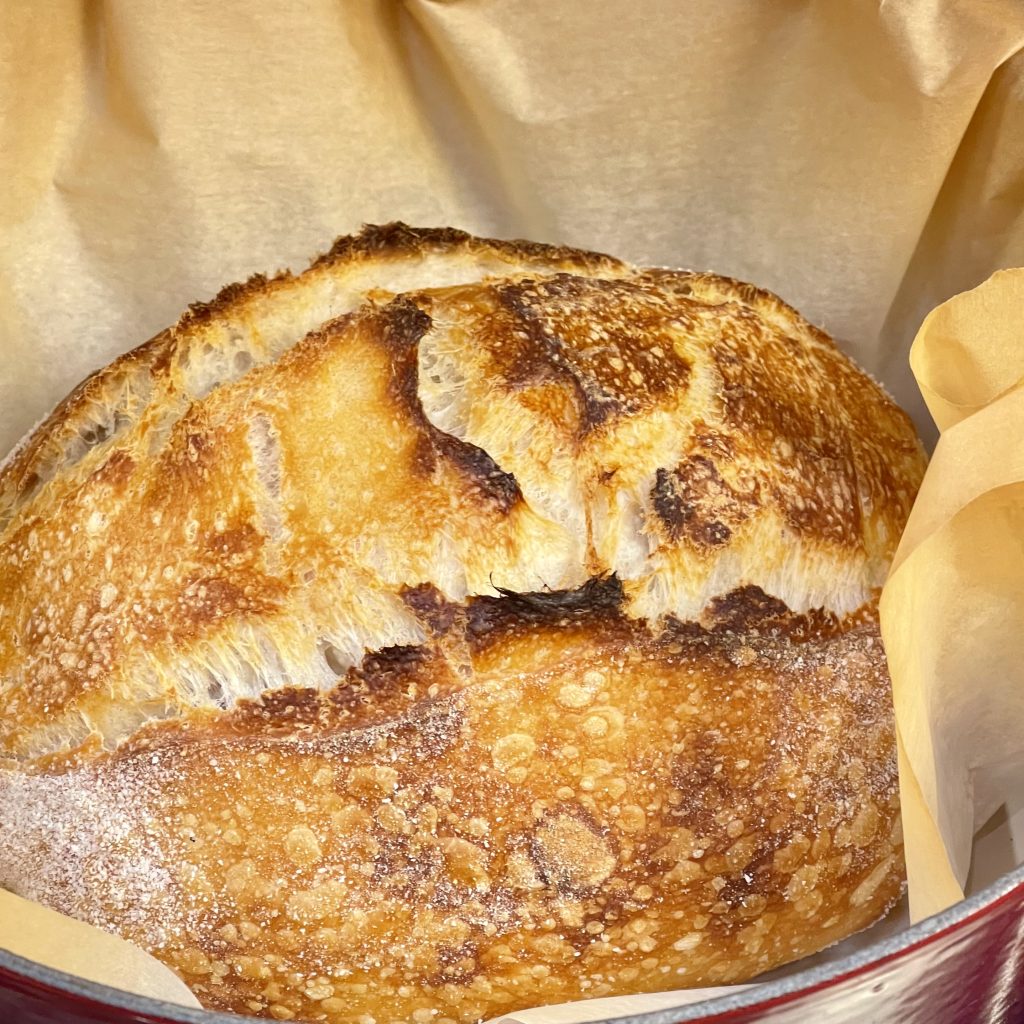
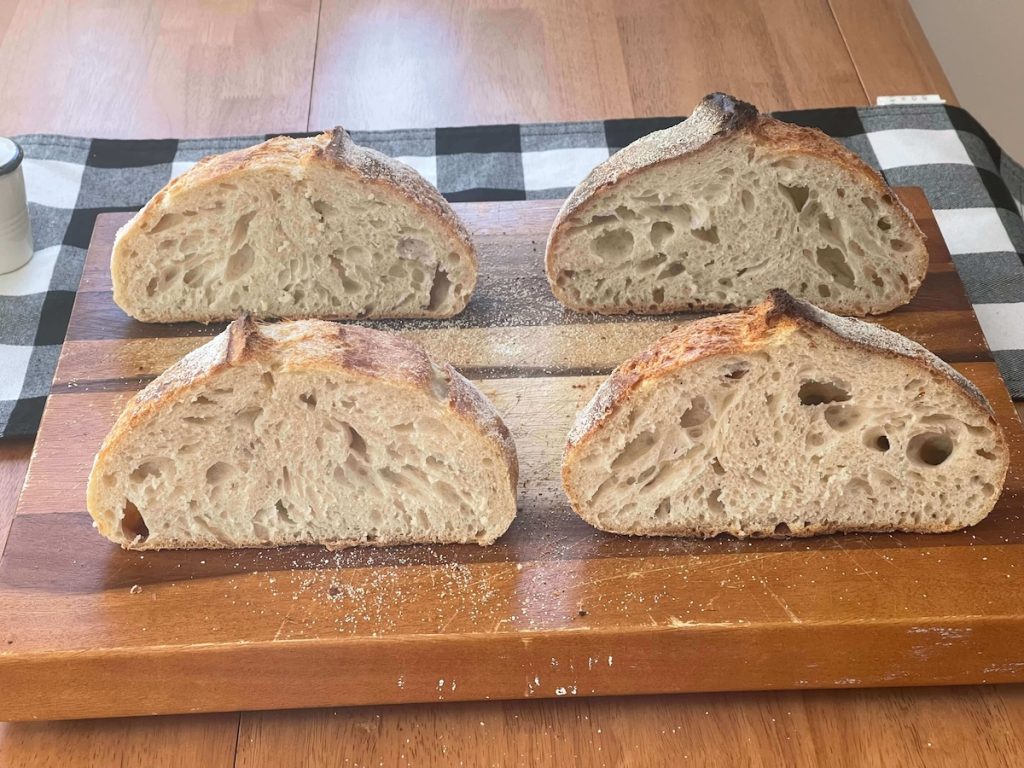
Recently, I baked the same sourdough recipe twice using identical flour, starter strength, salt, and fermentation timing. The only variable that changed was hydration. These are the pictures you see in this post for the finished bakes.
One loaf was measured carefully at the intended hydration level. The other loaf was mixed more casually, with slightly more water added and less precise flour measurement. It probably raised hydration to 79 or 80% due to sloppy measurements.
Here is what happened:
- The higher-hydration loaf felt looser during shaping.
- Surface tension was harder to build.
- The dough spread more during final proof.
- Oven spring was reduced.
- The finished loaf baked flatter with a more irregular crumb.
The properly measured loaf:
- Held its shape during bench rest.
- Built tension more easily.
- Rose upward instead of outward.
- Produced a creamy, structured crumb.
The key takeaway was not that higher hydration “fails.”
The takeaway was that hydration changes must be paired with adjustments in gluten development,(learn more about Sourdough Flour Types here) shaping precision, and fermentation control.
When water increases but process stays the same, structure weakens.
This side-by-side bake reinforced an important principle:
Hydration should be adjusted intentionally—not accidentally.
Exact measurement and disciplined process produce consistent results. Casual adjustments produce unpredictable structure.
Salt & Hydration (Important Note)
Salt does not change dough hydration on paper, but it changes how hydrated the dough behaves.
- Salt tightens gluten, making dough feel firmer and less sticky
- Salt binds free water, reducing effective hydration
- Salt slows fermentation, helping dough hold structure
- Unsalted dough will feel wetter and weaker at the same hydration
Takeaway:
A dough may feel “too wet” before salt is added, then suddenly manageable afterward. Always evaluate hydration after salt incorporation, not before.
Hydration Adjustment Checklist
Before increasing hydration, confirm the following:
☐ Flour has sufficient protein (bread flour preferred)
☐ Starter is recently fed, active, and predictable
☐ Autolyse is complete before salt is added
☐ Gluten development includes multiple stretch-and-folds
☐ Bulk fermentation is monitored by rise percentage, not time
☐ Shaping technique builds surface tension
☐ Baking method provides strong steam (Dutch oven)
If more than two boxes are unchecked, do not increase hydration yet.
NOTE: Don’t Increase Hydration Unless You Also…
- Increase gluten development
- Shorten or better control bulk fermentation
- Shape more gently but more precisely
- Accept a narrower margin of error
Higher hydration magnifies mistakes. Structure must increase with water
How Flour Choice Affects Hydration
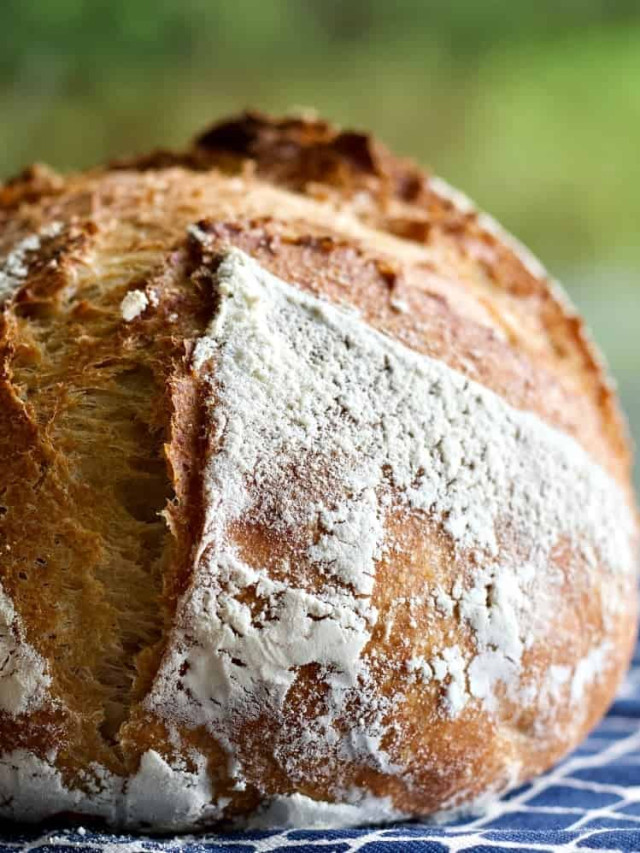
Different flours and add in ingredients like oatmeal, absorb water differently. Strong bread flour can support higher hydration, while all-purpose or whole wheat flour may behave very differently. For a deeper breakdown of protein levels, structure strength, and flour performance in sourdough, read our complete guide to choosing the right flour for sourdough bread.
- Bread flour like King Arthurs 12% bread flour is a strong flour. It absorbs water well and holds structure
- All-purpose flour: Performs best at moderate hydration and must be at least 4 grams protein. Central Milling all purpose flour is a good choice for bread making.
- Whole wheat flour: Absorbs more water but weakens gluten
- Rye flour: Absorbs water but does not build structure
- Ancient grains: Need lower hydration and gentler handling
Hydration and flour must always be balanced together. Our sourdough oatmeal bread is an example of a mathematically very high hydration bread of over 100% hydration. However, since the oatmeal is par cooked in some water it traps some hydration and creates a very workable dough.
This is why we recommend strong flour (4–5g protein per serving) for long cold-rise sourdough.
Why Hydration Matters More in Long Cold-Rise Sourdough
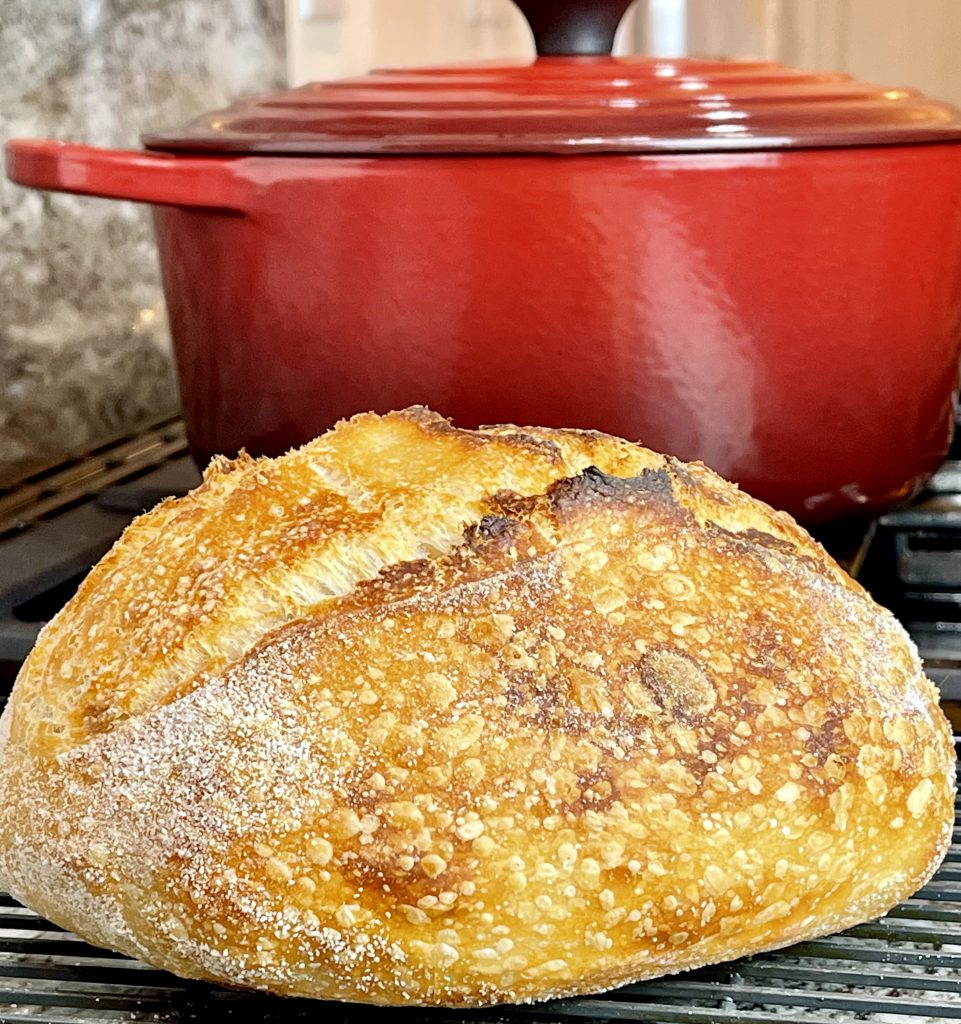
In long fermentation, hydration compounds over time. Water continues to redistribute, starches break down, and gluten relaxes slowly in the refrigerator. Dough that feels manageable at mixing can feel much wetter, and lighter with lots of bubbles in it 12–24 hours later. This is a good thing.
Hydration choices that work for same-day doughs often fail in long cold-rise sourdough unless flour strength and fermentation are adjusted accordingly.
Some highly skilled bakers push the sourdough hydration to very high hydration. These doughs are extremely wet and difficult to work with. But the crumb is very open and light.
Sticky Dough Does Not Mean Failed Dough
This is one of the most important mindset shifts for bakers new to sourdough. Especially bakers used to baking yeast breads. The feel of the dough and the process of making it are wildly different.
Sticky dough often means:
- Hydration is working
- Gluten is still developing
- Dough needs more rest
With no-knead methods:
- Time replaces handling
- Dough strengthens as it ferments
By the way, most of our sourdough bread recipes on this blog use higher hydration and create a sticky dough. Some examples are the Soft Sourdough sandwich breads.They are workable doughs and make wonderful bread. Here are some tips for handling sticky dough.
TIP: Using wet hands, light flouring, and patience matters more than forcing dough to feel “dry.” Remember, the more flour you use to reduce stickiness the less tender your bread will be. Wet hands will keep the dough hydrated and your hands won’t stick to the dough.
How Measurement Affects Sourdough Hydration
Many hydration problems are measurement problems.
Measuring flour by volume varies widely due to:
- Scooping method
- Flour type
- Humidity
- Settling
Using a digital scale keeps hydration consistent and dough behavior predictable. Even small inconsistencies can shift hydration enough to change results. Read our post on Why measuring matters in Sourdough Baking.
Even when measuring by weight, hydration can drift due to flour freshness, milling fineness, and ambient humidity. Fresh-milled and whole-grain flours absorb water progressively over time, meaning dough behavior may change between mixing and shaping.
Even the use of wet hands or the use of flour on the work board can impact hydration enough to change the dough, it’s all kind of a balance. Learn to feel your dough and adjust accordingly.
Signs Your Sourdough Hydration Is Working
Even if dough feels wet, hydration is likely correct when your dough progresses well through the steps of fermentation. Here are your clues.
- Dough relaxes instead of tearing
- Bubbles form during fermentation
- Dough gains strength over time
- Bread rises well in the oven
Trust fermentation cues more than texture alone.
Should Beginners Use Lower Hydration?
Yes — at first. The exception is a recipe couched in a complete process tutorial like our Beginner Sourdough Artisan Bread. A recipe with helps and a. tight instruction structure can help beginners succeed consistently.
Otherwise keep to Lower hydration Dough:
- Is easier to handle
- Builds confidence
- Teaches dough cues
As skill improves, bakers can gradually increase hydration to achieve:
- More open crumb
- Lighter texture
How Sourdough Hydration Affects The Long Cold-Rise, No-Knead Method
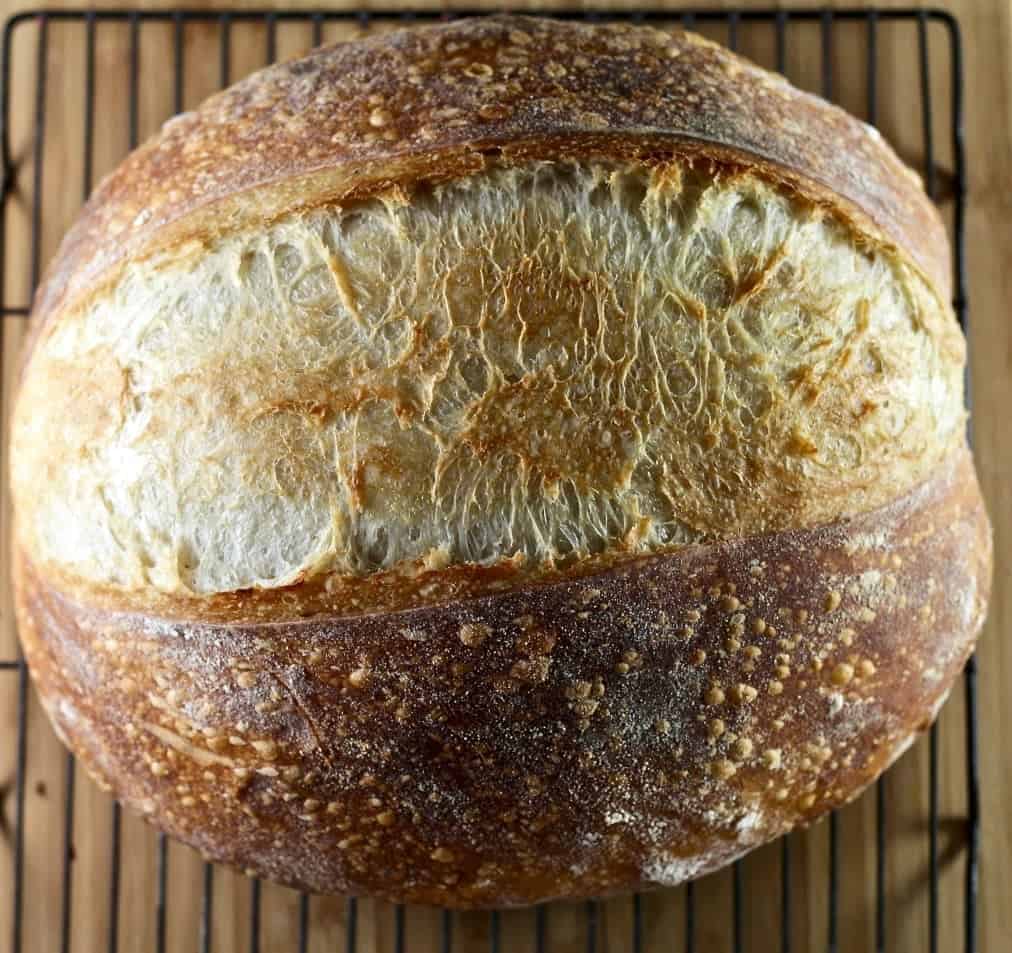
Almost all of our sourdough bread recipes, you can find them here, use this method. it’s simple and reliable and offers great results. Three things affect your outcome with sourdough.
- Time to develop
- Sourdough Hydration
- Fermentation process
Hydration allows the dough to develop naturally without kneading. When balanced with strong flour and proper fermentation, it becomes forgiving — not fragile.
Once you understand sourdough hydration, baking with this method becomes far less mysterious.
Common Hydration Mistakes (Quick Fixes)
After you have put together a few sourdough bread recipes you will ‘FEEL’ the sourdough hydration in your hands. This is important. Learn the feel of your dough. Then it’s easy to make small changes in the sourdough hydration as follows:
- Dough feels dry: increase water slightly by wetting your hands as you work the dough, rest the dough a bit longer so it can relax as you go through the steps.
- Dough spreads: reduce hydration or strengthen flour choice next time. Adding stretch and folds may help develop the dough structure.
- Sticky dough panic: wait before adjusting — time matters. Sourdough takes time to develop. Trust the recipe!
Change one variable at a time. This will help you learn what is working to get the results you prefer in your finished loaf.
NOTE: Sourdough Hydration is not about chasing a number — it’s about understanding relationships.
Once you see how water, flour, time, and fermentation work together, sourdough baking becomes consistent, flexible, and enjoyable.
What Sourdough Hydration Percentage Really Means
In sourdough baking, hydration refers to the ratio of water to flour by weight, expressed as a percentage. If a dough contains 500 grams of flour and 350 grams of water, the hydration level is 70%.
Hydration percentage matters because even small changes dramatically affect dough behavior. A 5% increase in hydration can turn an easy-to-handle dough into one that feels sticky, slack, or difficult to shape. Understanding hydration allows you to troubleshoot problems like dense crumb, flat loaves, and weak oven spring with intention instead of trial and error.
Hydration is also inseparable from flour type, fermentation time, and gluten development. There is no “one perfect hydration,” only the right hydration for your flour, skill level, and environment.
Low Hydration Sourdough (60–68%)
Low hydration doughs contain less water relative to flour, making them firmer and easier to handle.
Characteristics of Low Hydration Dough
- Dough feels tight and smooth
- Easier shaping and scoring
- More predictable fermentation
- Tighter, sandwich-style crumb
Best Uses
- Beginner sourdough bakers
- All-purpose or bread flour
- Cooler kitchens
- Sourdough sandwich loaves
Low hydration sourdough is often overlooked, but it is one of the best ways to build confidence and consistency. These doughs are more forgiving if fermentation runs slightly long and are less likely to spread or collapse.
If your sourdough frequently turns out flat or dense, lowering hydration is often the fastest fix.
Medium Hydration Sourdough (68–75%)
This range is where most successful everyday sourdough loaves live.
Characteristics of Medium Hydration Dough
- Balanced extensibility and strength
- Easier gluten development
- Open but controlled crumb
- Reliable oven spring
Best Uses
- Artisan boules and batards
- Mixed flour doughs
- Bakers developing fermentation skills
Medium hydration doughs strike a balance between structure and openness. They respond well to stretch-and-folds or coil folds and are ideal for learning to read fermentation cues without fighting the dough.
If you are only baking one style of sourdough regularly, this hydration range offers the widest margin for success.
High Hydration Sourdough (75% and Above)
High hydration sourdough doughs contain more water than most beginners expect — and are the source of many common frustrations.
Characteristics of High Hydration Dough
- Sticky and slack during mixing
- Requires strong gluten development
- Ferments faster
- Produces a more open crumb
Common Problems With High Hydration Dough
- Dough spreads instead of rising
- Shaping feels impossible
- Loaves bake flat
- Crumb turns gummy if under-fermented
High hydration does not automatically equal better bread. Without sufficient gluten strength and fermentation control, excess water weakens structure rather than improving crumb. If you are having trouble getting your crumb dialed in, read our post on Why Is my Sourdough Bread Dense?.
There are specific techniques that will help build high hydration dough structure like laminations. We will talk about those in a post in the future.
High hydration sourdough works best when:
- Using strong bread flour
- Gluten is fully developed
- Fermentation is carefully monitored
- Shaping technique creates strong surface tension
For most home bakers, high hydration is something to work up to, not start with. For experienced bakers, high hydration becomes a precision tool rather than a goal. Success depends less on the hydration number and more on gluten development, fermentation timing, and shaping discipline. Without those controls, added water weakens structure instead of improving crumb.
Adjusting Hydration Based on Flour Type
Different flours absorb water very differently, which means hydration must be adjusted accordingly.
- Bread flour: Handles higher hydration well
- All-purpose flour: Performs best at moderate hydration
- Whole wheat flour: Requires higher hydration due to bran
- Rye flour: Absorbs water aggressively but weakens structure
- Ancient grains (spelt, einkorn): Need reduced hydration and gentler handling
If you change flours without adjusting hydration, dough problems are almost guaranteed. Flour choice and hydration must always be considered together.
Common Sourdough Hydration Mistakes (Quick Fixes)
- Dough feels dry: Rest longer; wet hands during folds
- Dough spreads: Strengthen gluten or reduce hydration slightly
- Sticky dough panic: Wait—time matters more than texture
Change one variable at a time so you can learn what actually affects your results.
Choosing the Right Sourdough Hydration for Your Skill Level
There is no benefit to pushing hydration higher than your technique can support.
Most bakers improve faster by mastering moderate hydration doughs before experimenting with extremes. Structure comes first. Open crumb follows naturally with experience.
Open crumb will come naturally with experience — structure must come first. Sourdough hydration is not about chasing a number—it’s about understanding the relationship between water, flour, fermentation, and technique. When hydration is balanced with strong flour and proper fermentation, dough becomes predictable instead of frustrating.
Once you understand that relationship, sourdough baking becomes consistent, flexible, and enjoyable. Read our guide on How to Read Sourdough Crumb.
Sourdough Hydration FAQs
Is sticky sourdough dough normal?
Yes. Sticky dough is normal in sourdough, especially in higher hydration or long cold-rise recipes. Sourdough relies on time rather than kneading, so dough often starts sticky and gains strength gradually as gluten develops and fermentation progresses. Stickiness alone does not mean the dough is too wet or failed.
Does higher hydration make better sourdough bread?
Not always. Higher hydration can create a more open crumb, but only when gluten development, flour strength, and fermentation are properly balanced. Without enough structure, higher hydration weakens dough, causing flat loaves, poor oven spring, or gummy crumb. Better bread comes from balance, not maximum water.
Why does sourdough dough feel wetter after refrigeration?
During long cold fermentation, water continues to redistribute and gluten slowly relaxes. Dough that felt manageable at mixing often feels wetter after 12–24 hours in the refrigerator. This is normal for cold-rise sourdough and does not automatically mean hydration is too high.
Should beginners use low hydration sourdough recipes?
Yes, most beginners succeed faster with low to moderate hydration sourdough. These doughs are easier to handle, more forgiving of timing errors, and better for learning fermentation cues. Higher hydration doughs are best attempted after developing confidence with shaping and fermentation control.
Does salt change sourdough hydration?
Salt does not change hydration percentage, but it changes how hydrated the dough behaves. Salt tightens gluten, binds some free water, and slows fermentation, making dough feel firmer and easier to handle. Dough should always be evaluated after salt is added, not before.
Why does my sourdough behave differently even when I follow the same recipe?
Sourdough behavior varies due to flour type, protein content, fermentation time, temperature, and measurement accuracy. Even small changes in these factors can alter hydration behavior. This is why sourdough recipes must be adjusted by feel and fermentation cues, not timing alone.
Sourdough hydration is not about chasing a number—it’s about understanding the relationship between water, flour, fermentation, and technique. When hydration is balanced with strong flour and proper fermentation, dough becomes predictable instead of frustrating. Once you understand that relationship, sourdough baking becomes consistent, flexible, and enjoyable.
Where to Go Next
These posts will help you with all the questions you may have about sourdough baking. Did we miss something? Please comment in the comment section and we will do our best to answer your questions!
Continue Learning:
Find all of our sourdough guides in our Sourdough Bread Baking Section. Here are a few of them.
- Review our Sourdough Starter Guide
- Read Understanding Flour in Sourdough
- Read How to Proof Sourdough Bread Dough– This changes a LOT with hydration
- Read How to Shape sourdough– for tips on how to shape sourdough at different hydrations
- Read How to Score Sourdough– for more on how to correctly score with different hydrations
- Troubleshoot specific issues in our Sourdough Troubleshooting Guide
- Bake using our Long Cold-Rise, No-Knead Artisan Sourdough Method tutorial